Copiapoa hypogaea: The Subterranean Cactus of the Atacama Desert
Copiapoa hypogaea, commonly known as the underground copiapoa, is a unique cactus species endemic to the arid regions of northern Chile, particularly the Atacama Desert. This remarkable plant often grows with much of its body beneath the soil surface, a fascinating adaptation to its harsh native habitat.
Distinctive Features
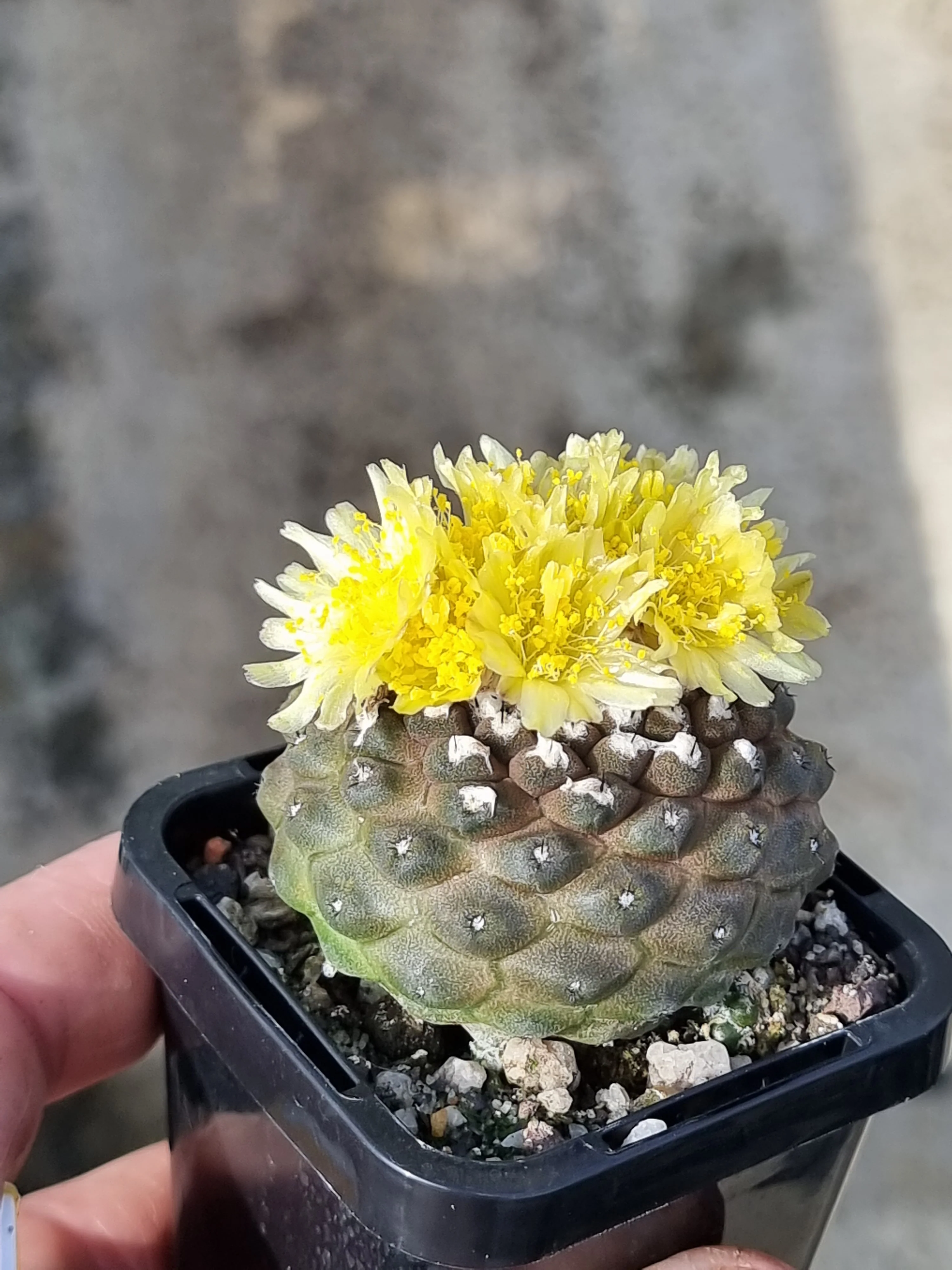
- Growth Form: Typically grows solitary, with stems that are spherical and often depressed, measuring between 3 to 6.5 cm in diameter. The plant's surface is grey-brown to greenish and may appear wrinkled. :contentReference[oaicite:0]{index=0}
- Ribs and Areoles: Possesses 10 to 14 slightly twisted ribs with broad, flat notches. The sunken areoles are lined with white wool. :contentReference[oaicite:1]{index=1}
- Spines: Spines are mostly absent; occasionally, 1 to 6 tiny blackish spines may be present. :contentReference[oaicite:2]{index=2}
- Flowers: Produces wide-open, yellow flowers at the shoot tip. :contentReference[oaicite:3]{index=3}
- Roots: Features tuberous roots that store water, aiding survival in arid conditions. :contentReference[oaicite:4]{index=4}
Care Tips
- Light: Prefers full sun exposure but can tolerate light shade. :contentReference[oaicite:5]{index=5}
- Water: Water infrequently, allowing the soil to dry out completely between waterings. Overwatering can lead to root rot. :contentReference[oaicite:6]{index=6}
- Humidity: Thrives in low-humidity environments, mimicking its native desert conditions.
- Media: Requires a well-draining, sandy-gritty cactus compost to prevent water retention. :contentReference[oaicite:7]{index=7}
- Temperature: Prefers warmth with a minimum winter temperature of 5°C. Can survive light frost if kept dry. :contentReference[oaicite:8]{index=8}
- Fertiliser: Feed once during the growing season with a dilute, low-nitrogen, high-potash fertiliser. :contentReference[oaicite:9]{index=9}
- Repotting: Due to its slow growth, repotting is seldom necessary. Handle with care to avoid damaging the delicate roots.
More Images


Copiapoa hypogaea: The Subterranean Cactus of the Atacama Desert
Copiapoa hypogaea, commonly known as the underground copiapoa, is a unique cactus species endemic to the arid regions of northern Chile, particularly the Atacama Desert. This remarkable plant often grows with much of its body beneath the soil surface, a fascinating adaptation to its harsh native habitat.
Distinctive Features
- Growth Form: Typically grows solitary, with stems that are spherical and often depressed, measuring between 3 to 6.5 cm in diameter. The plant's surface is grey-brown to greenish and may appear wrinkled. :contentReference[oaicite:0]{index=0}
- Ribs and Areoles: Possesses 10 to 14 slightly twisted ribs with broad, flat notches. The sunken areoles are lined with white wool. :contentReference[oaicite:1]{index=1}
- Spines: Spines are mostly absent; occasionally, 1 to 6 tiny blackish spines may be present. :contentReference[oaicite:2]{index=2}
- Flowers: Produces wide-open, yellow flowers at the shoot tip. :contentReference[oaicite:3]{index=3}
- Roots: Features tuberous roots that store water, aiding survival in arid conditions. :contentReference[oaicite:4]{index=4}
Care Tips
- Light: Prefers full sun exposure but can tolerate light shade. :contentReference[oaicite:5]{index=5}
- Water: Water infrequently, allowing the soil to dry out completely between waterings. Overwatering can lead to root rot. :contentReference[oaicite:6]{index=6}
- Humidity: Thrives in low-humidity environments, mimicking its native desert conditions.
- Media: Requires a well-draining, sandy-gritty cactus compost to prevent water retention. :contentReference[oaicite:7]{index=7}
- Temperature: Prefers warmth with a minimum winter temperature of 5°C. Can survive light frost if kept dry. :contentReference[oaicite:8]{index=8}
- Fertiliser: Feed once during the growing season with a dilute, low-nitrogen, high-potash fertiliser. :contentReference[oaicite:9]{index=9}
- Repotting: Due to its slow growth, repotting is seldom necessary. Handle with care to avoid damaging the delicate roots.
Product Information
Product Information
Shipping & Returns
Shipping & Returns
Description
Copiapoa hypogaea, commonly known as the underground copiapoa, is a unique cactus species endemic to the arid regions of northern Chile, particularly the Atacama Desert. This remarkable plant often grows with much of its body beneath the soil surface, a fascinating adaptation to its harsh native habitat.
Distinctive Features
- Growth Form: Typically grows solitary, with stems that are spherical and often depressed, measuring between 3 to 6.5 cm in diameter. The plant's surface is grey-brown to greenish and may appear wrinkled. :contentReference[oaicite:0]{index=0}
- Ribs and Areoles: Possesses 10 to 14 slightly twisted ribs with broad, flat notches. The sunken areoles are lined with white wool. :contentReference[oaicite:1]{index=1}
- Spines: Spines are mostly absent; occasionally, 1 to 6 tiny blackish spines may be present. :contentReference[oaicite:2]{index=2}
- Flowers: Produces wide-open, yellow flowers at the shoot tip. :contentReference[oaicite:3]{index=3}
- Roots: Features tuberous roots that store water, aiding survival in arid conditions. :contentReference[oaicite:4]{index=4}
Care Tips
- Light: Prefers full sun exposure but can tolerate light shade. :contentReference[oaicite:5]{index=5}
- Water: Water infrequently, allowing the soil to dry out completely between waterings. Overwatering can lead to root rot. :contentReference[oaicite:6]{index=6}
- Humidity: Thrives in low-humidity environments, mimicking its native desert conditions.
- Media: Requires a well-draining, sandy-gritty cactus compost to prevent water retention. :contentReference[oaicite:7]{index=7}
- Temperature: Prefers warmth with a minimum winter temperature of 5°C. Can survive light frost if kept dry. :contentReference[oaicite:8]{index=8}
- Fertiliser: Feed once during the growing season with a dilute, low-nitrogen, high-potash fertiliser. :contentReference[oaicite:9]{index=9}
- Repotting: Due to its slow growth, repotting is seldom necessary. Handle with care to avoid damaging the delicate roots.