Lepismium cruciforme - Mistletoe Cactus
Lepismium cruciforme is a forest cactus native to Brazil, Argentina, and Paraguay, where it grows in subtropical woodlands and semi-deciduous forests. It typically establishes in shaded habitats, often in the branches of trees or occasionally among rocks, benefiting from high humidity and filtered light.
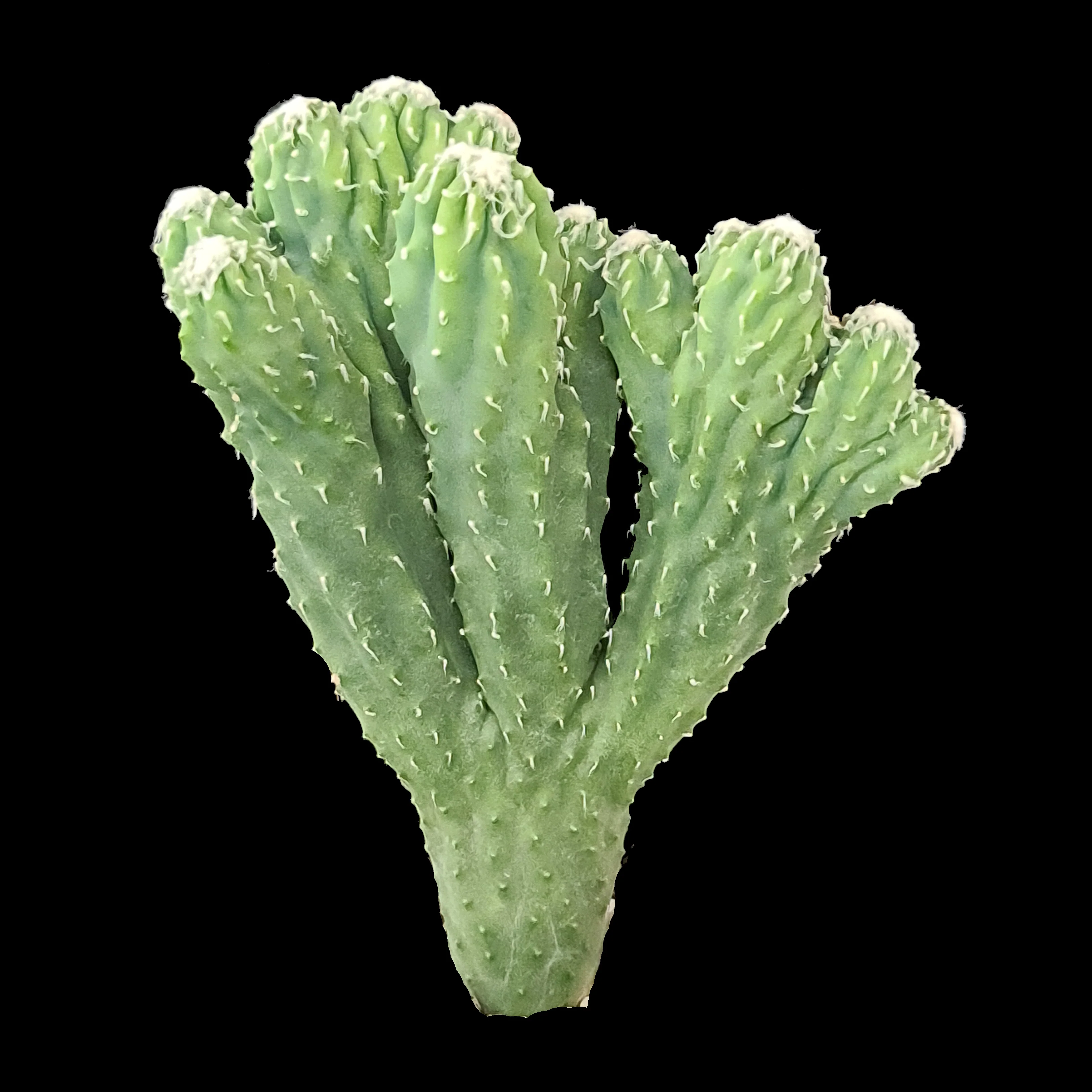
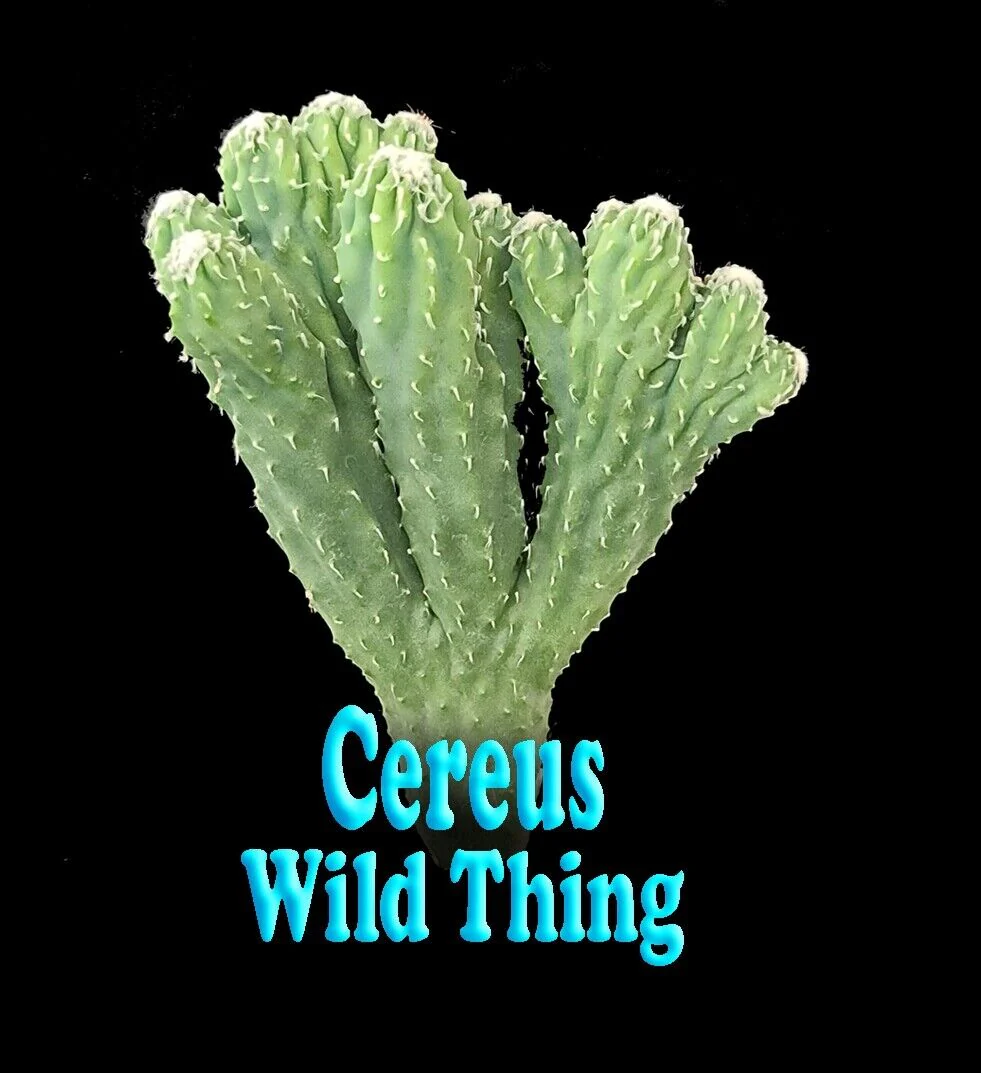
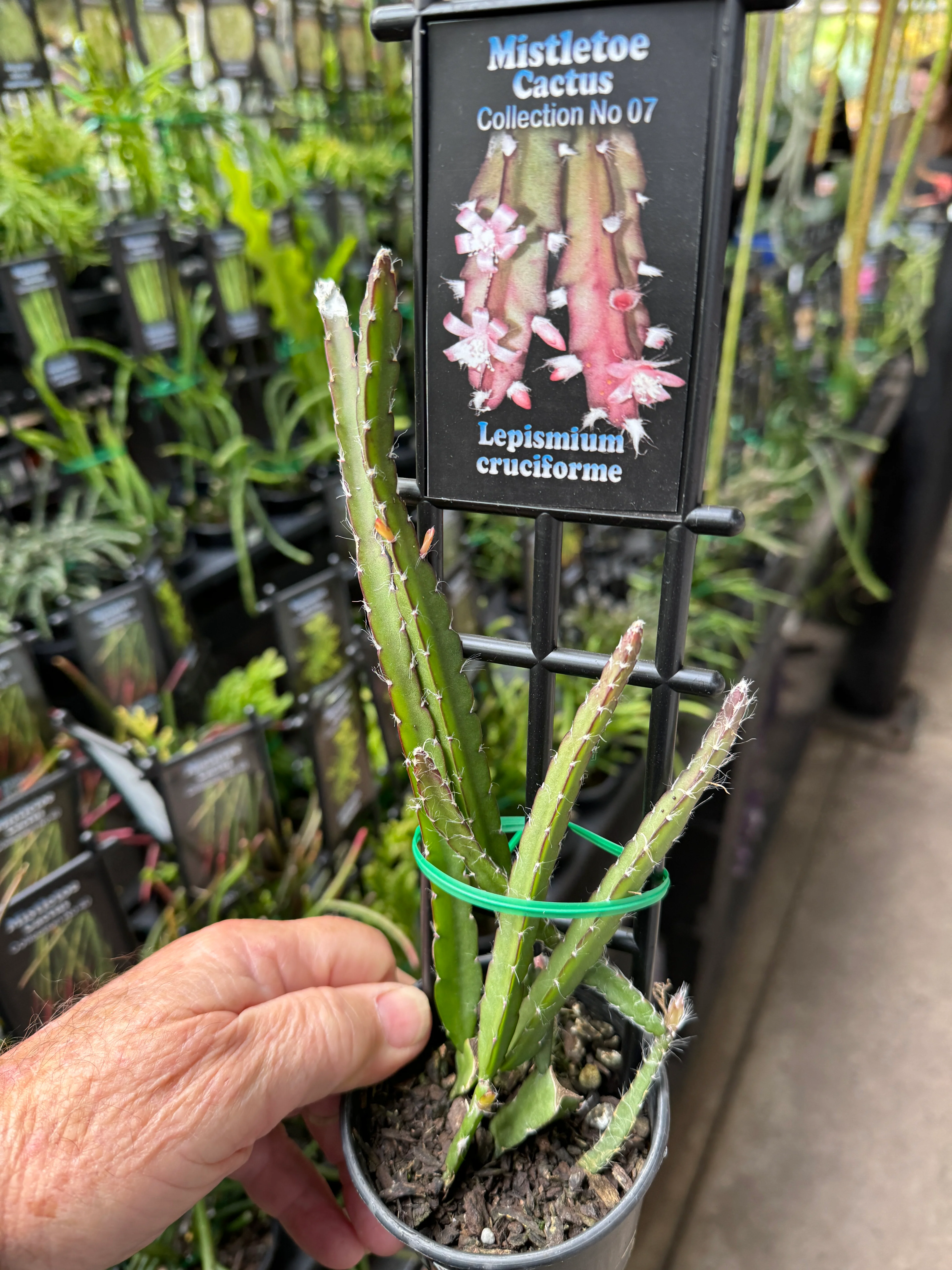
The plant produces distinctive flattened stems with irregular, cross-shaped segments that branch freely. These stems are bright green, sometimes tinged reddish when exposed to stronger light, and carry small areoles along the margins. Unlike many desert cacti, its spination is minimal, with only a few short bristles present at the areoles.
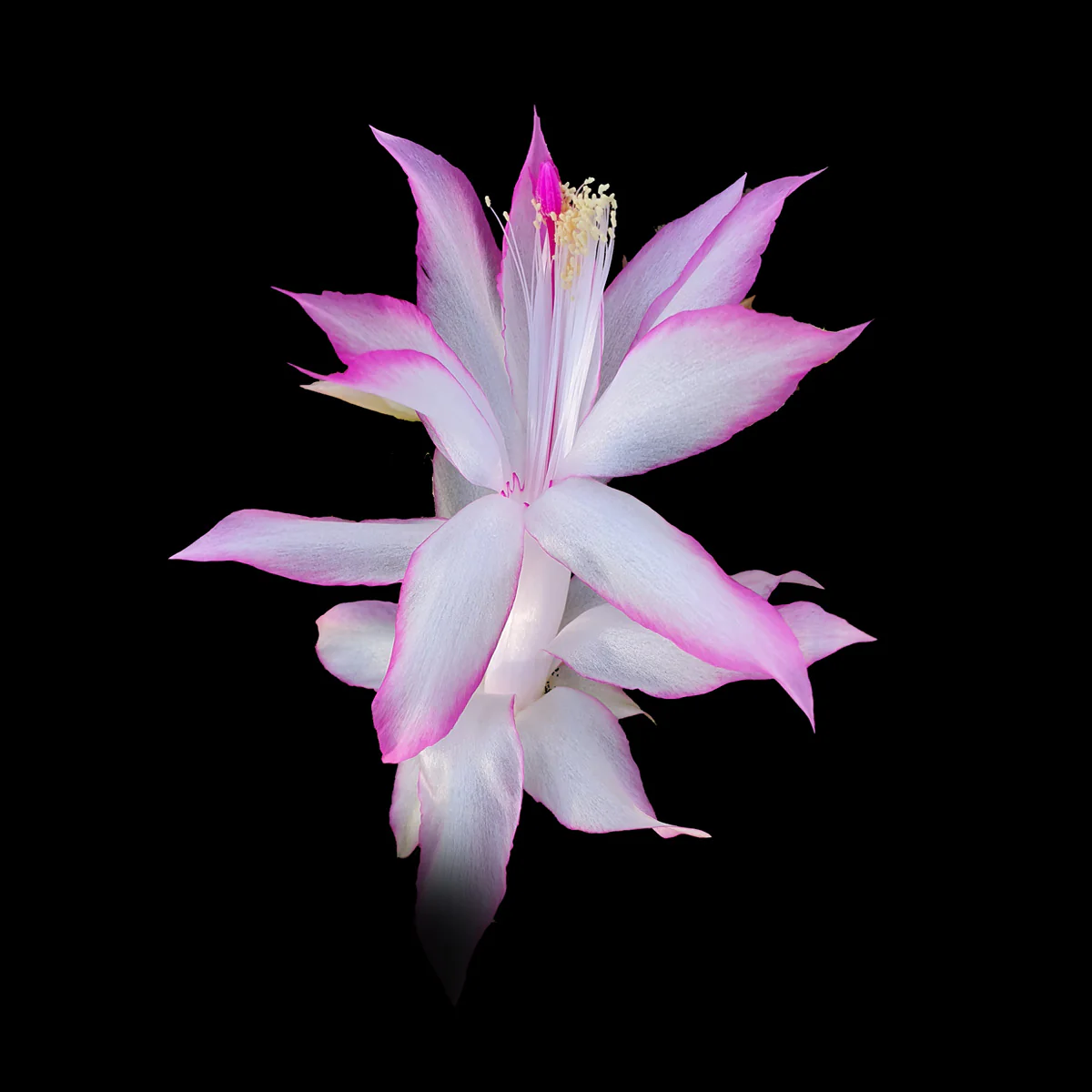
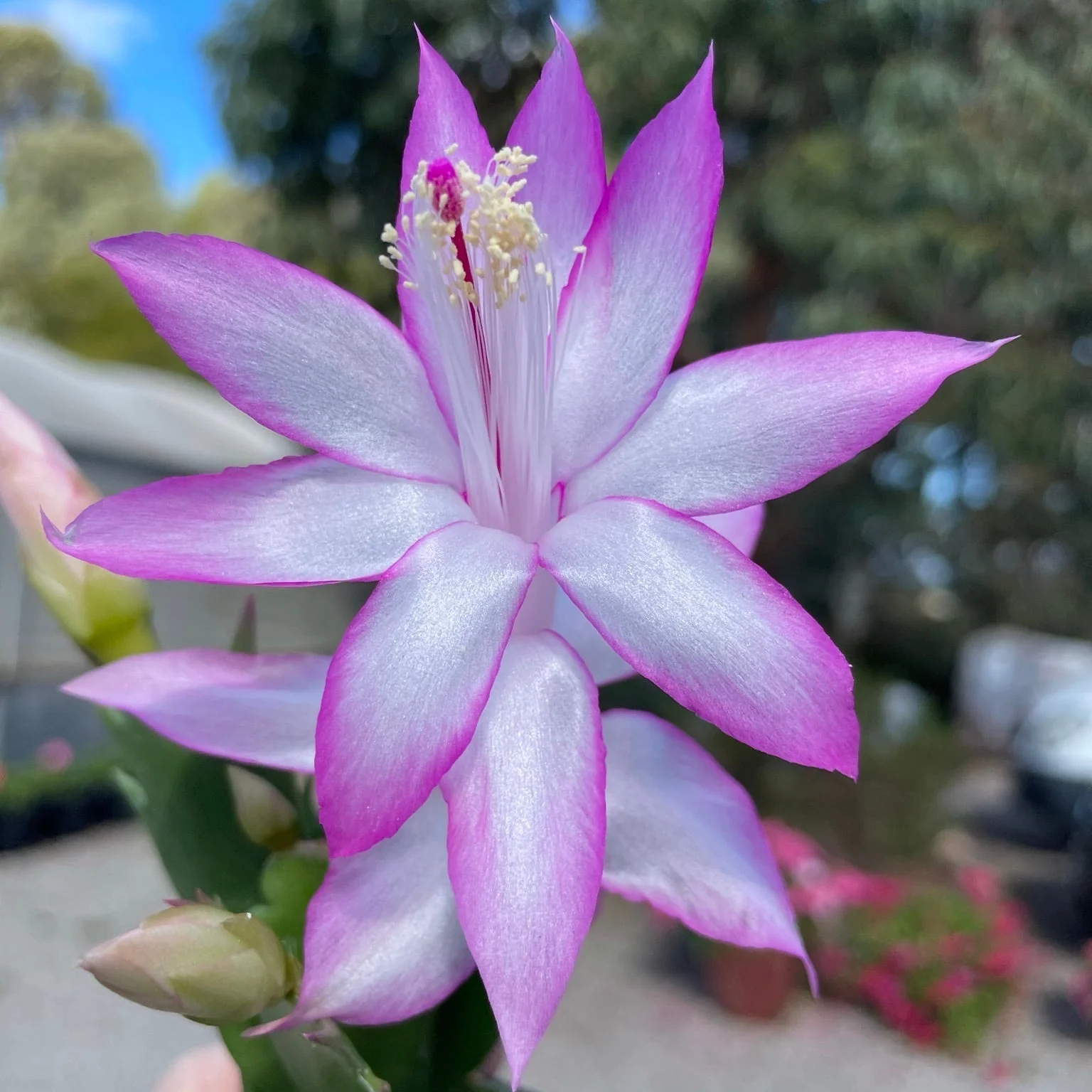
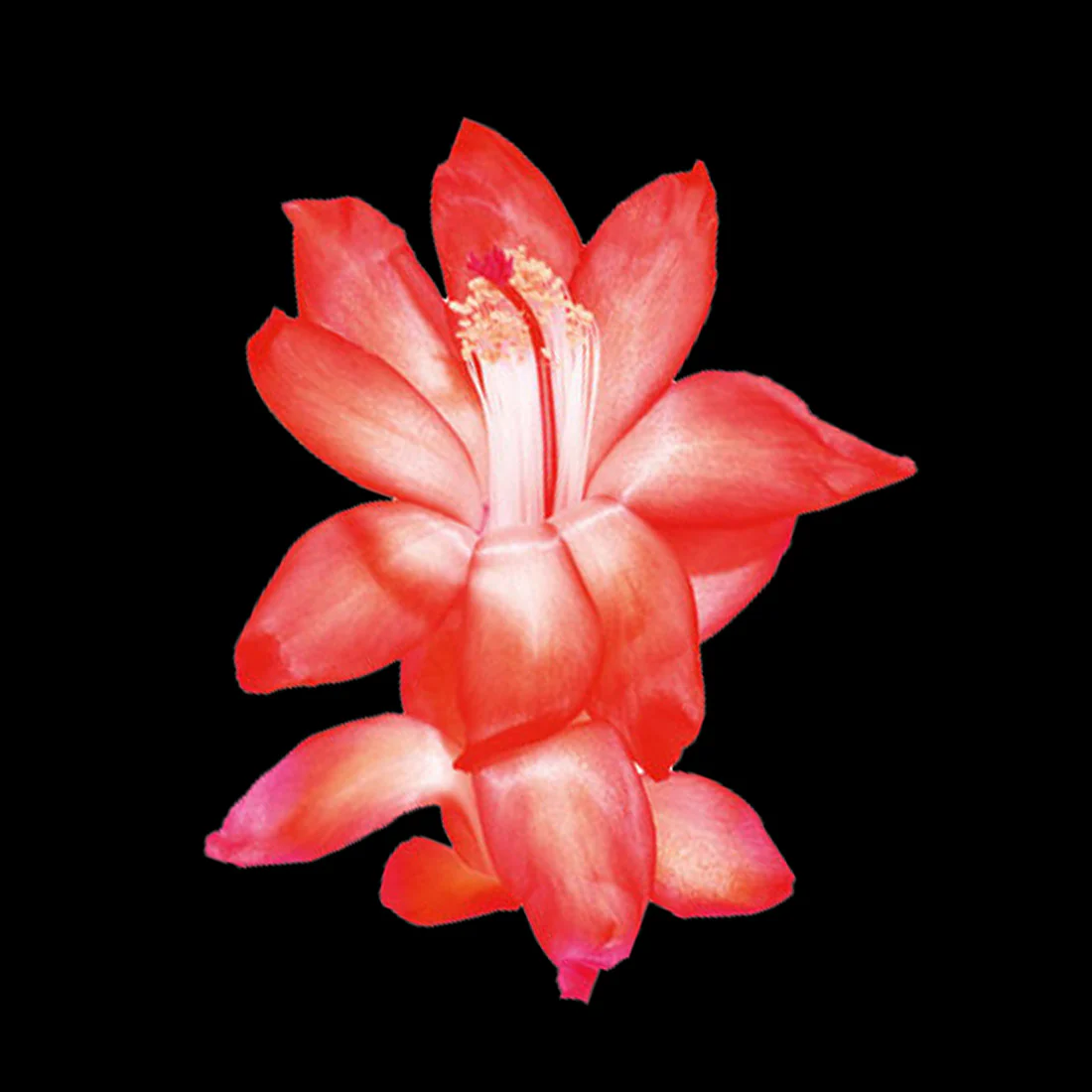
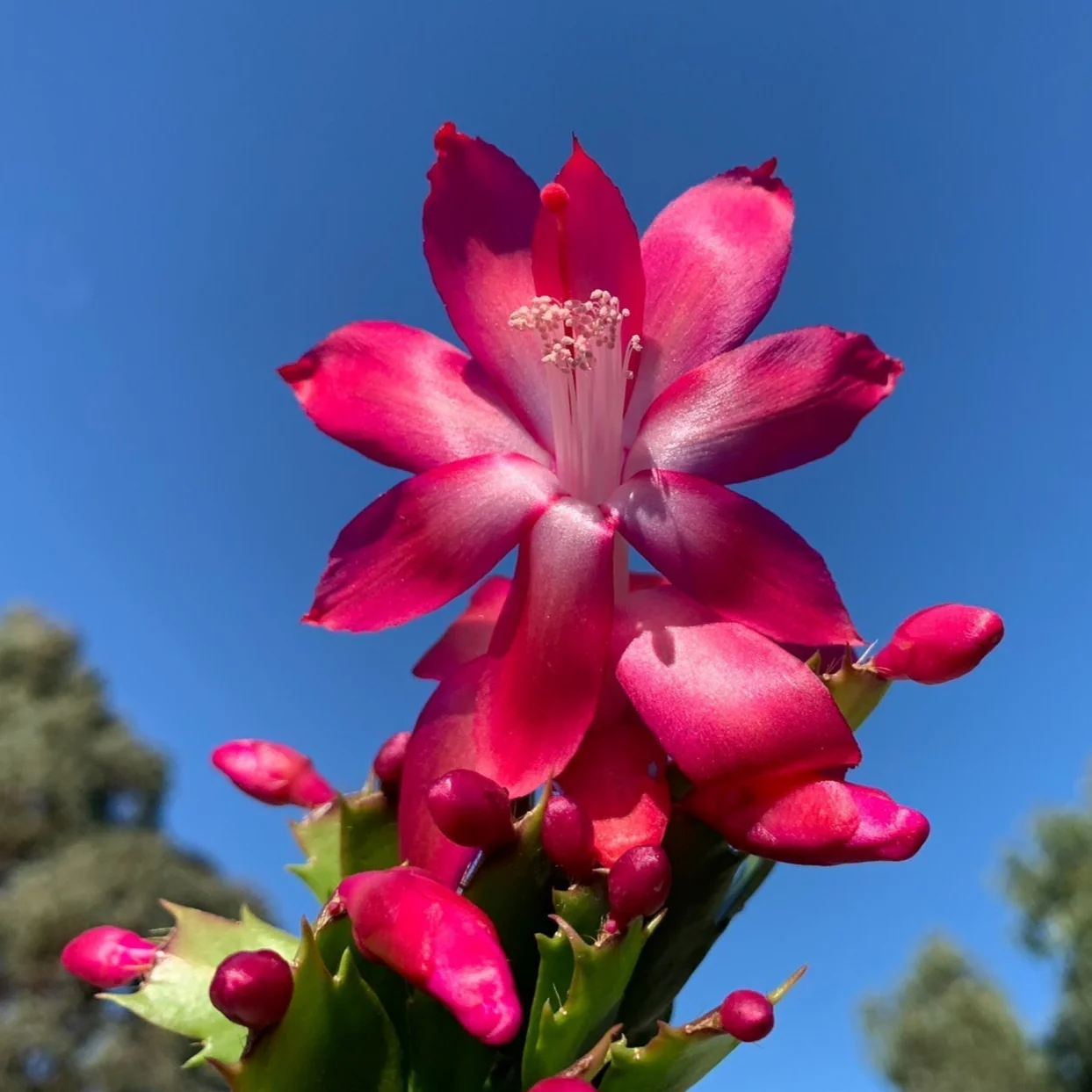
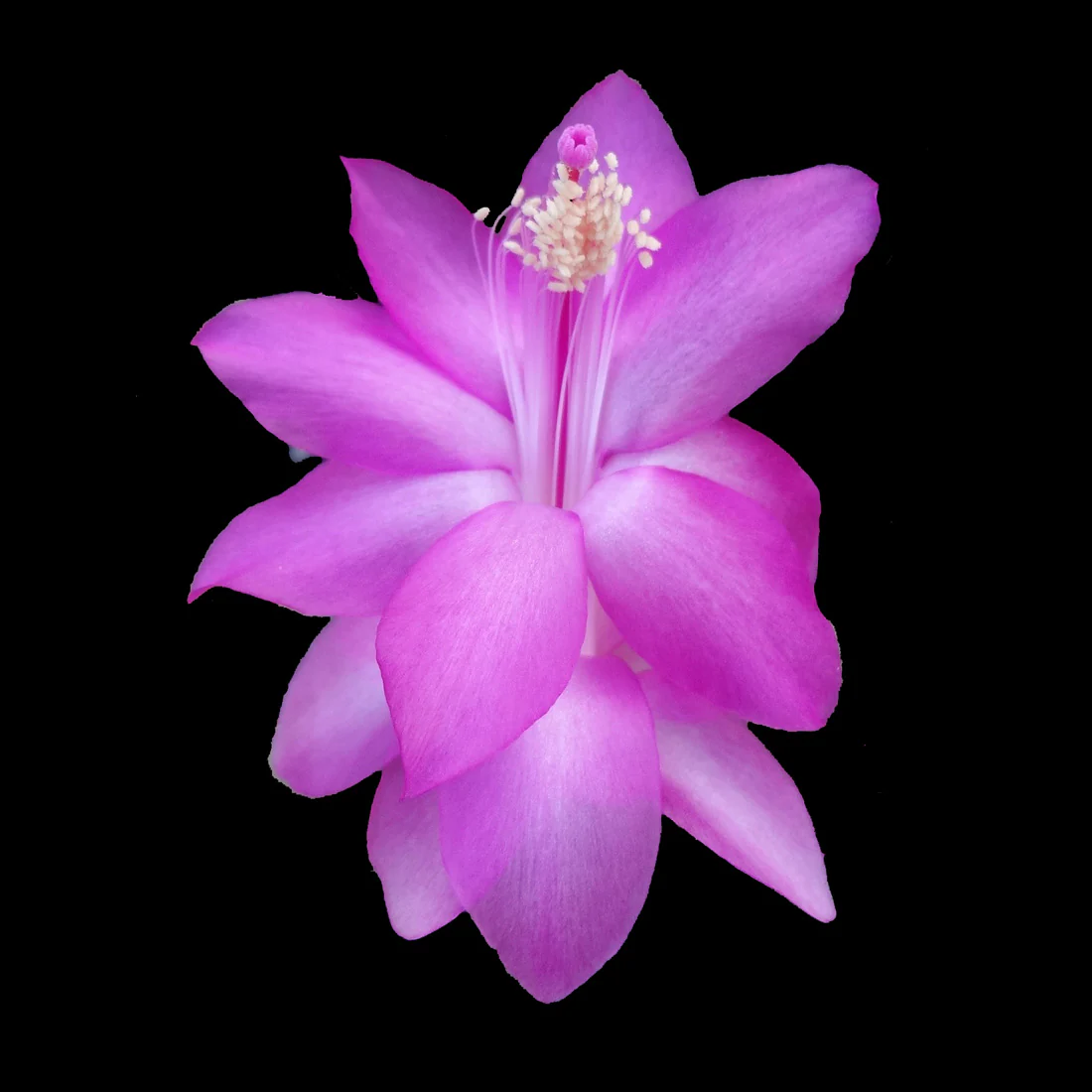
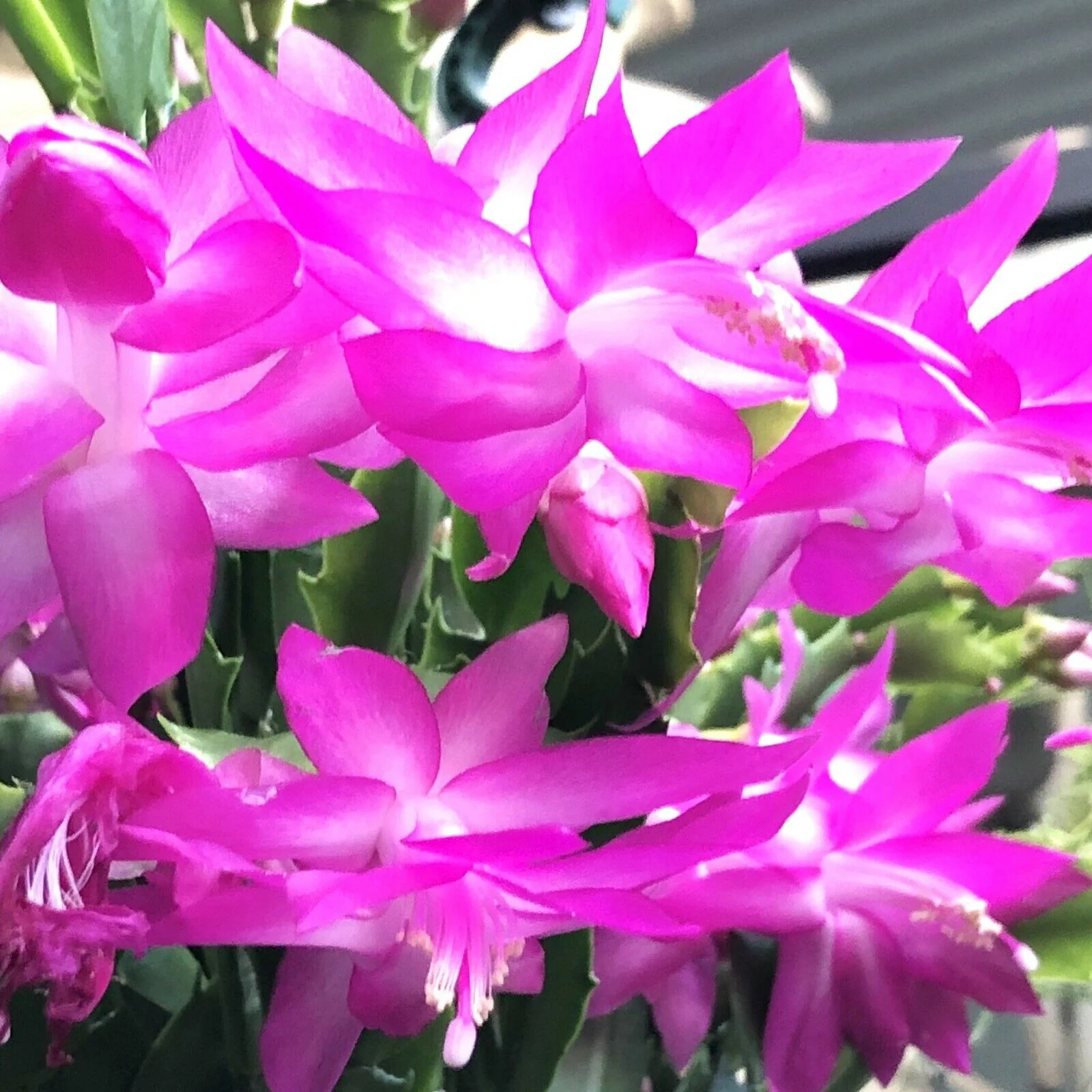
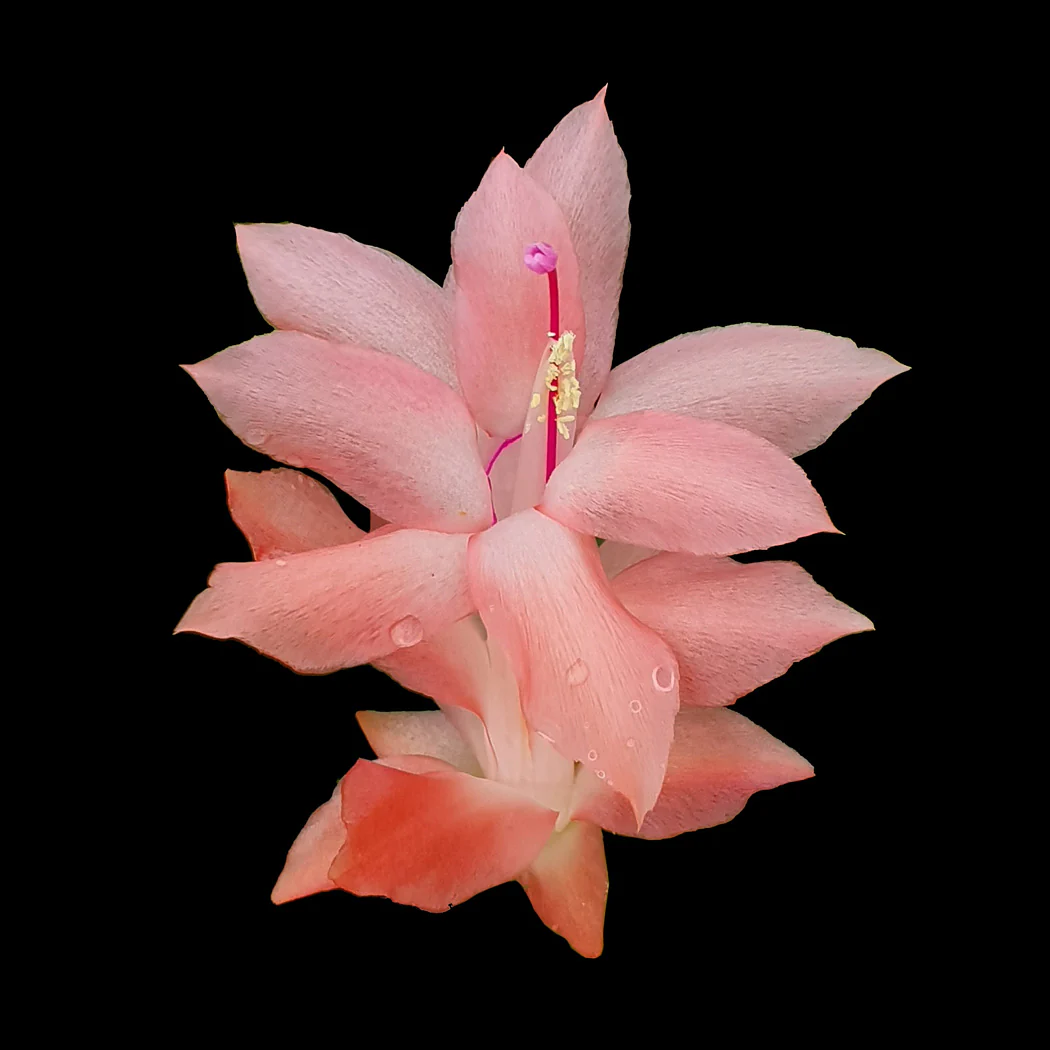
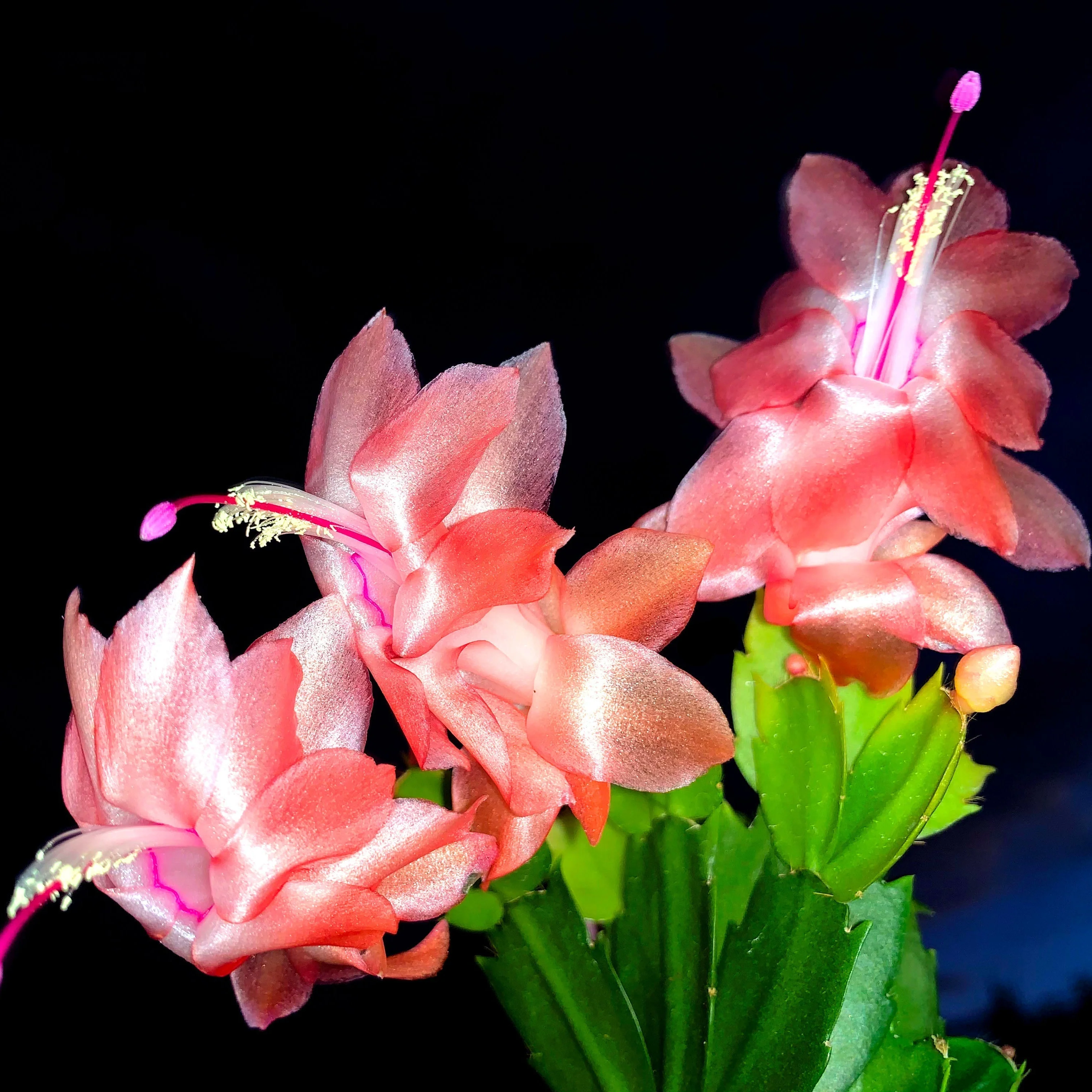
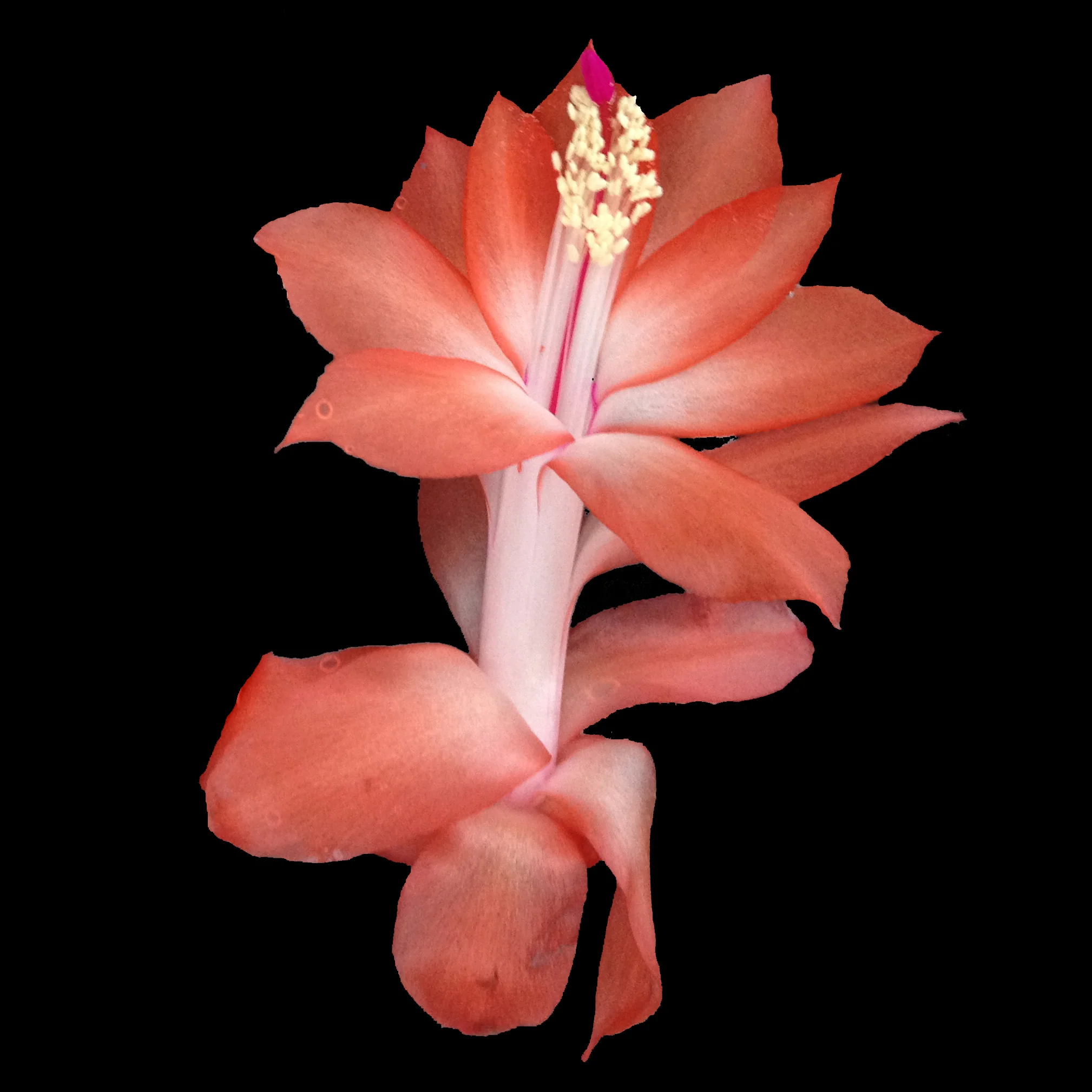
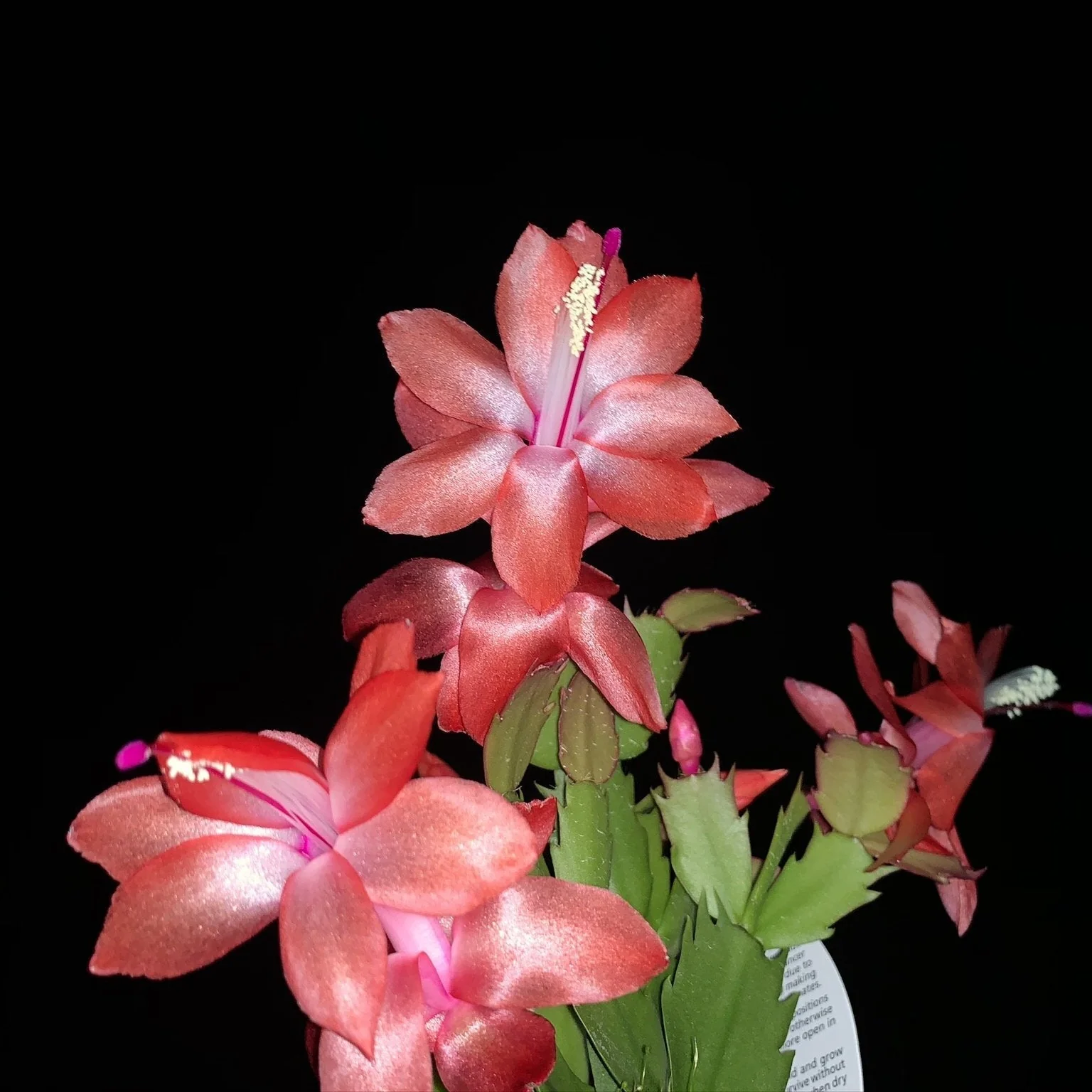
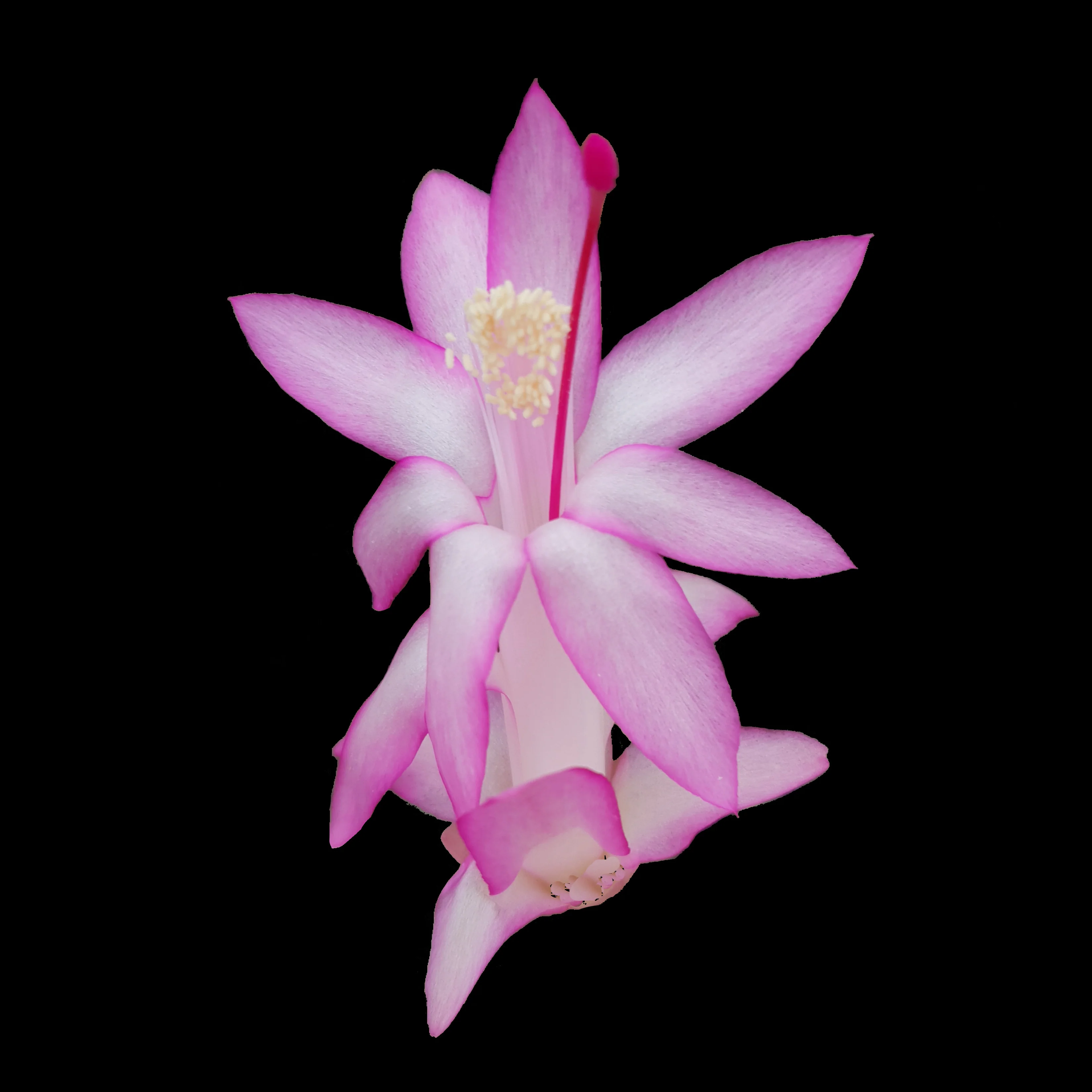
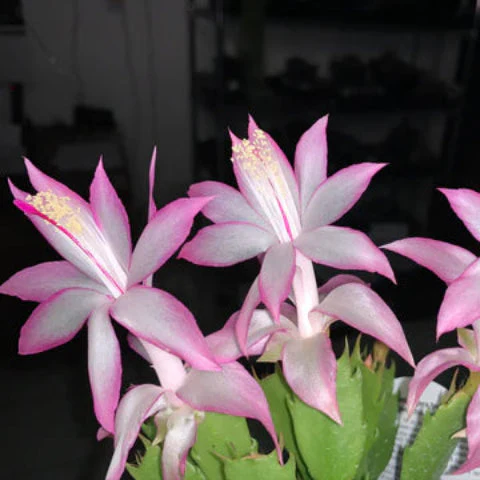
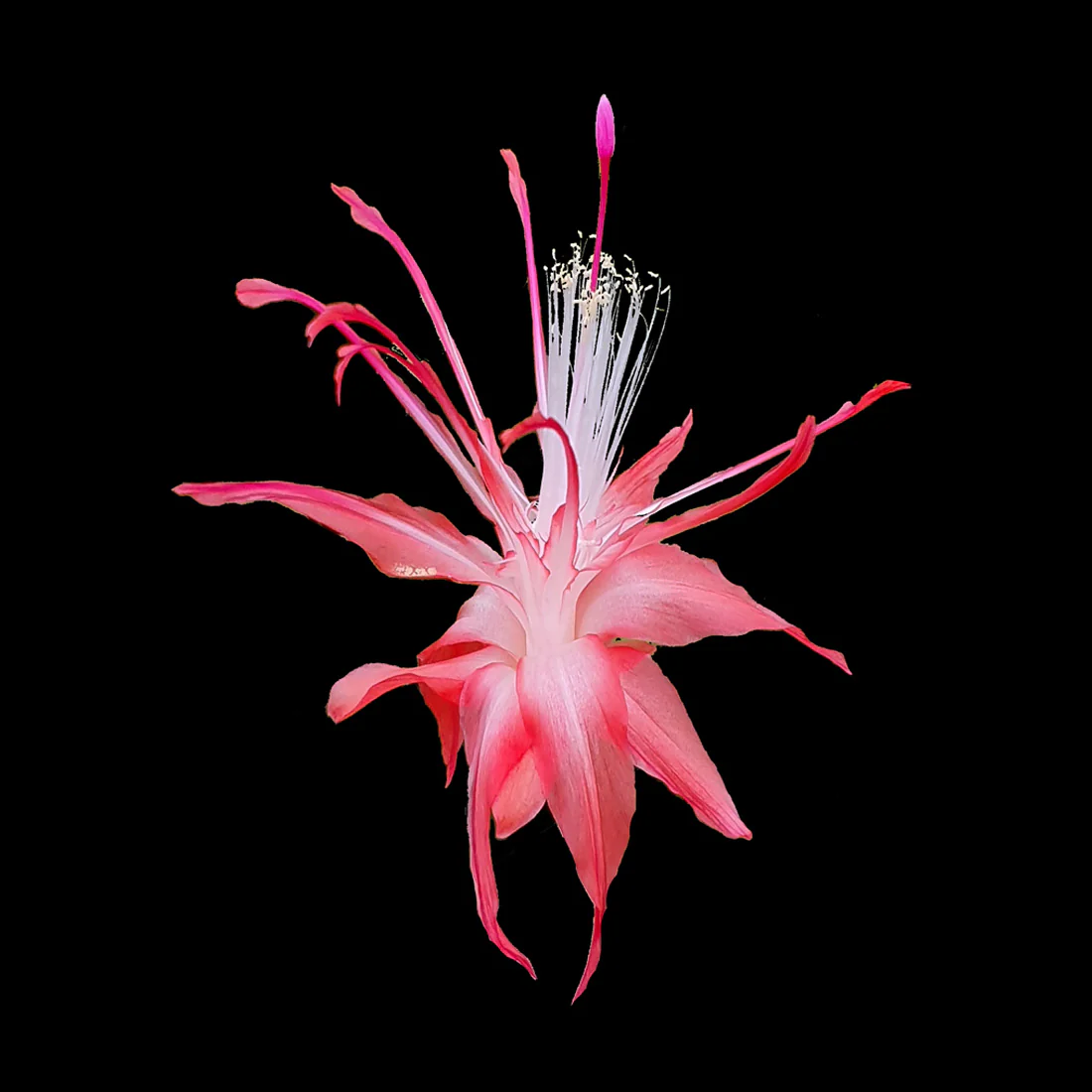
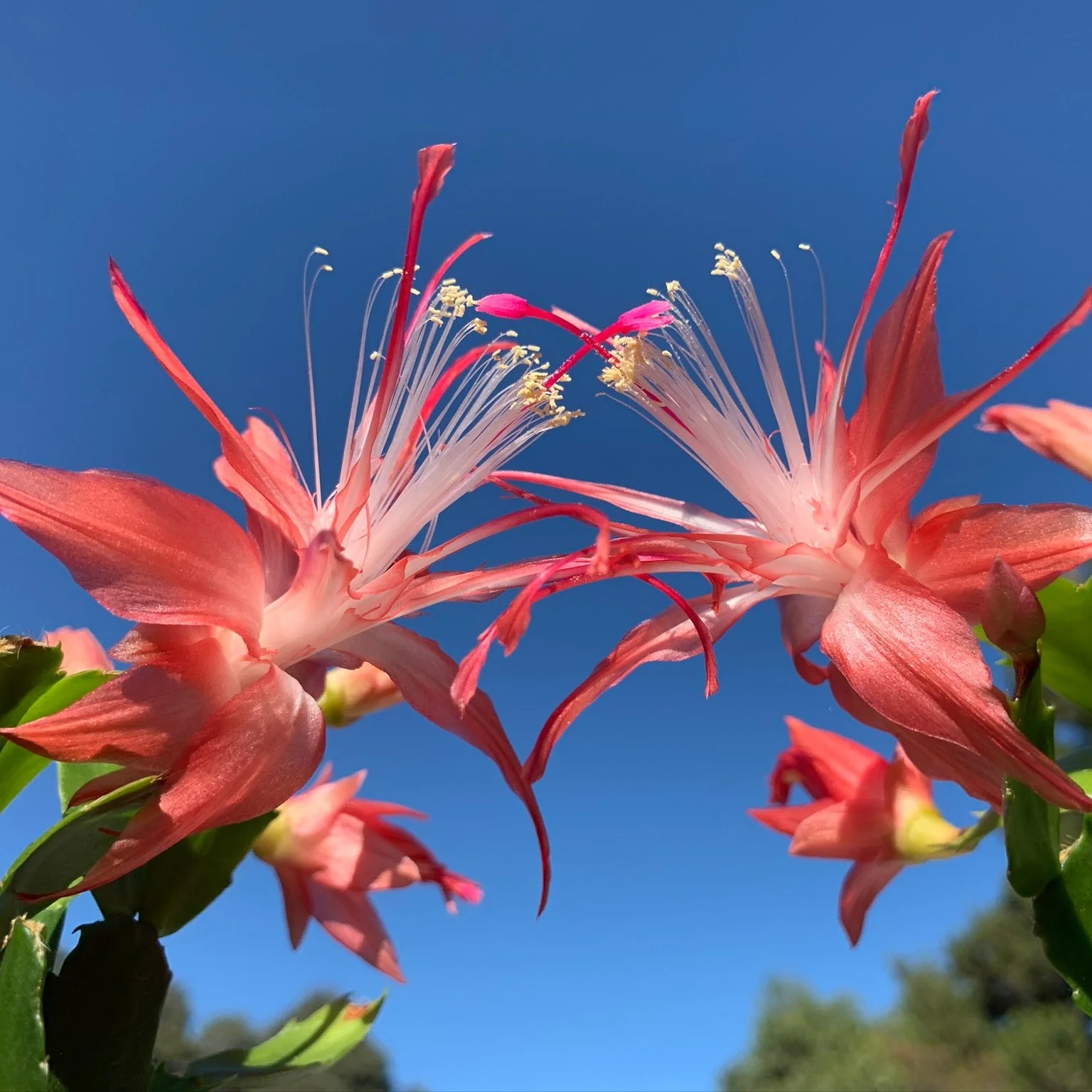
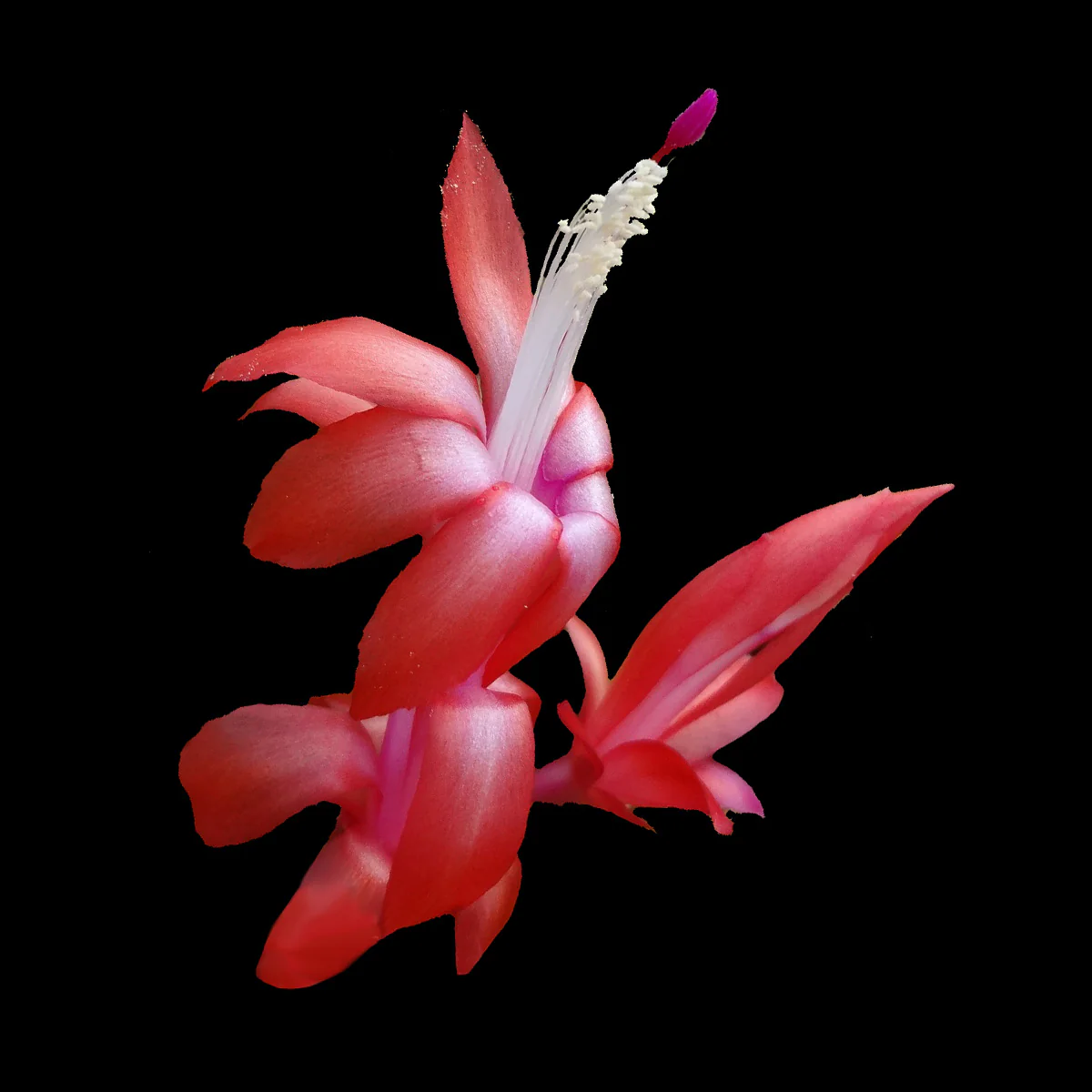
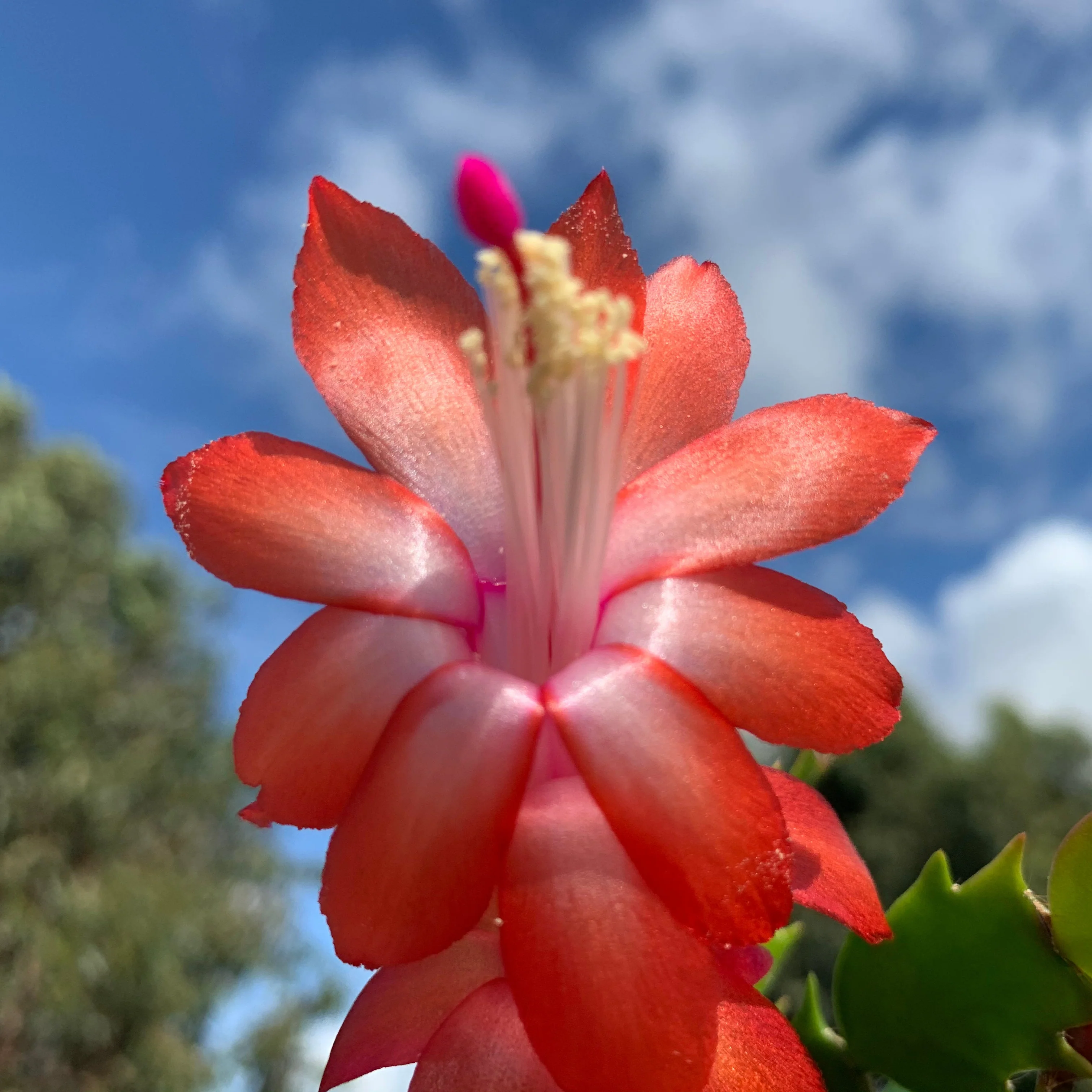
Flowering occurs in spring to early summer, when small funnel-shaped blooms emerge from the stem margins. The flowers are usually white to pale pink, sometimes followed by rounded fruits that mature to shades of red or purple. These fruits contain numerous seeds and are readily taken by birds, aiding in natural dispersal through the forest.
Care Tips:
- Light: Prefers bright, indirect light or dappled shade; avoid prolonged direct sun, which can scorch the stems.
- Water: Water regularly in the growing season, keeping the soil lightly moist but never saturated. Reduce watering in winter.
- Humidity: Benefits from moderate to high humidity, reflecting its forest habitat.
- Media: Grow in a loose, free-draining mix with organic matter and added perlite or bark to retain some moisture.
- Fertiliser: Apply a diluted cactus or orchid fertiliser every 4–6 weeks during spring and summer.
- Temperature: Ideal range is 15–28 °C. Protect from cold drafts and avoid exposure below 5 °C.
- Repotting: Repot every 2–3 years to refresh the mix and manage clumping growth, trimming or replanting segments as required.
Original: $12.00
-65%$12.00
$4.20More Images

Lepismium cruciforme - Mistletoe Cactus
Lepismium cruciforme is a forest cactus native to Brazil, Argentina, and Paraguay, where it grows in subtropical woodlands and semi-deciduous forests. It typically establishes in shaded habitats, often in the branches of trees or occasionally among rocks, benefiting from high humidity and filtered light.
The plant produces distinctive flattened stems with irregular, cross-shaped segments that branch freely. These stems are bright green, sometimes tinged reddish when exposed to stronger light, and carry small areoles along the margins. Unlike many desert cacti, its spination is minimal, with only a few short bristles present at the areoles.
Flowering occurs in spring to early summer, when small funnel-shaped blooms emerge from the stem margins. The flowers are usually white to pale pink, sometimes followed by rounded fruits that mature to shades of red or purple. These fruits contain numerous seeds and are readily taken by birds, aiding in natural dispersal through the forest.
Care Tips:
- Light: Prefers bright, indirect light or dappled shade; avoid prolonged direct sun, which can scorch the stems.
- Water: Water regularly in the growing season, keeping the soil lightly moist but never saturated. Reduce watering in winter.
- Humidity: Benefits from moderate to high humidity, reflecting its forest habitat.
- Media: Grow in a loose, free-draining mix with organic matter and added perlite or bark to retain some moisture.
- Fertiliser: Apply a diluted cactus or orchid fertiliser every 4–6 weeks during spring and summer.
- Temperature: Ideal range is 15–28 °C. Protect from cold drafts and avoid exposure below 5 °C.
- Repotting: Repot every 2–3 years to refresh the mix and manage clumping growth, trimming or replanting segments as required.
Product Information
Product Information
Shipping & Returns
Shipping & Returns
Description
Lepismium cruciforme is a forest cactus native to Brazil, Argentina, and Paraguay, where it grows in subtropical woodlands and semi-deciduous forests. It typically establishes in shaded habitats, often in the branches of trees or occasionally among rocks, benefiting from high humidity and filtered light.
The plant produces distinctive flattened stems with irregular, cross-shaped segments that branch freely. These stems are bright green, sometimes tinged reddish when exposed to stronger light, and carry small areoles along the margins. Unlike many desert cacti, its spination is minimal, with only a few short bristles present at the areoles.
Flowering occurs in spring to early summer, when small funnel-shaped blooms emerge from the stem margins. The flowers are usually white to pale pink, sometimes followed by rounded fruits that mature to shades of red or purple. These fruits contain numerous seeds and are readily taken by birds, aiding in natural dispersal through the forest.
Care Tips:
- Light: Prefers bright, indirect light or dappled shade; avoid prolonged direct sun, which can scorch the stems.
- Water: Water regularly in the growing season, keeping the soil lightly moist but never saturated. Reduce watering in winter.
- Humidity: Benefits from moderate to high humidity, reflecting its forest habitat.
- Media: Grow in a loose, free-draining mix with organic matter and added perlite or bark to retain some moisture.
- Fertiliser: Apply a diluted cactus or orchid fertiliser every 4–6 weeks during spring and summer.
- Temperature: Ideal range is 15–28 °C. Protect from cold drafts and avoid exposure below 5 °C.
- Repotting: Repot every 2–3 years to refresh the mix and manage clumping growth, trimming or replanting segments as required.