Mammillaria carmenae cristata
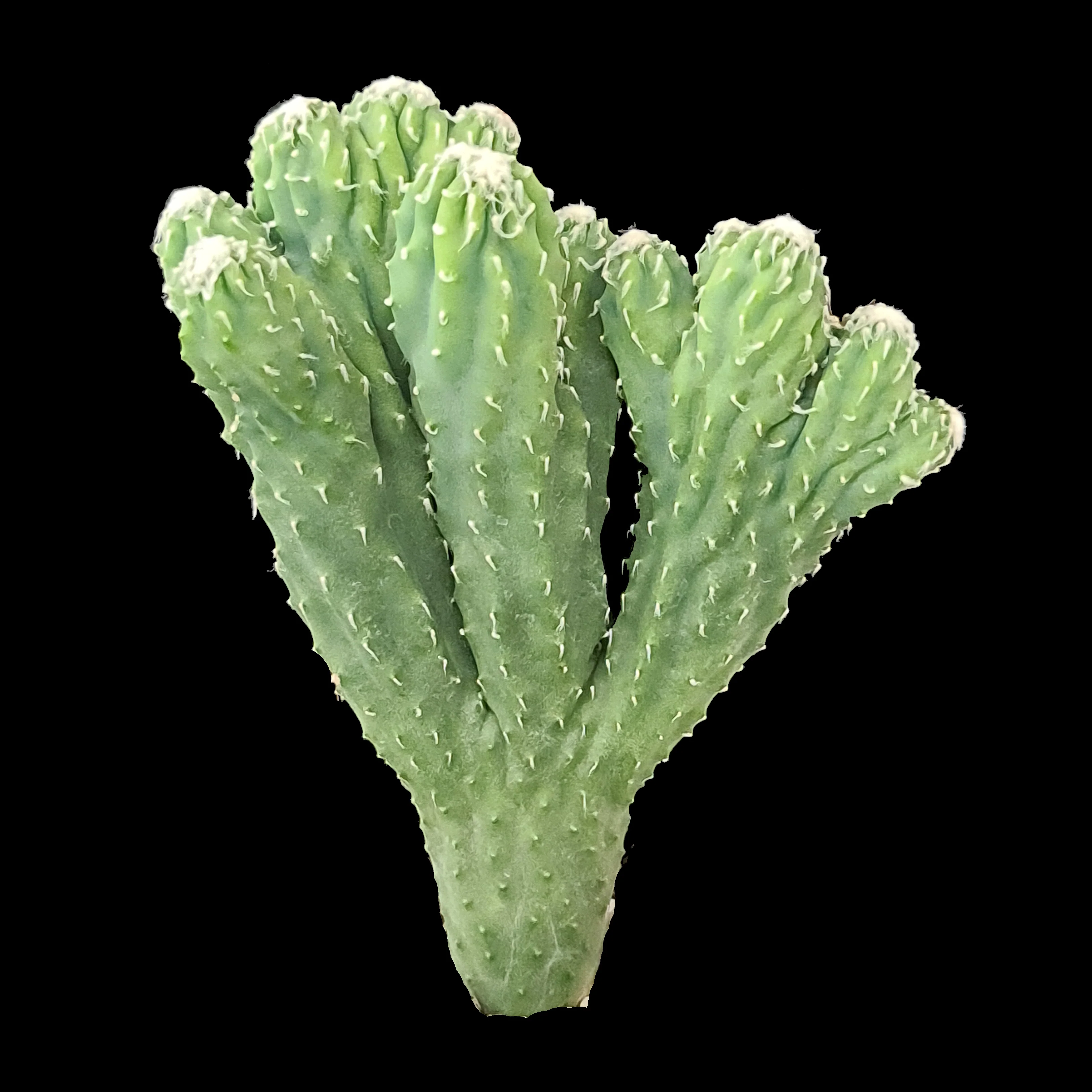
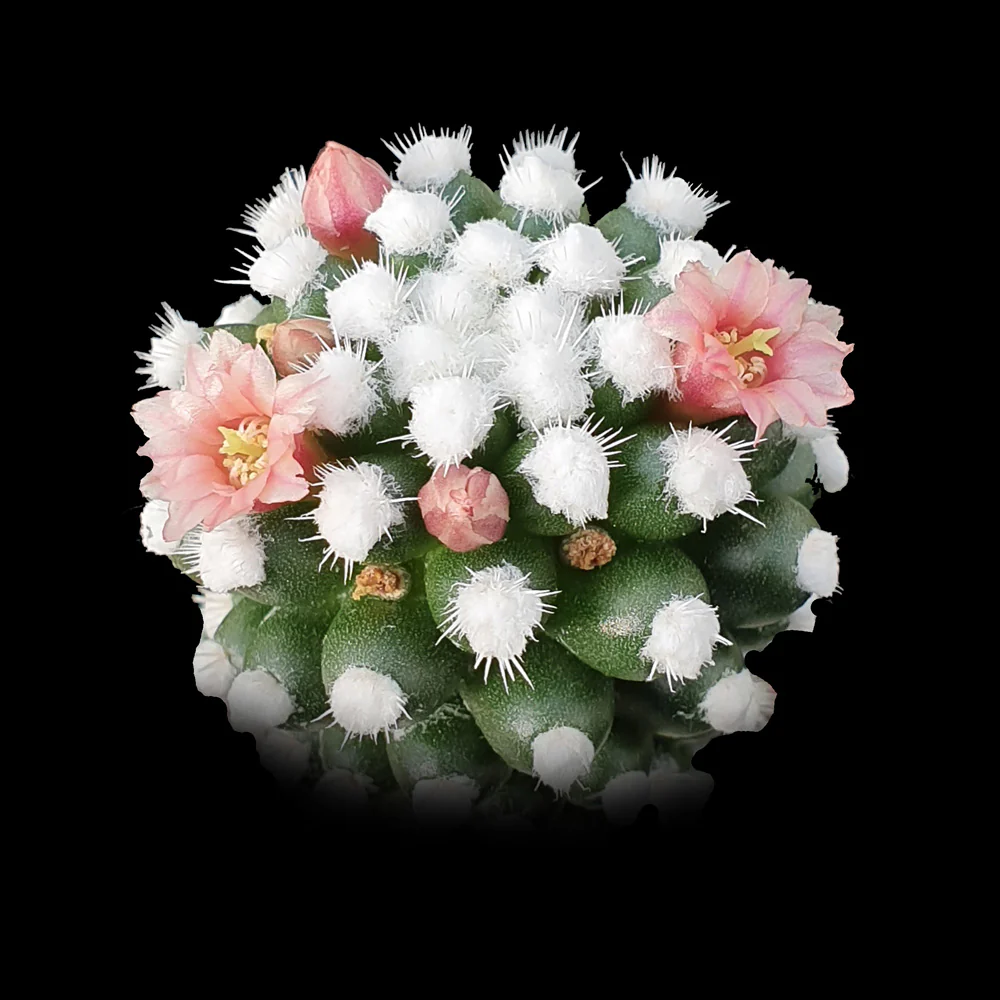
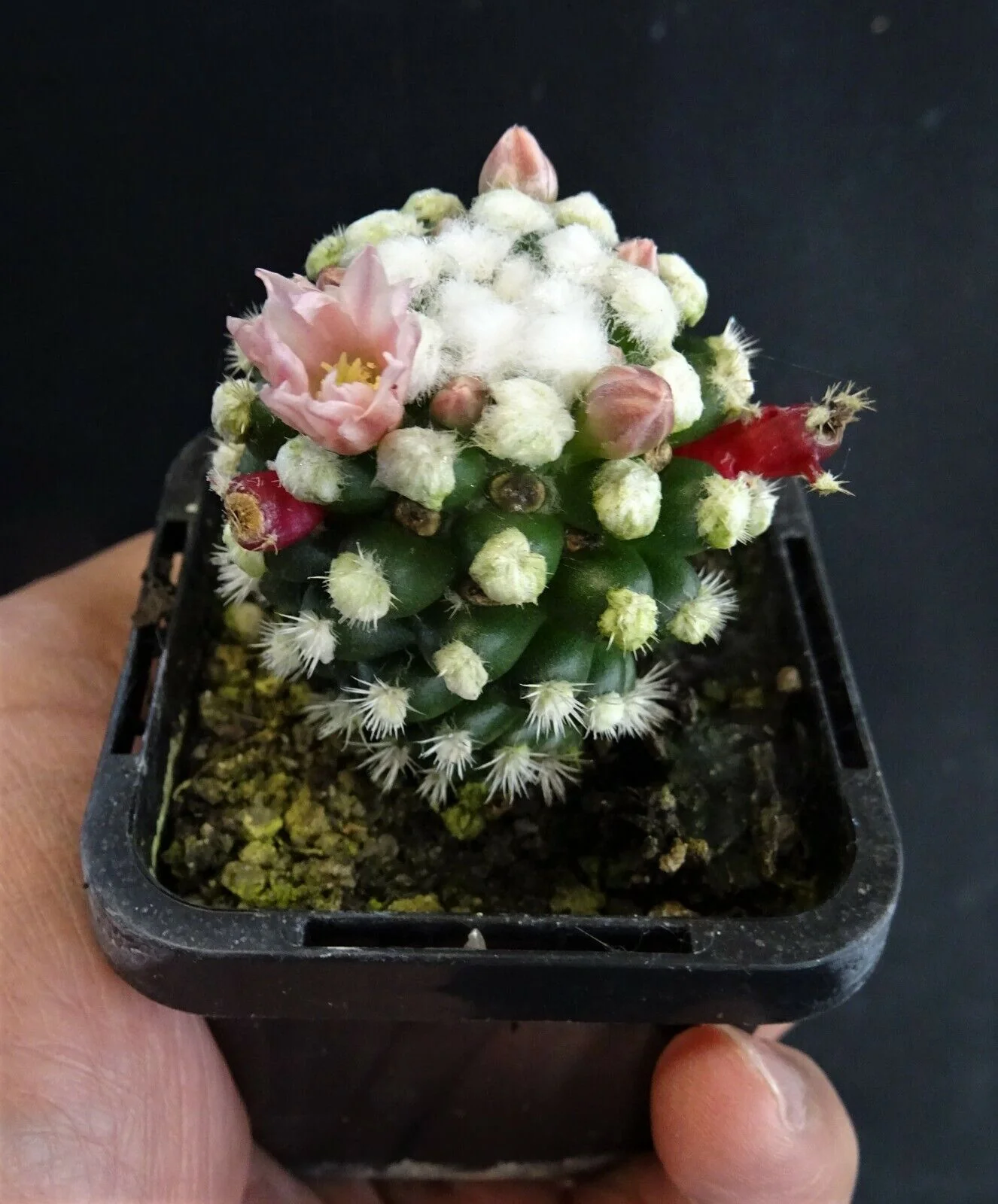
Mammillaria carmenae cristata is a crested form of a compact Mexican Mammillaria known for its dense covering of fine, hair like radial spines. In crested specimens, this species is valued for the way those soft spines accumulate tightly along the crest, often giving the plant a continuous, velvety surface rather than sharply defined ribs or tubercles.
Cresting in Mammillaria carmenae is generally stable and slow growing. Unlike many columnar cacti where crests can elongate or break into irregular sections, this species tends to broaden gradually, maintaining a low, compact profile. Flowering can still occur, with small pink blooms forming along the upper edge of the crest rather than in a circular crown. Growth remains measured even in good conditions, which contributes to the long term preservation of its form.
Care Tips
- Light: Bright light with some direct sun. Adequate light helps keep growth compact and prevents elongation.
- Water: Water thoroughly, then allow the mix to dry completely before watering again. Reduce watering significantly in cooler months.
- Media: Use a very free draining cactus mix with a high mineral content, reflecting its preference for rocky substrates.
- Fertiliser: Feed sparingly during warm periods with a diluted cactus fertiliser. Excess feeding can soften growth.
- Temperature: Grows best in warm conditions but should be kept dry and protected from frost in winter.
- Repotting: Repot only when necessary. Disturbance is best minimised, as growth is slow and the crest can be brittle.
More Images


Mammillaria carmenae cristata
Mammillaria carmenae cristata is a crested form of a compact Mexican Mammillaria known for its dense covering of fine, hair like radial spines. In crested specimens, this species is valued for the way those soft spines accumulate tightly along the crest, often giving the plant a continuous, velvety surface rather than sharply defined ribs or tubercles.
Cresting in Mammillaria carmenae is generally stable and slow growing. Unlike many columnar cacti where crests can elongate or break into irregular sections, this species tends to broaden gradually, maintaining a low, compact profile. Flowering can still occur, with small pink blooms forming along the upper edge of the crest rather than in a circular crown. Growth remains measured even in good conditions, which contributes to the long term preservation of its form.
Care Tips
- Light: Bright light with some direct sun. Adequate light helps keep growth compact and prevents elongation.
- Water: Water thoroughly, then allow the mix to dry completely before watering again. Reduce watering significantly in cooler months.
- Media: Use a very free draining cactus mix with a high mineral content, reflecting its preference for rocky substrates.
- Fertiliser: Feed sparingly during warm periods with a diluted cactus fertiliser. Excess feeding can soften growth.
- Temperature: Grows best in warm conditions but should be kept dry and protected from frost in winter.
- Repotting: Repot only when necessary. Disturbance is best minimised, as growth is slow and the crest can be brittle.
Product Information
Product Information
Shipping & Returns
Shipping & Returns
Description
Mammillaria carmenae cristata is a crested form of a compact Mexican Mammillaria known for its dense covering of fine, hair like radial spines. In crested specimens, this species is valued for the way those soft spines accumulate tightly along the crest, often giving the plant a continuous, velvety surface rather than sharply defined ribs or tubercles.
Cresting in Mammillaria carmenae is generally stable and slow growing. Unlike many columnar cacti where crests can elongate or break into irregular sections, this species tends to broaden gradually, maintaining a low, compact profile. Flowering can still occur, with small pink blooms forming along the upper edge of the crest rather than in a circular crown. Growth remains measured even in good conditions, which contributes to the long term preservation of its form.
Care Tips
- Light: Bright light with some direct sun. Adequate light helps keep growth compact and prevents elongation.
- Water: Water thoroughly, then allow the mix to dry completely before watering again. Reduce watering significantly in cooler months.
- Media: Use a very free draining cactus mix with a high mineral content, reflecting its preference for rocky substrates.
- Fertiliser: Feed sparingly during warm periods with a diluted cactus fertiliser. Excess feeding can soften growth.
- Temperature: Grows best in warm conditions but should be kept dry and protected from frost in winter.
- Repotting: Repot only when necessary. Disturbance is best minimised, as growth is slow and the crest can be brittle.