Mammillaria elongata – Golden Star Cactus
Mammillaria elongata is a widespread cactus species native to central Mexico, particularly in Hidalgo, Guanajuato, and Querétaro. It grows on rocky slopes and cliffs within semi-arid scrub at elevations between 1,300–2,400 m, often forming dense colonies across limestone outcrops. Its natural habitat is characterised by high light levels and sharp drainage.
The plant produces cylindrical stems that are usually 1.5–3 cm in diameter and can reach 15 cm in length, though in cultivation they are often shorter. These stems branch freely from the base, creating compact clumps or mounded clusters over time. Each tubercle bears numerous short, interlacing spines, usually golden, copper, or yellowish-brown, which give the plant a distinct textured appearance.
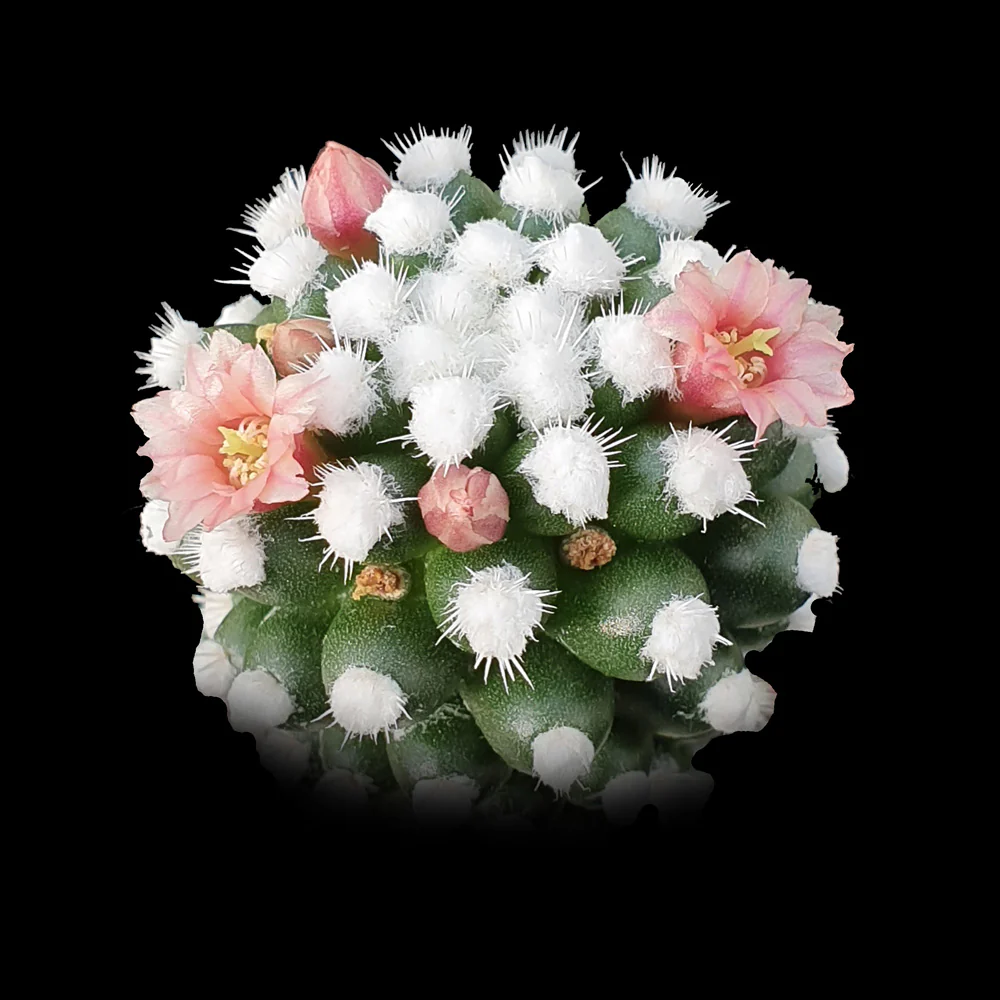
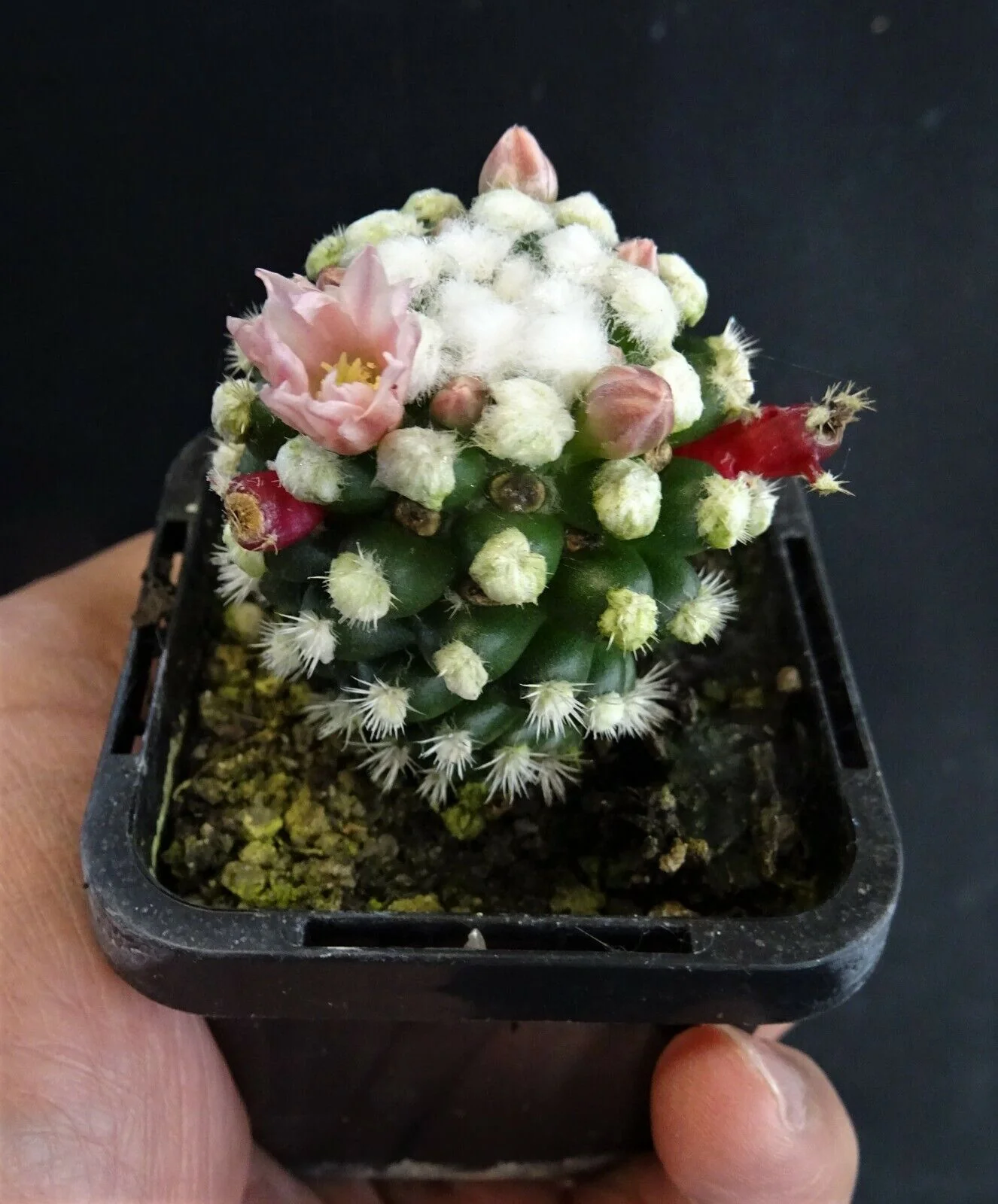
Flowering generally occurs in spring, with small, cream to pale yellow blooms sometimes tinged with pink, forming a loose ring around the stem tips. Fruits are elongated and reddish, containing small black seeds, a typical feature of many Mammillaria species.
Care Tips:
- Light: Requires bright light and benefits from several hours of direct sun each day. Provide some protection during the hottest summer afternoons.
- Water: Water moderately in spring and summer, allowing the soil to dry completely between applications. Keep almost dry during winter rest.
- Media: Grow in a gritty, mineral-based cactus mix with excellent drainage.
- Fertiliser: Apply a dilute cactus fertiliser during the active growing season, about once a month.
- Temperature: Performs best between 18–30 °C. Hardy down to about 5 °C if kept dry.
- Repotting: Repot every 2–3 years as clumps expand, removing and replanting offsets if desired.
Original: $10.00
-65%$10.00
$3.50More Images

Mammillaria elongata – Golden Star Cactus
Mammillaria elongata is a widespread cactus species native to central Mexico, particularly in Hidalgo, Guanajuato, and Querétaro. It grows on rocky slopes and cliffs within semi-arid scrub at elevations between 1,300–2,400 m, often forming dense colonies across limestone outcrops. Its natural habitat is characterised by high light levels and sharp drainage.
The plant produces cylindrical stems that are usually 1.5–3 cm in diameter and can reach 15 cm in length, though in cultivation they are often shorter. These stems branch freely from the base, creating compact clumps or mounded clusters over time. Each tubercle bears numerous short, interlacing spines, usually golden, copper, or yellowish-brown, which give the plant a distinct textured appearance.
Flowering generally occurs in spring, with small, cream to pale yellow blooms sometimes tinged with pink, forming a loose ring around the stem tips. Fruits are elongated and reddish, containing small black seeds, a typical feature of many Mammillaria species.
Care Tips:
- Light: Requires bright light and benefits from several hours of direct sun each day. Provide some protection during the hottest summer afternoons.
- Water: Water moderately in spring and summer, allowing the soil to dry completely between applications. Keep almost dry during winter rest.
- Media: Grow in a gritty, mineral-based cactus mix with excellent drainage.
- Fertiliser: Apply a dilute cactus fertiliser during the active growing season, about once a month.
- Temperature: Performs best between 18–30 °C. Hardy down to about 5 °C if kept dry.
- Repotting: Repot every 2–3 years as clumps expand, removing and replanting offsets if desired.
Product Information
Product Information
Shipping & Returns
Shipping & Returns
Description
Mammillaria elongata is a widespread cactus species native to central Mexico, particularly in Hidalgo, Guanajuato, and Querétaro. It grows on rocky slopes and cliffs within semi-arid scrub at elevations between 1,300–2,400 m, often forming dense colonies across limestone outcrops. Its natural habitat is characterised by high light levels and sharp drainage.
The plant produces cylindrical stems that are usually 1.5–3 cm in diameter and can reach 15 cm in length, though in cultivation they are often shorter. These stems branch freely from the base, creating compact clumps or mounded clusters over time. Each tubercle bears numerous short, interlacing spines, usually golden, copper, or yellowish-brown, which give the plant a distinct textured appearance.
Flowering generally occurs in spring, with small, cream to pale yellow blooms sometimes tinged with pink, forming a loose ring around the stem tips. Fruits are elongated and reddish, containing small black seeds, a typical feature of many Mammillaria species.
Care Tips:
- Light: Requires bright light and benefits from several hours of direct sun each day. Provide some protection during the hottest summer afternoons.
- Water: Water moderately in spring and summer, allowing the soil to dry completely between applications. Keep almost dry during winter rest.
- Media: Grow in a gritty, mineral-based cactus mix with excellent drainage.
- Fertiliser: Apply a dilute cactus fertiliser during the active growing season, about once a month.
- Temperature: Performs best between 18–30 °C. Hardy down to about 5 °C if kept dry.
- Repotting: Repot every 2–3 years as clumps expand, removing and replanting offsets if desired.