Mammillaria plumosa - Feather Cactus
Mammillaria plumosa, commonly known as the Feather Cactus, is native to the limestone hills of northeastern Mexico, particularly in Coahuila and Nuevo León. It grows in rocky outcrops and shallow soils at elevations between 1,200-2,000 m, where it forms low mounds adapted to the semi-arid climate.
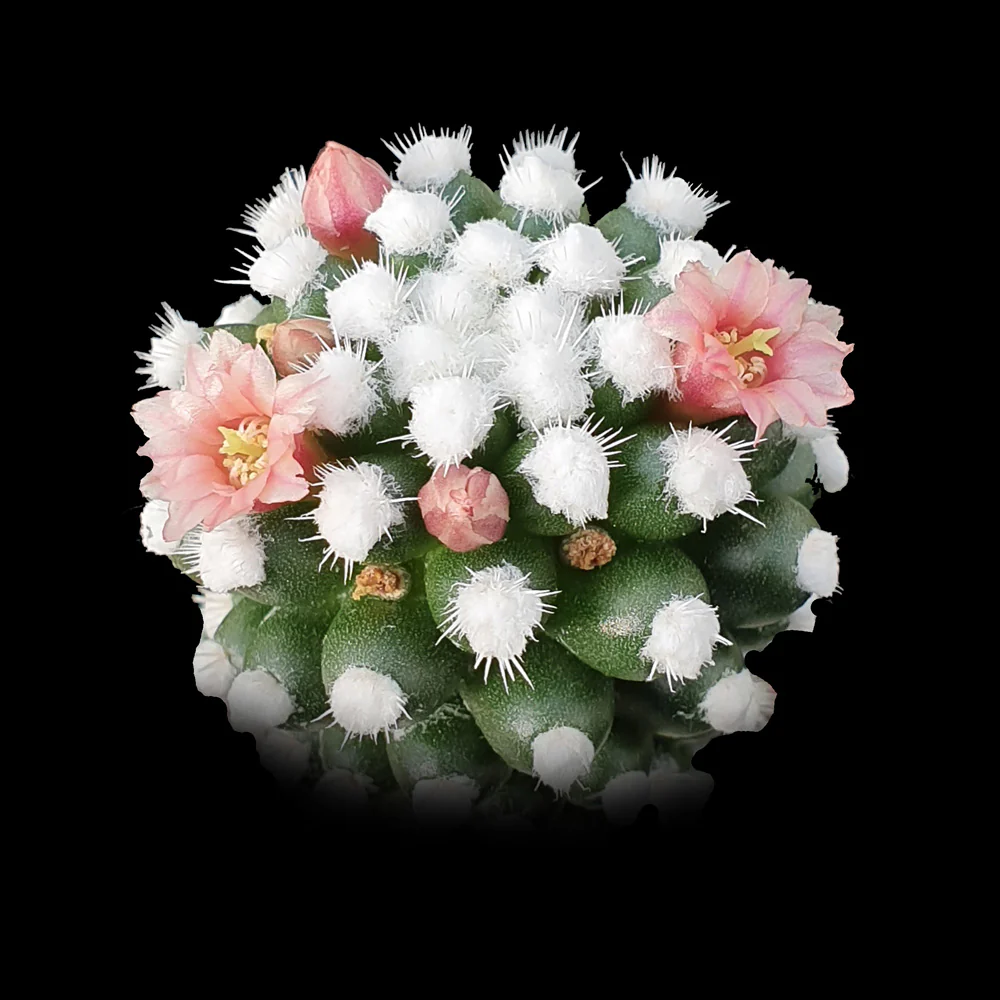
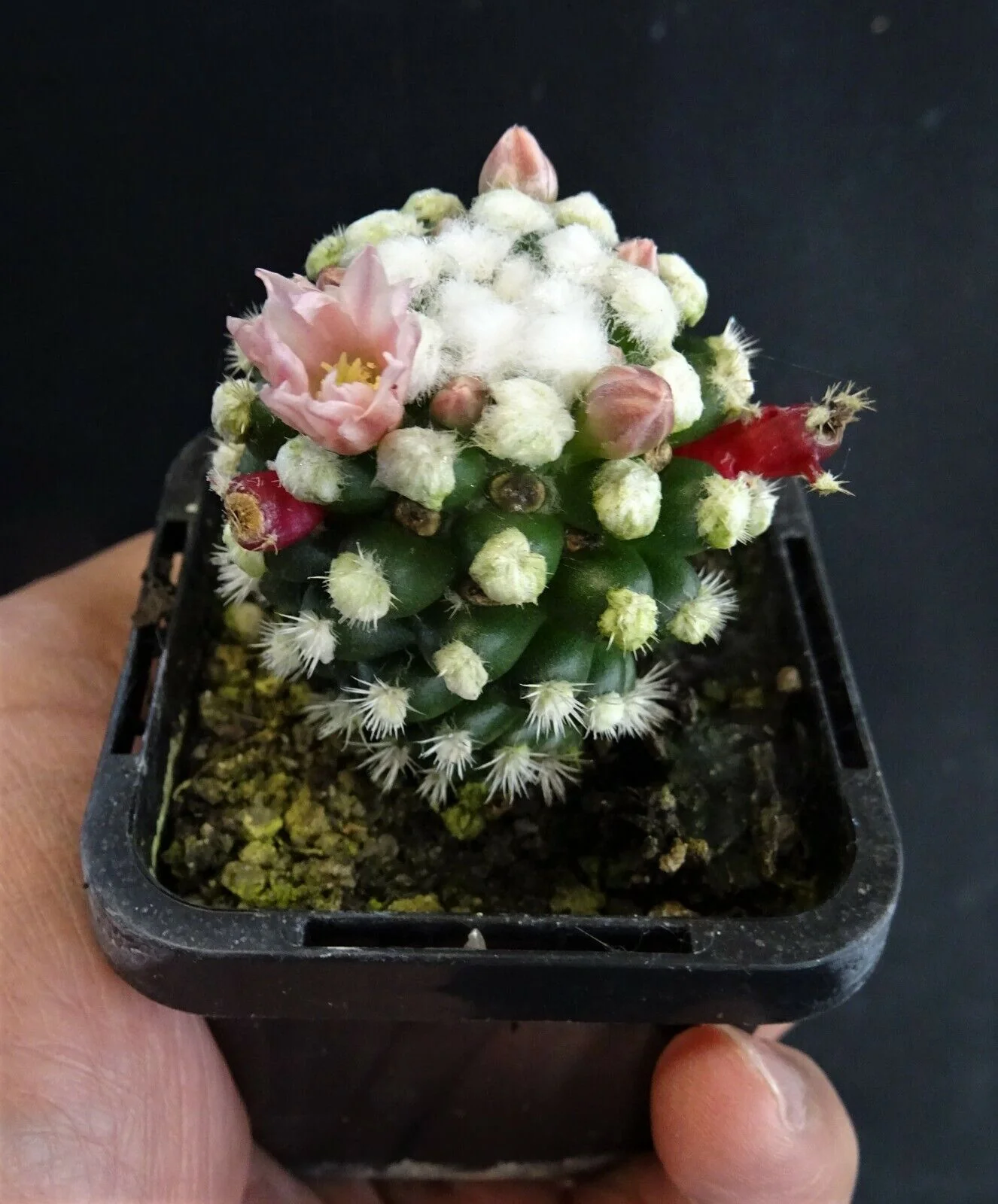
This species is easily identified by its dense covering of fine, feathery white spines that conceal the underlying globose stems. The spines are soft to the touch, unlike many other Mammillarias, and serve both as protection from the sun and as a moisture trap. Mature clusters can spread into rounded cushions up to 40 cm across in cultivation.
Flowering usually occurs in late summer to autumn, with small white to pale yellow blooms appearing in a ring close to the stem apex. These flowers are followed by elongated pinkish-red fruits containing numerous black seeds, providing the main means of reproduction in its natural habitat.
Care Tips:
- Light: Thrives in bright conditions with several hours of direct morning or late afternoon sun, but avoid harsh midday exposure.
- Water: Water modestly during active growth, allowing the soil to dry completely between applications. Keep dry in winter.
- Media: Use a well-draining, mineral-based cactus mix with high proportions of grit or pumice.
- Fertiliser: Apply a weak, low-nitrogen cactus fertiliser during the growing season, about once a month.
- Temperature: Best kept between 18-30 °C. Tolerates light frost if dry, but prolonged cold and moisture can damage the plant.
- Repotting: Repot every 2-3 years as the cluster expands, handling carefully to avoid damaging the soft spine covering.
More Images


Mammillaria plumosa - Feather Cactus
Mammillaria plumosa, commonly known as the Feather Cactus, is native to the limestone hills of northeastern Mexico, particularly in Coahuila and Nuevo León. It grows in rocky outcrops and shallow soils at elevations between 1,200-2,000 m, where it forms low mounds adapted to the semi-arid climate.
This species is easily identified by its dense covering of fine, feathery white spines that conceal the underlying globose stems. The spines are soft to the touch, unlike many other Mammillarias, and serve both as protection from the sun and as a moisture trap. Mature clusters can spread into rounded cushions up to 40 cm across in cultivation.
Flowering usually occurs in late summer to autumn, with small white to pale yellow blooms appearing in a ring close to the stem apex. These flowers are followed by elongated pinkish-red fruits containing numerous black seeds, providing the main means of reproduction in its natural habitat.
Care Tips:
- Light: Thrives in bright conditions with several hours of direct morning or late afternoon sun, but avoid harsh midday exposure.
- Water: Water modestly during active growth, allowing the soil to dry completely between applications. Keep dry in winter.
- Media: Use a well-draining, mineral-based cactus mix with high proportions of grit or pumice.
- Fertiliser: Apply a weak, low-nitrogen cactus fertiliser during the growing season, about once a month.
- Temperature: Best kept between 18-30 °C. Tolerates light frost if dry, but prolonged cold and moisture can damage the plant.
- Repotting: Repot every 2-3 years as the cluster expands, handling carefully to avoid damaging the soft spine covering.
Product Information
Product Information
Shipping & Returns
Shipping & Returns
Description
Mammillaria plumosa, commonly known as the Feather Cactus, is native to the limestone hills of northeastern Mexico, particularly in Coahuila and Nuevo León. It grows in rocky outcrops and shallow soils at elevations between 1,200-2,000 m, where it forms low mounds adapted to the semi-arid climate.
This species is easily identified by its dense covering of fine, feathery white spines that conceal the underlying globose stems. The spines are soft to the touch, unlike many other Mammillarias, and serve both as protection from the sun and as a moisture trap. Mature clusters can spread into rounded cushions up to 40 cm across in cultivation.
Flowering usually occurs in late summer to autumn, with small white to pale yellow blooms appearing in a ring close to the stem apex. These flowers are followed by elongated pinkish-red fruits containing numerous black seeds, providing the main means of reproduction in its natural habitat.
Care Tips:
- Light: Thrives in bright conditions with several hours of direct morning or late afternoon sun, but avoid harsh midday exposure.
- Water: Water modestly during active growth, allowing the soil to dry completely between applications. Keep dry in winter.
- Media: Use a well-draining, mineral-based cactus mix with high proportions of grit or pumice.
- Fertiliser: Apply a weak, low-nitrogen cactus fertiliser during the growing season, about once a month.
- Temperature: Best kept between 18-30 °C. Tolerates light frost if dry, but prolonged cold and moisture can damage the plant.
- Repotting: Repot every 2-3 years as the cluster expands, handling carefully to avoid damaging the soft spine covering.