Parodia scopa albispina var. succinea – Silver Ball Cactus
Parodia scopa albispina var. succinea is a regional variety of Parodia scopa, native to the grasslands and rocky slopes of southern Brazil and Uruguay. It grows in well-drained soils with high sun exposure and seasonal rainfall, tolerating both hot summers and cooler winters in its natural range.
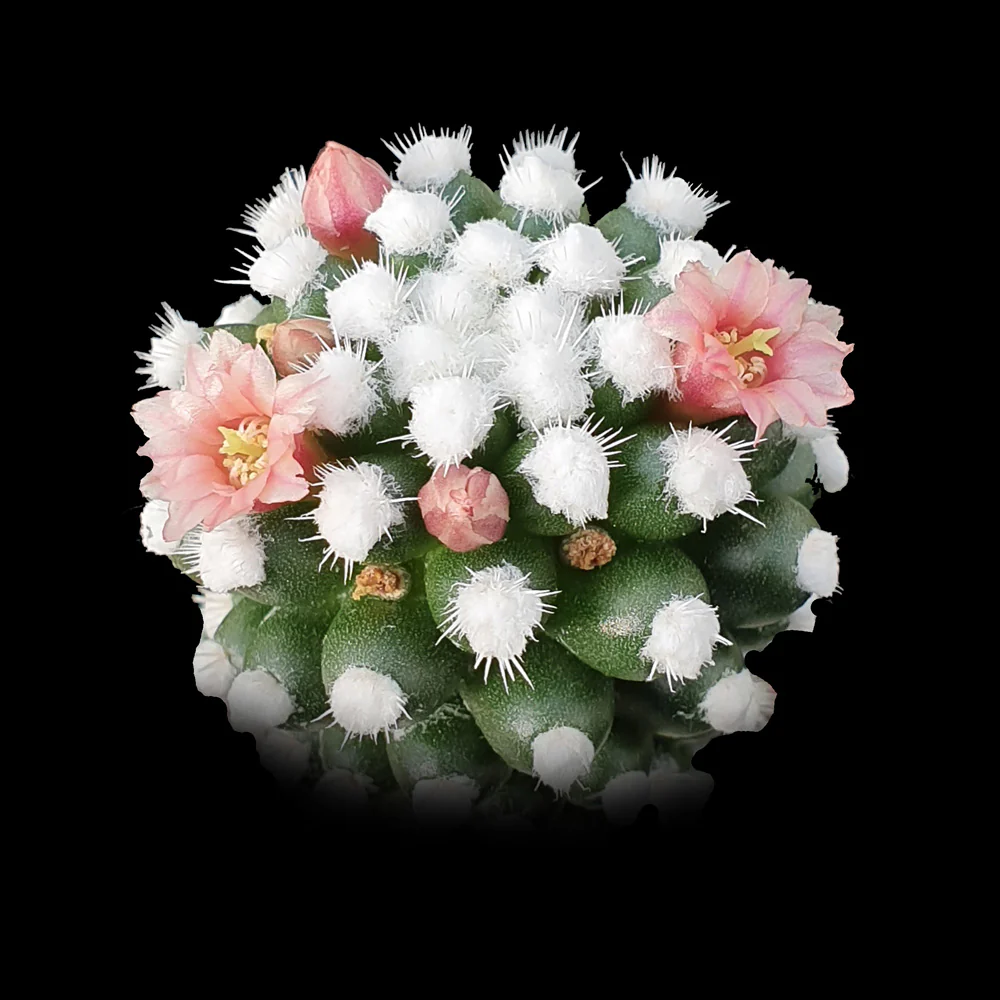
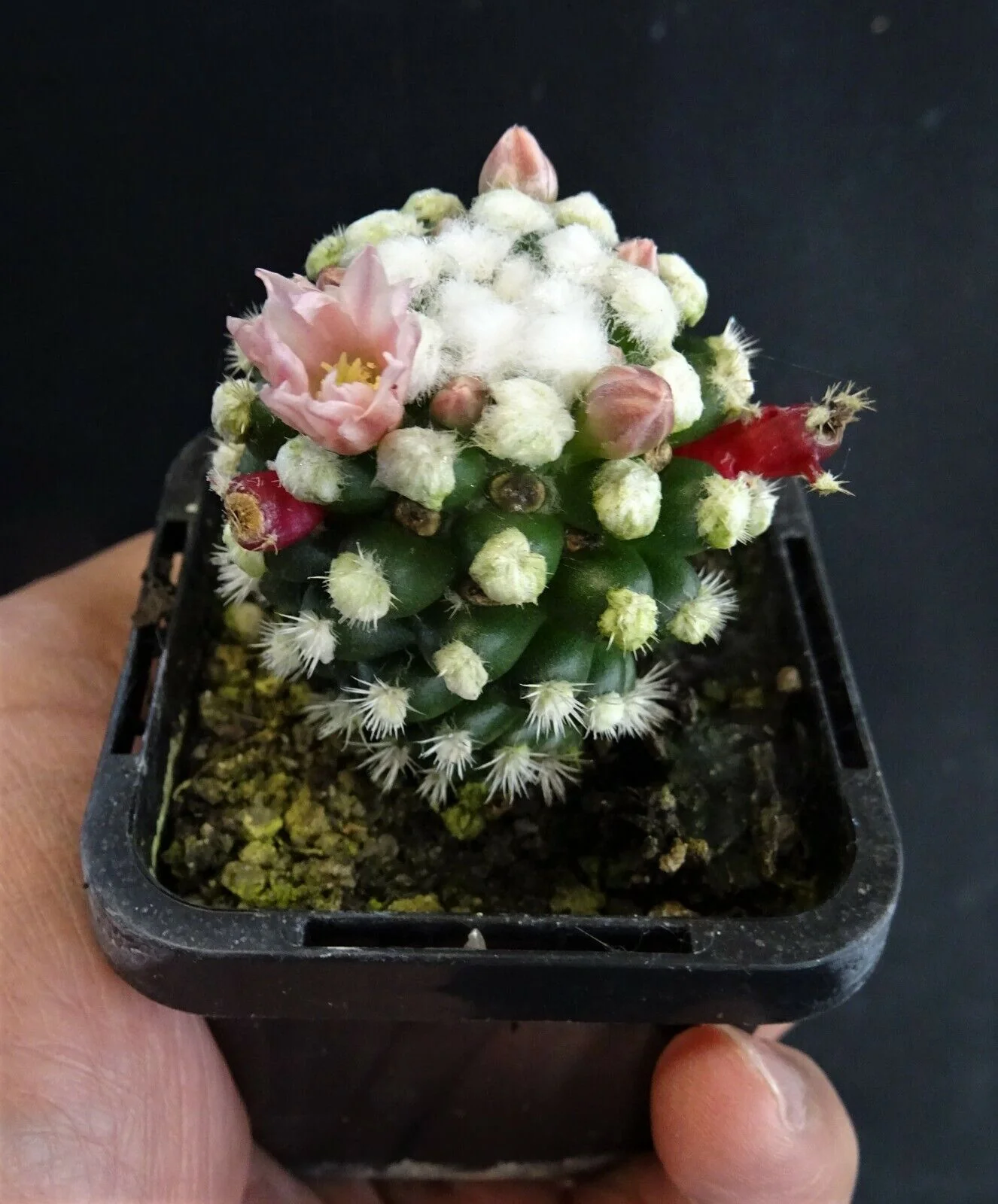
The plant forms a small, spherical to slightly elongated stem covered in neat, vertical ribs lined with white radial spines and yellowish central spines. Over time, it can produce offsets at the base, forming small clusters. The stem surface is dark green, and the spination provides some protection from intense sunlight.
Flowering typically occurs in summer, producing bright golden-yellow blooms that emerge from the crown. These flowers are followed by small, woolly seed pods. In cultivation, it is valued for its compact form, dense spines, and reliable flowering when given sufficient light.
Care Tips:
- Light: Full sun to bright light for best growth and flowering.
- Water: Water thoroughly when the soil is dry during the growing season; keep almost dry in winter.
- Humidity: Prefers low humidity.
- Media: Use a very free-draining cactus mix with coarse sand or grit.
- Fertiliser: Feed monthly in the growing season with a diluted low-nitrogen cactus fertiliser.
- Temperature: Tolerates brief drops to around 0 °C if kept dry; ideal range is 15–27 °C.
- Repotting: Repot every 2–3 years in spring, refreshing the mix and inspecting the roots.
Original: $14.00
-65%$14.00
$4.90More Images


Parodia scopa albispina var. succinea – Silver Ball Cactus
Parodia scopa albispina var. succinea is a regional variety of Parodia scopa, native to the grasslands and rocky slopes of southern Brazil and Uruguay. It grows in well-drained soils with high sun exposure and seasonal rainfall, tolerating both hot summers and cooler winters in its natural range.
The plant forms a small, spherical to slightly elongated stem covered in neat, vertical ribs lined with white radial spines and yellowish central spines. Over time, it can produce offsets at the base, forming small clusters. The stem surface is dark green, and the spination provides some protection from intense sunlight.
Flowering typically occurs in summer, producing bright golden-yellow blooms that emerge from the crown. These flowers are followed by small, woolly seed pods. In cultivation, it is valued for its compact form, dense spines, and reliable flowering when given sufficient light.
Care Tips:
- Light: Full sun to bright light for best growth and flowering.
- Water: Water thoroughly when the soil is dry during the growing season; keep almost dry in winter.
- Humidity: Prefers low humidity.
- Media: Use a very free-draining cactus mix with coarse sand or grit.
- Fertiliser: Feed monthly in the growing season with a diluted low-nitrogen cactus fertiliser.
- Temperature: Tolerates brief drops to around 0 °C if kept dry; ideal range is 15–27 °C.
- Repotting: Repot every 2–3 years in spring, refreshing the mix and inspecting the roots.
Product Information
Product Information
Shipping & Returns
Shipping & Returns
Description
Parodia scopa albispina var. succinea is a regional variety of Parodia scopa, native to the grasslands and rocky slopes of southern Brazil and Uruguay. It grows in well-drained soils with high sun exposure and seasonal rainfall, tolerating both hot summers and cooler winters in its natural range.
The plant forms a small, spherical to slightly elongated stem covered in neat, vertical ribs lined with white radial spines and yellowish central spines. Over time, it can produce offsets at the base, forming small clusters. The stem surface is dark green, and the spination provides some protection from intense sunlight.
Flowering typically occurs in summer, producing bright golden-yellow blooms that emerge from the crown. These flowers are followed by small, woolly seed pods. In cultivation, it is valued for its compact form, dense spines, and reliable flowering when given sufficient light.
Care Tips:
- Light: Full sun to bright light for best growth and flowering.
- Water: Water thoroughly when the soil is dry during the growing season; keep almost dry in winter.
- Humidity: Prefers low humidity.
- Media: Use a very free-draining cactus mix with coarse sand or grit.
- Fertiliser: Feed monthly in the growing season with a diluted low-nitrogen cactus fertiliser.
- Temperature: Tolerates brief drops to around 0 °C if kept dry; ideal range is 15–27 °C.
- Repotting: Repot every 2–3 years in spring, refreshing the mix and inspecting the roots.