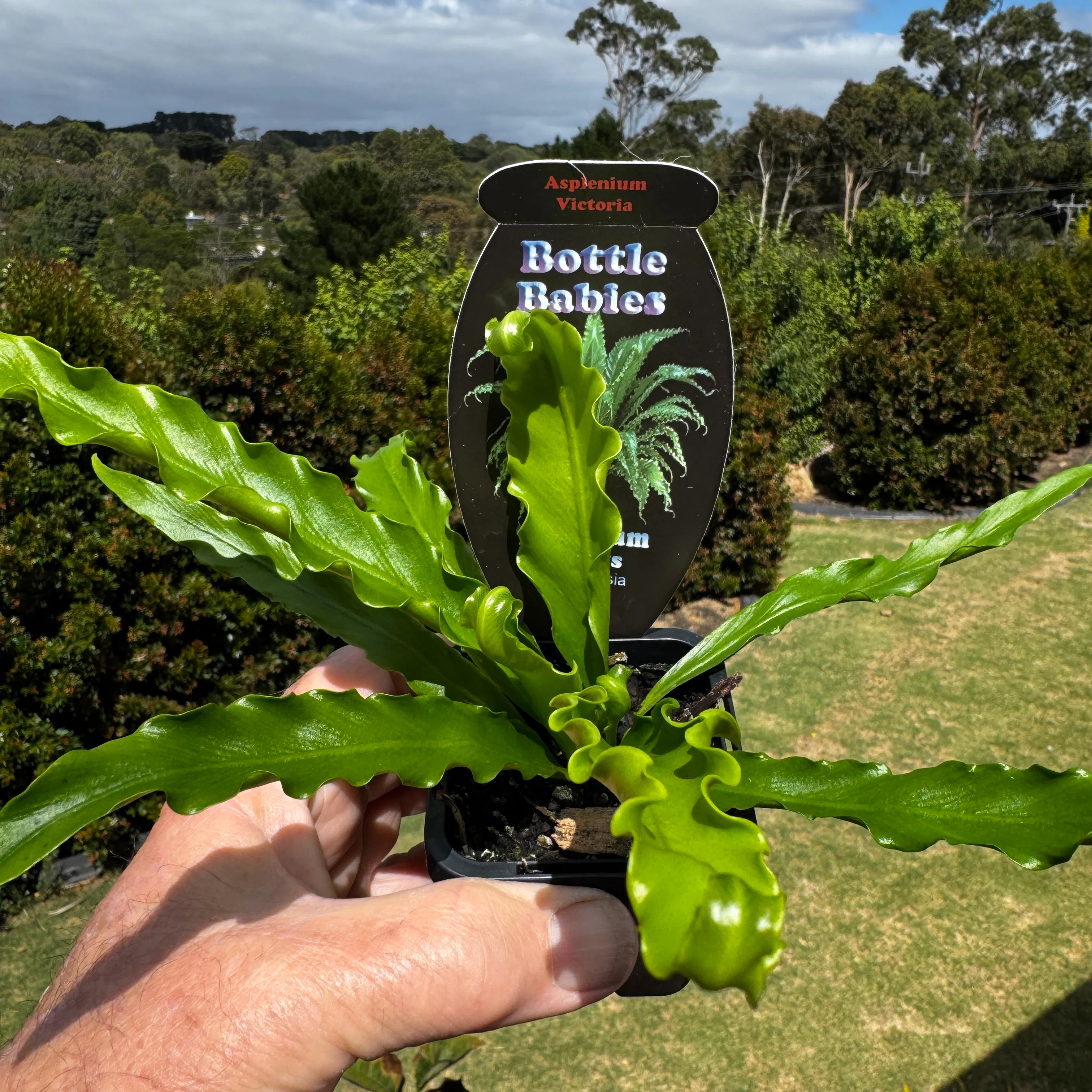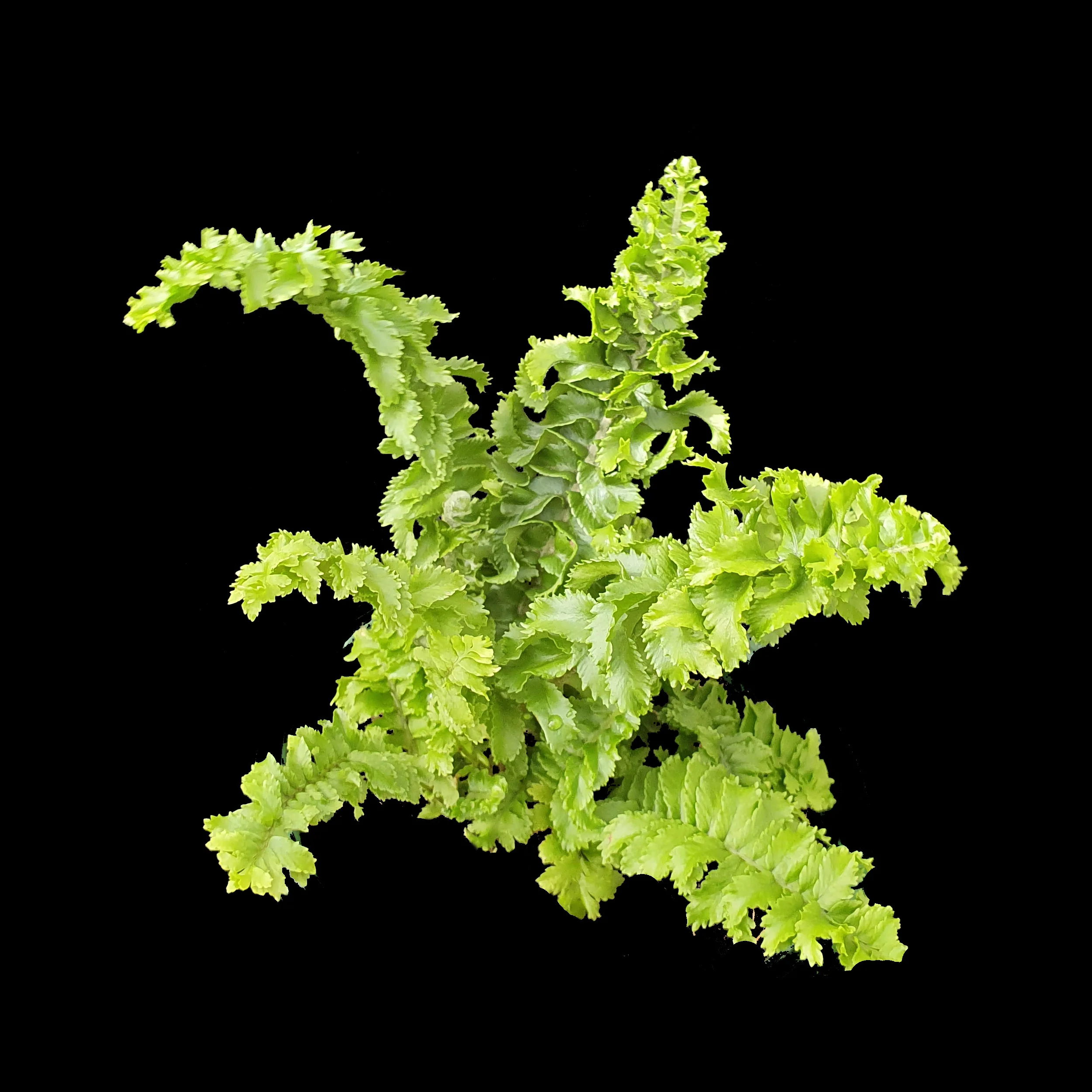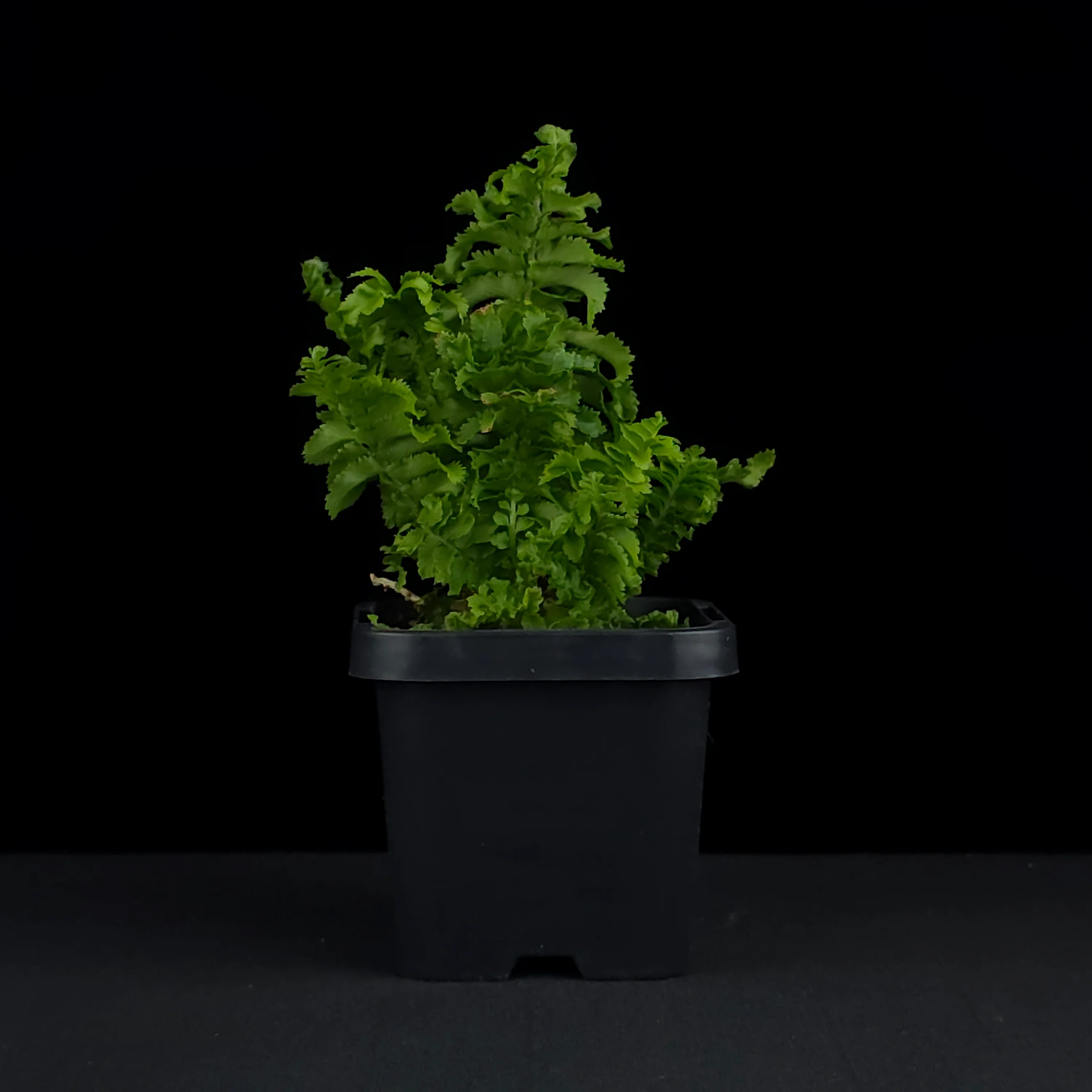
Platycerium bifurcatum 'Netherland' - Staghorn Fern
Platycerium bifurcatum 'Netherland' is an epiphytic fern with origins in Australia, New Guinea, and parts of Indonesia, where the species grows attached to tree trunks and branches in warm, humid forests. It collects water and organic debris in its basal fronds, enabling it to thrive high in the canopy without soil contact.
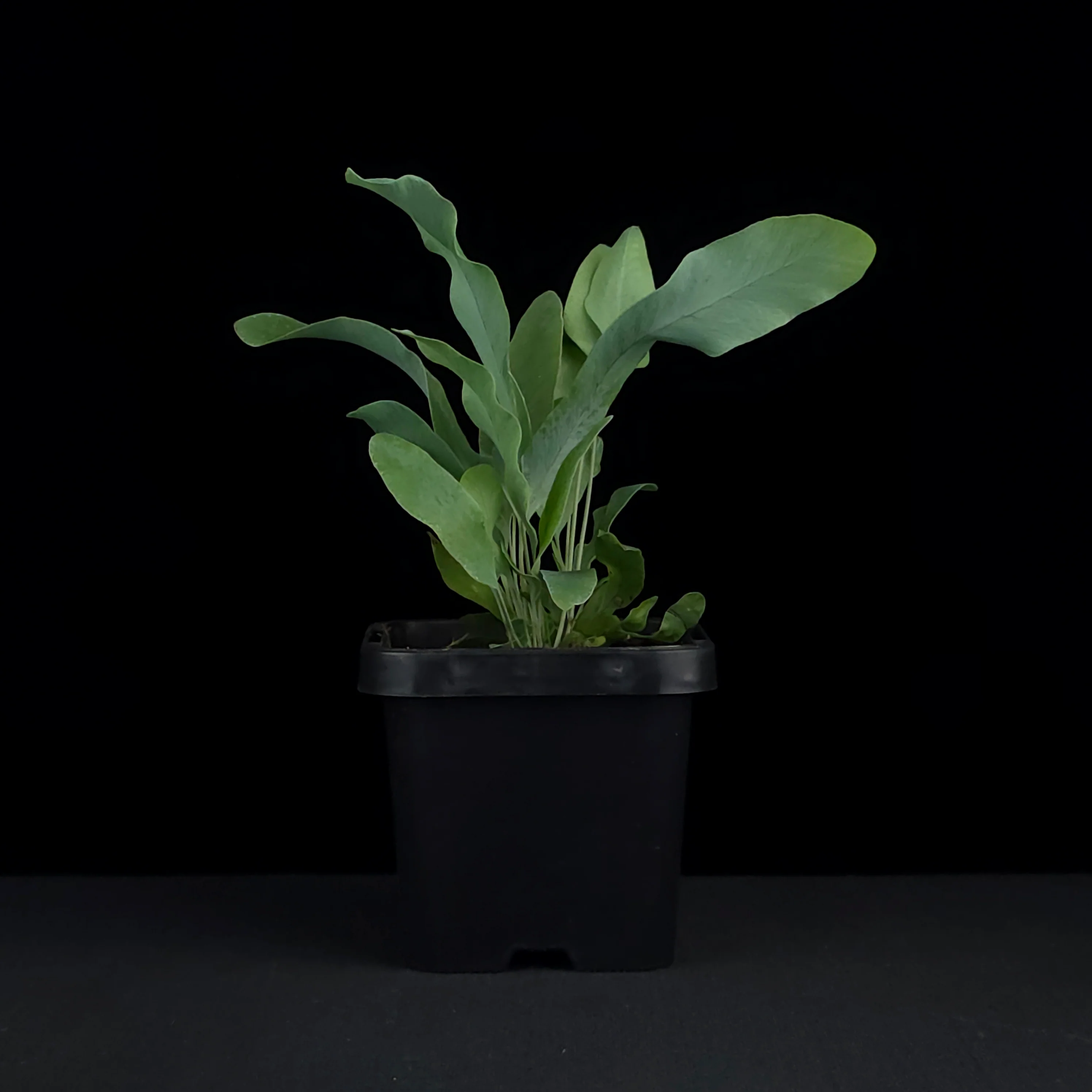
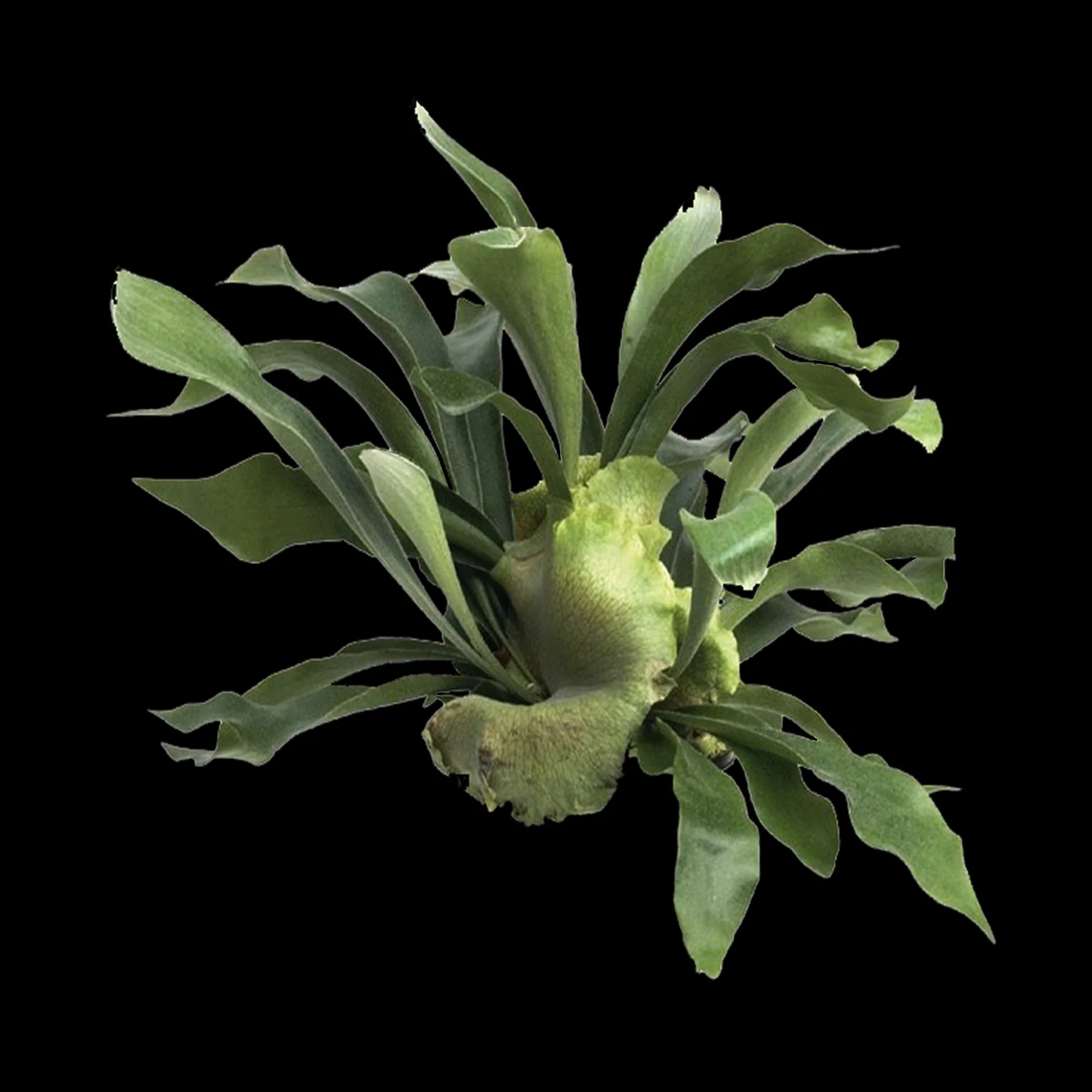
It develops rounded, overlapping basal fronds that transition from green to papery brown with age, creating a shield-like base. Above these, the fertile fronds are long, grey-green, and forked into narrow lobes, producing an antler-like silhouette. 'Netherland' is valued for its dense, symmetrical growth, making it particularly suitable for decorative mounting.
Reproduction occurs through spores released from the undersides of fertile fronds, though in cultivation it is often propagated by dividing offsets. With the right support and conditions, it can form large, impressive specimens that enhance vertical spaces indoors or in sheltered outdoor settings.
Care Tips:
- Light: Bright, indirect light; tolerates soft morning or late afternoon sun.
- Water: Water thoroughly when the mounting medium begins to dry; avoid keeping constantly wet.
- Humidity: Prefers moderate to high humidity; mist during extended dry periods.
- Mounting: Best grown mounted on wood, cork, or tree fern, allowing room for basal fronds to expand.
- Fertiliser: Feed monthly during active growth with a diluted balanced fertiliser.
- Temperature: Keep between 15-27 °C; protect from frost.
- Repotting: Remount only when size or medium breakdown requires it.
Original: $11.50
-65%$11.50
$4.02More Images


Platycerium bifurcatum 'Netherland' - Staghorn Fern
Platycerium bifurcatum 'Netherland' is an epiphytic fern with origins in Australia, New Guinea, and parts of Indonesia, where the species grows attached to tree trunks and branches in warm, humid forests. It collects water and organic debris in its basal fronds, enabling it to thrive high in the canopy without soil contact.
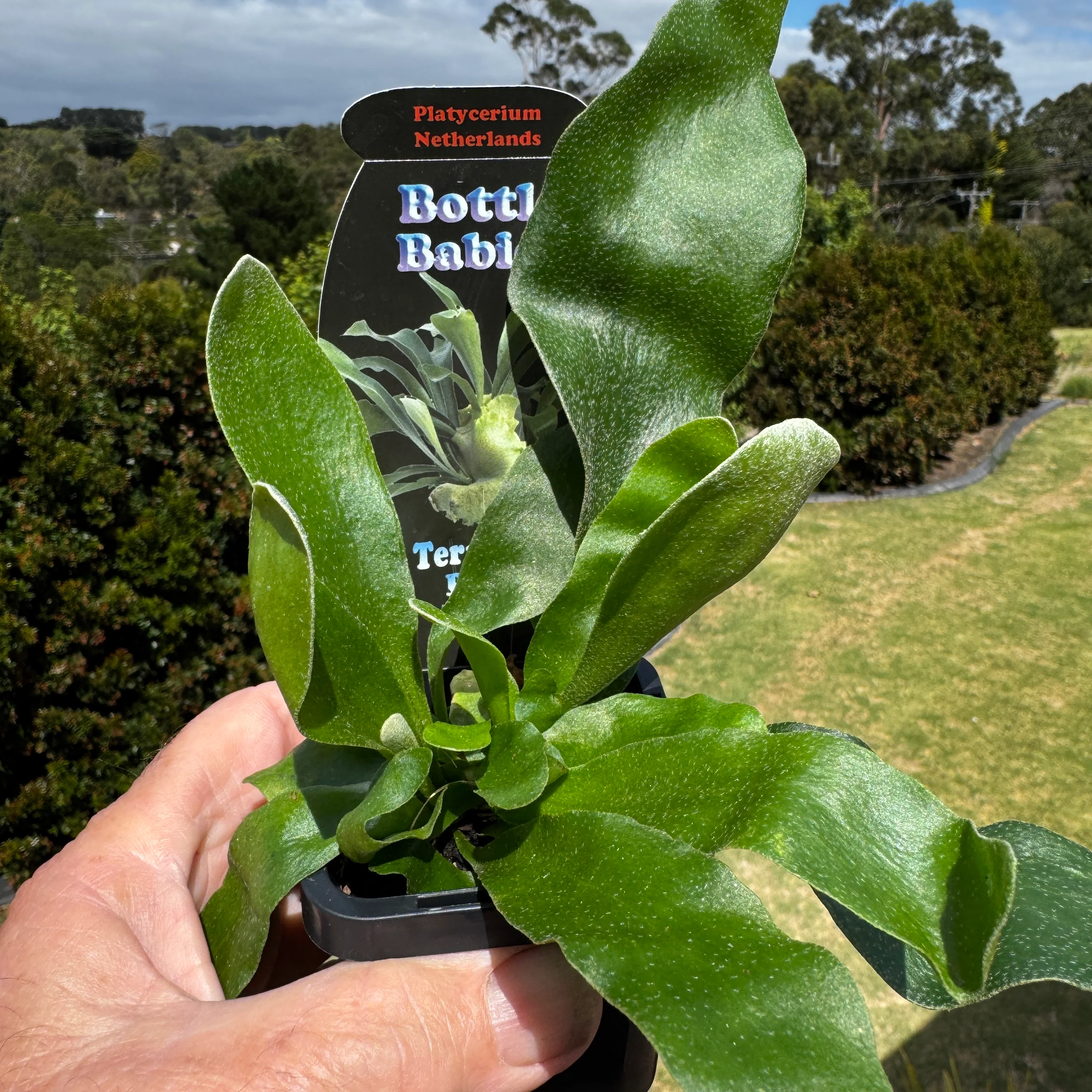
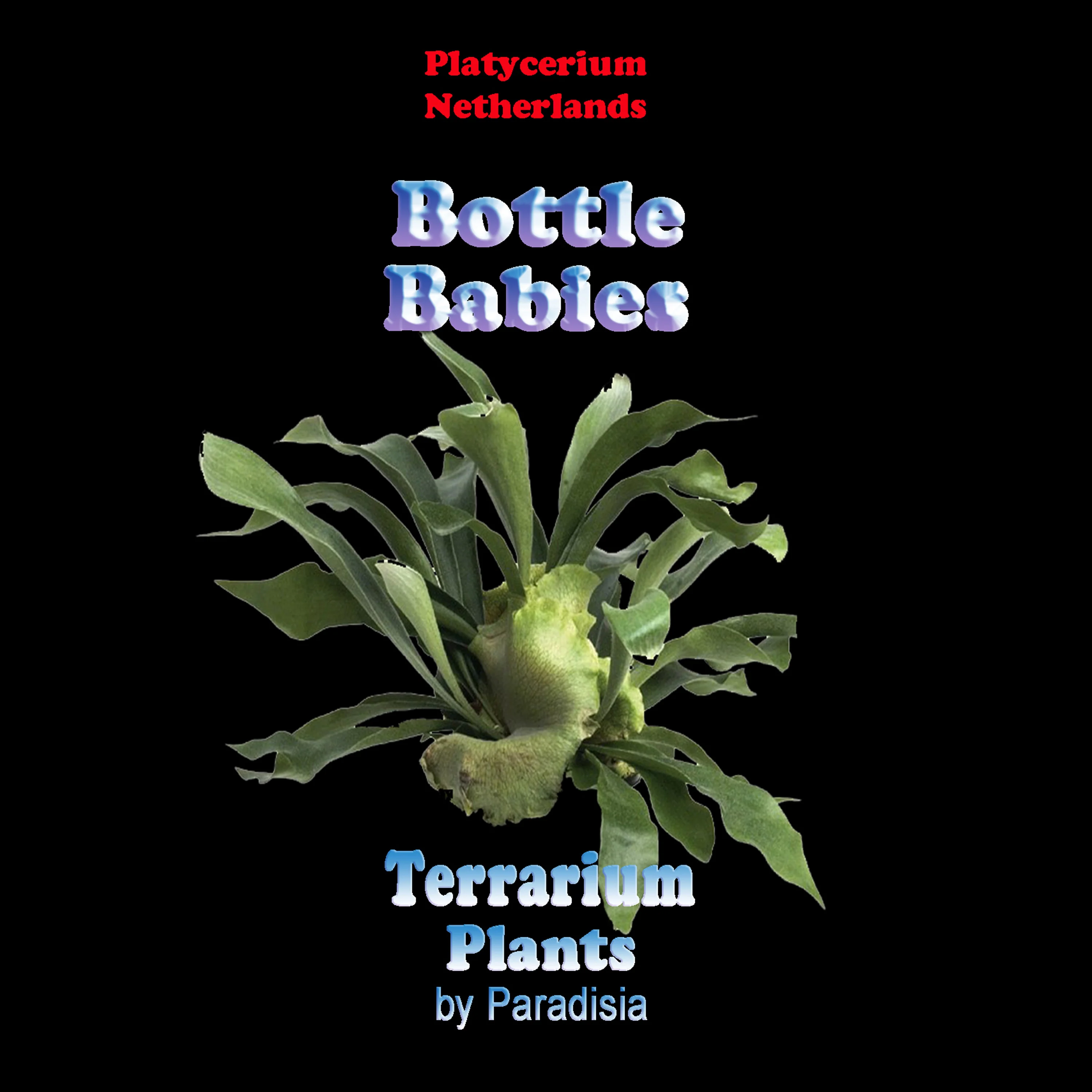
It develops rounded, overlapping basal fronds that transition from green to papery brown with age, creating a shield-like base. Above these, the fertile fronds are long, grey-green, and forked into narrow lobes, producing an antler-like silhouette. 'Netherland' is valued for its dense, symmetrical growth, making it particularly suitable for decorative mounting.
Reproduction occurs through spores released from the undersides of fertile fronds, though in cultivation it is often propagated by dividing offsets. With the right support and conditions, it can form large, impressive specimens that enhance vertical spaces indoors or in sheltered outdoor settings.
Care Tips:
- Light: Bright, indirect light; tolerates soft morning or late afternoon sun.
- Water: Water thoroughly when the mounting medium begins to dry; avoid keeping constantly wet.
- Humidity: Prefers moderate to high humidity; mist during extended dry periods.
- Mounting: Best grown mounted on wood, cork, or tree fern, allowing room for basal fronds to expand.
- Fertiliser: Feed monthly during active growth with a diluted balanced fertiliser.
- Temperature: Keep between 15-27 °C; protect from frost.
- Repotting: Remount only when size or medium breakdown requires it.
Product Information
Product Information
Shipping & Returns
Shipping & Returns
Description
Platycerium bifurcatum 'Netherland' is an epiphytic fern with origins in Australia, New Guinea, and parts of Indonesia, where the species grows attached to tree trunks and branches in warm, humid forests. It collects water and organic debris in its basal fronds, enabling it to thrive high in the canopy without soil contact.
It develops rounded, overlapping basal fronds that transition from green to papery brown with age, creating a shield-like base. Above these, the fertile fronds are long, grey-green, and forked into narrow lobes, producing an antler-like silhouette. 'Netherland' is valued for its dense, symmetrical growth, making it particularly suitable for decorative mounting.
Reproduction occurs through spores released from the undersides of fertile fronds, though in cultivation it is often propagated by dividing offsets. With the right support and conditions, it can form large, impressive specimens that enhance vertical spaces indoors or in sheltered outdoor settings.
Care Tips:
- Light: Bright, indirect light; tolerates soft morning or late afternoon sun.
- Water: Water thoroughly when the mounting medium begins to dry; avoid keeping constantly wet.
- Humidity: Prefers moderate to high humidity; mist during extended dry periods.
- Mounting: Best grown mounted on wood, cork, or tree fern, allowing room for basal fronds to expand.
- Fertiliser: Feed monthly during active growth with a diluted balanced fertiliser.
- Temperature: Keep between 15-27 °C; protect from frost.
- Repotting: Remount only when size or medium breakdown requires it.