Rhipsalis pilocarpa - Mistletoe Cactus
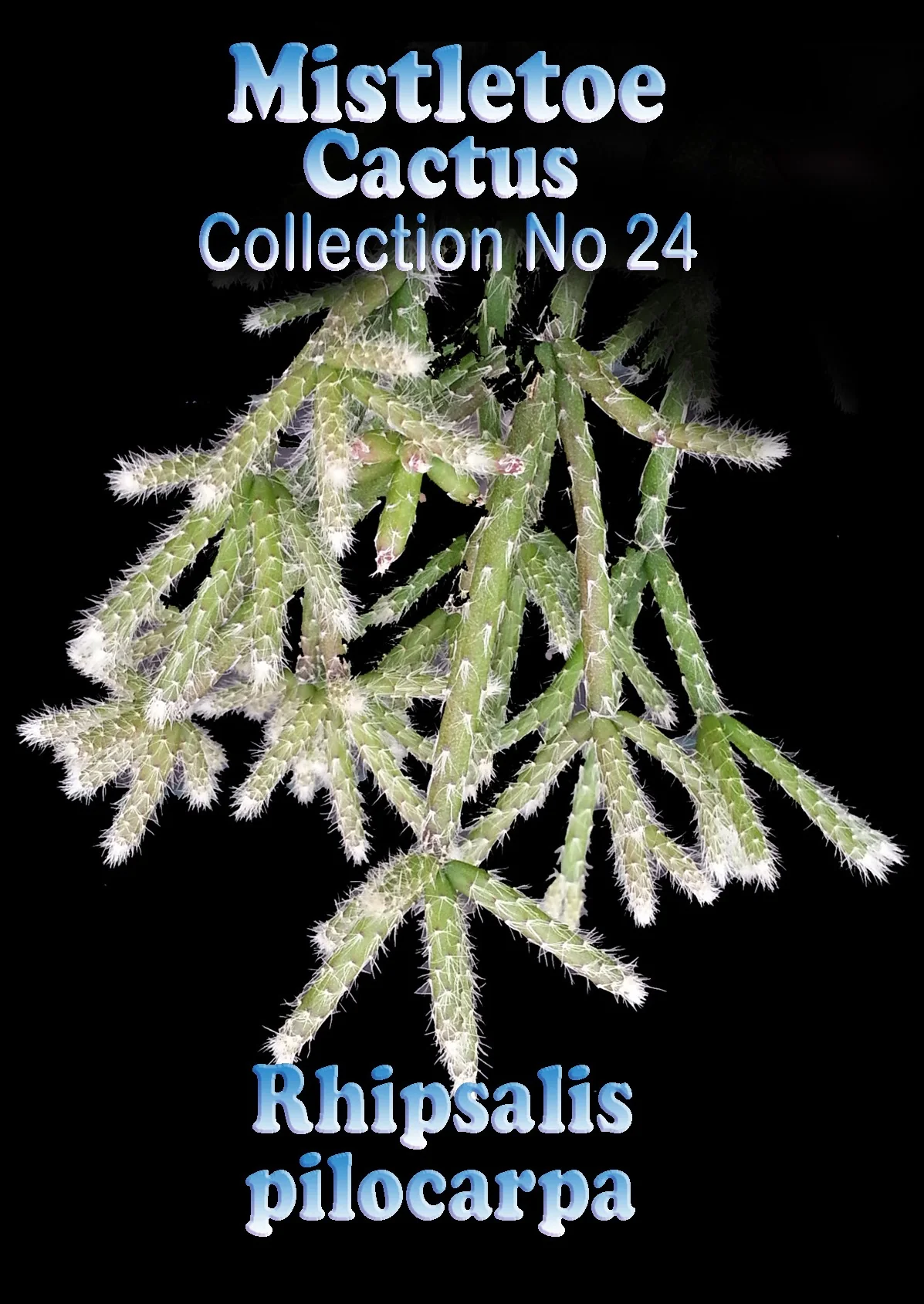
Rhipsalis pilocarpa, commonly called the Mistletoe Cactus, is a pendant, branching cactus native to southeastern Brazil, where it inhabits the humid, shaded environments of the Atlantic Forest. It is often found attached to tree branches or occasionally established in mossy rock crevices, thriving in areas with consistent moisture and diffused light.
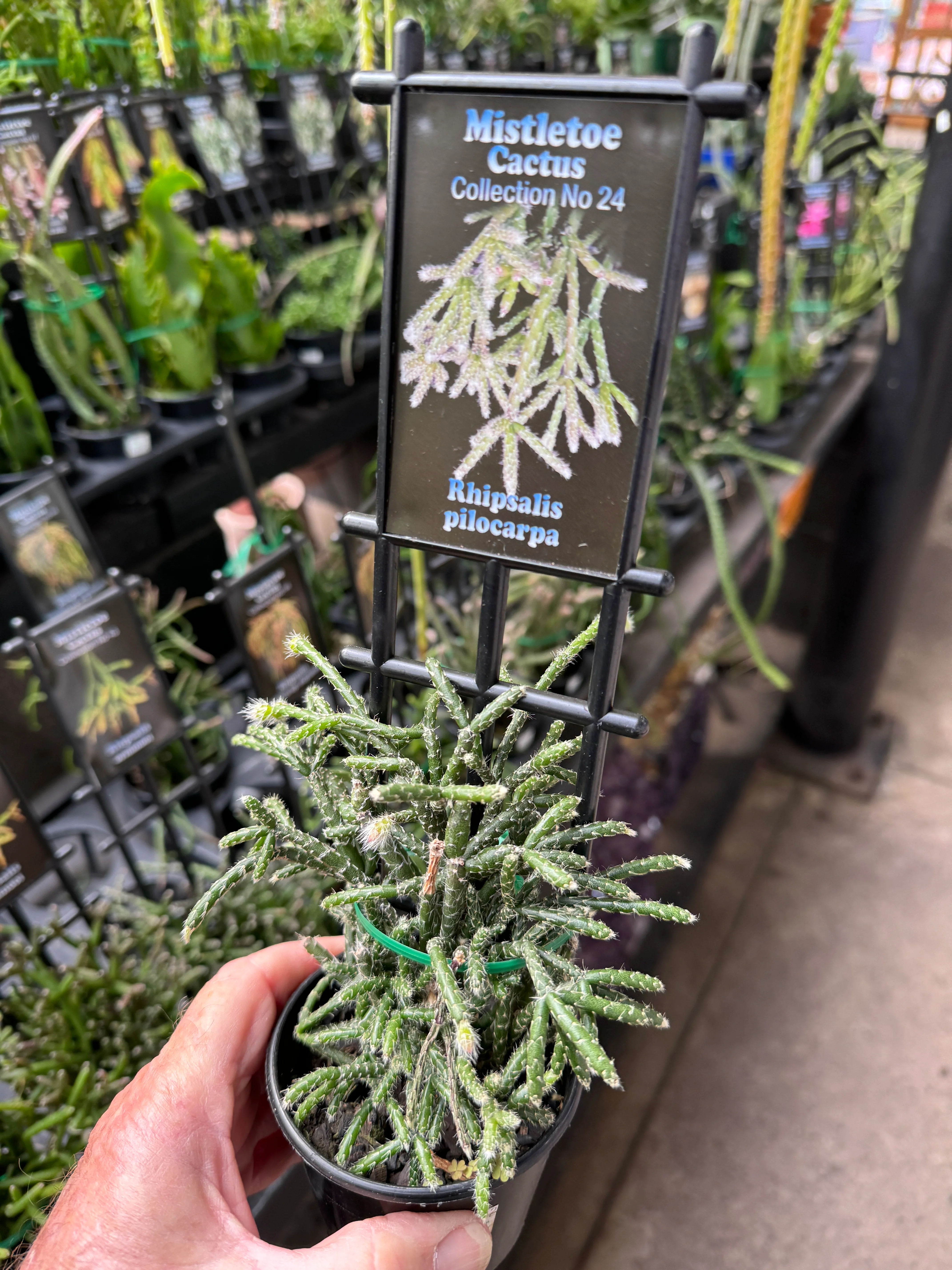
The stems are cylindrical, slender, and densely covered in fine, hair-like bristles that give the plant a slightly fuzzy appearance. These bristles emerge from small areoles spaced along the stem and can take on a golden to whitish tone. Stems branch irregularly, forming cascading growth that can extend over 1 metre when mature.
Flowering typically occurs in the cooler months, producing fragrant, star-shaped white flowers along the stems. These are followed by small, spherical, red berries that persist for some time, contrasting with the green stems and making the plant visually distinctive in fruit.
Care Tips:
- Light: Requires bright, indirect light; avoid prolonged direct sunlight which can scorch stems.
- Water: Keep the potting mix evenly moist during growth; allow the top layer to dry slightly before rewatering and reduce watering in winter.
- Humidity: Appreciates moderate to high humidity; mist occasionally if grown indoors in dry air.
- Media: Use a free-draining mix with fine orchid bark, peat or coir, and perlite.
- Temperature: Thrives between 15–27°C; protect from frost.
- Fertiliser: Apply a diluted, balanced fertiliser every 4–6 weeks during the active growth season.
- Repotting: Repot every 2–3 years or when root-bound, ideally in spring.
More Images
Rhipsalis pilocarpa - Mistletoe Cactus
Rhipsalis pilocarpa, commonly called the Mistletoe Cactus, is a pendant, branching cactus native to southeastern Brazil, where it inhabits the humid, shaded environments of the Atlantic Forest. It is often found attached to tree branches or occasionally established in mossy rock crevices, thriving in areas with consistent moisture and diffused light.
The stems are cylindrical, slender, and densely covered in fine, hair-like bristles that give the plant a slightly fuzzy appearance. These bristles emerge from small areoles spaced along the stem and can take on a golden to whitish tone. Stems branch irregularly, forming cascading growth that can extend over 1 metre when mature.
Flowering typically occurs in the cooler months, producing fragrant, star-shaped white flowers along the stems. These are followed by small, spherical, red berries that persist for some time, contrasting with the green stems and making the plant visually distinctive in fruit.
Care Tips:
- Light: Requires bright, indirect light; avoid prolonged direct sunlight which can scorch stems.
- Water: Keep the potting mix evenly moist during growth; allow the top layer to dry slightly before rewatering and reduce watering in winter.
- Humidity: Appreciates moderate to high humidity; mist occasionally if grown indoors in dry air.
- Media: Use a free-draining mix with fine orchid bark, peat or coir, and perlite.
- Temperature: Thrives between 15–27°C; protect from frost.
- Fertiliser: Apply a diluted, balanced fertiliser every 4–6 weeks during the active growth season.
- Repotting: Repot every 2–3 years or when root-bound, ideally in spring.
Product Information
Product Information
Shipping & Returns
Shipping & Returns
Description
Rhipsalis pilocarpa, commonly called the Mistletoe Cactus, is a pendant, branching cactus native to southeastern Brazil, where it inhabits the humid, shaded environments of the Atlantic Forest. It is often found attached to tree branches or occasionally established in mossy rock crevices, thriving in areas with consistent moisture and diffused light.
The stems are cylindrical, slender, and densely covered in fine, hair-like bristles that give the plant a slightly fuzzy appearance. These bristles emerge from small areoles spaced along the stem and can take on a golden to whitish tone. Stems branch irregularly, forming cascading growth that can extend over 1 metre when mature.
Flowering typically occurs in the cooler months, producing fragrant, star-shaped white flowers along the stems. These are followed by small, spherical, red berries that persist for some time, contrasting with the green stems and making the plant visually distinctive in fruit.
Care Tips:
- Light: Requires bright, indirect light; avoid prolonged direct sunlight which can scorch stems.
- Water: Keep the potting mix evenly moist during growth; allow the top layer to dry slightly before rewatering and reduce watering in winter.
- Humidity: Appreciates moderate to high humidity; mist occasionally if grown indoors in dry air.
- Media: Use a free-draining mix with fine orchid bark, peat or coir, and perlite.
- Temperature: Thrives between 15–27°C; protect from frost.
- Fertiliser: Apply a diluted, balanced fertiliser every 4–6 weeks during the active growth season.
- Repotting: Repot every 2–3 years or when root-bound, ideally in spring.