Stetsonia coryne – The Toothpick Cactus
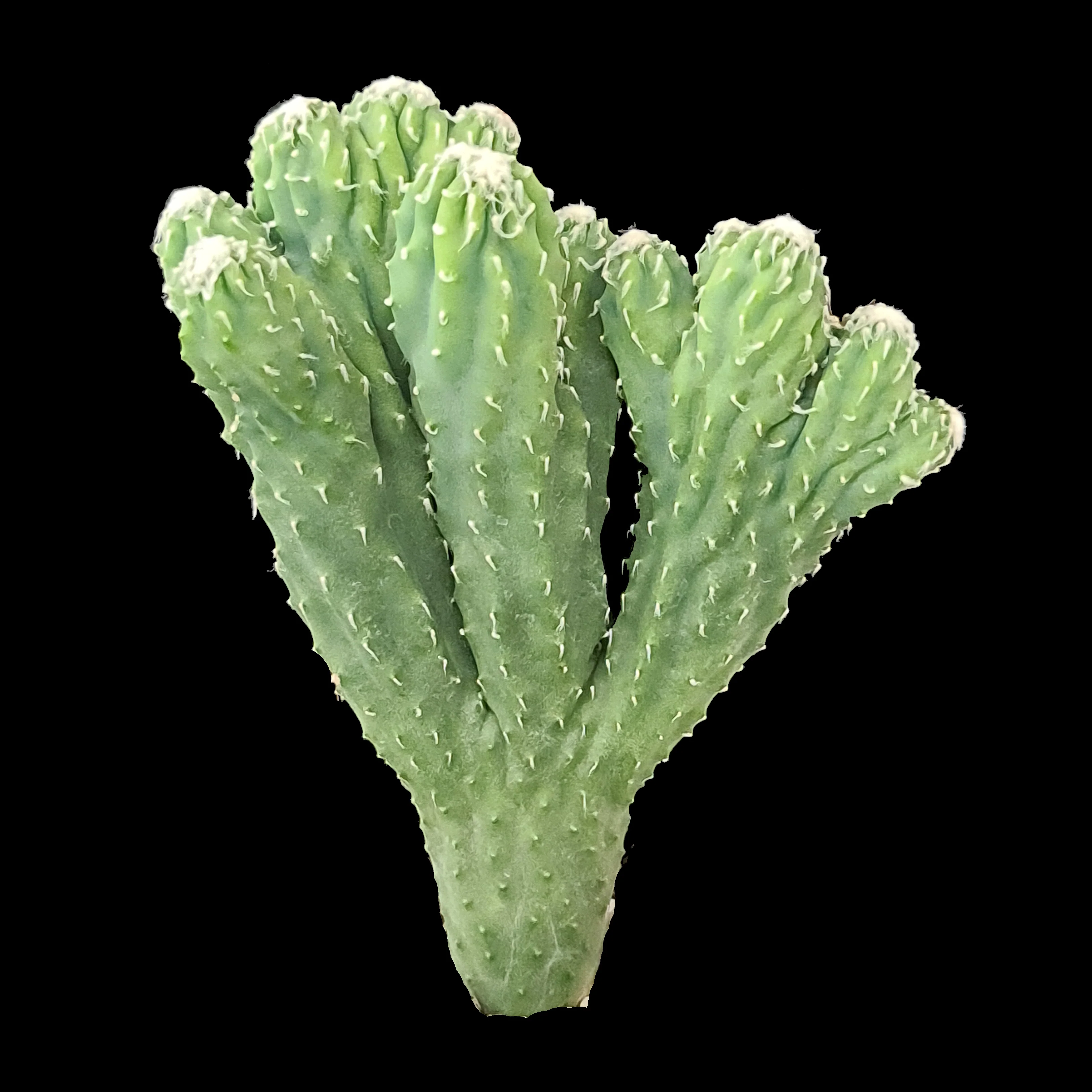
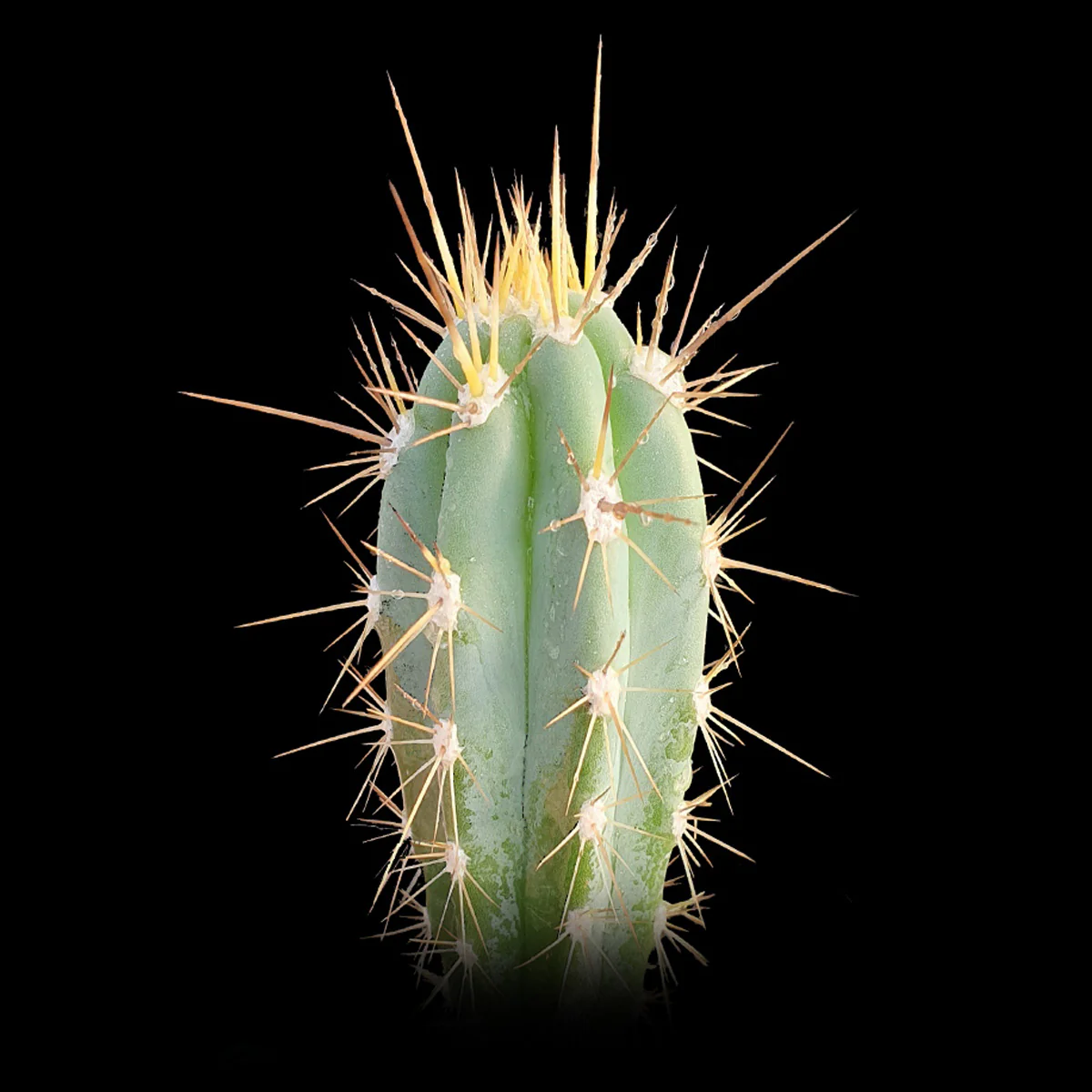
Stetsonia coryne, commonly referred to as the Toothpick Cactus, is the only recognised species within its genus and is native to the dry Chaco region of Argentina, Bolivia, and Paraguay. In its natural range, it can develop into a tree-like cactus reaching 8–10 m in height, forming a woody trunk with thick, ascending branches.
The stems are strongly ribbed, each rib bearing clusters of rigid spines up to 8 cm long that deter herbivory. Mature plants produce large, funnel-shaped white flowers that open at night during the warmer months, often pollinated by nocturnal insects or bats. These are followed by oval, spiny fruits that are edible when ripe and are eaten by local wildlife. In cultivation, flowering generally occurs in older, well-grown specimens.
Light: Requires full sun for healthy growth.
Water: Water sparingly, allowing soil to fully dry between waterings.
Media: Use a coarse, well-draining cactus mix.
Temperature: Tolerates high heat; protect from frost.
Fertiliser: Apply a low-nitrogen cactus fertiliser during the active growing season.
Repotting: Repot every 3–4 years or when the plant outgrows its container, taking care to protect yourself from the long spines.
Care Tips:
$5.25
Original: $15.00
-65%Stetsonia coryne – The Toothpick Cactus—
$15.00
$5.25More Images
Stetsonia coryne – The Toothpick Cactus
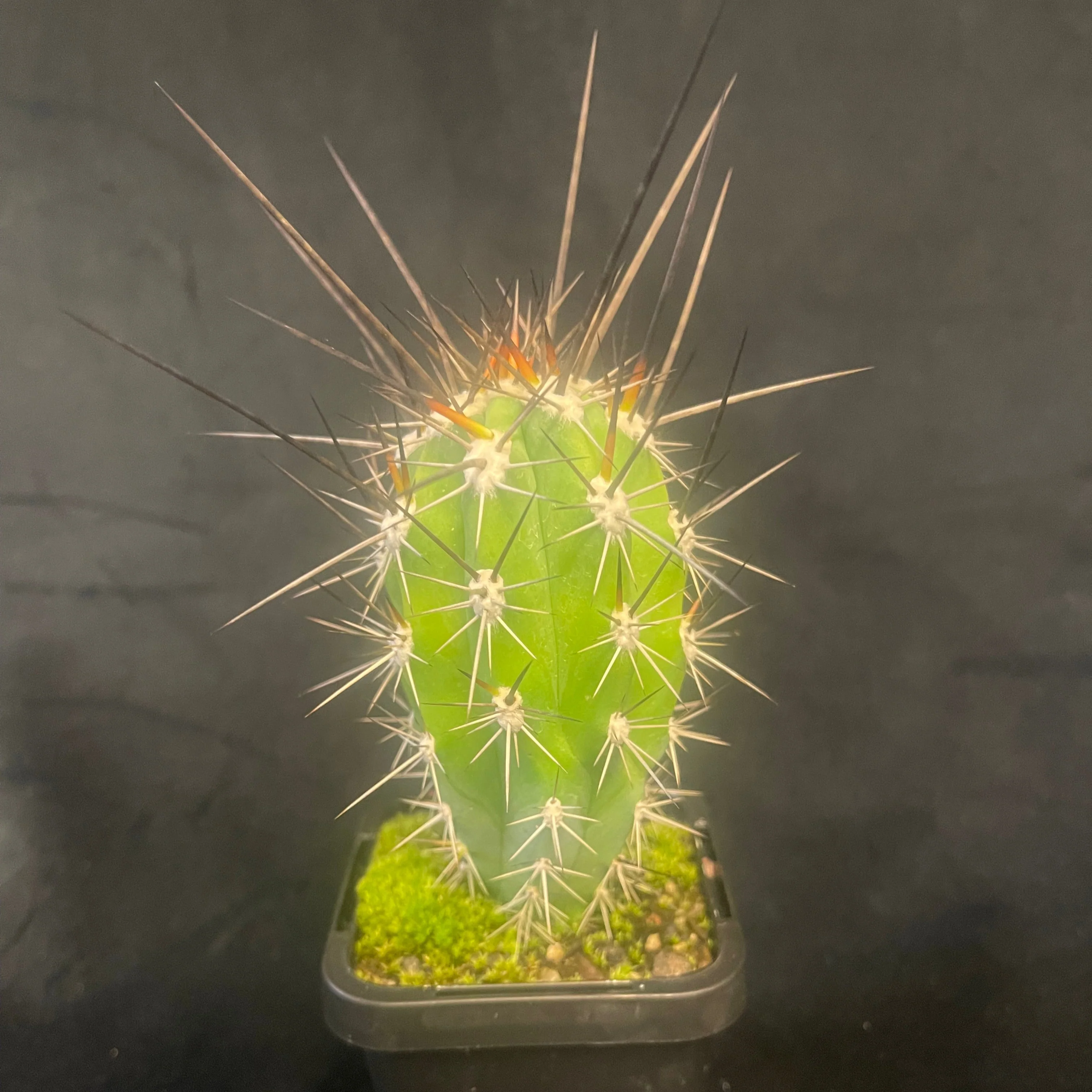
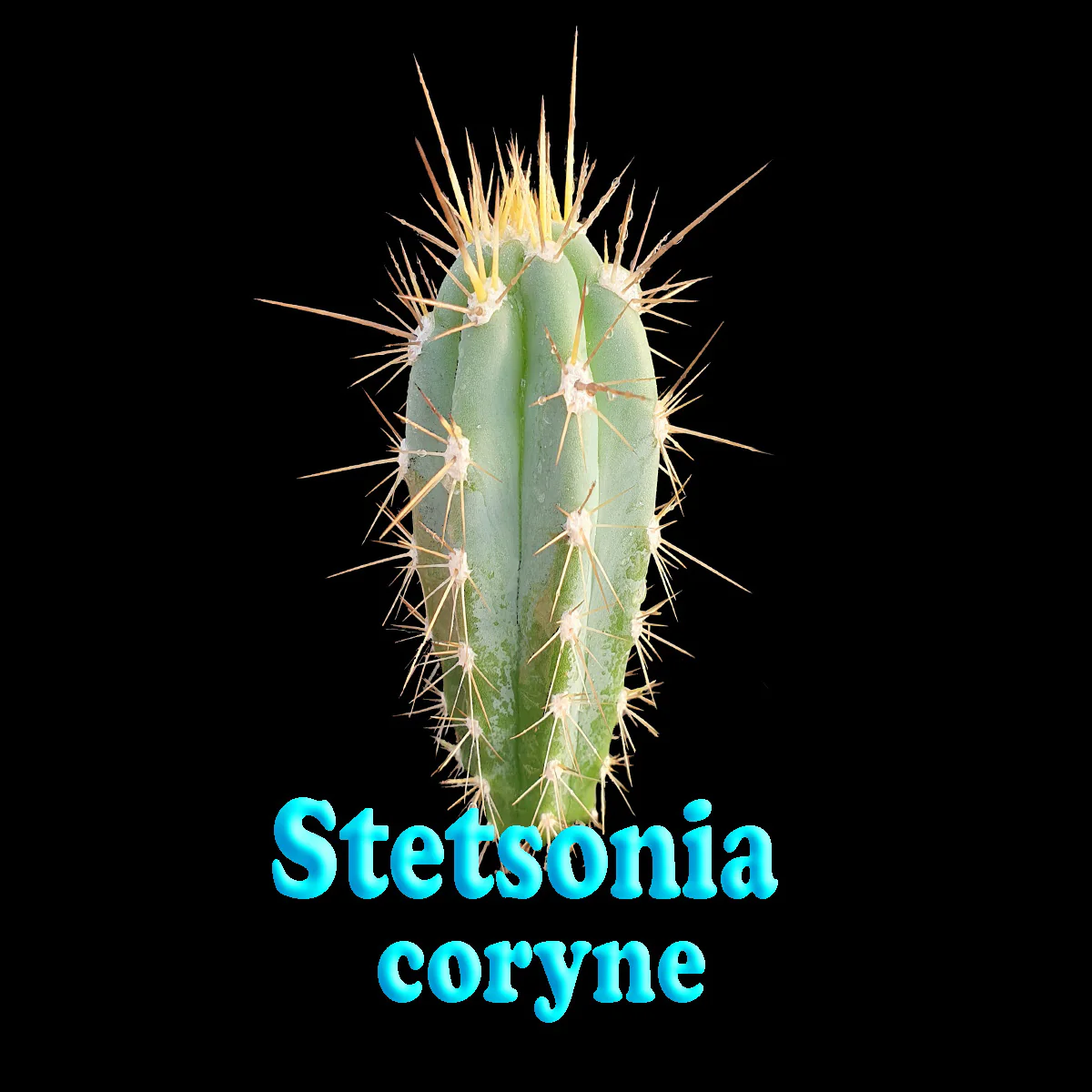
Stetsonia coryne, commonly referred to as the Toothpick Cactus, is the only recognised species within its genus and is native to the dry Chaco region of Argentina, Bolivia, and Paraguay. In its natural range, it can develop into a tree-like cactus reaching 8–10 m in height, forming a woody trunk with thick, ascending branches.
The stems are strongly ribbed, each rib bearing clusters of rigid spines up to 8 cm long that deter herbivory. Mature plants produce large, funnel-shaped white flowers that open at night during the warmer months, often pollinated by nocturnal insects or bats. These are followed by oval, spiny fruits that are edible when ripe and are eaten by local wildlife. In cultivation, flowering generally occurs in older, well-grown specimens.
Light: Requires full sun for healthy growth.
Water: Water sparingly, allowing soil to fully dry between waterings.
Media: Use a coarse, well-draining cactus mix.
Temperature: Tolerates high heat; protect from frost.
Fertiliser: Apply a low-nitrogen cactus fertiliser during the active growing season.
Repotting: Repot every 3–4 years or when the plant outgrows its container, taking care to protect yourself from the long spines.
Care Tips:
Product Information
Product Information
Shipping & Returns
Shipping & Returns
Description
Stetsonia coryne, commonly referred to as the Toothpick Cactus, is the only recognised species within its genus and is native to the dry Chaco region of Argentina, Bolivia, and Paraguay. In its natural range, it can develop into a tree-like cactus reaching 8–10 m in height, forming a woody trunk with thick, ascending branches.
The stems are strongly ribbed, each rib bearing clusters of rigid spines up to 8 cm long that deter herbivory. Mature plants produce large, funnel-shaped white flowers that open at night during the warmer months, often pollinated by nocturnal insects or bats. These are followed by oval, spiny fruits that are edible when ripe and are eaten by local wildlife. In cultivation, flowering generally occurs in older, well-grown specimens.
Light: Requires full sun for healthy growth.
Water: Water sparingly, allowing soil to fully dry between waterings.
Media: Use a coarse, well-draining cactus mix.
Temperature: Tolerates high heat; protect from frost.
Fertiliser: Apply a low-nitrogen cactus fertiliser during the active growing season.
Repotting: Repot every 3–4 years or when the plant outgrows its container, taking care to protect yourself from the long spines.