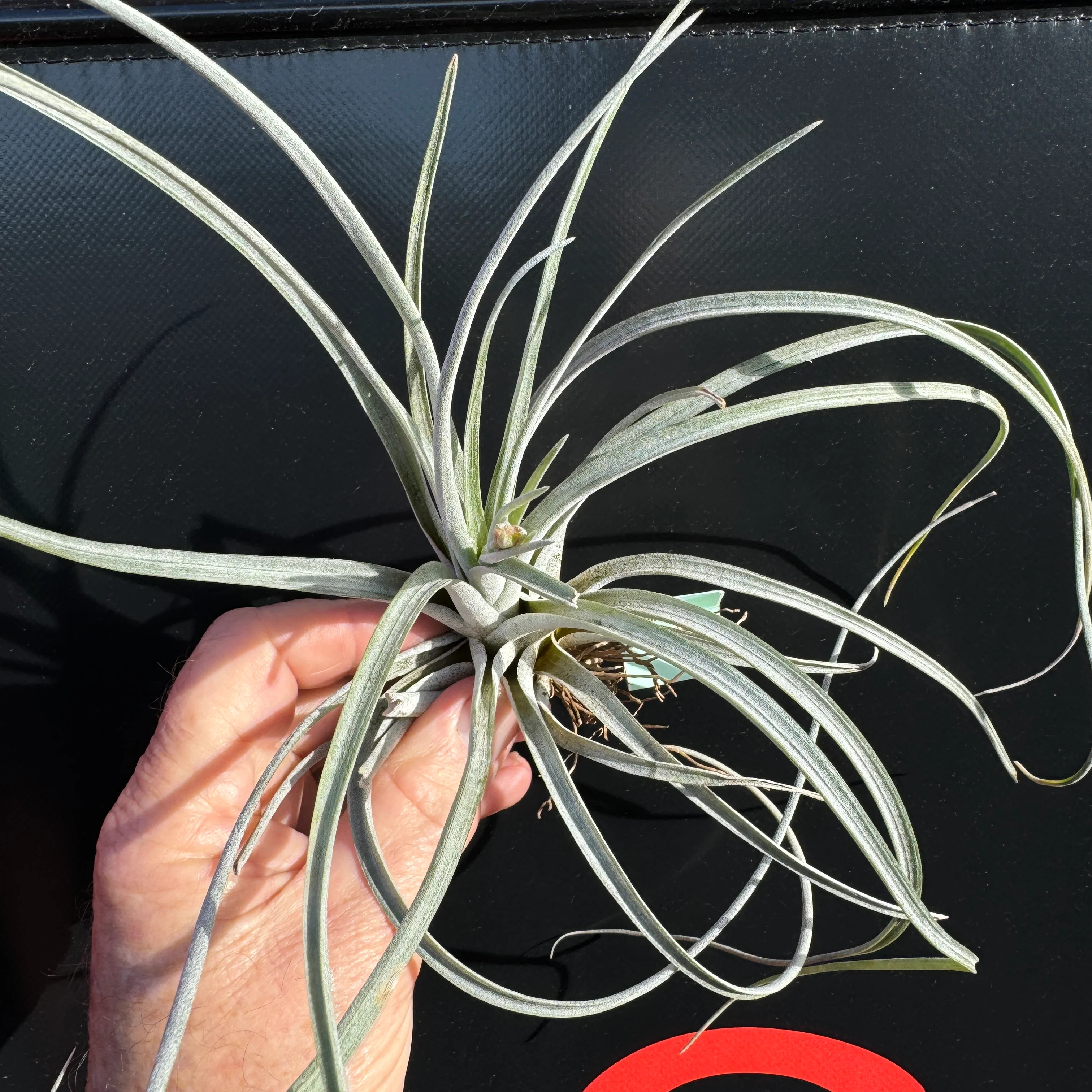
Tillandsia aff. utriculata
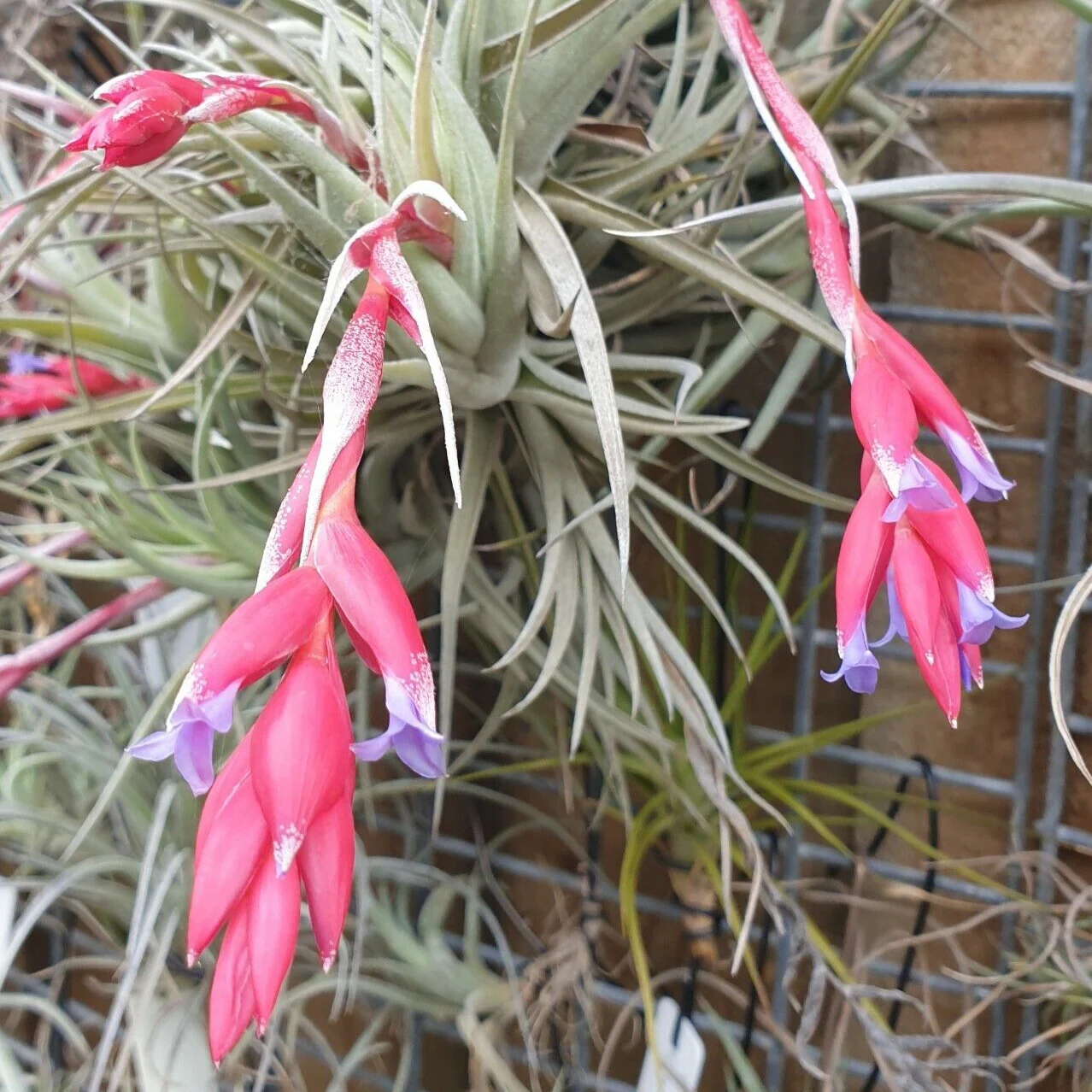
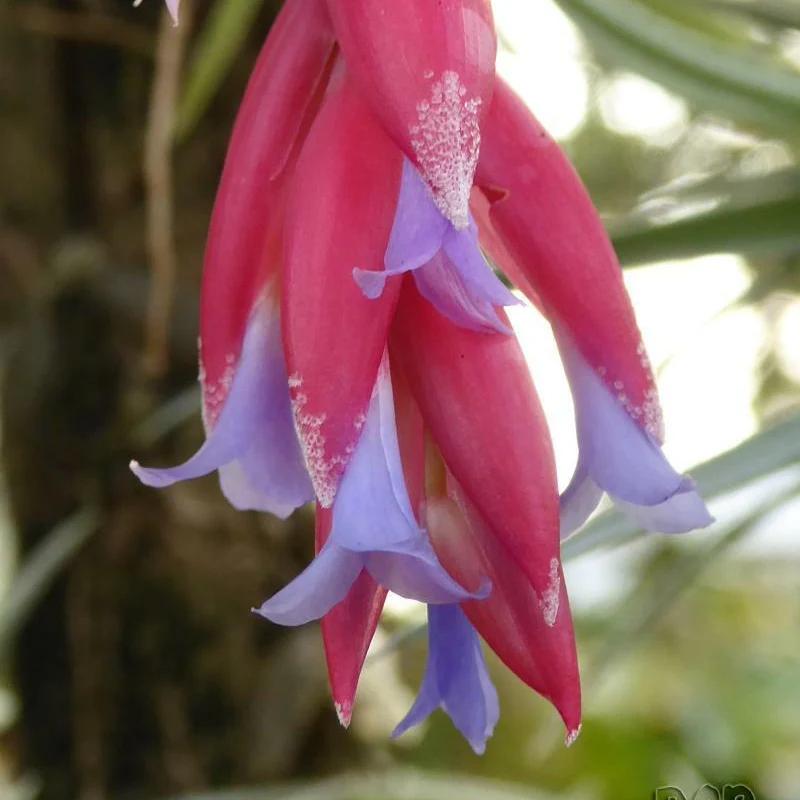
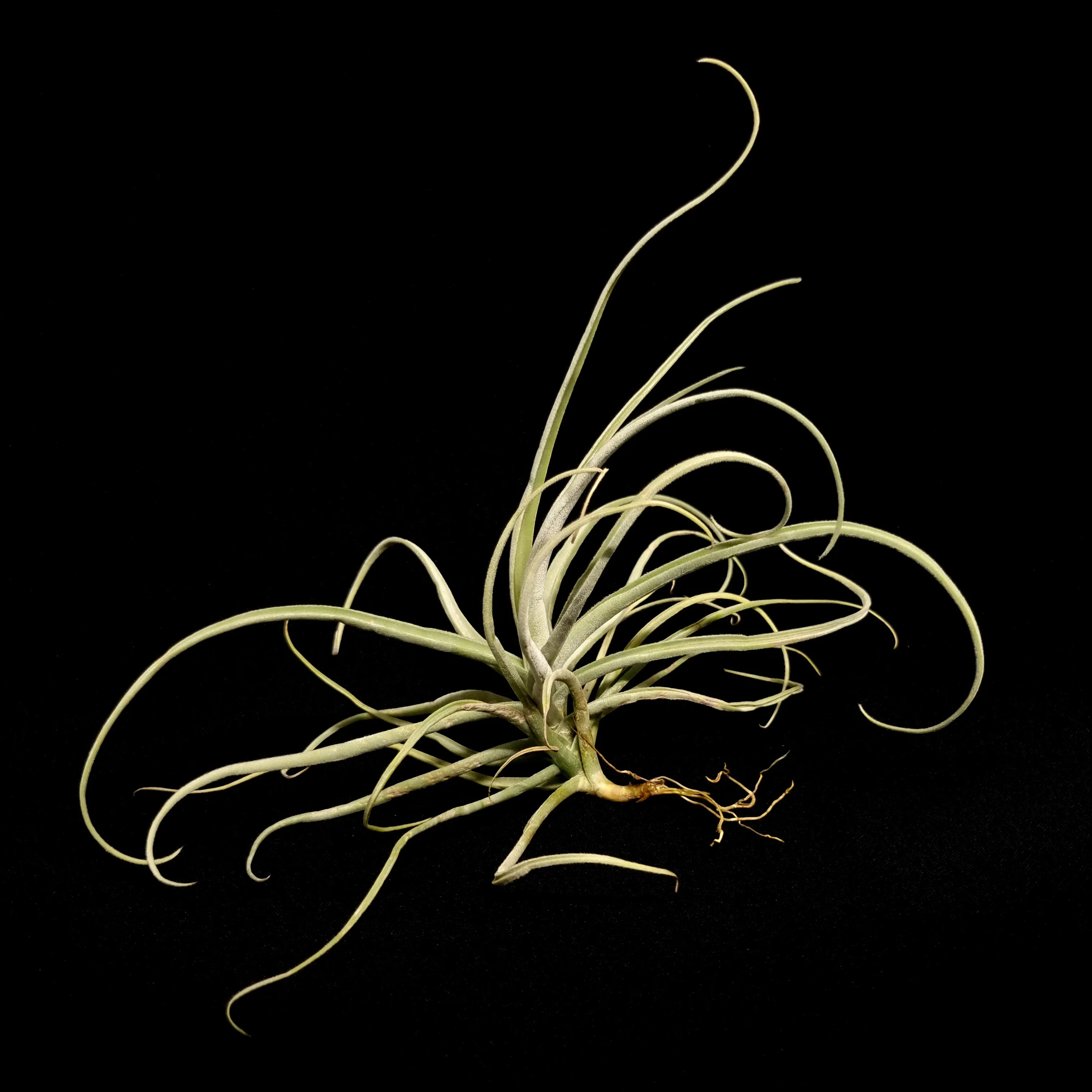
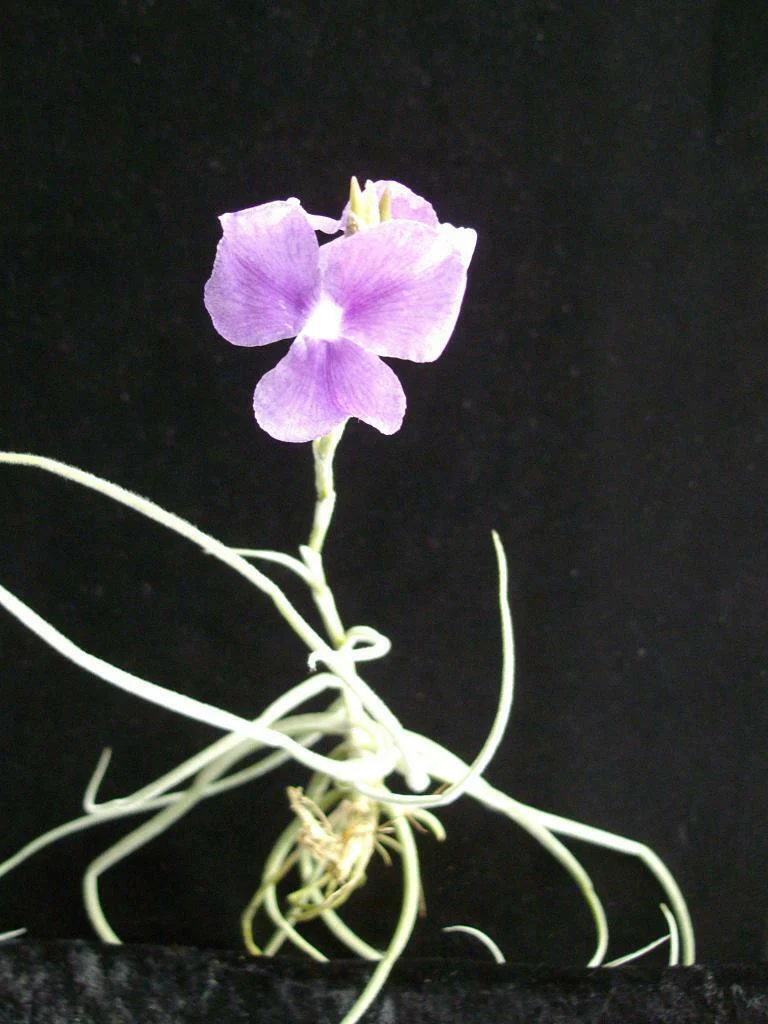
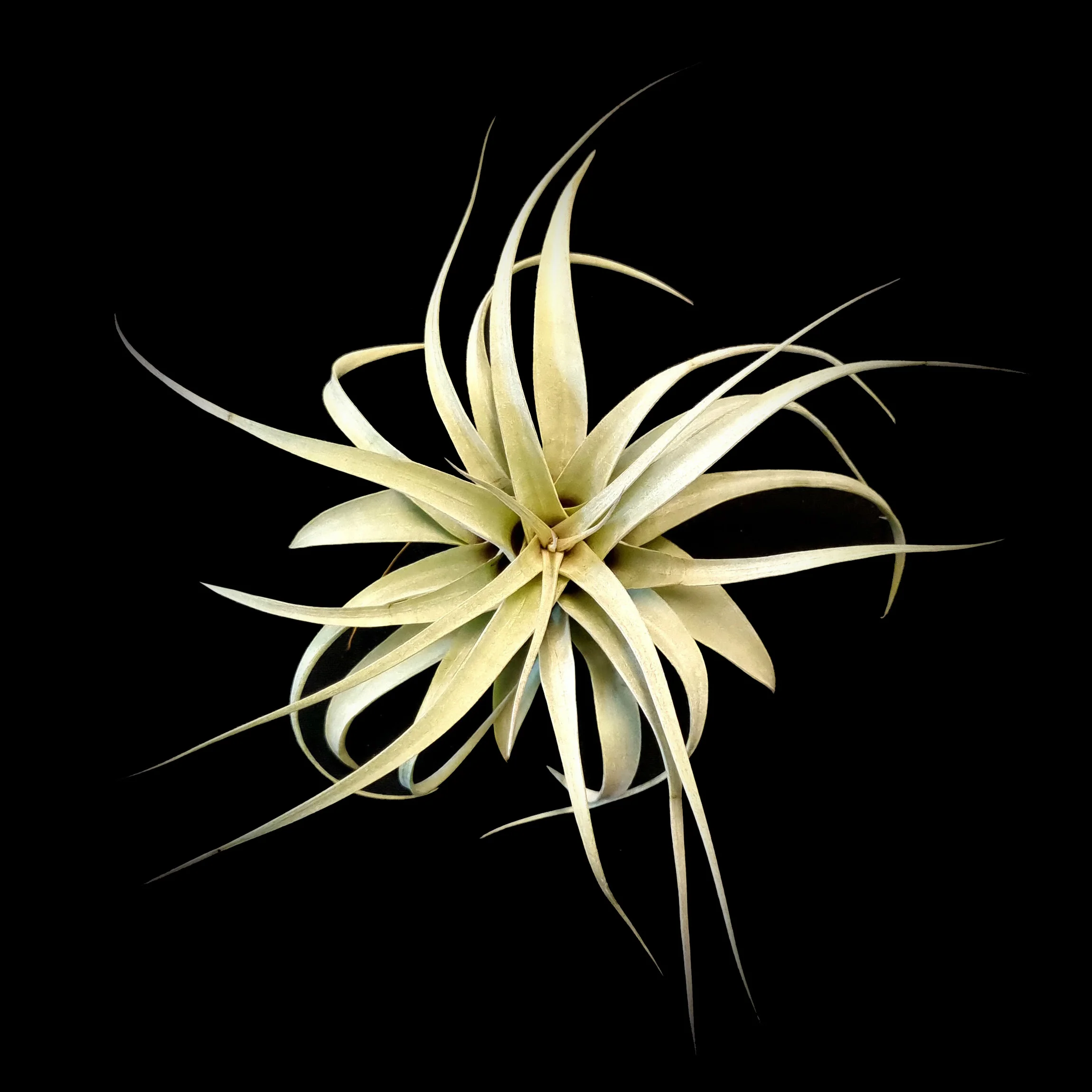
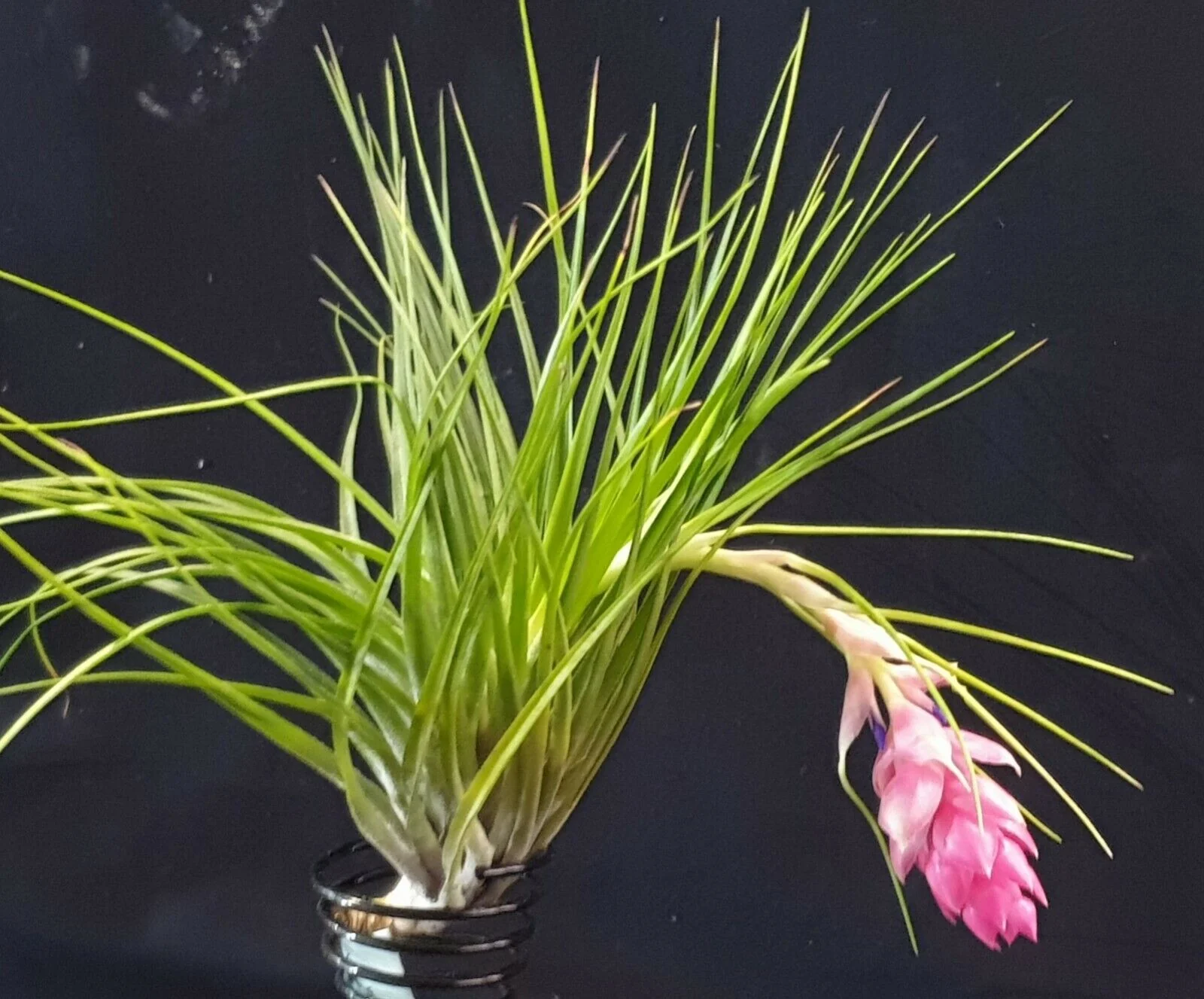
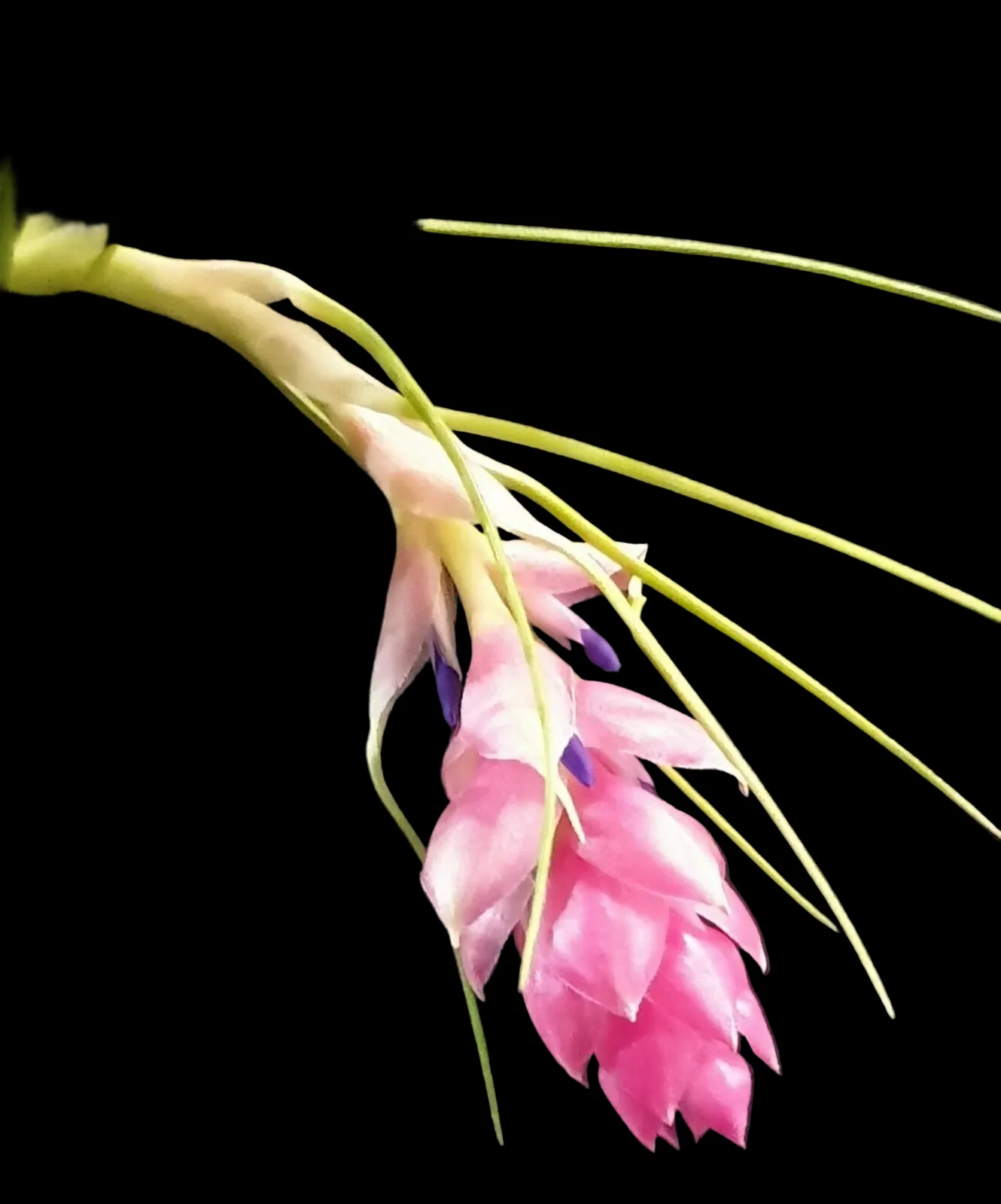
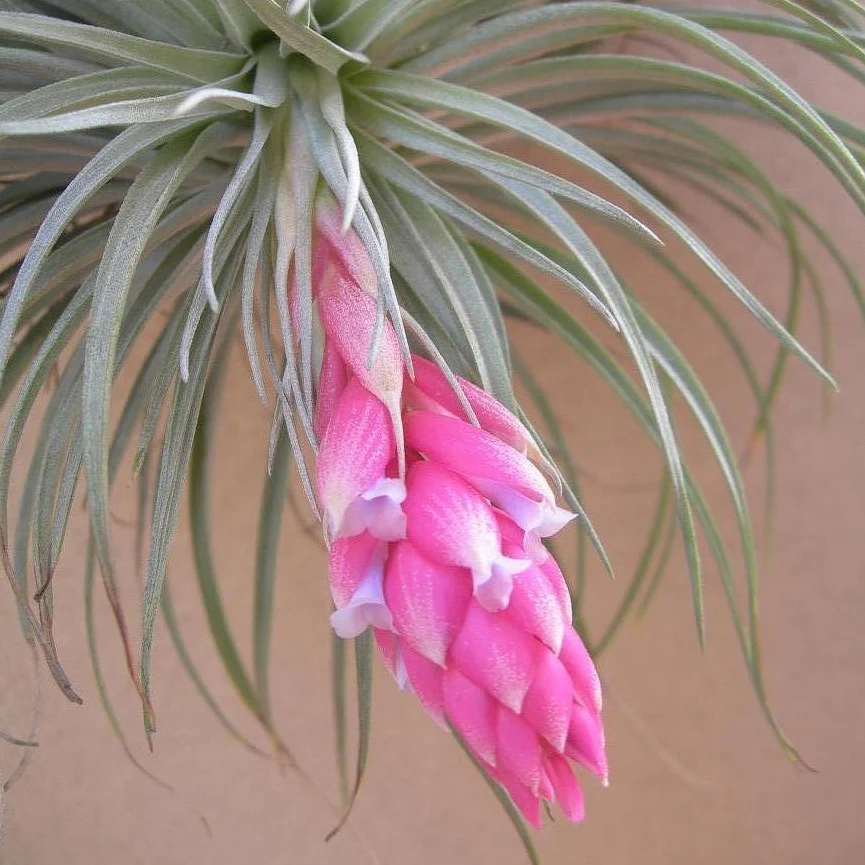
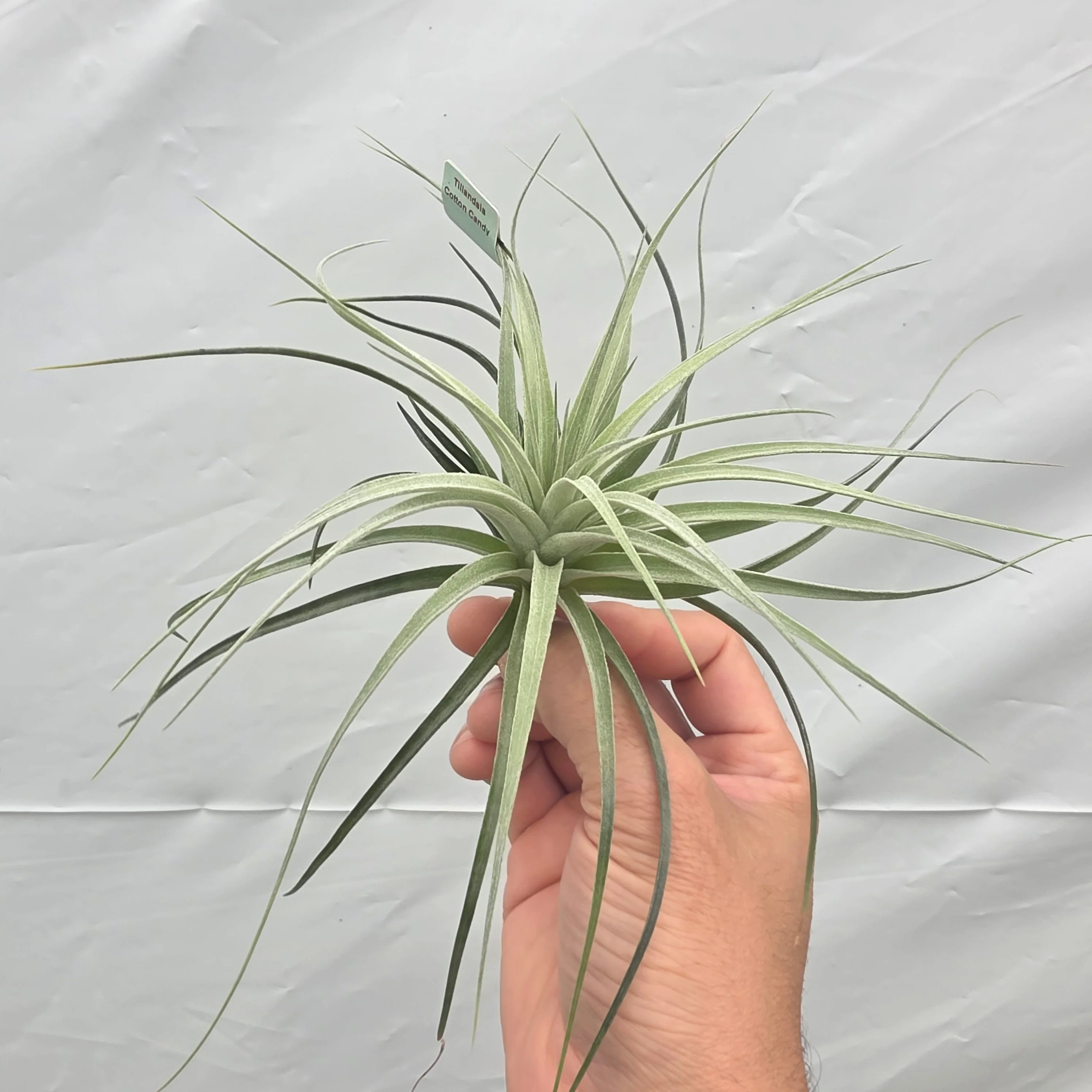
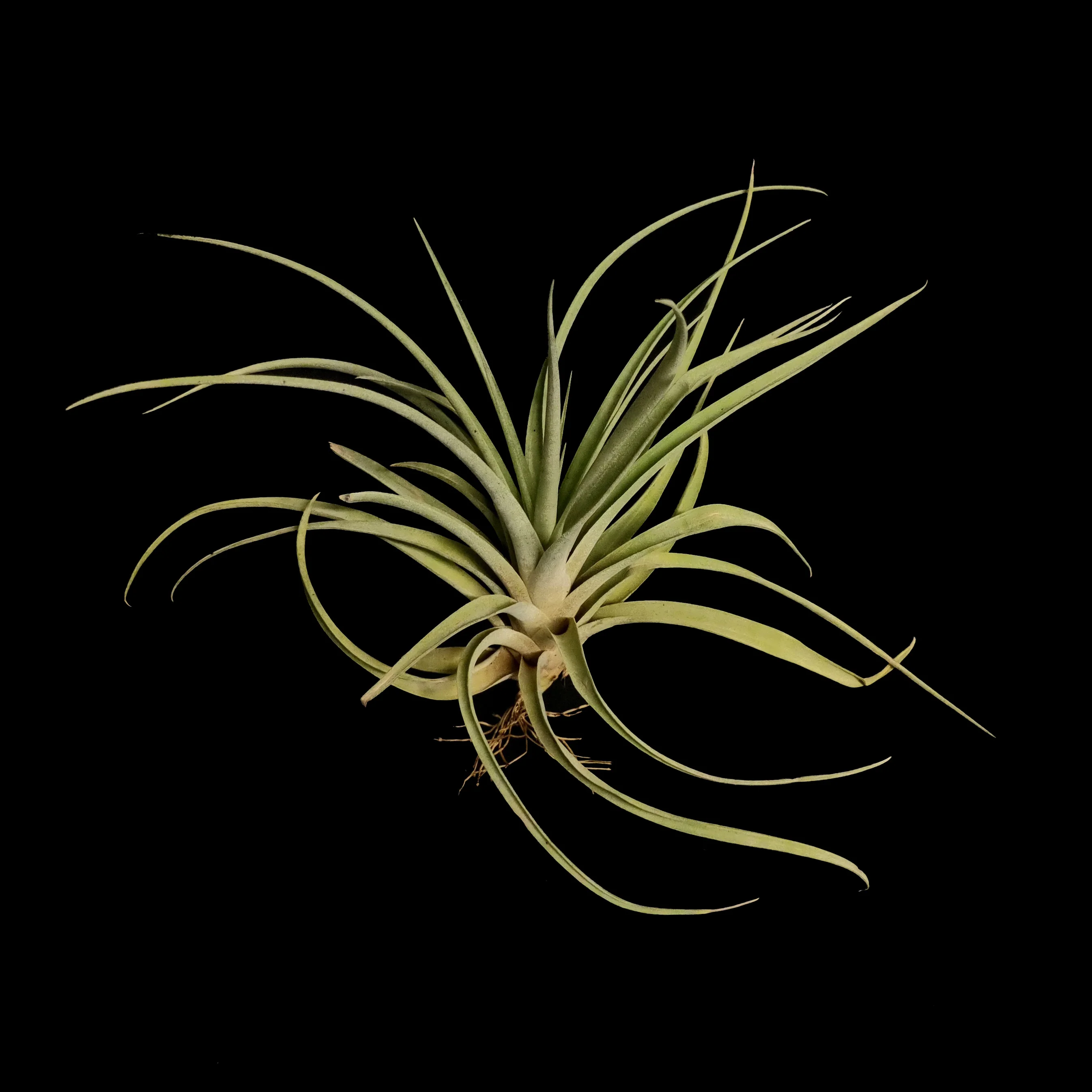
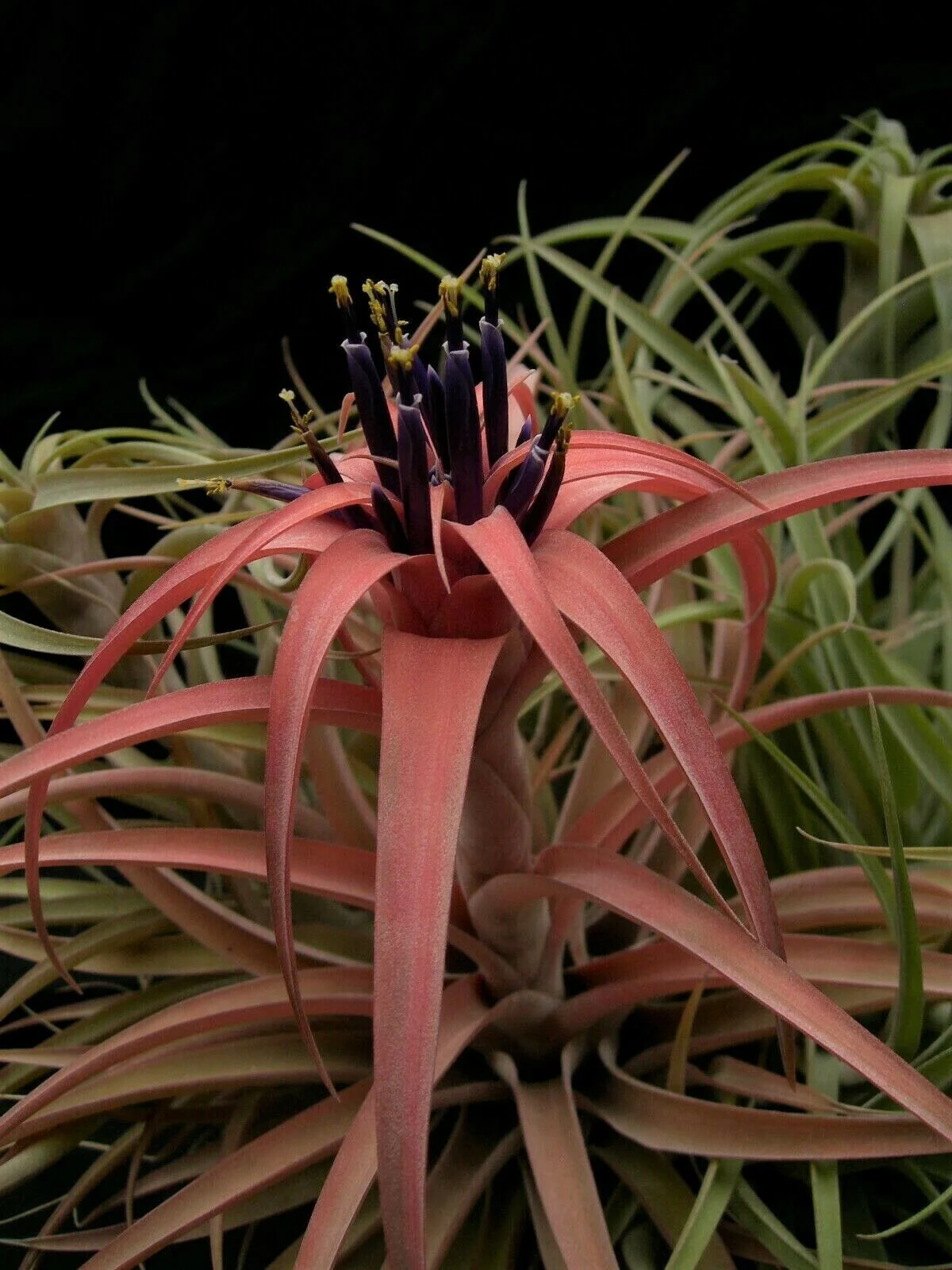
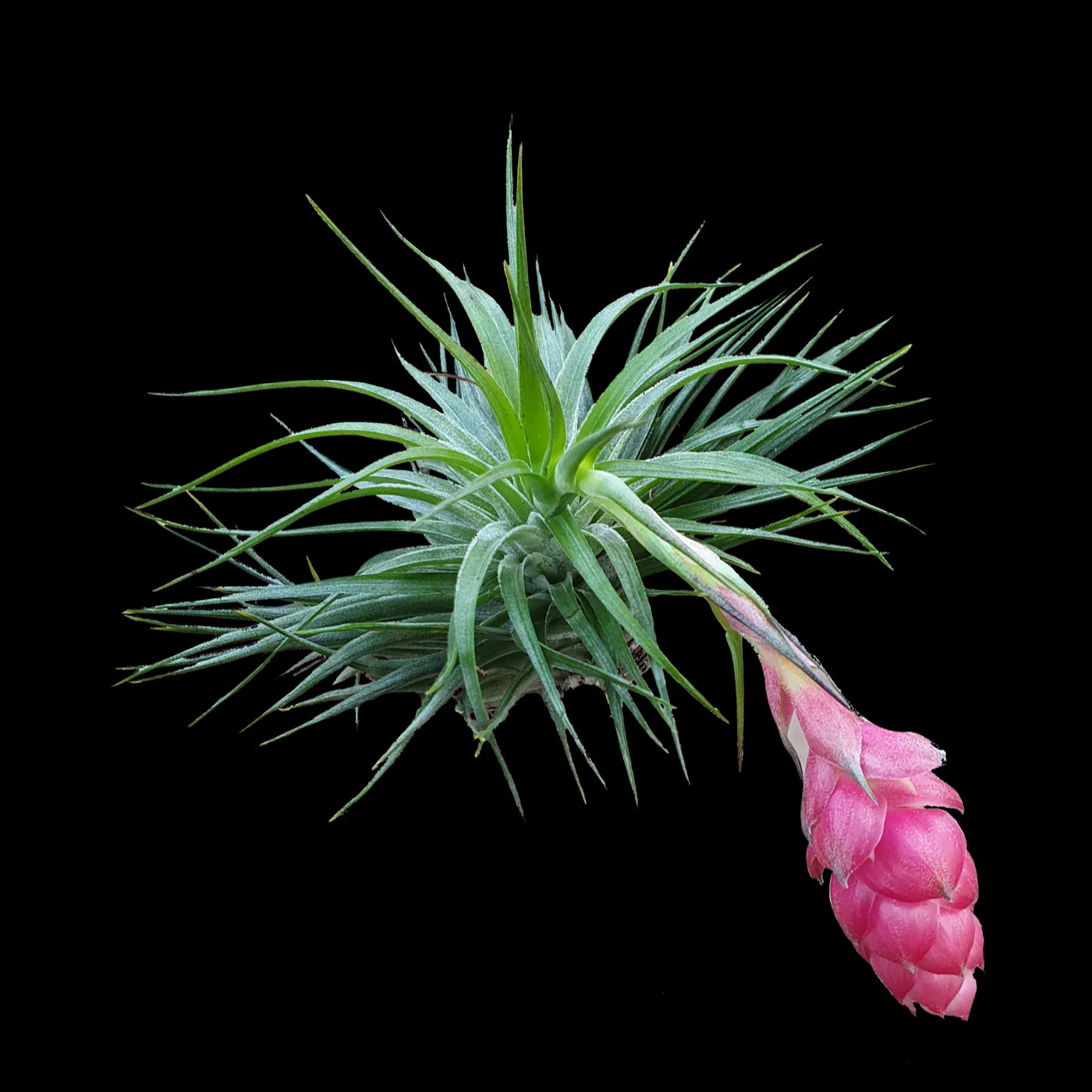
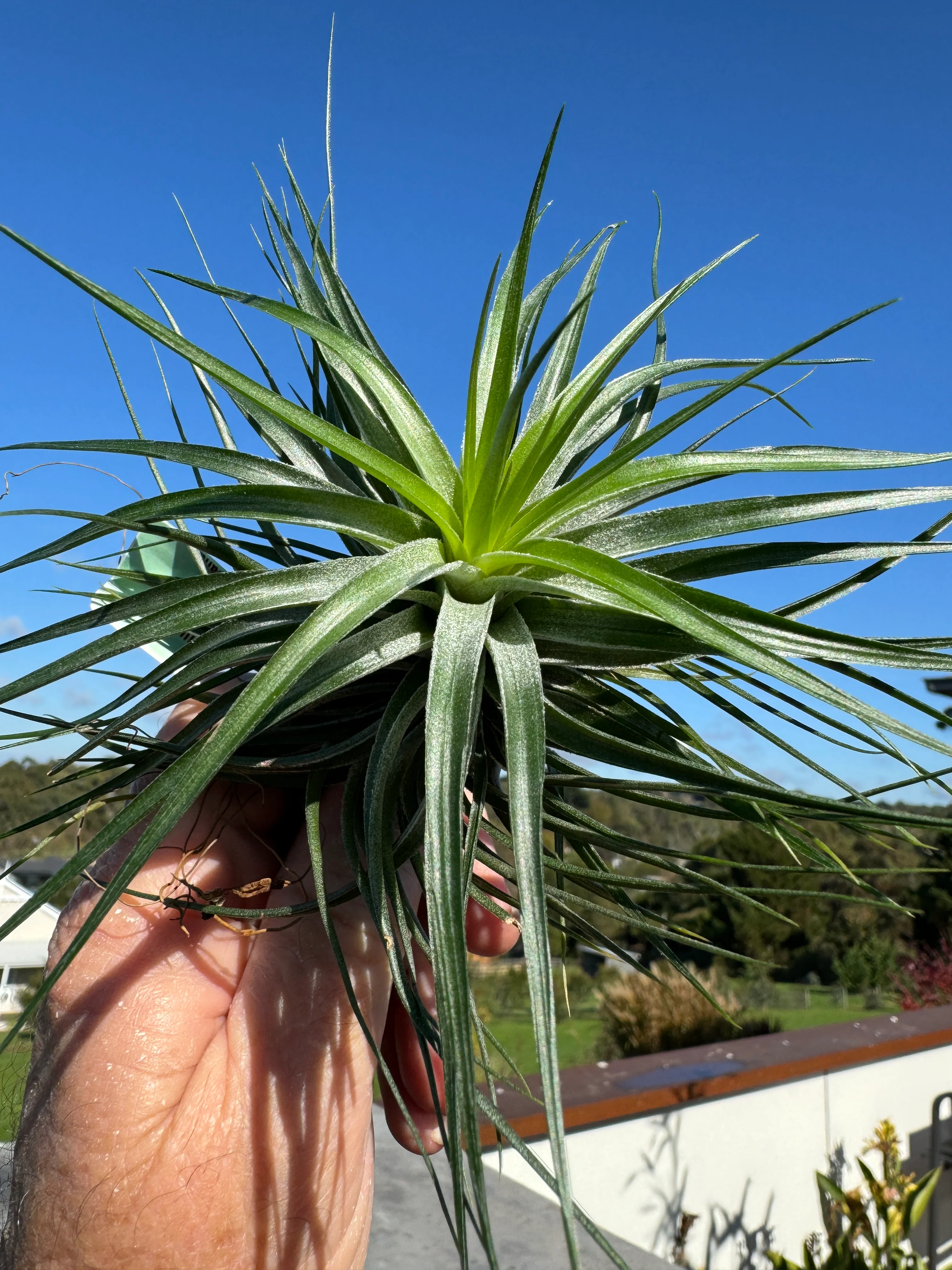
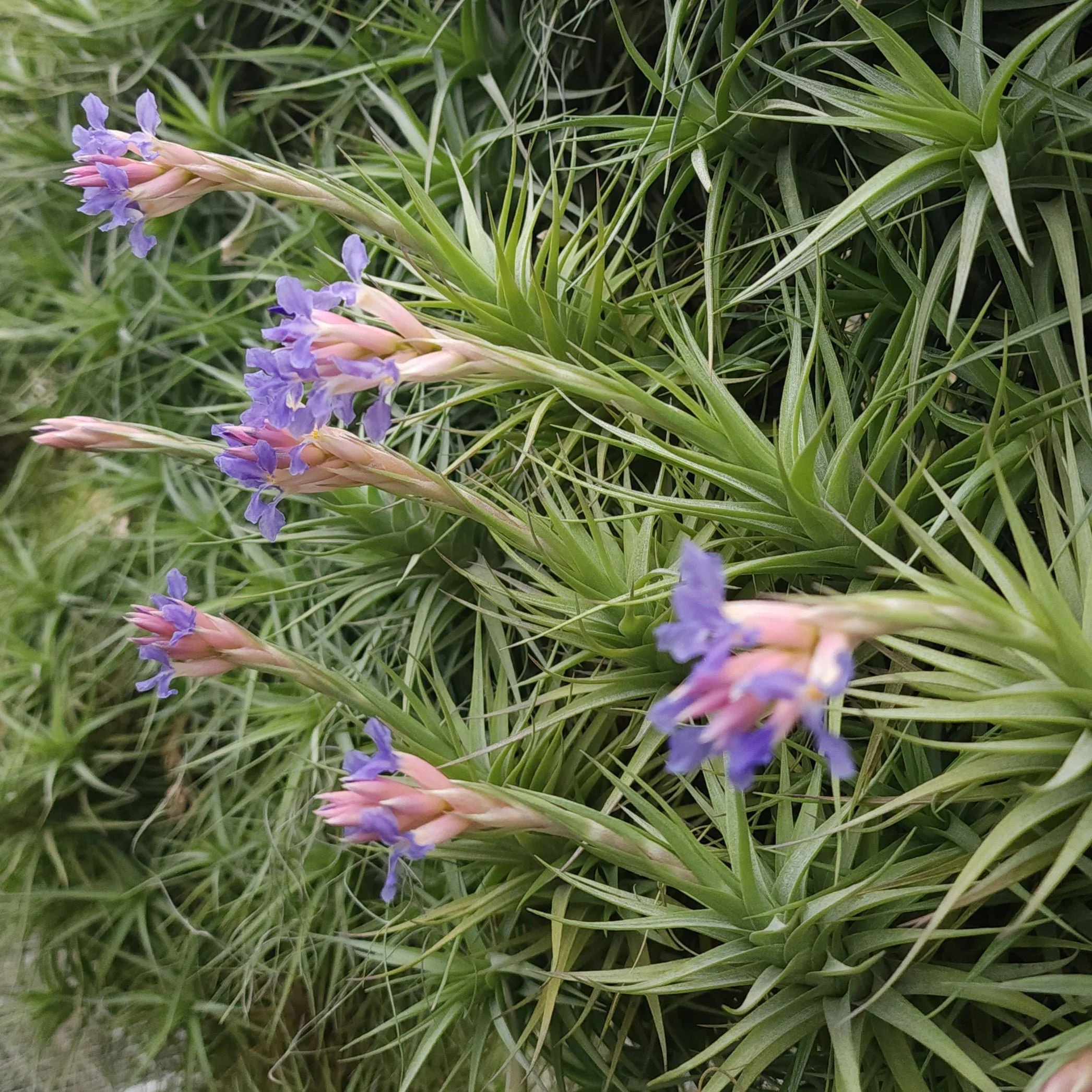
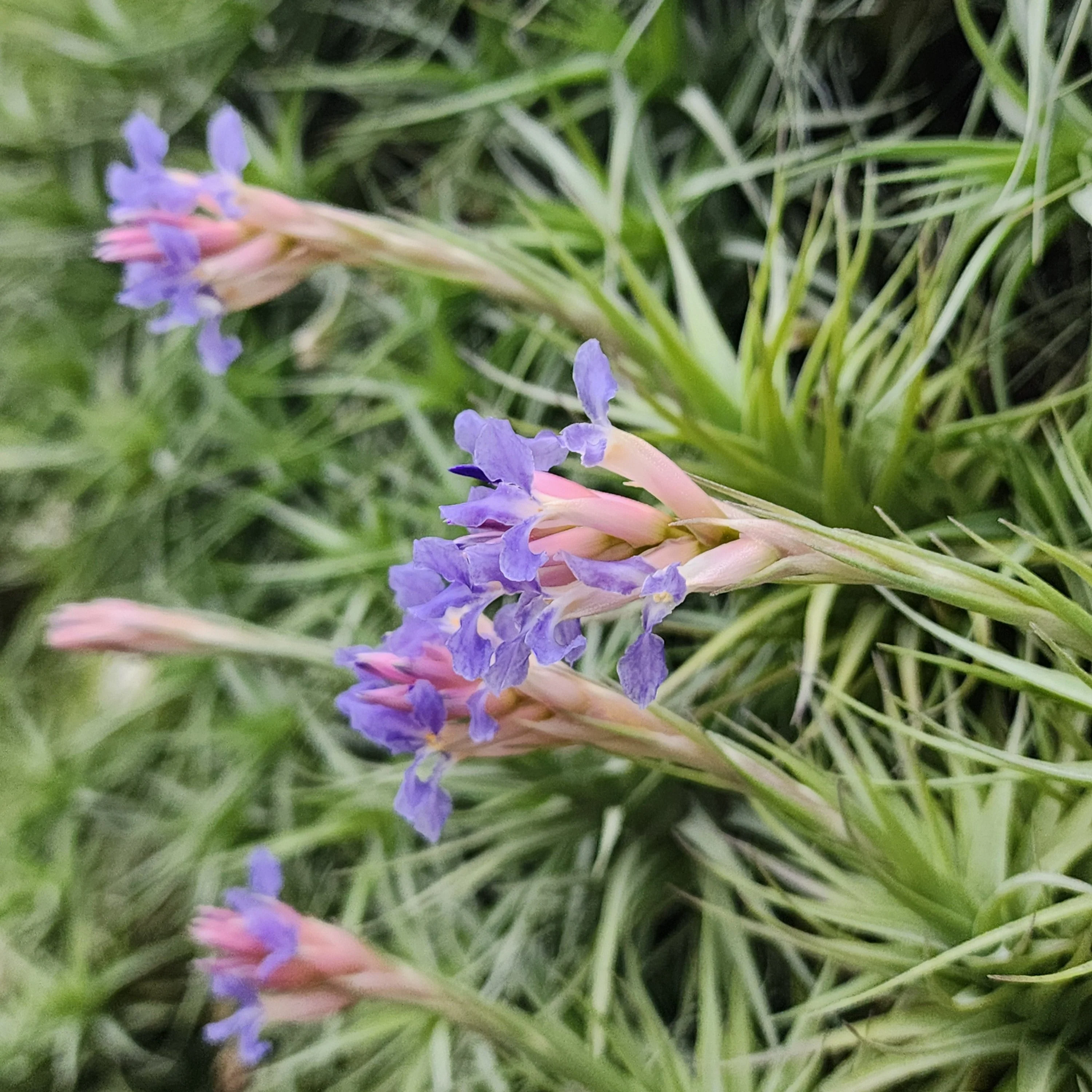
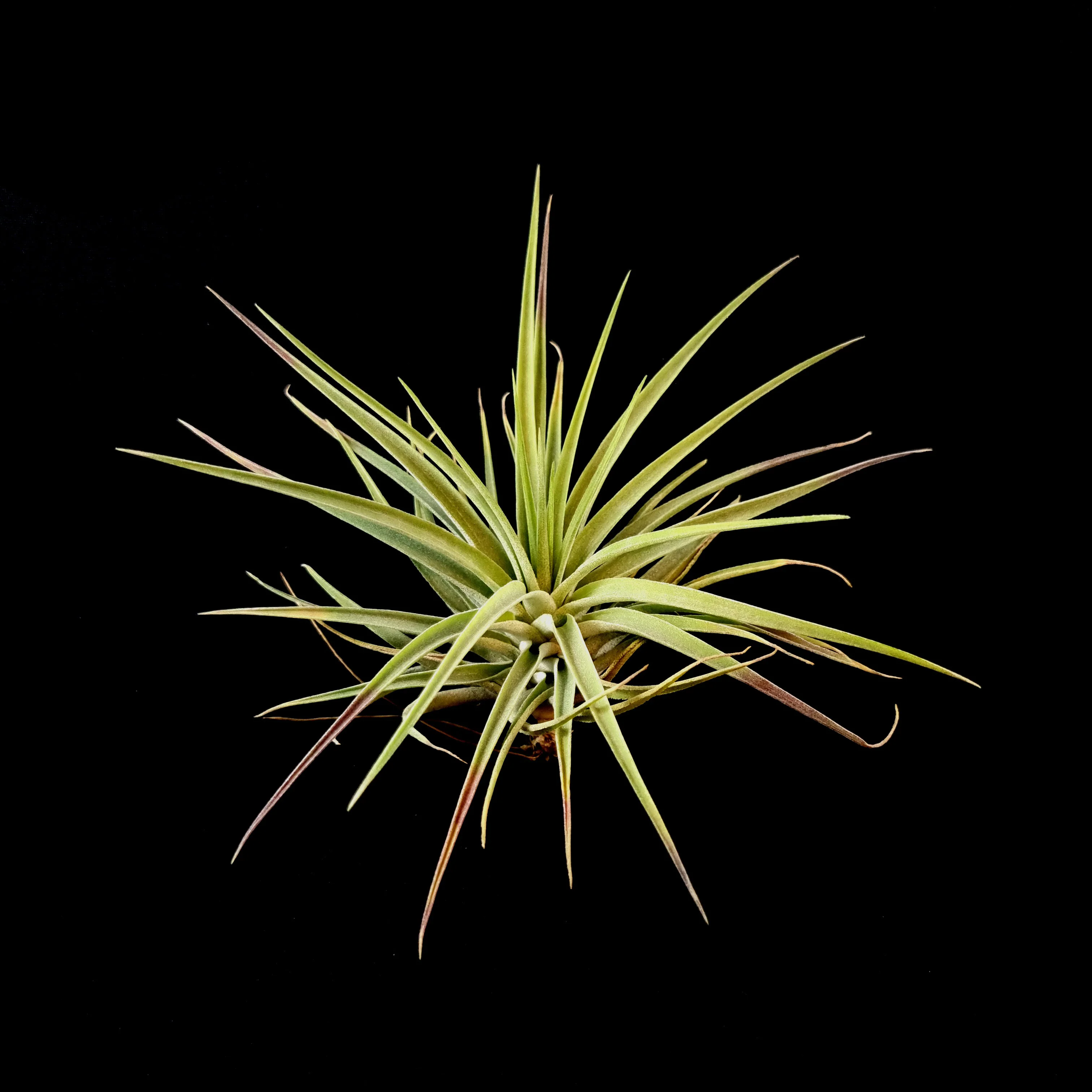
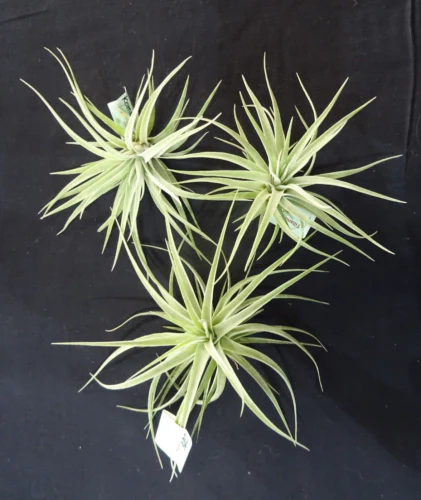
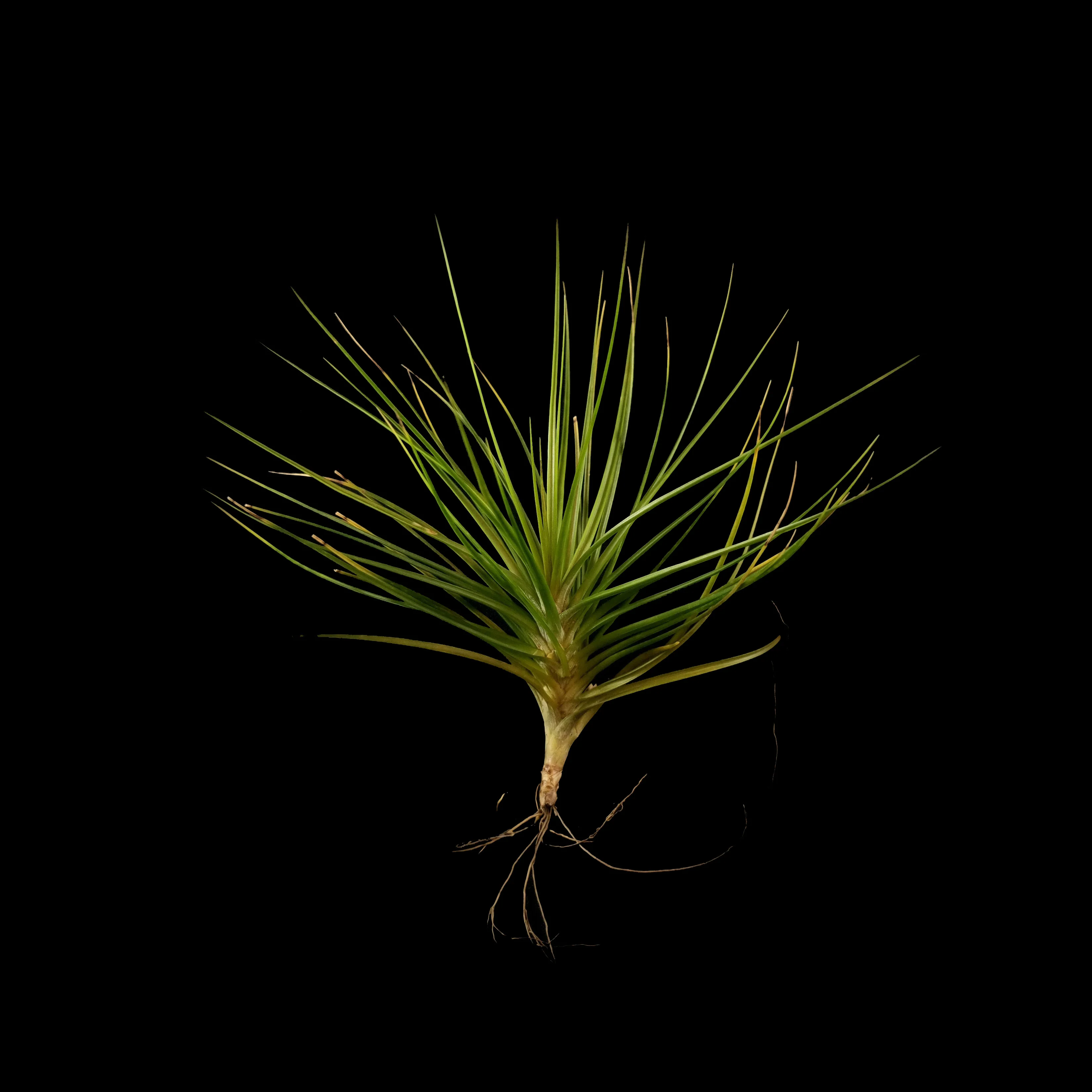
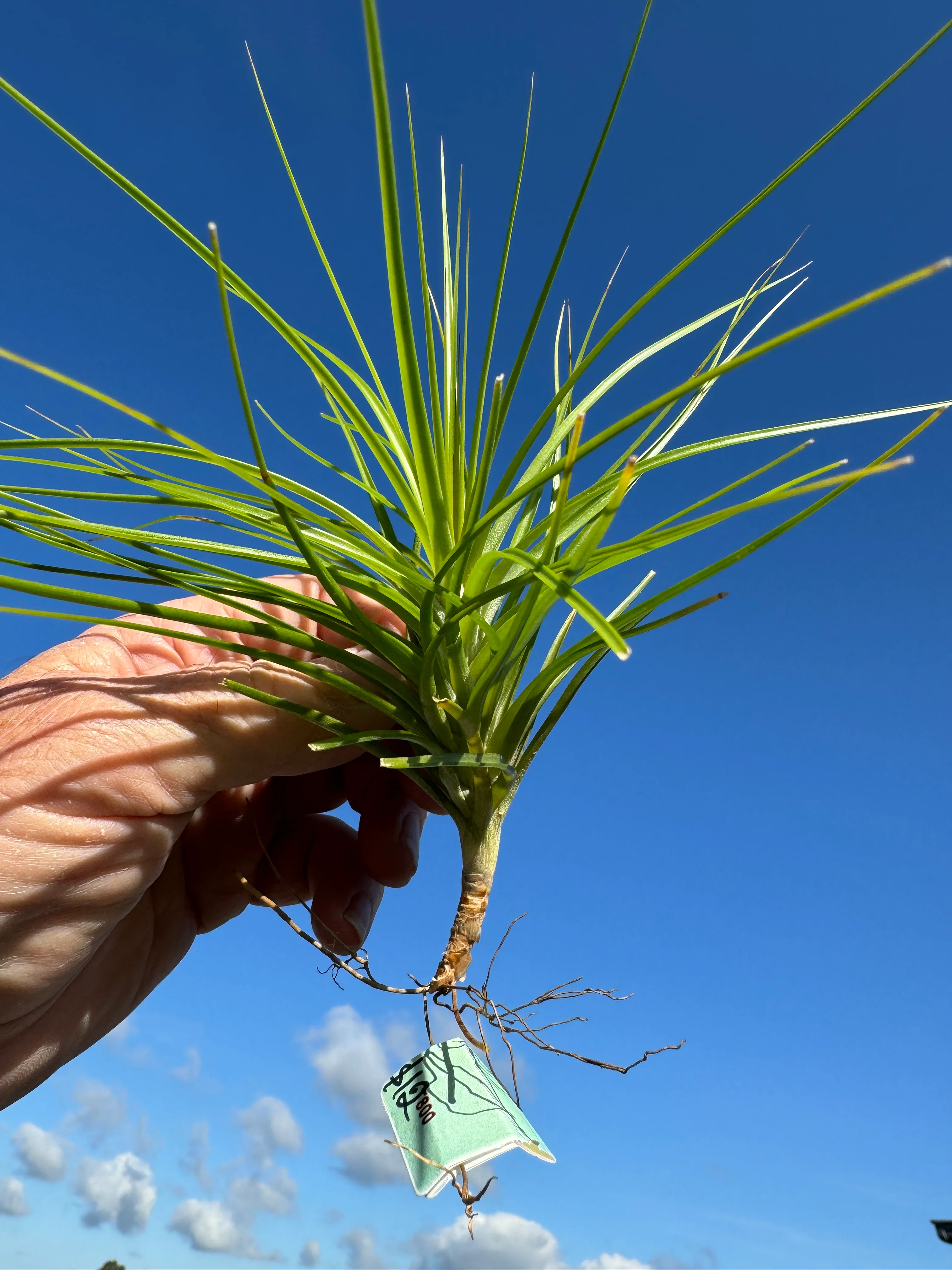
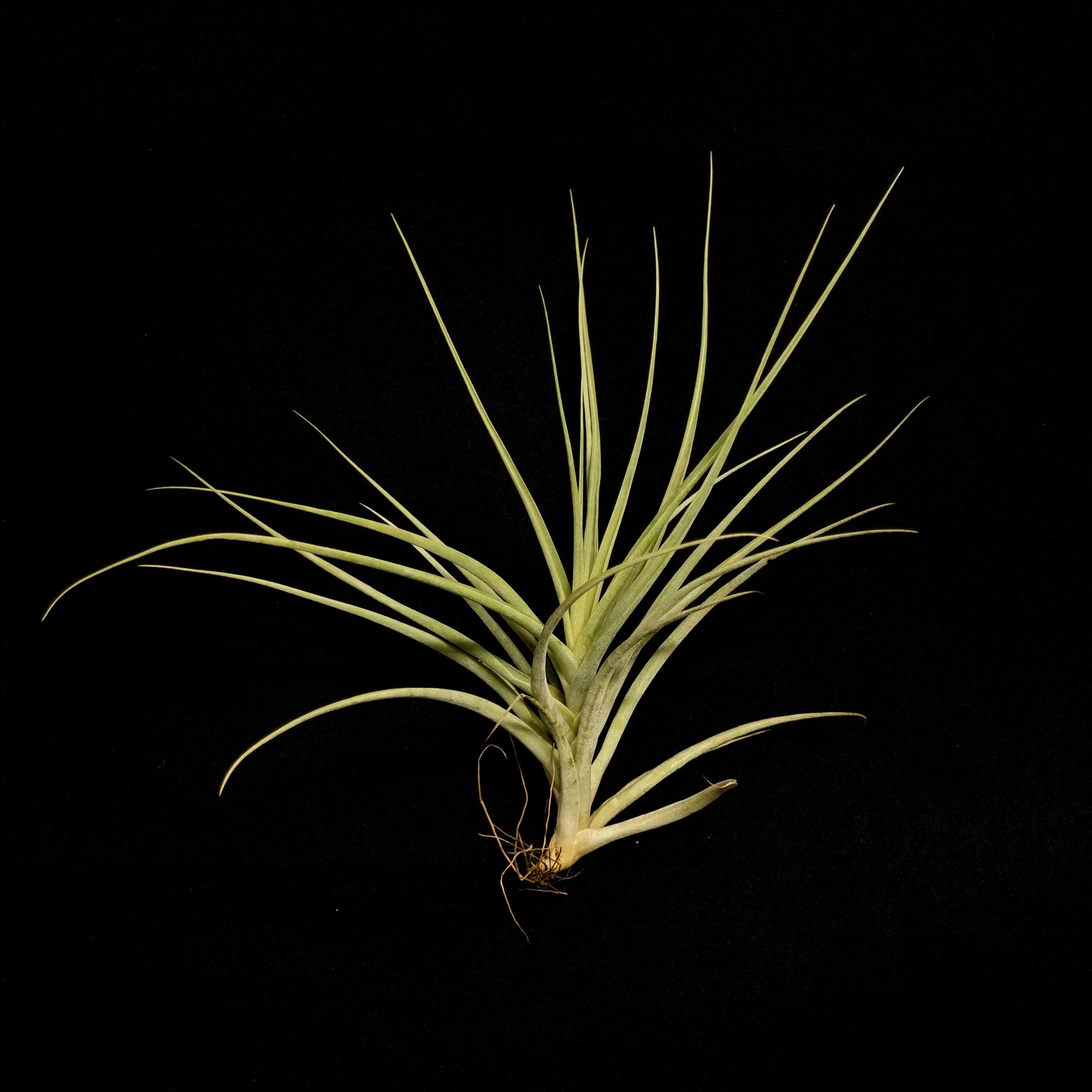
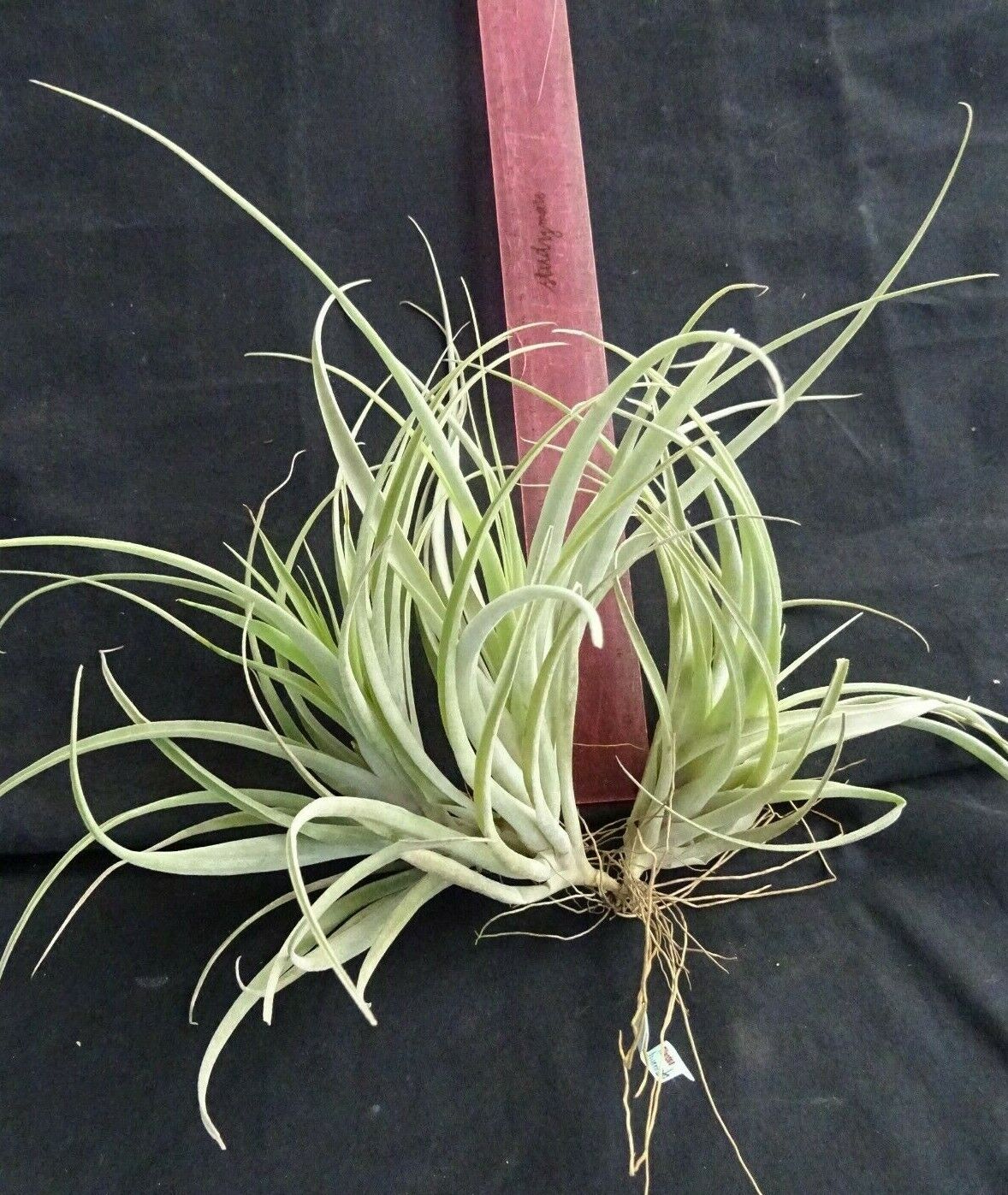
Tillandsia aff. utriculata refers to a form that shows close affinity to the species Tillandsia utriculata but may differ morphologically or regionally, often pending formal taxonomic clarification. Native to parts of the Caribbean, Central America, and the southern United States, plants in this complex typically grow in warm, open habitats including pine rocklands and tropical hammocks. This large, tank-forming species develops an upright rosette of broad, grey-green leaves and can produce a towering inflorescence that, in some cases, exceeds one metre in height. The spike is often branched and bears pale green to yellow bracts with purple to lavender tubular flowers. These forms are ecologically significant as water reservoirs in their native habitats.
Care Tips:
- Light: Requires bright light to full sun; thrives in open, airy spaces
- Water: Fill central tank with clean water and flush periodically; mist leaves in dry climates
- Humidity: Prefers moderate to high humidity with good air circulation
- Media: Can be grown mounted or supported in large baskets; avoid enclosed containers
- Temperature: Ideal range is 18–32°C; protect from frost and cold winds
- Fertiliser: Apply diluted bromeliad fertiliser monthly to tank or leaves during growth
Original: $10.00
-65%$10.00
$3.50More Images
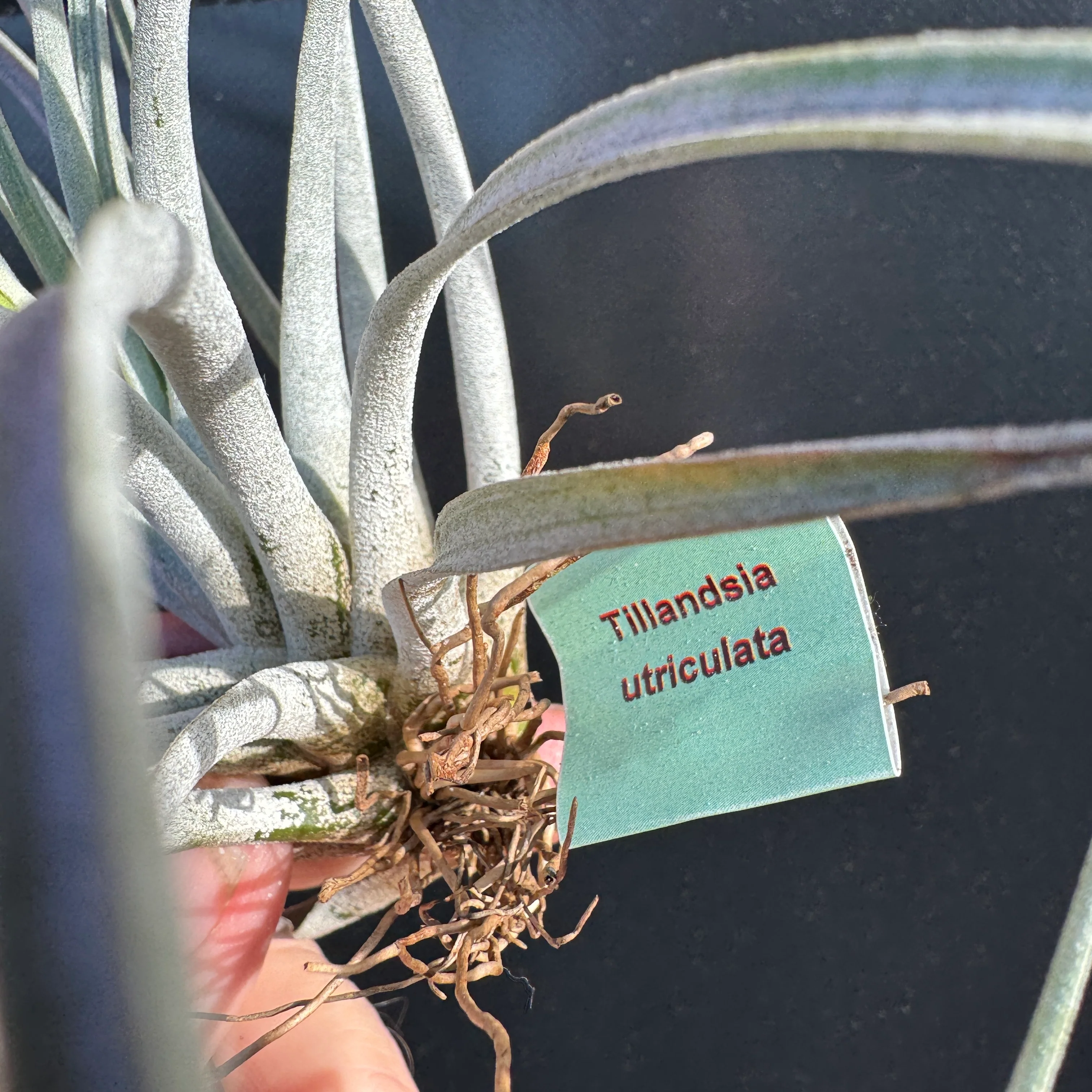
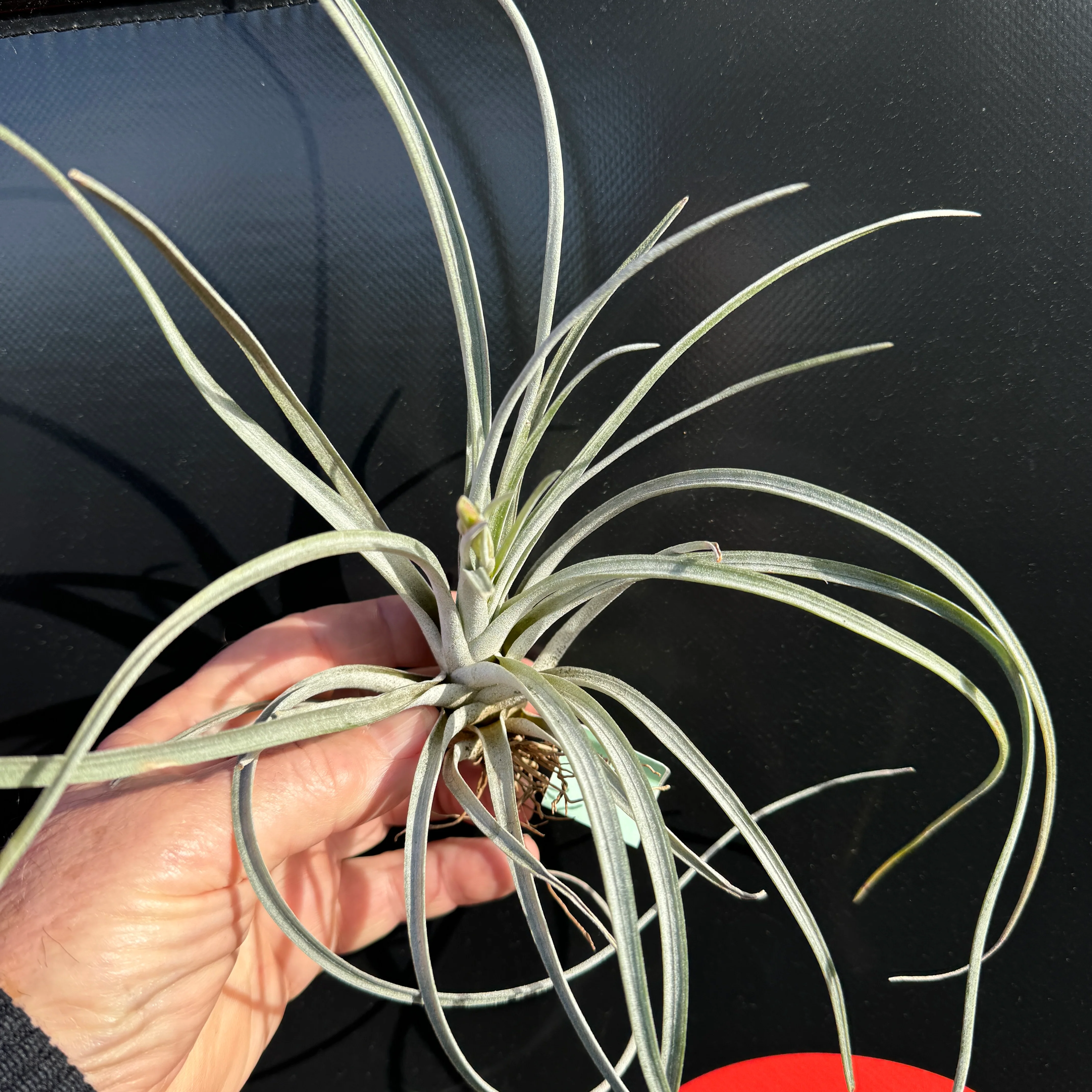
Tillandsia aff. utriculata
Tillandsia aff. utriculata refers to a form that shows close affinity to the species Tillandsia utriculata but may differ morphologically or regionally, often pending formal taxonomic clarification. Native to parts of the Caribbean, Central America, and the southern United States, plants in this complex typically grow in warm, open habitats including pine rocklands and tropical hammocks. This large, tank-forming species develops an upright rosette of broad, grey-green leaves and can produce a towering inflorescence that, in some cases, exceeds one metre in height. The spike is often branched and bears pale green to yellow bracts with purple to lavender tubular flowers. These forms are ecologically significant as water reservoirs in their native habitats.
Care Tips:
- Light: Requires bright light to full sun; thrives in open, airy spaces
- Water: Fill central tank with clean water and flush periodically; mist leaves in dry climates
- Humidity: Prefers moderate to high humidity with good air circulation
- Media: Can be grown mounted or supported in large baskets; avoid enclosed containers
- Temperature: Ideal range is 18–32°C; protect from frost and cold winds
- Fertiliser: Apply diluted bromeliad fertiliser monthly to tank or leaves during growth
Product Information
Product Information
Shipping & Returns
Shipping & Returns
Description
Tillandsia aff. utriculata refers to a form that shows close affinity to the species Tillandsia utriculata but may differ morphologically or regionally, often pending formal taxonomic clarification. Native to parts of the Caribbean, Central America, and the southern United States, plants in this complex typically grow in warm, open habitats including pine rocklands and tropical hammocks. This large, tank-forming species develops an upright rosette of broad, grey-green leaves and can produce a towering inflorescence that, in some cases, exceeds one metre in height. The spike is often branched and bears pale green to yellow bracts with purple to lavender tubular flowers. These forms are ecologically significant as water reservoirs in their native habitats.
Care Tips:
- Light: Requires bright light to full sun; thrives in open, airy spaces
- Water: Fill central tank with clean water and flush periodically; mist leaves in dry climates
- Humidity: Prefers moderate to high humidity with good air circulation
- Media: Can be grown mounted or supported in large baskets; avoid enclosed containers
- Temperature: Ideal range is 18–32°C; protect from frost and cold winds
- Fertiliser: Apply diluted bromeliad fertiliser monthly to tank or leaves during growth