Bulbophyllum fascinator
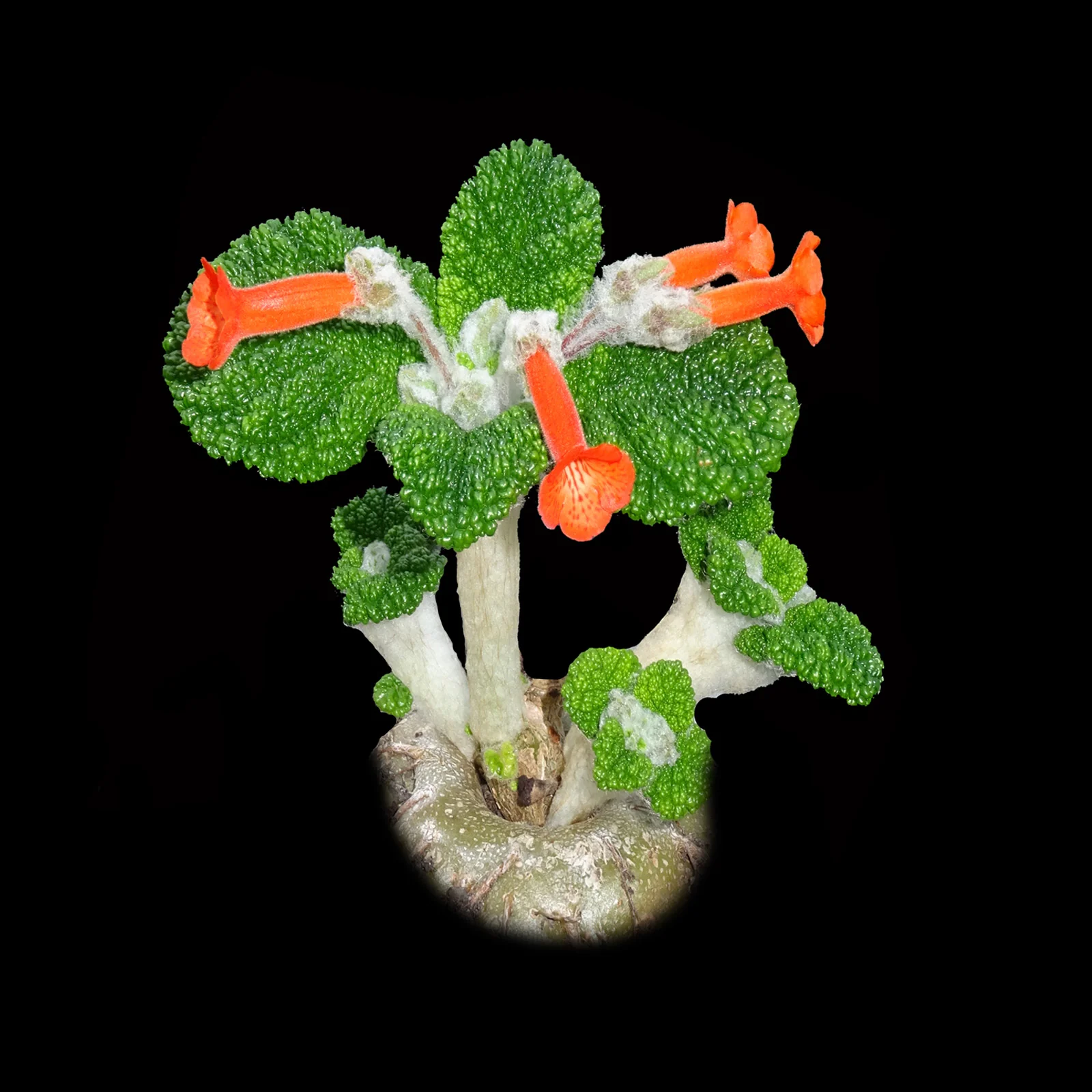
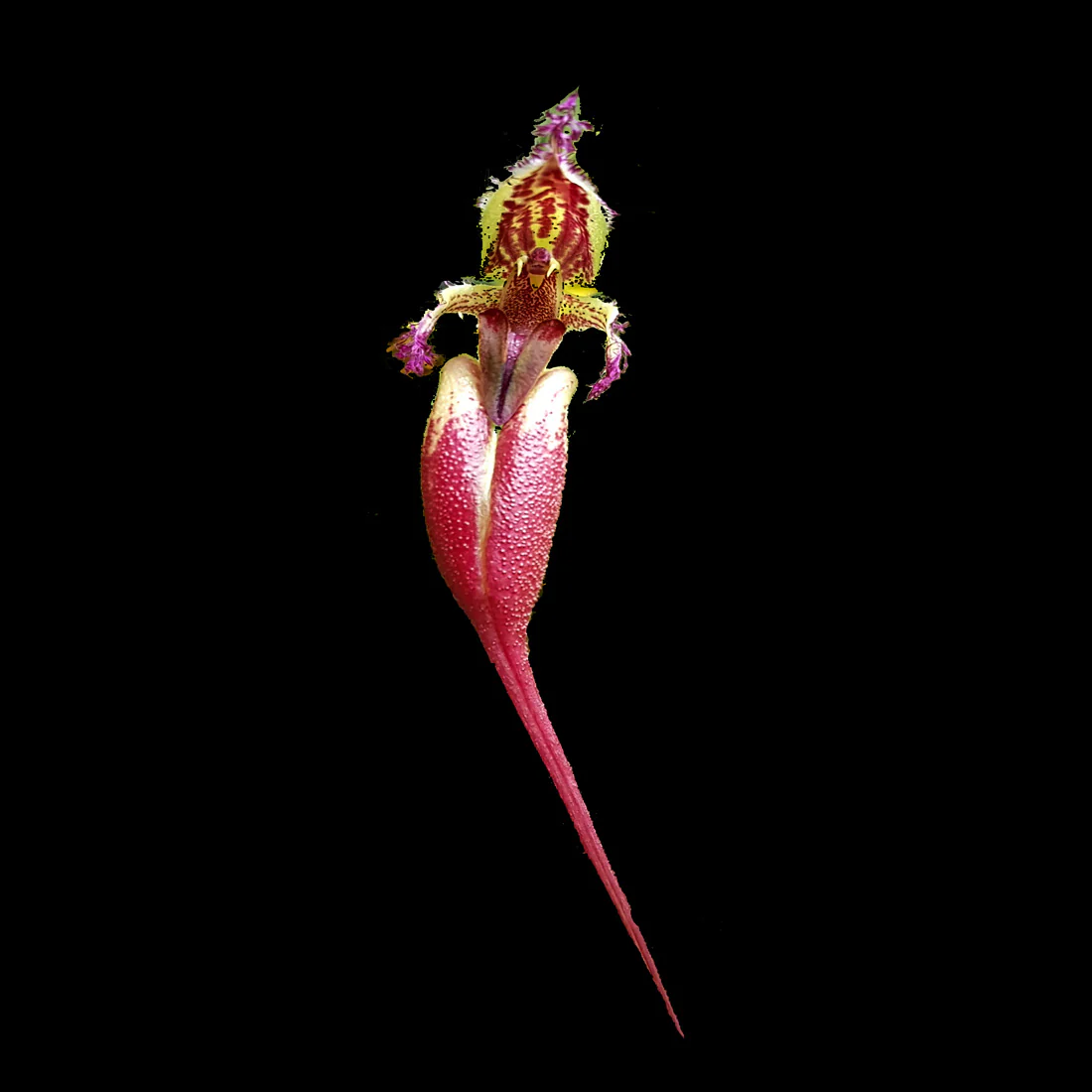
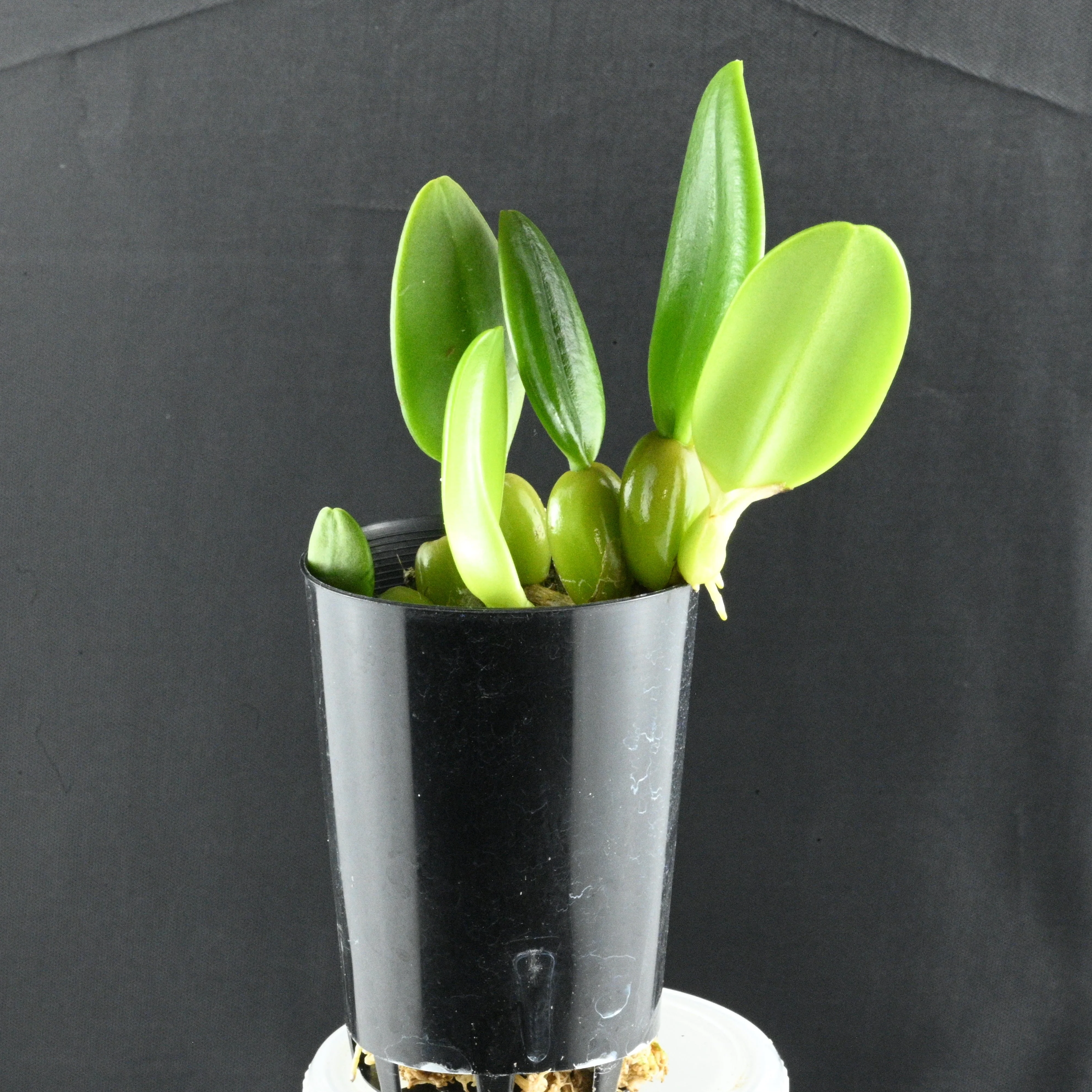
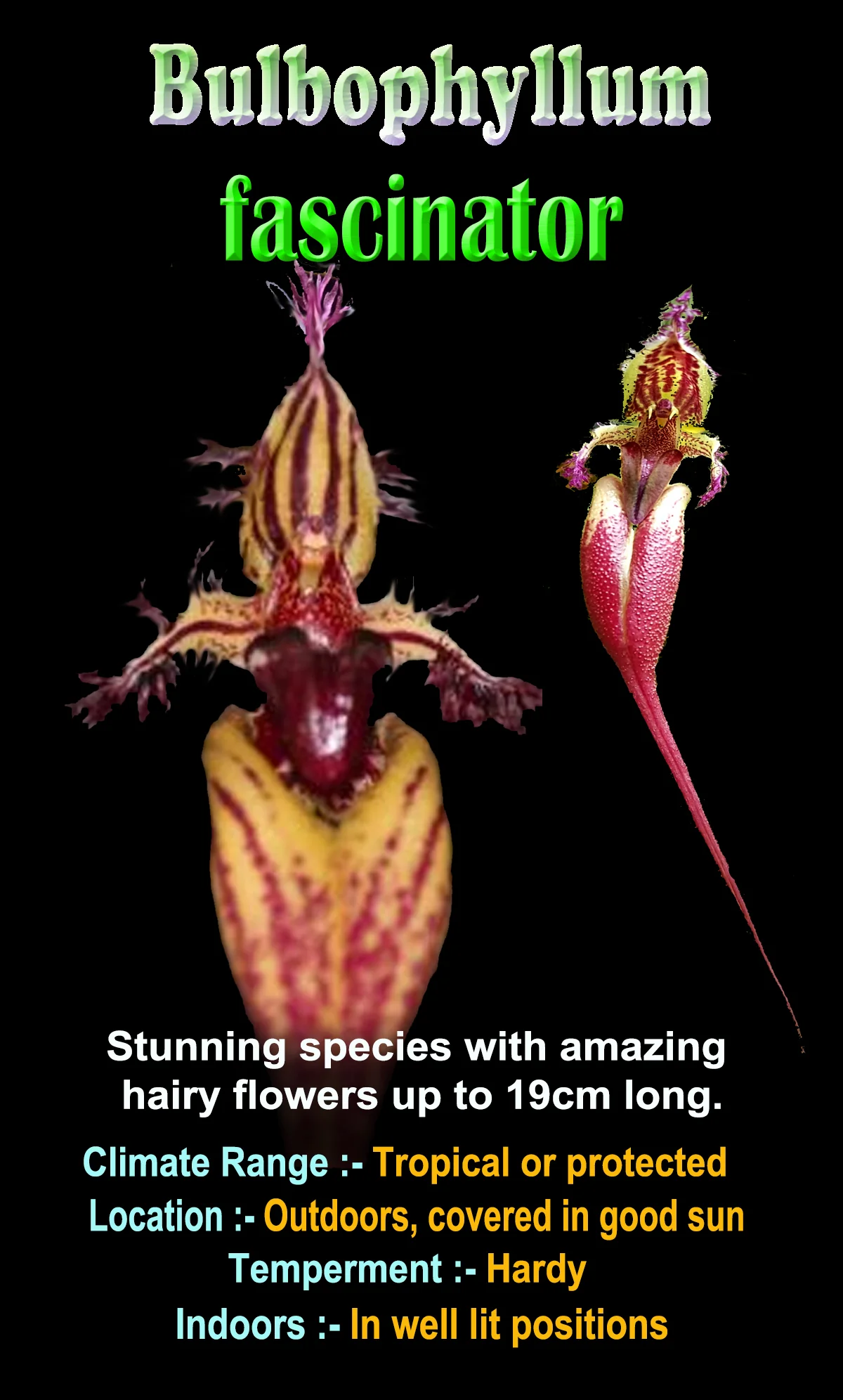
Bulbophyllum fascinator is an orchid species native to Laos, Thailand, and Vietnam, where it inhabits warm, humid forests at mid elevations. It develops small pseudobulbs on a creeping rhizome, each with a single leaf. Inflorescences bear solitary but striking flowers, deep purple to magenta in colour, with narrow petals and exceptionally long, thread-like sepals that can extend well beyond the flower body. This exaggerated sepal structure is adapted to attract fly pollinators, sometimes enhanced by musky floral scents. Its unusual form and vivid colouring make it a prized species among collectors.
Distinctive Features
- Unique Flowers: The deep maroon and gold blooms feature long, thread-like appendages, giving them a fringed appearance.
- Epiphytic Growth: Typically found clinging to tree trunks and branches, it thrives in a well-aerated environment.
- Pseudobulbs and Leaves: Compact pseudobulbs produce a single, leathery leaf, contributing to its efficient water storage.
Care Tips
- Light: Prefers bright, indirect light or dappled shade, avoiding direct midday sun.
- Water: Requires consistent moisture but should not be waterlogged; best watered when the roots begin to dry.
- Humidity: Thrives in high humidity levels (60-80%) and benefits from regular misting.
- Temperature: Prefers warm temperatures between 18-27°C, avoiding cold drafts.
- Fertiliser: Feed with a diluted orchid fertiliser every two weeks during active growth.
- Potting: Grows best in a fine bark mix or mounted on wood with sphagnum moss for enhanced air circulation.
- Propagation: Best propagated by division, ensuring each section has at least one healthy pseudobulb.
Original: $20.00
-65%$20.00
$7.00More Images
Bulbophyllum fascinator
Bulbophyllum fascinator is an orchid species native to Laos, Thailand, and Vietnam, where it inhabits warm, humid forests at mid elevations. It develops small pseudobulbs on a creeping rhizome, each with a single leaf. Inflorescences bear solitary but striking flowers, deep purple to magenta in colour, with narrow petals and exceptionally long, thread-like sepals that can extend well beyond the flower body. This exaggerated sepal structure is adapted to attract fly pollinators, sometimes enhanced by musky floral scents. Its unusual form and vivid colouring make it a prized species among collectors.
Distinctive Features
- Unique Flowers: The deep maroon and gold blooms feature long, thread-like appendages, giving them a fringed appearance.
- Epiphytic Growth: Typically found clinging to tree trunks and branches, it thrives in a well-aerated environment.
- Pseudobulbs and Leaves: Compact pseudobulbs produce a single, leathery leaf, contributing to its efficient water storage.
Care Tips
- Light: Prefers bright, indirect light or dappled shade, avoiding direct midday sun.
- Water: Requires consistent moisture but should not be waterlogged; best watered when the roots begin to dry.
- Humidity: Thrives in high humidity levels (60-80%) and benefits from regular misting.
- Temperature: Prefers warm temperatures between 18-27°C, avoiding cold drafts.
- Fertiliser: Feed with a diluted orchid fertiliser every two weeks during active growth.
- Potting: Grows best in a fine bark mix or mounted on wood with sphagnum moss for enhanced air circulation.
- Propagation: Best propagated by division, ensuring each section has at least one healthy pseudobulb.
Product Information
Product Information
Shipping & Returns
Shipping & Returns
Description
Bulbophyllum fascinator is an orchid species native to Laos, Thailand, and Vietnam, where it inhabits warm, humid forests at mid elevations. It develops small pseudobulbs on a creeping rhizome, each with a single leaf. Inflorescences bear solitary but striking flowers, deep purple to magenta in colour, with narrow petals and exceptionally long, thread-like sepals that can extend well beyond the flower body. This exaggerated sepal structure is adapted to attract fly pollinators, sometimes enhanced by musky floral scents. Its unusual form and vivid colouring make it a prized species among collectors.
Distinctive Features
- Unique Flowers: The deep maroon and gold blooms feature long, thread-like appendages, giving them a fringed appearance.
- Epiphytic Growth: Typically found clinging to tree trunks and branches, it thrives in a well-aerated environment.
- Pseudobulbs and Leaves: Compact pseudobulbs produce a single, leathery leaf, contributing to its efficient water storage.
Care Tips
- Light: Prefers bright, indirect light or dappled shade, avoiding direct midday sun.
- Water: Requires consistent moisture but should not be waterlogged; best watered when the roots begin to dry.
- Humidity: Thrives in high humidity levels (60-80%) and benefits from regular misting.
- Temperature: Prefers warm temperatures between 18-27°C, avoiding cold drafts.
- Fertiliser: Feed with a diluted orchid fertiliser every two weeks during active growth.
- Potting: Grows best in a fine bark mix or mounted on wood with sphagnum moss for enhanced air circulation.
- Propagation: Best propagated by division, ensuring each section has at least one healthy pseudobulb.