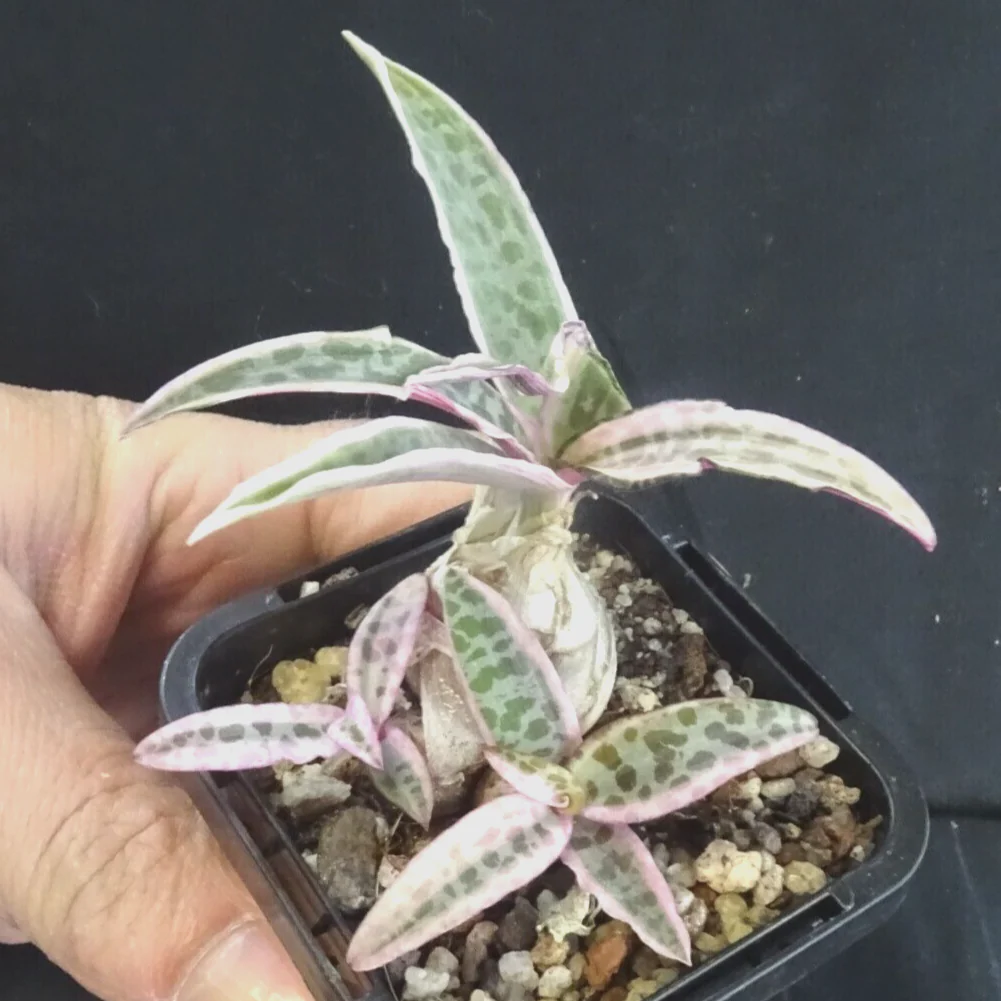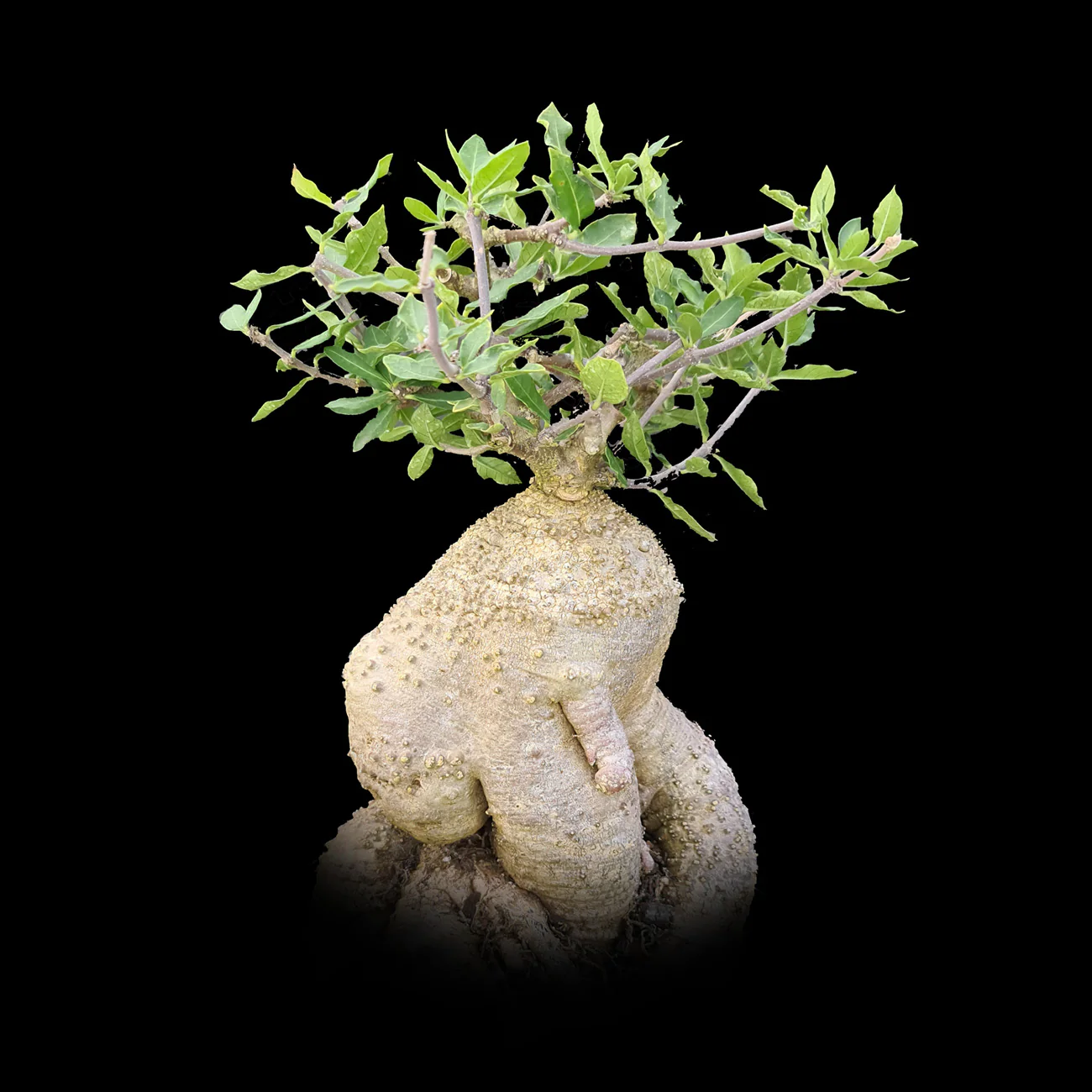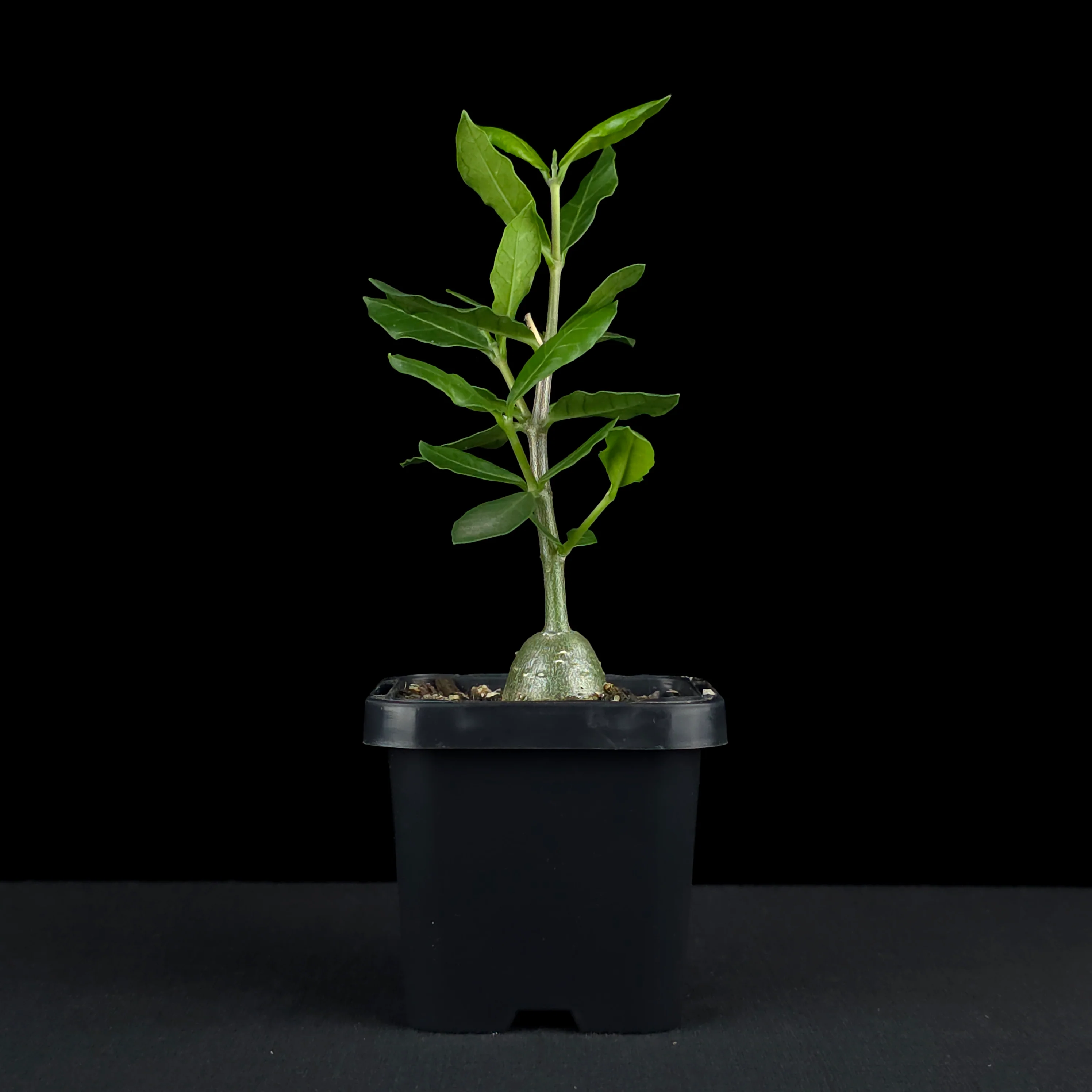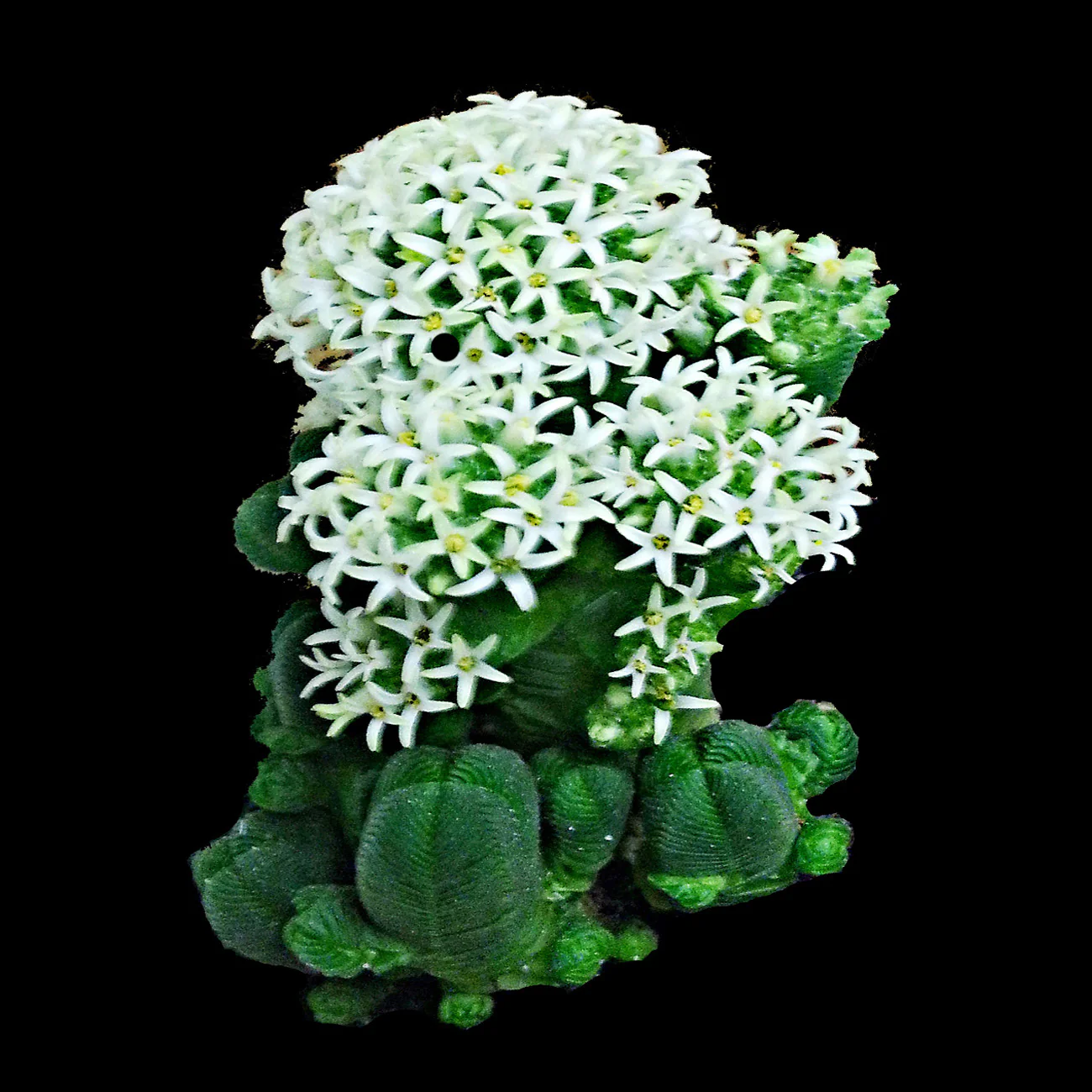
Sinningia leucotricha 'Brazillian Edelweiss'
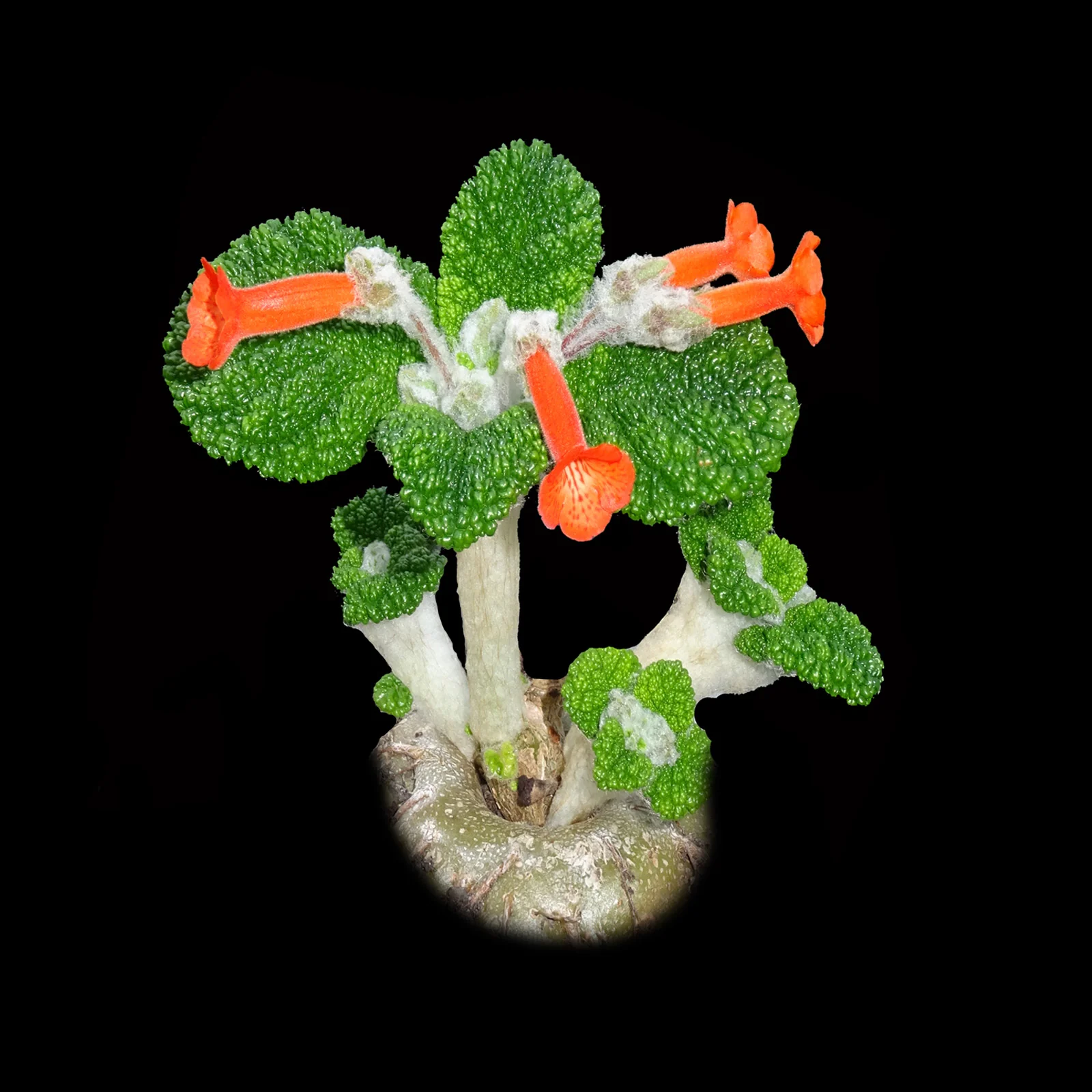
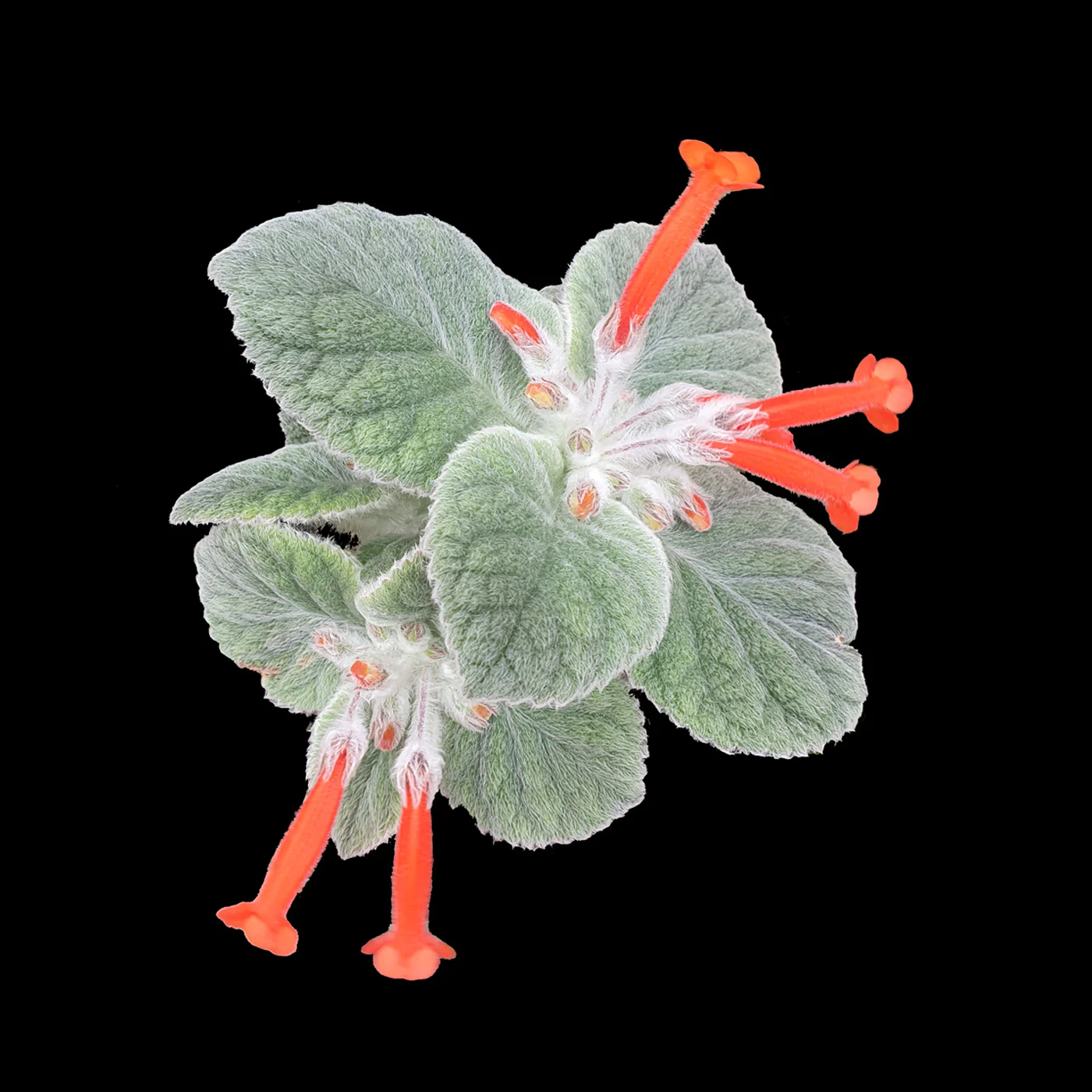
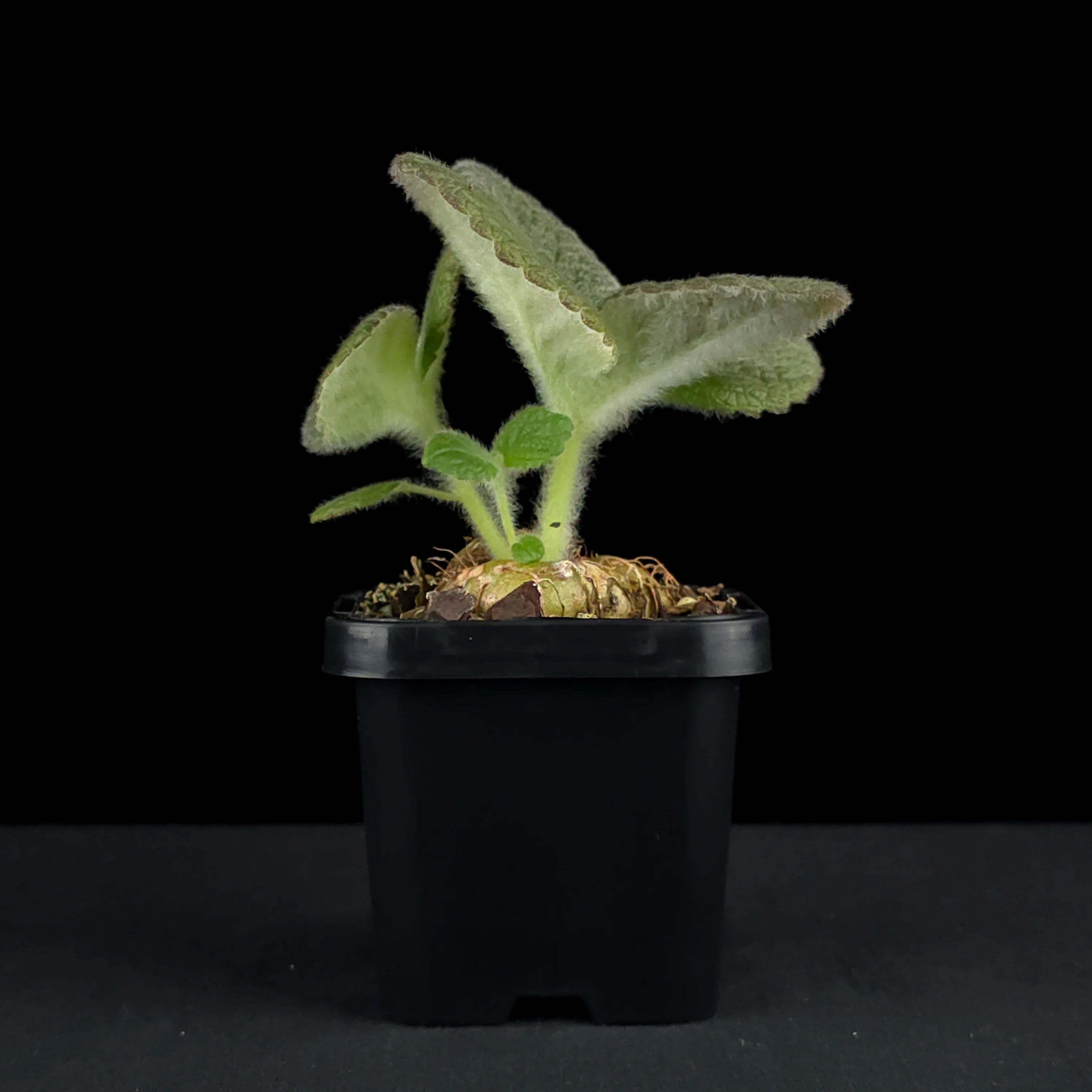
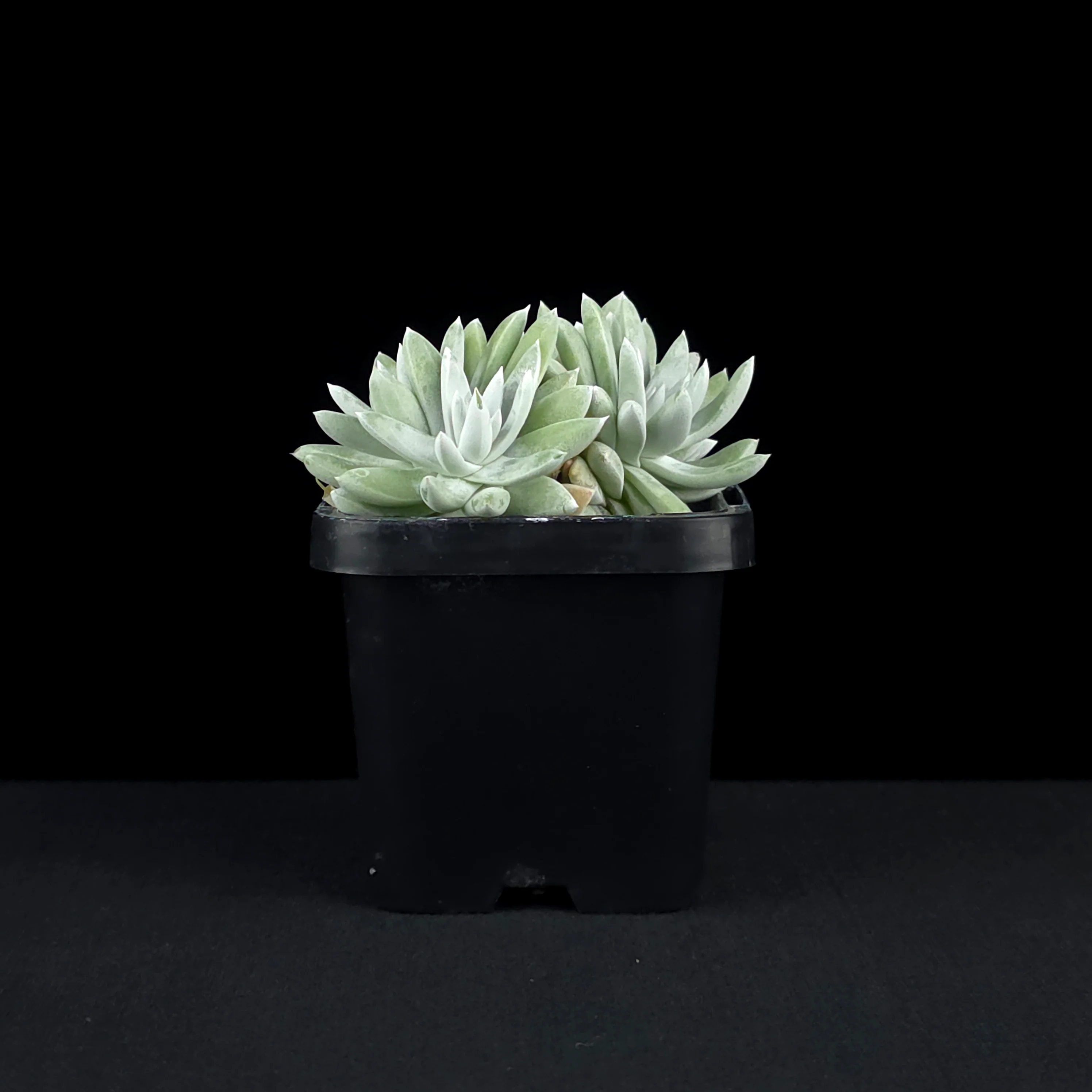
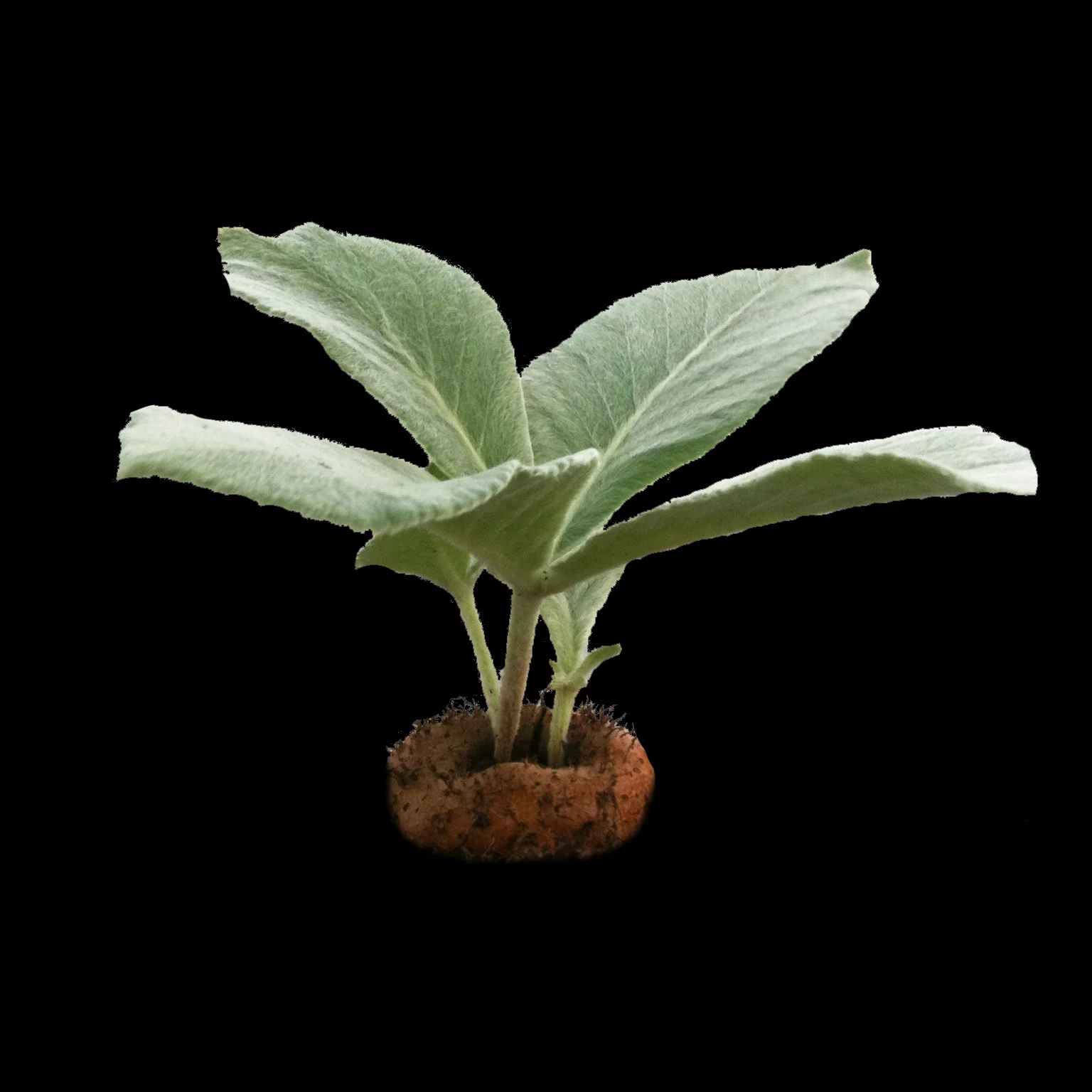
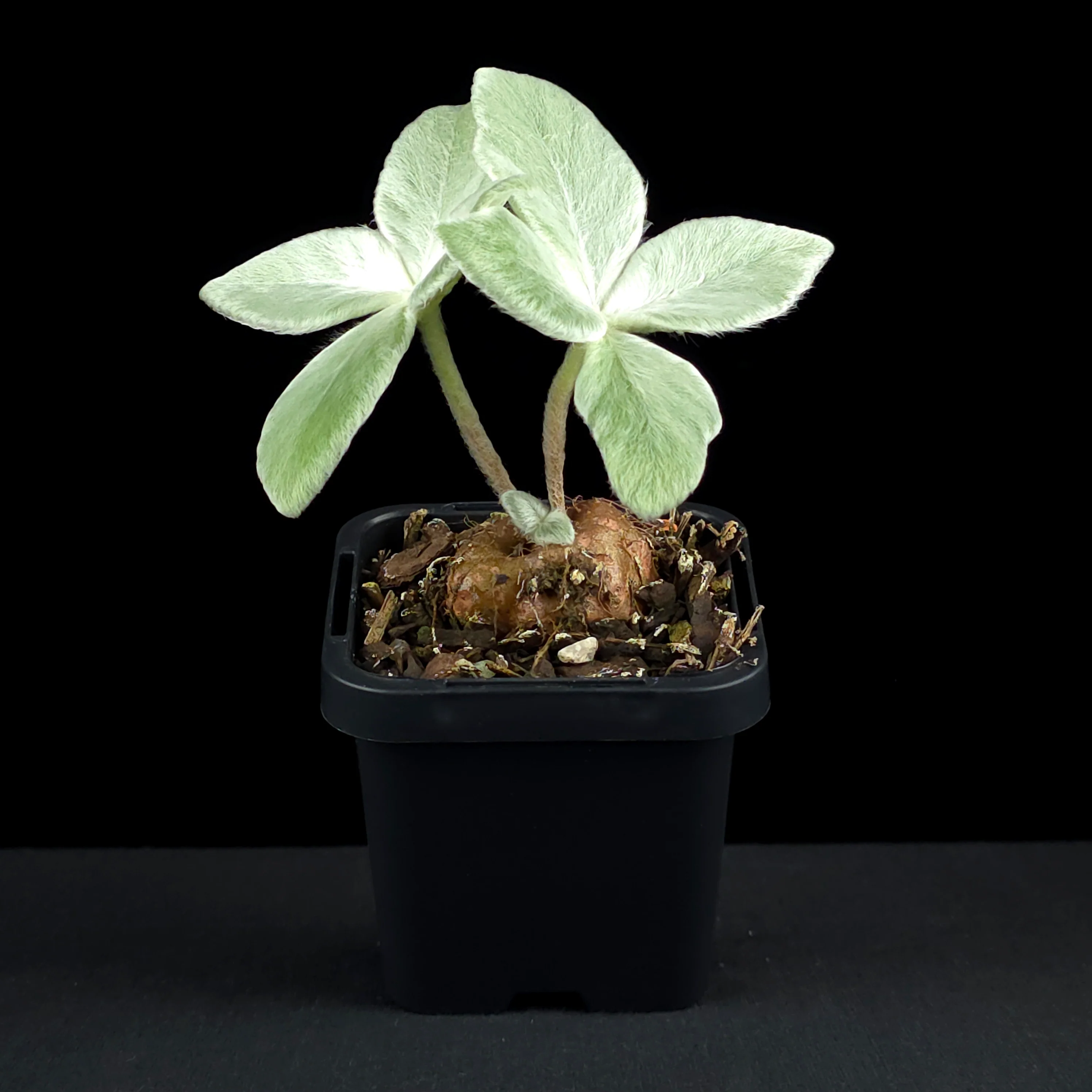
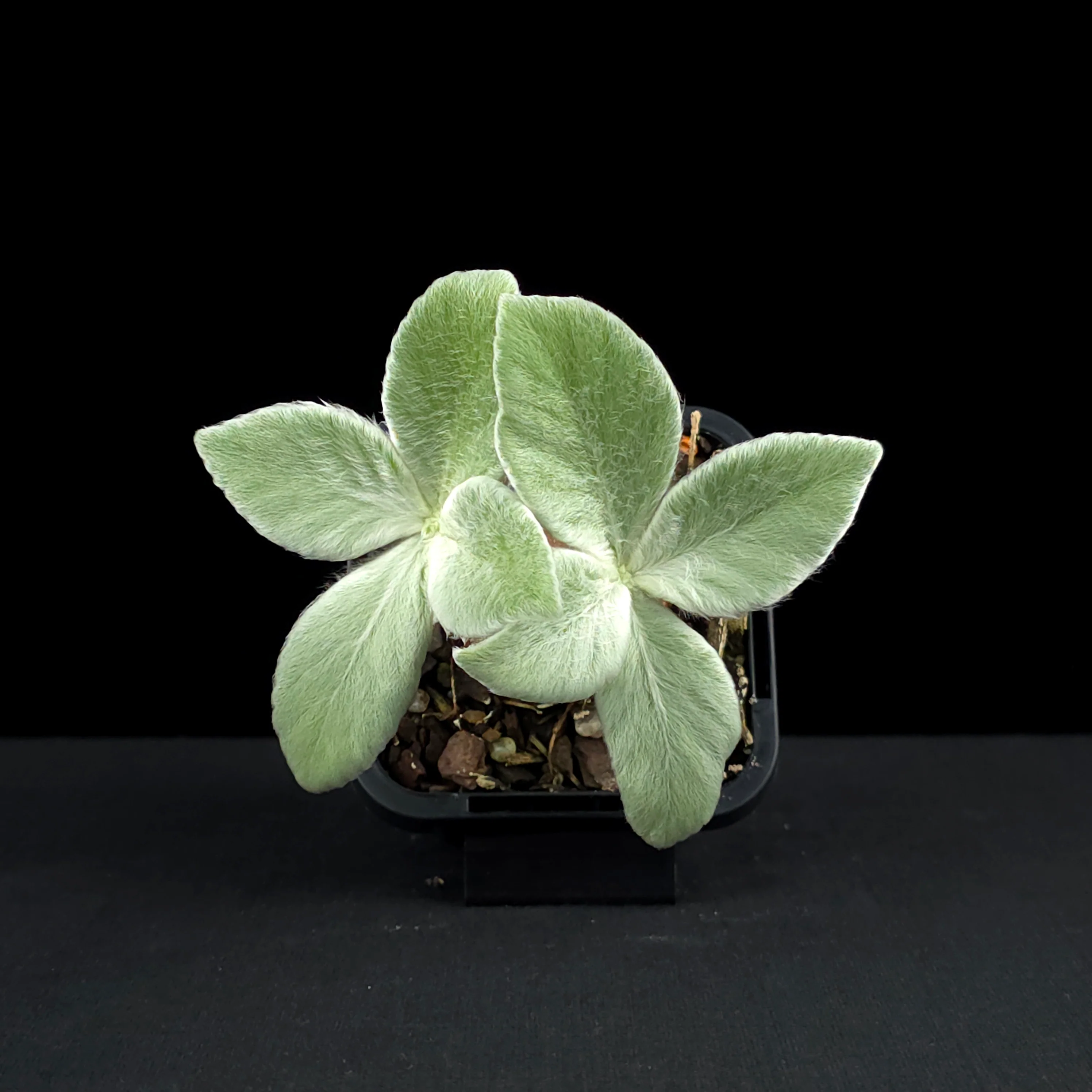
Sinningia leucotricha, commonly known as Brazilian Edelweiss, is a tuberous perennial species native to Paraná in southern Brazil, where it grows on rocky slopes and cliffs. It forms a woody caudex from which seasonal shoots emerge, each bearing silvery, felted leaves that help reduce water loss in its exposed habitat.
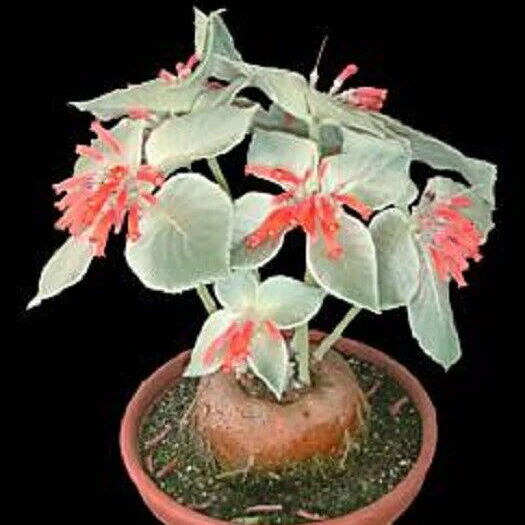
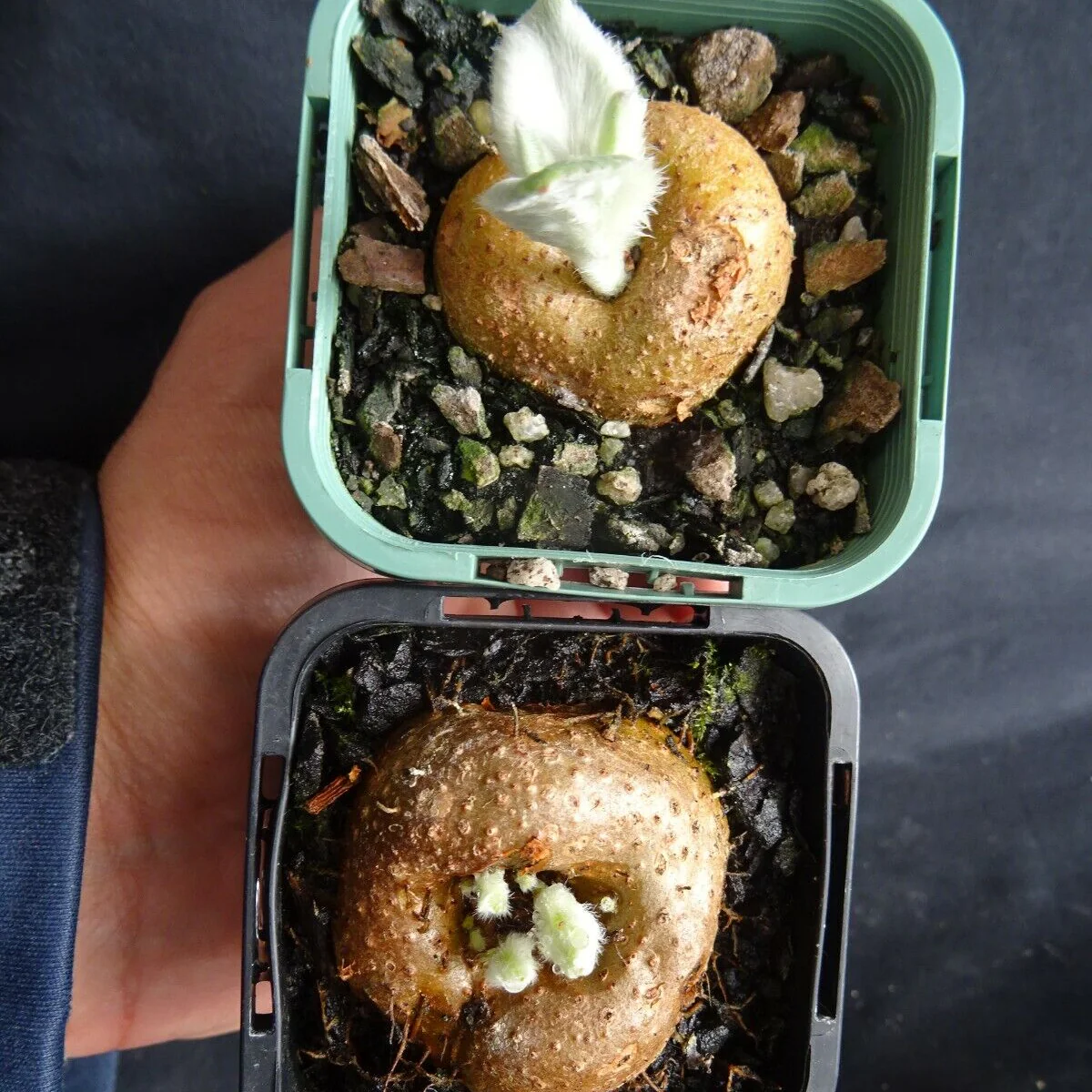
In spring to early summer, clusters of tubular orange-red flowers appear above the foliage, attracting hummingbirds and other pollinators. The plant undergoes a dormancy period during cooler months, shedding its leaves and resting as a caudex until growth resumes with warmer temperatures.
Care Tips:
- Light: Provide bright light with some direct morning or late afternoon sun.
- Water: Water moderately during active growth, allowing the topsoil to dry between waterings; keep the caudex dry during dormancy.
- Media: Use a coarse, free-draining mix suitable for caudiciform plants.
- Temperature: Keep warm during the growing season; protect from cold and frost.
- Fertiliser: Feed with a diluted, balanced fertiliser every 3-4 weeks while in leaf.
- Repotting: Repot in early spring before new growth, keeping the caudex partly exposed above the soil.
Original: $10.00
-65%$10.00
$3.50More Images
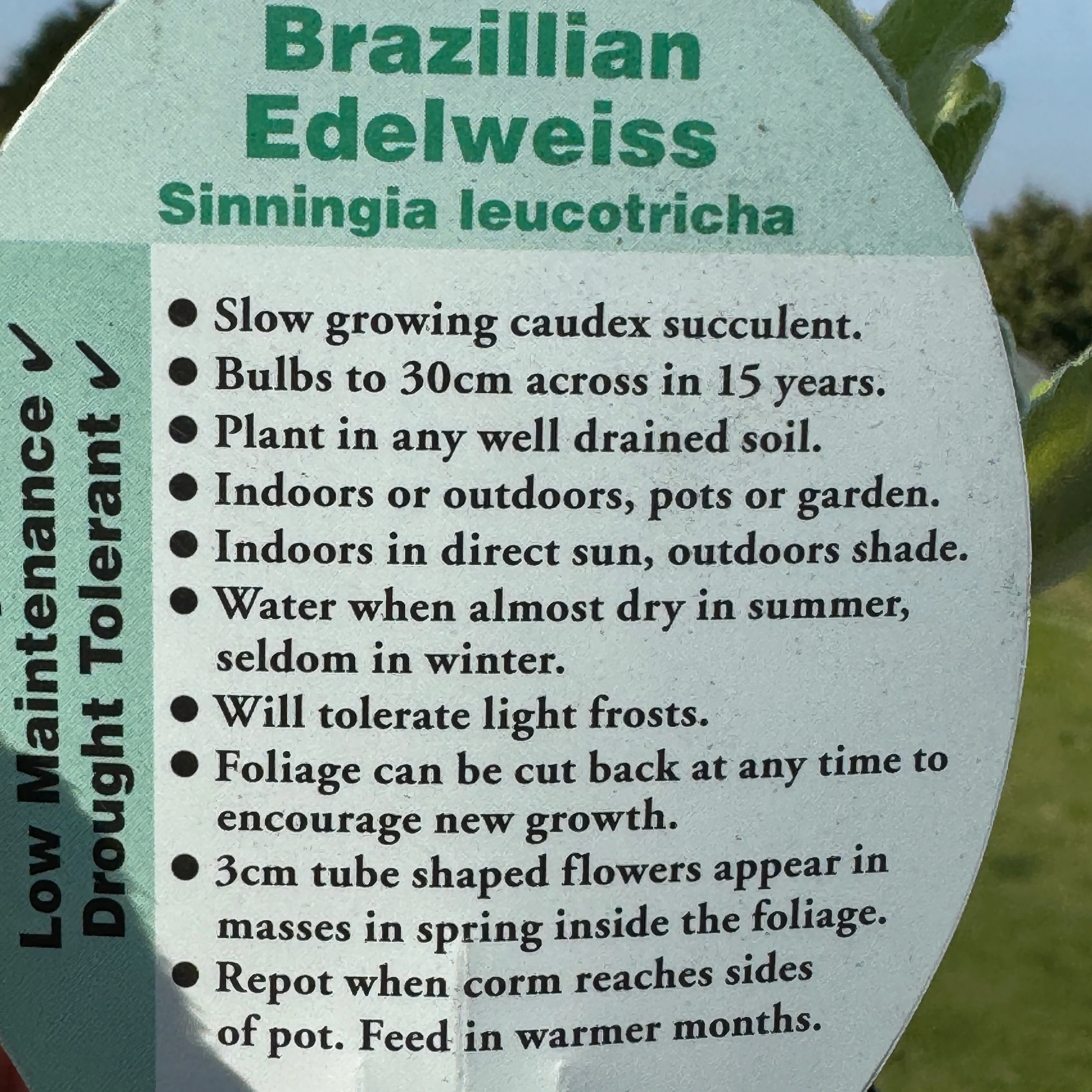
Sinningia leucotricha 'Brazillian Edelweiss'
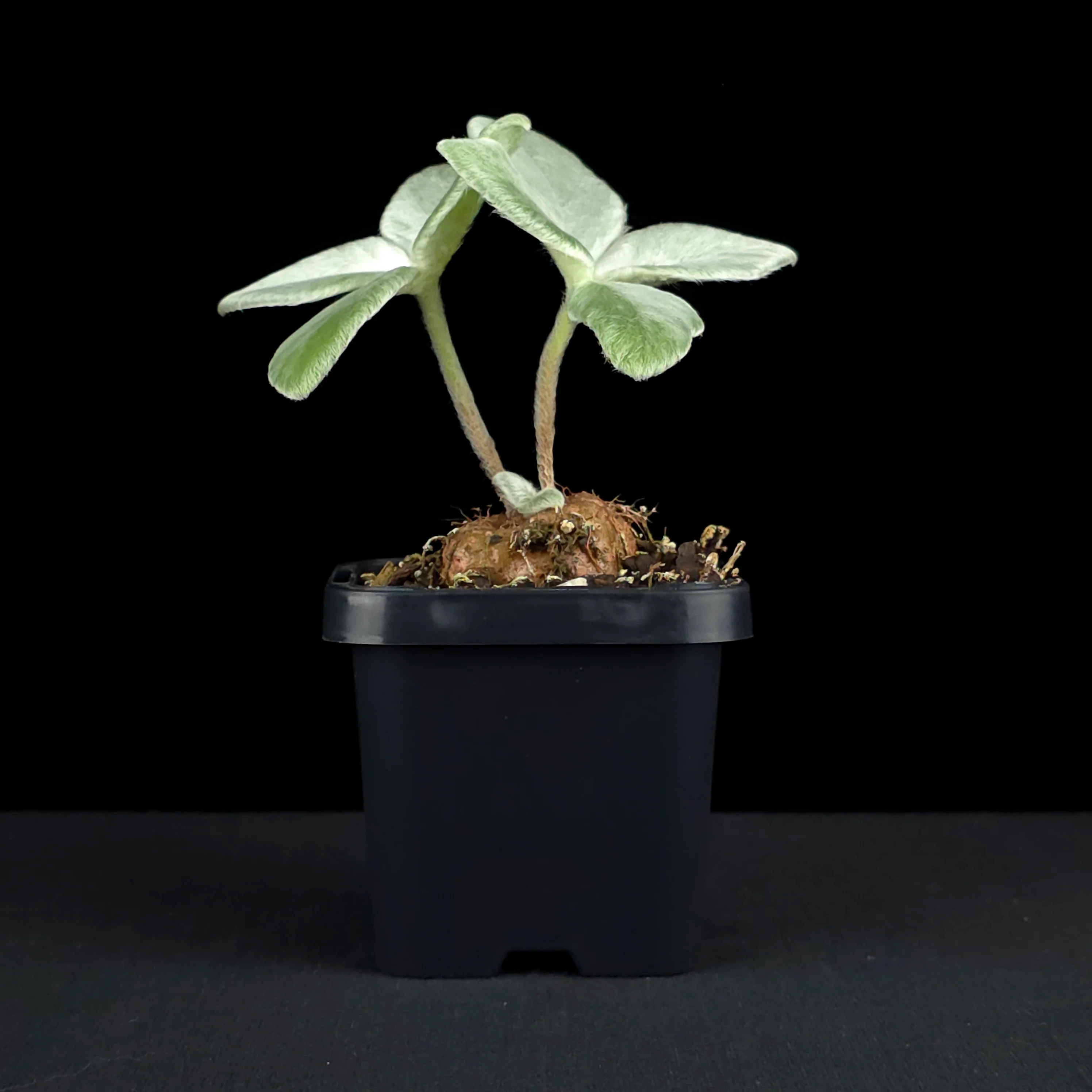
Sinningia leucotricha, commonly known as Brazilian Edelweiss, is a tuberous perennial species native to Paraná in southern Brazil, where it grows on rocky slopes and cliffs. It forms a woody caudex from which seasonal shoots emerge, each bearing silvery, felted leaves that help reduce water loss in its exposed habitat.
In spring to early summer, clusters of tubular orange-red flowers appear above the foliage, attracting hummingbirds and other pollinators. The plant undergoes a dormancy period during cooler months, shedding its leaves and resting as a caudex until growth resumes with warmer temperatures.
Care Tips:
- Light: Provide bright light with some direct morning or late afternoon sun.
- Water: Water moderately during active growth, allowing the topsoil to dry between waterings; keep the caudex dry during dormancy.
- Media: Use a coarse, free-draining mix suitable for caudiciform plants.
- Temperature: Keep warm during the growing season; protect from cold and frost.
- Fertiliser: Feed with a diluted, balanced fertiliser every 3-4 weeks while in leaf.
- Repotting: Repot in early spring before new growth, keeping the caudex partly exposed above the soil.
Product Information
Product Information
Shipping & Returns
Shipping & Returns
Description
Sinningia leucotricha, commonly known as Brazilian Edelweiss, is a tuberous perennial species native to Paraná in southern Brazil, where it grows on rocky slopes and cliffs. It forms a woody caudex from which seasonal shoots emerge, each bearing silvery, felted leaves that help reduce water loss in its exposed habitat.
In spring to early summer, clusters of tubular orange-red flowers appear above the foliage, attracting hummingbirds and other pollinators. The plant undergoes a dormancy period during cooler months, shedding its leaves and resting as a caudex until growth resumes with warmer temperatures.
Care Tips:
- Light: Provide bright light with some direct morning or late afternoon sun.
- Water: Water moderately during active growth, allowing the topsoil to dry between waterings; keep the caudex dry during dormancy.
- Media: Use a coarse, free-draining mix suitable for caudiciform plants.
- Temperature: Keep warm during the growing season; protect from cold and frost.
- Fertiliser: Feed with a diluted, balanced fertiliser every 3-4 weeks while in leaf.
- Repotting: Repot in early spring before new growth, keeping the caudex partly exposed above the soil.