Cymbidium Paradisian Surprise 'Splash of Pink' 2 only
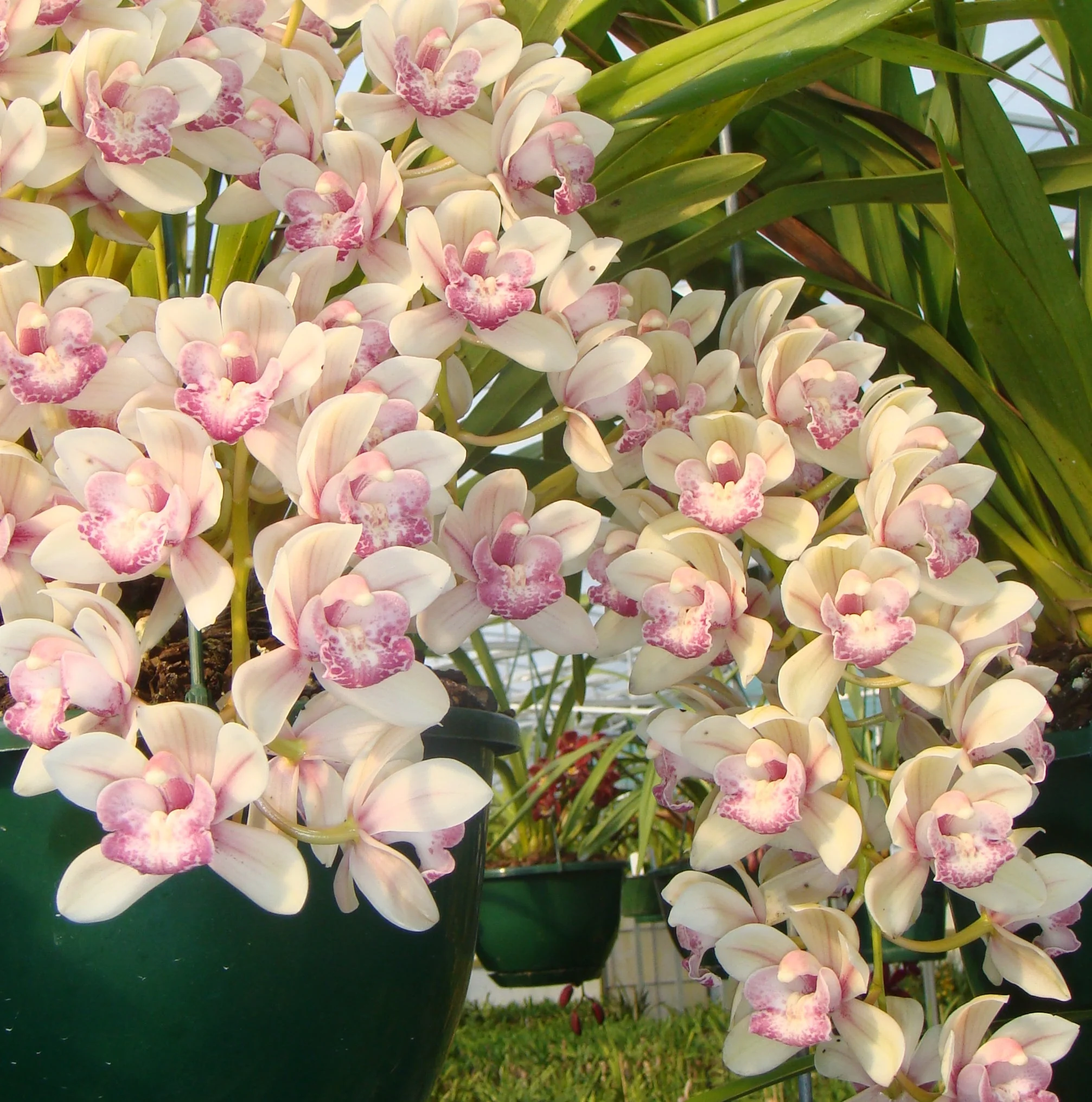
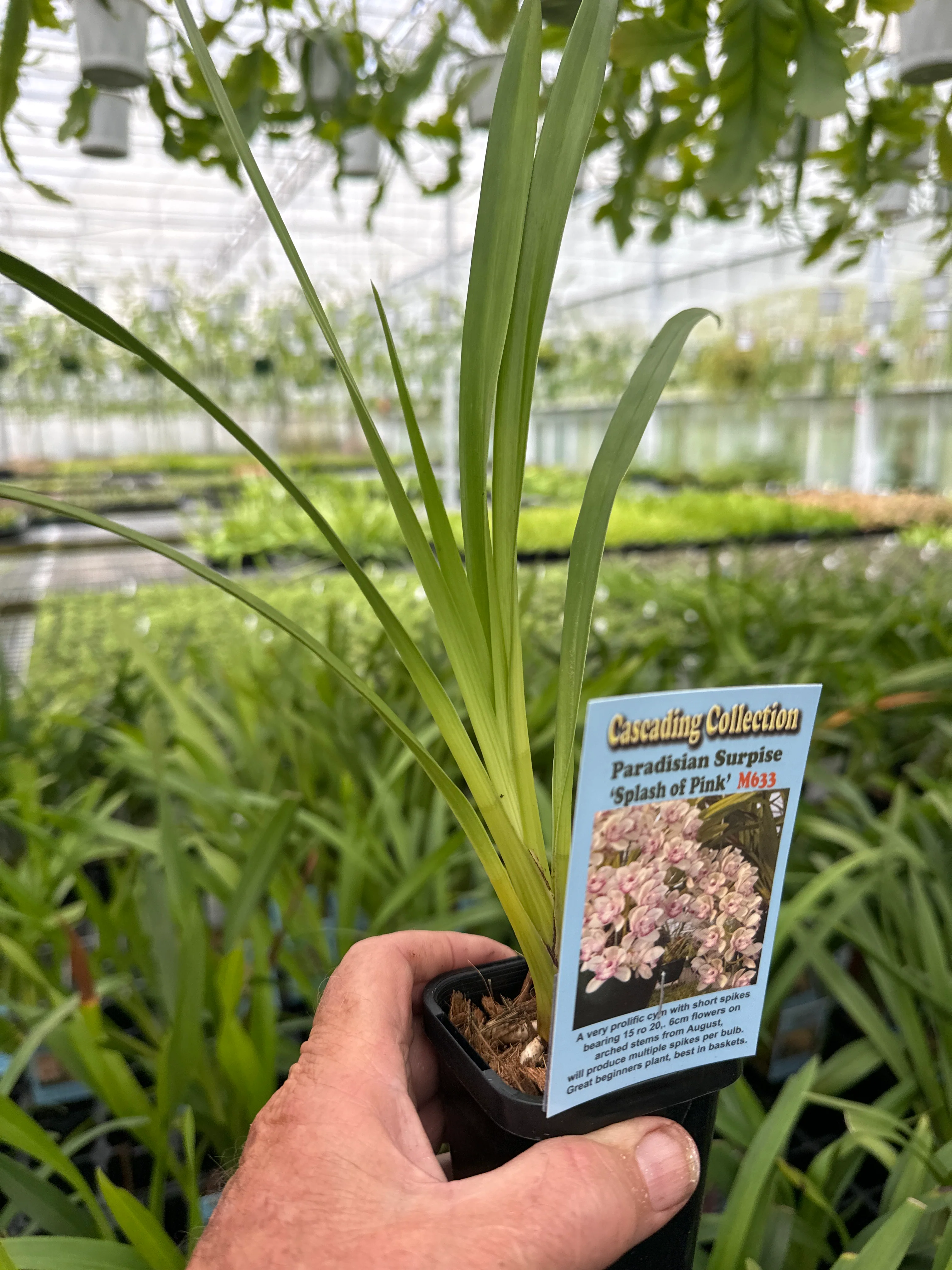
Cymbidium Paradisian Surprise 'Splash of Pink' is a selected cultivar from the grex. This hybrid was registered by M. J. McBean in 2000 from the cross between Cymbidium Paradisian Dream and Cymbidium Eastern Magic. The cultivar 'Splash of Pink' produces upright spikes of pale to mid-pink flowers, often showing darker splashes of colour across the petals and a contrasting lip. It is well suited to pot culture in cool to temperate growing conditions.
Key Characteristics
- Flower size: Medium to large (approx. 8–9 cm)
- Flower colour & pattern: Light to mid-pink with darker pink splashing; lip patterned with deeper markings
- Spike habit: Upright; typically 2–3 spikes per bulb
- Blooming season: Mid-season
- Plant size: Medium
- Growth habit: Clumping
- Fragrance: Light fragrance possible
- Flower count per spike: 12–18 flowers
- Bloom longevity: 6 weeks or more
Care Notes
- Position: Bright filtered light; gentle morning sun is beneficial
- Water: Maintain regular watering during active growth; reduce in winter
- Potting: Free-draining orchid mix; suited to pots or baskets
- Feeding: Fortnightly with balanced fertiliser during growth; change to high-potassium fertiliser in autumn
- Climate: Cool to temperate conditions preferred
- Repotting: Every 2–3 years, ideally after flowering
Original: $25.00
-65%$25.00
$8.75More Images
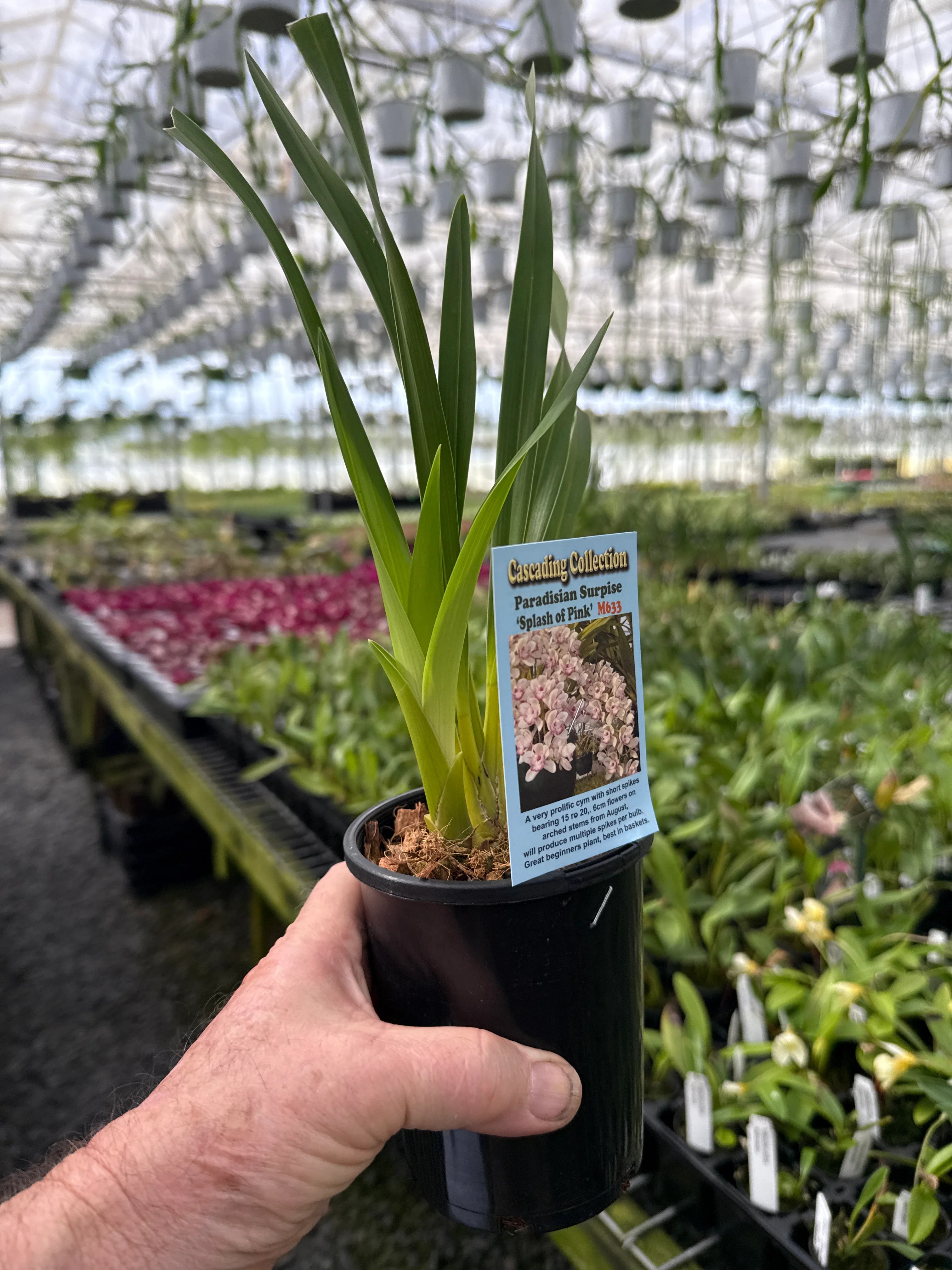
Cymbidium Paradisian Surprise 'Splash of Pink' 2 only
Cymbidium Paradisian Surprise 'Splash of Pink' is a selected cultivar from the grex. This hybrid was registered by M. J. McBean in 2000 from the cross between Cymbidium Paradisian Dream and Cymbidium Eastern Magic. The cultivar 'Splash of Pink' produces upright spikes of pale to mid-pink flowers, often showing darker splashes of colour across the petals and a contrasting lip. It is well suited to pot culture in cool to temperate growing conditions.
Key Characteristics
- Flower size: Medium to large (approx. 8–9 cm)
- Flower colour & pattern: Light to mid-pink with darker pink splashing; lip patterned with deeper markings
- Spike habit: Upright; typically 2–3 spikes per bulb
- Blooming season: Mid-season
- Plant size: Medium
- Growth habit: Clumping
- Fragrance: Light fragrance possible
- Flower count per spike: 12–18 flowers
- Bloom longevity: 6 weeks or more
Care Notes
- Position: Bright filtered light; gentle morning sun is beneficial
- Water: Maintain regular watering during active growth; reduce in winter
- Potting: Free-draining orchid mix; suited to pots or baskets
- Feeding: Fortnightly with balanced fertiliser during growth; change to high-potassium fertiliser in autumn
- Climate: Cool to temperate conditions preferred
- Repotting: Every 2–3 years, ideally after flowering
Product Information
Product Information
Shipping & Returns
Shipping & Returns
Description
Cymbidium Paradisian Surprise 'Splash of Pink' is a selected cultivar from the grex. This hybrid was registered by M. J. McBean in 2000 from the cross between Cymbidium Paradisian Dream and Cymbidium Eastern Magic. The cultivar 'Splash of Pink' produces upright spikes of pale to mid-pink flowers, often showing darker splashes of colour across the petals and a contrasting lip. It is well suited to pot culture in cool to temperate growing conditions.
Key Characteristics
- Flower size: Medium to large (approx. 8–9 cm)
- Flower colour & pattern: Light to mid-pink with darker pink splashing; lip patterned with deeper markings
- Spike habit: Upright; typically 2–3 spikes per bulb
- Blooming season: Mid-season
- Plant size: Medium
- Growth habit: Clumping
- Fragrance: Light fragrance possible
- Flower count per spike: 12–18 flowers
- Bloom longevity: 6 weeks or more
Care Notes
- Position: Bright filtered light; gentle morning sun is beneficial
- Water: Maintain regular watering during active growth; reduce in winter
- Potting: Free-draining orchid mix; suited to pots or baskets
- Feeding: Fortnightly with balanced fertiliser during growth; change to high-potassium fertiliser in autumn
- Climate: Cool to temperate conditions preferred
- Repotting: Every 2–3 years, ideally after flowering