Dendrobium parishii '6 eyes'
Dendrobium parishii '6 Eyes' is a selected form of the orchid species Dendrobium parishii, which is native to Southeast Asia, including Myanmar, Thailand, Laos, and Vietnam. It grows in warm to intermediate forests at elevations between 600 and 1,200 metres, often on tree trunks or large branches where it receives bright, filtered light and seasonal rainfall.
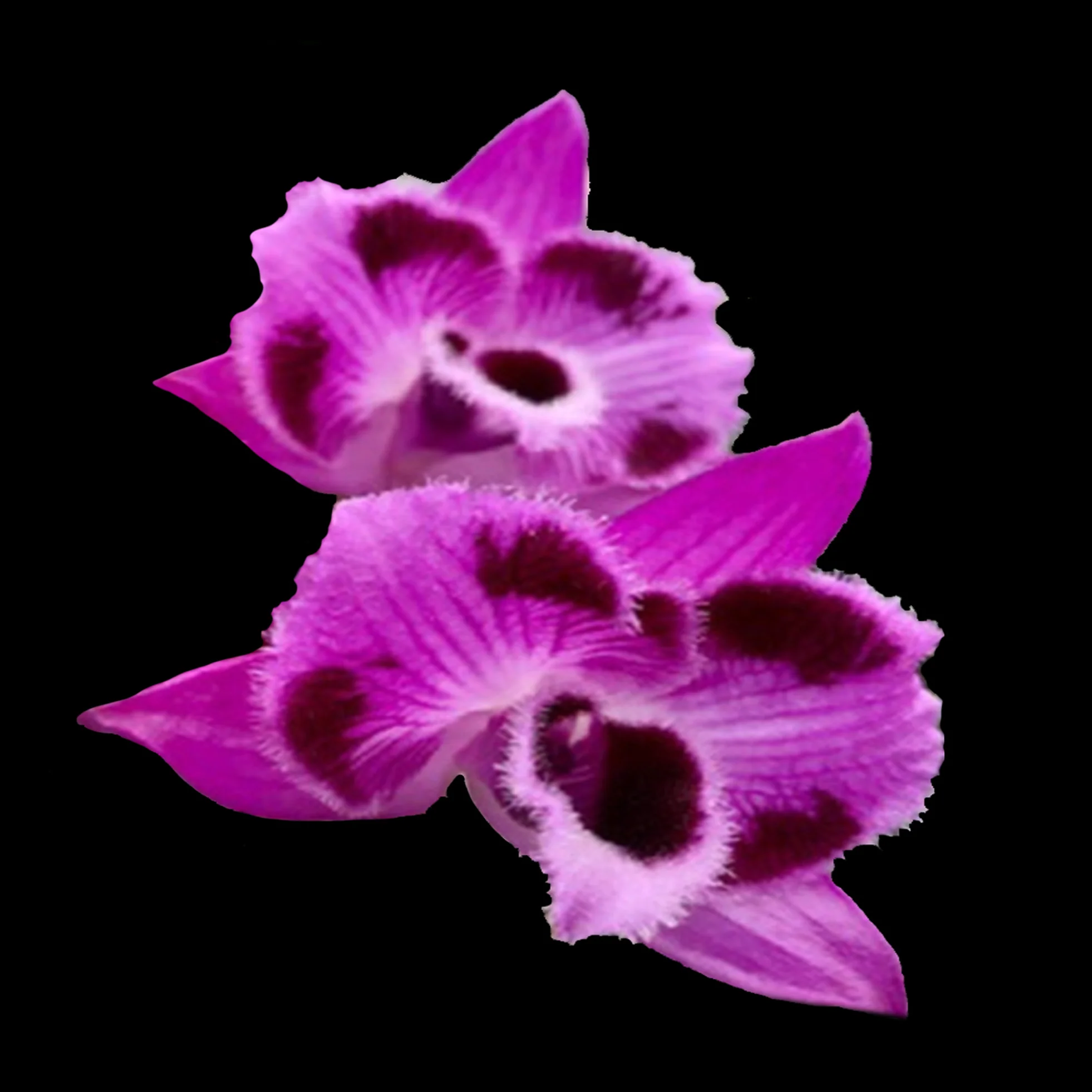
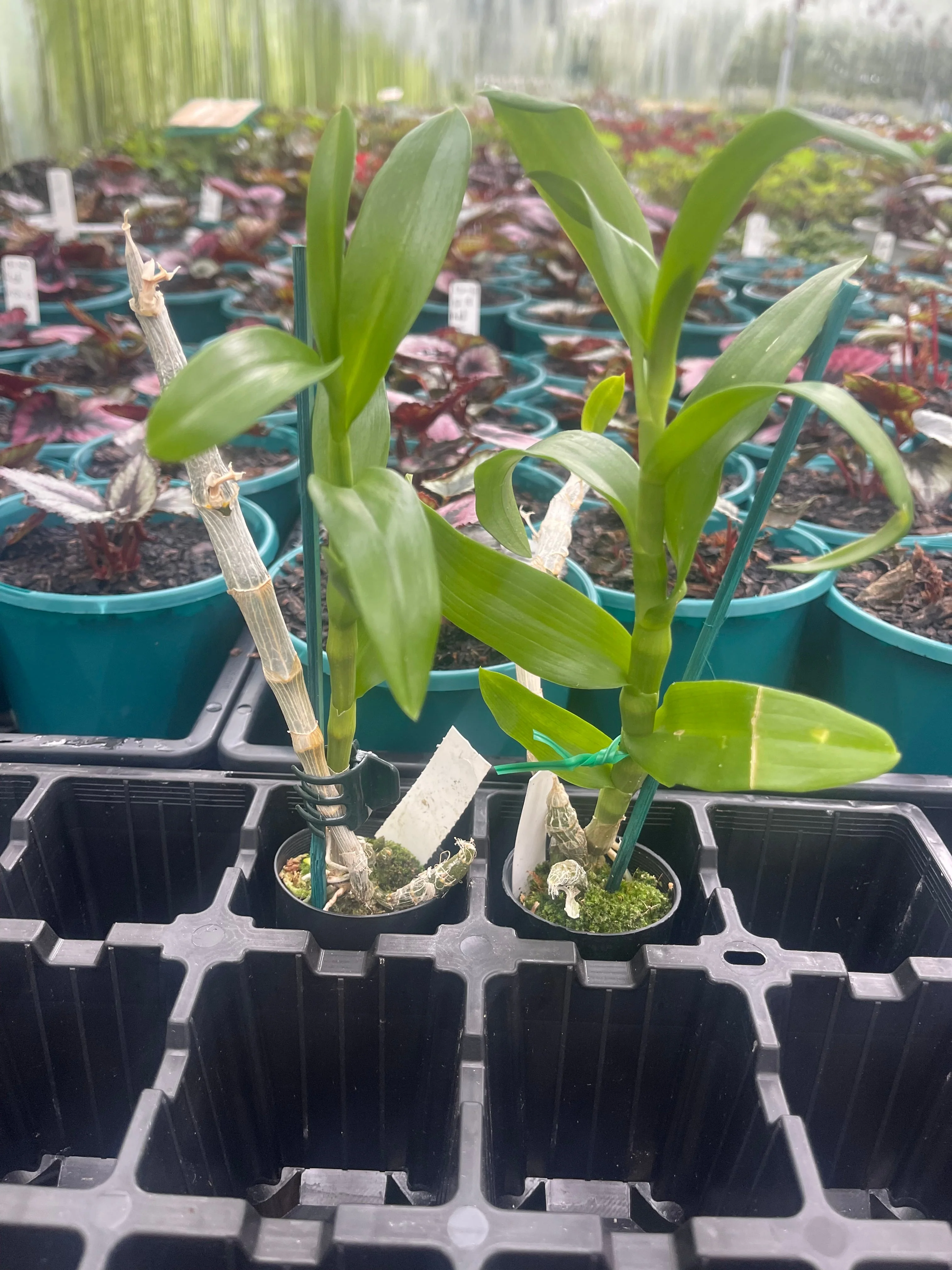
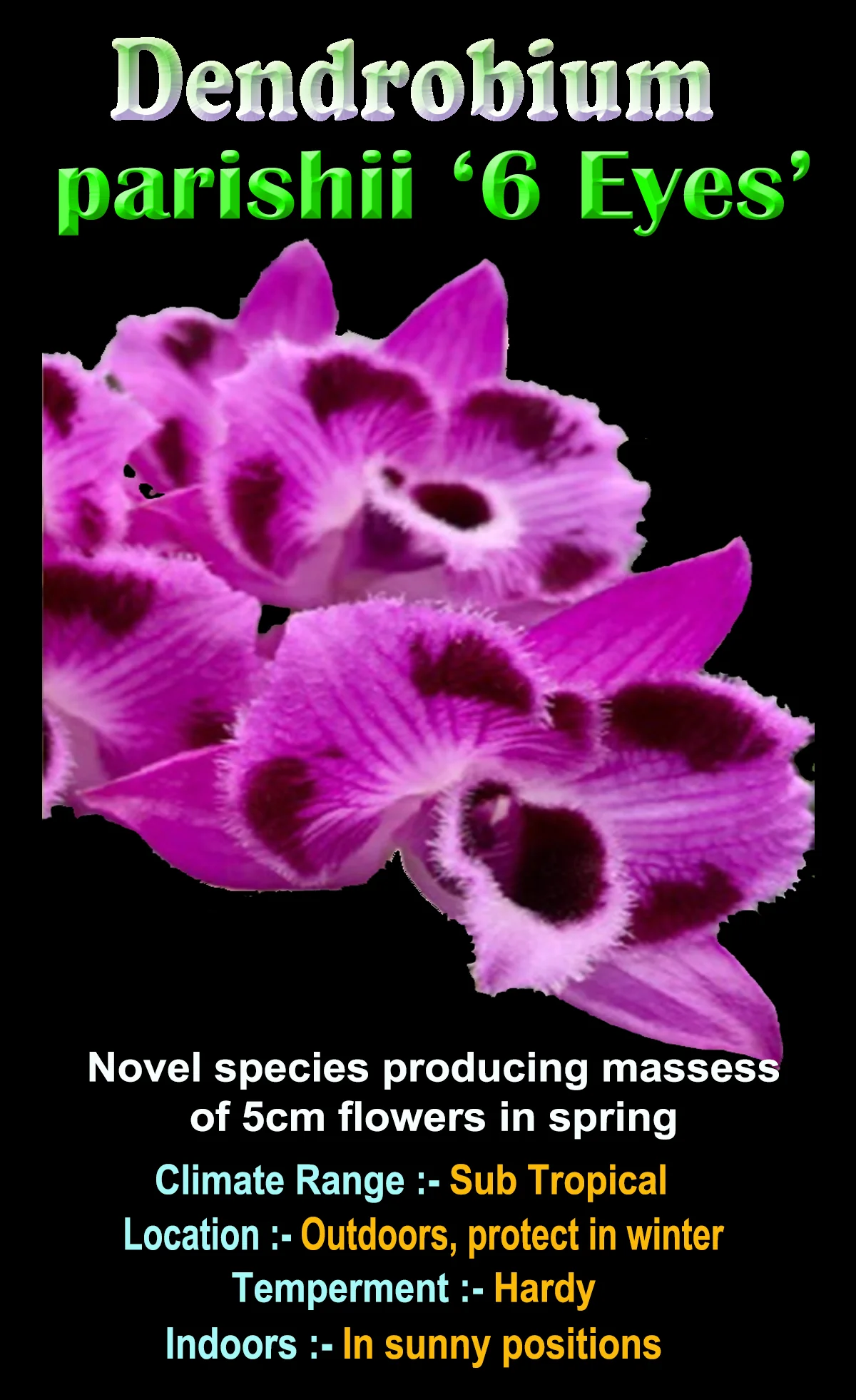
This form retains the species’ typical pendulous, cane-like pseudobulbs, which lose their leaves before flowering. The '6 Eyes' name refers to the distinct markings in the throat of the blooms, which may show multiple dark spots or “eye” patterns that stand out against the petal colouration.
Flowers are large, fragrant, and velvety in texture, ranging from soft pink to deeper magenta, with a contrasting dark maroon to almost black lip centre. Blooming usually occurs in spring from the nodes of leafless canes, with flowers lasting for several weeks under suitable conditions.
Care Tips:
- Light: Provide bright, filtered light; some direct morning sun is beneficial.
- Water: Water regularly during the growing season; reduce watering in winter to promote flowering.
- Humidity: Prefers 50–70% humidity with good air movement.
- Media: Grow in a well-draining orchid mix such as medium bark, or mount on cork or hardwood with extra watering during active growth.
- Temperature: Thrives in intermediate conditions, ideally 15–27°C, with cooler nights in winter.
- Fertiliser: Feed every 2–3 weeks during growth with a diluted orchid fertiliser; cease feeding in the winter rest period.
- Repotting: Repot every 2–3 years after flowering, when new roots are emerging.
More Images
Dendrobium parishii '6 eyes'
Dendrobium parishii '6 Eyes' is a selected form of the orchid species Dendrobium parishii, which is native to Southeast Asia, including Myanmar, Thailand, Laos, and Vietnam. It grows in warm to intermediate forests at elevations between 600 and 1,200 metres, often on tree trunks or large branches where it receives bright, filtered light and seasonal rainfall.
This form retains the species’ typical pendulous, cane-like pseudobulbs, which lose their leaves before flowering. The '6 Eyes' name refers to the distinct markings in the throat of the blooms, which may show multiple dark spots or “eye” patterns that stand out against the petal colouration.
Flowers are large, fragrant, and velvety in texture, ranging from soft pink to deeper magenta, with a contrasting dark maroon to almost black lip centre. Blooming usually occurs in spring from the nodes of leafless canes, with flowers lasting for several weeks under suitable conditions.
Care Tips:
- Light: Provide bright, filtered light; some direct morning sun is beneficial.
- Water: Water regularly during the growing season; reduce watering in winter to promote flowering.
- Humidity: Prefers 50–70% humidity with good air movement.
- Media: Grow in a well-draining orchid mix such as medium bark, or mount on cork or hardwood with extra watering during active growth.
- Temperature: Thrives in intermediate conditions, ideally 15–27°C, with cooler nights in winter.
- Fertiliser: Feed every 2–3 weeks during growth with a diluted orchid fertiliser; cease feeding in the winter rest period.
- Repotting: Repot every 2–3 years after flowering, when new roots are emerging.
Product Information
Product Information
Shipping & Returns
Shipping & Returns
Description
Dendrobium parishii '6 Eyes' is a selected form of the orchid species Dendrobium parishii, which is native to Southeast Asia, including Myanmar, Thailand, Laos, and Vietnam. It grows in warm to intermediate forests at elevations between 600 and 1,200 metres, often on tree trunks or large branches where it receives bright, filtered light and seasonal rainfall.
This form retains the species’ typical pendulous, cane-like pseudobulbs, which lose their leaves before flowering. The '6 Eyes' name refers to the distinct markings in the throat of the blooms, which may show multiple dark spots or “eye” patterns that stand out against the petal colouration.
Flowers are large, fragrant, and velvety in texture, ranging from soft pink to deeper magenta, with a contrasting dark maroon to almost black lip centre. Blooming usually occurs in spring from the nodes of leafless canes, with flowers lasting for several weeks under suitable conditions.
Care Tips:
- Light: Provide bright, filtered light; some direct morning sun is beneficial.
- Water: Water regularly during the growing season; reduce watering in winter to promote flowering.
- Humidity: Prefers 50–70% humidity with good air movement.
- Media: Grow in a well-draining orchid mix such as medium bark, or mount on cork or hardwood with extra watering during active growth.
- Temperature: Thrives in intermediate conditions, ideally 15–27°C, with cooler nights in winter.
- Fertiliser: Feed every 2–3 weeks during growth with a diluted orchid fertiliser; cease feeding in the winter rest period.
- Repotting: Repot every 2–3 years after flowering, when new roots are emerging.