Kalanchoe humilis 'The Painted Kalanchoe' (WA Prohibited)
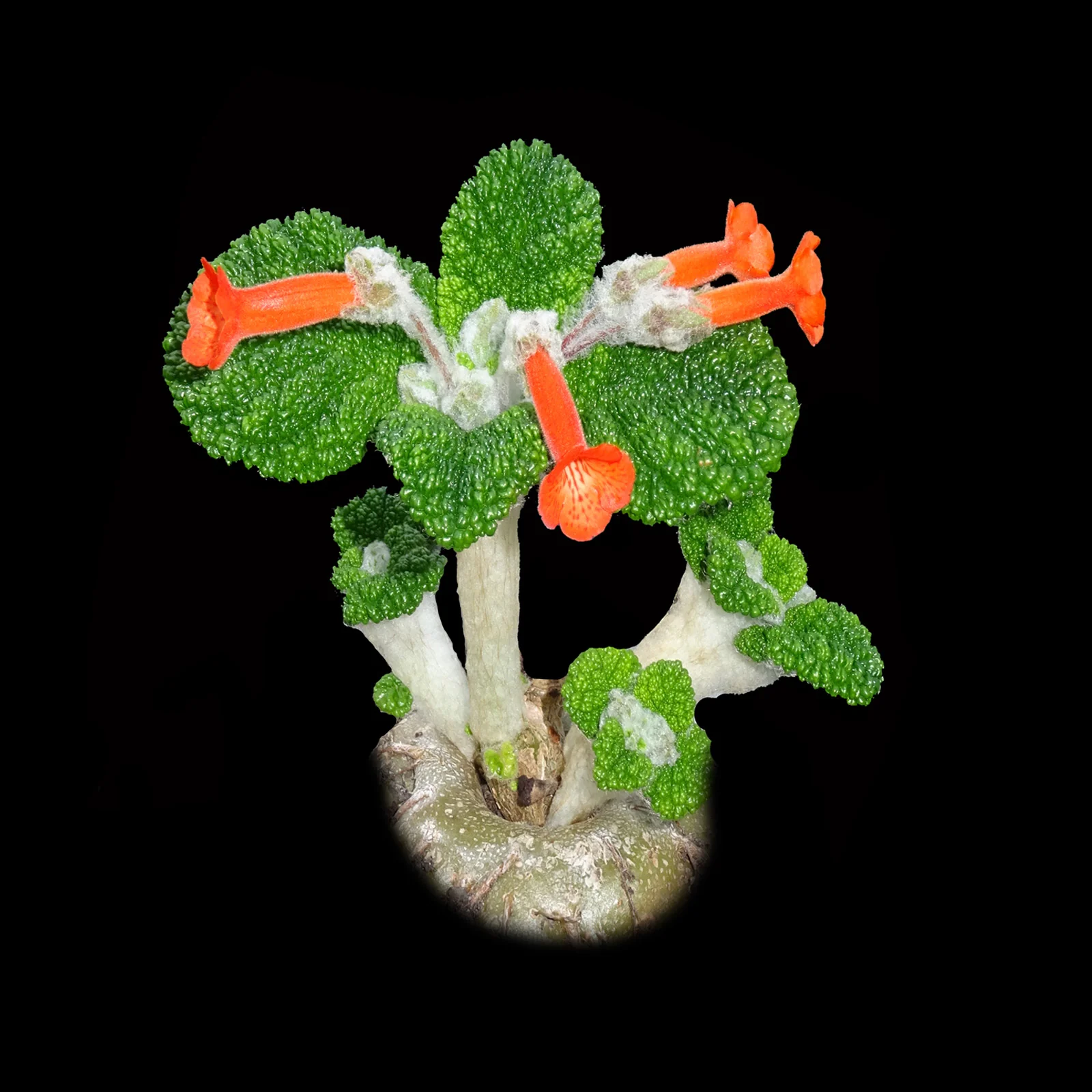
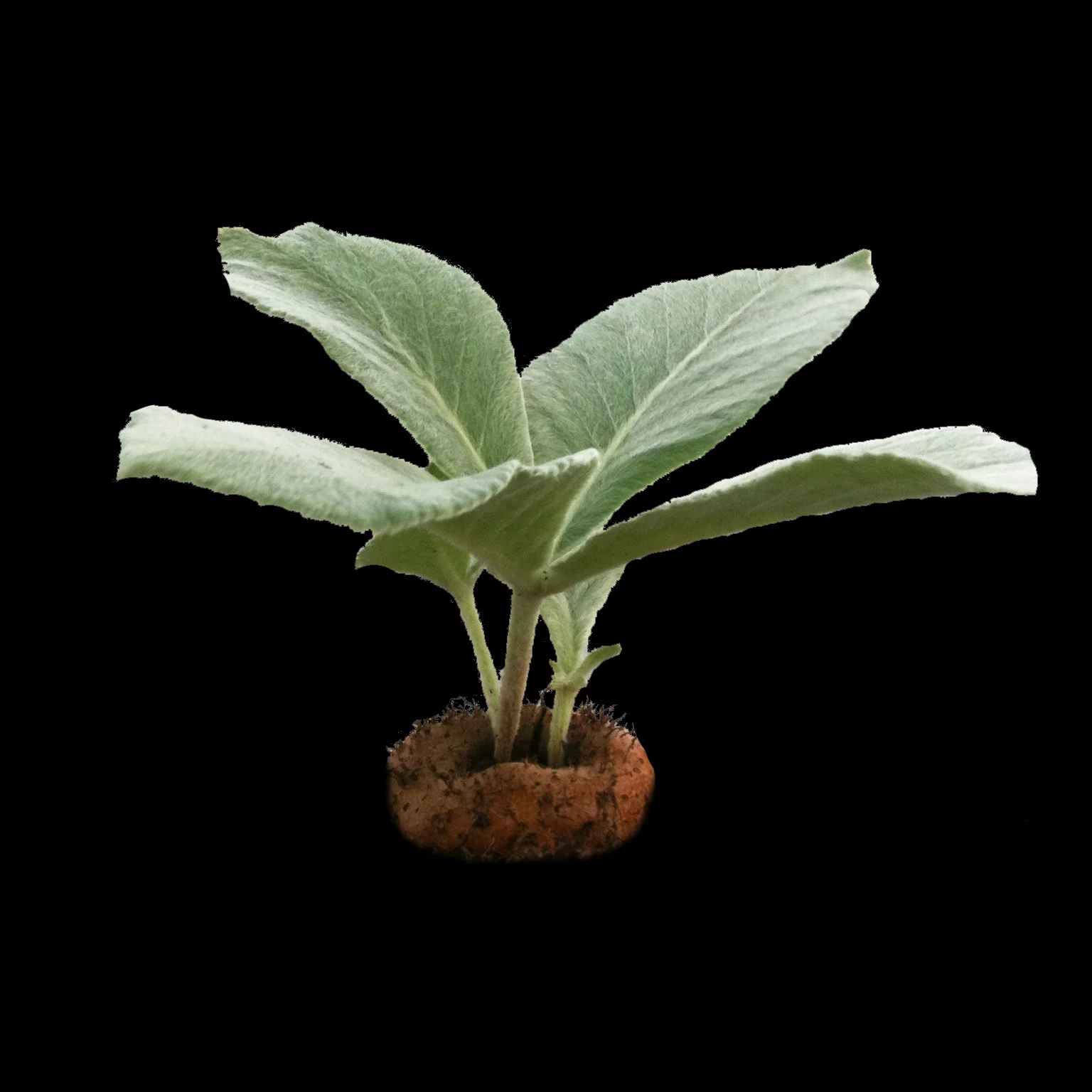
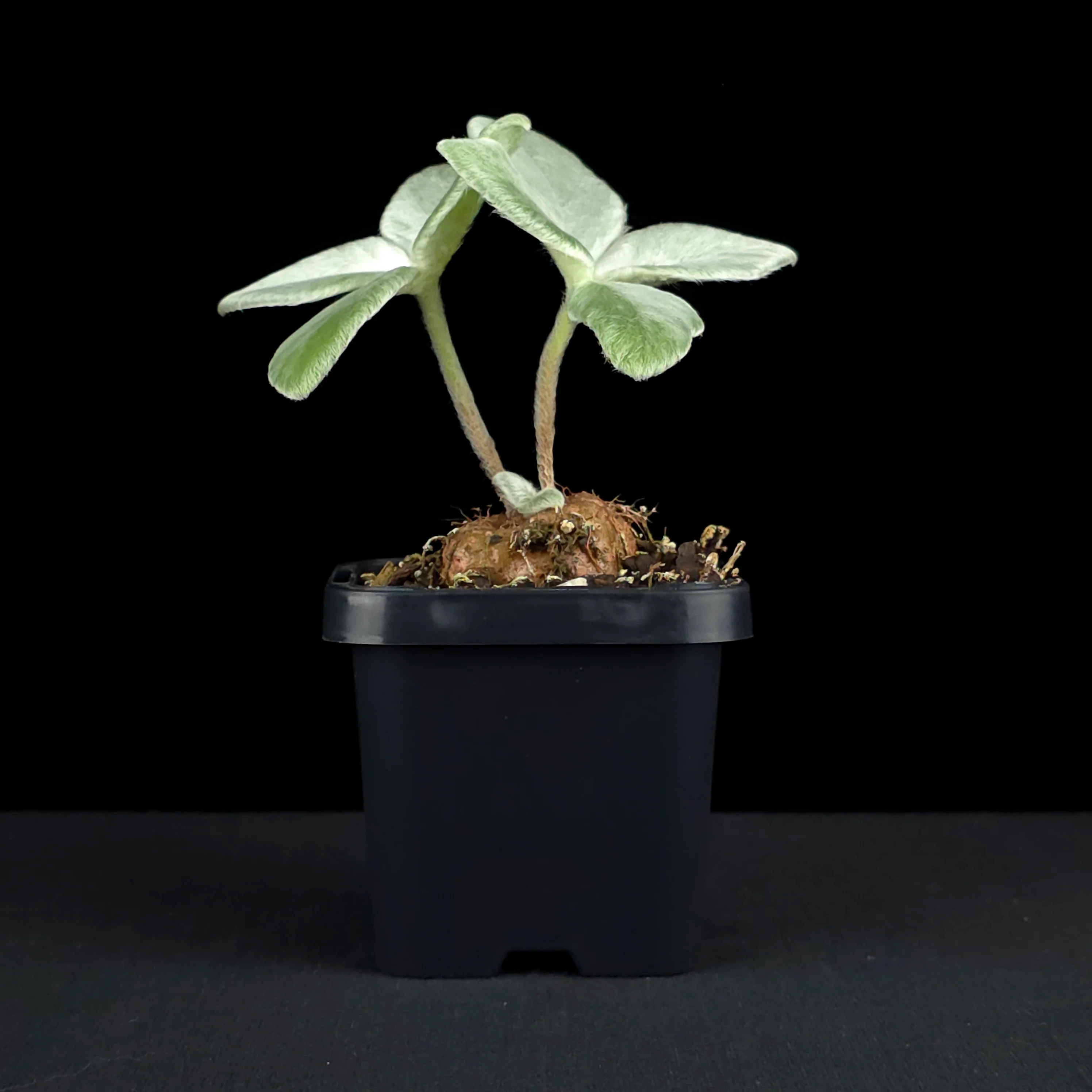
Kalanchoe humilis is a succulent shrub native to eastern Africa, particularly Tanzania and Malawi, where it grows on rocky slopes and dry grasslands. Its natural habitat is marked by seasonal rains and prolonged dry periods, conditions to which the plant is well adapted through water-storing leaves and efficient drought tolerance.
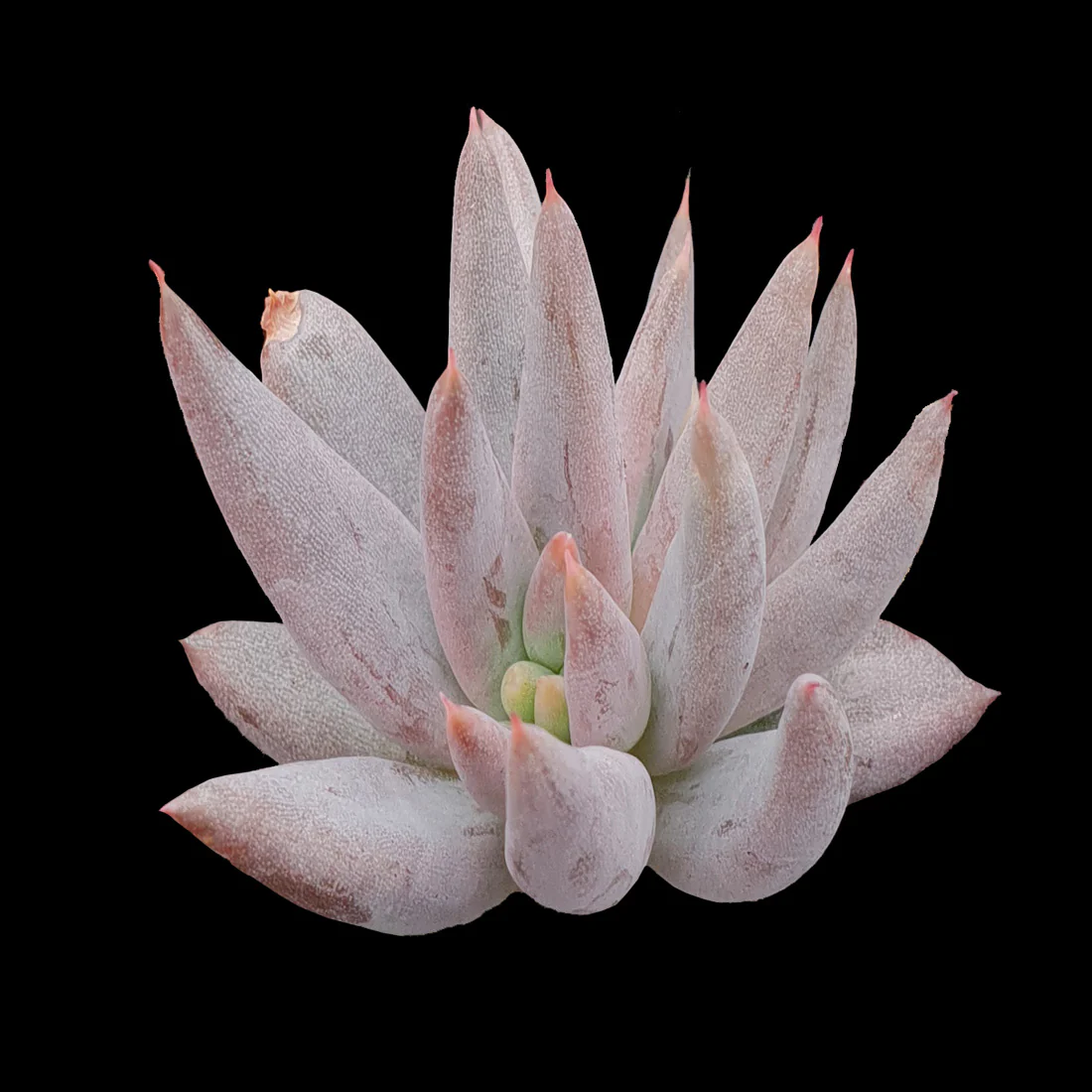
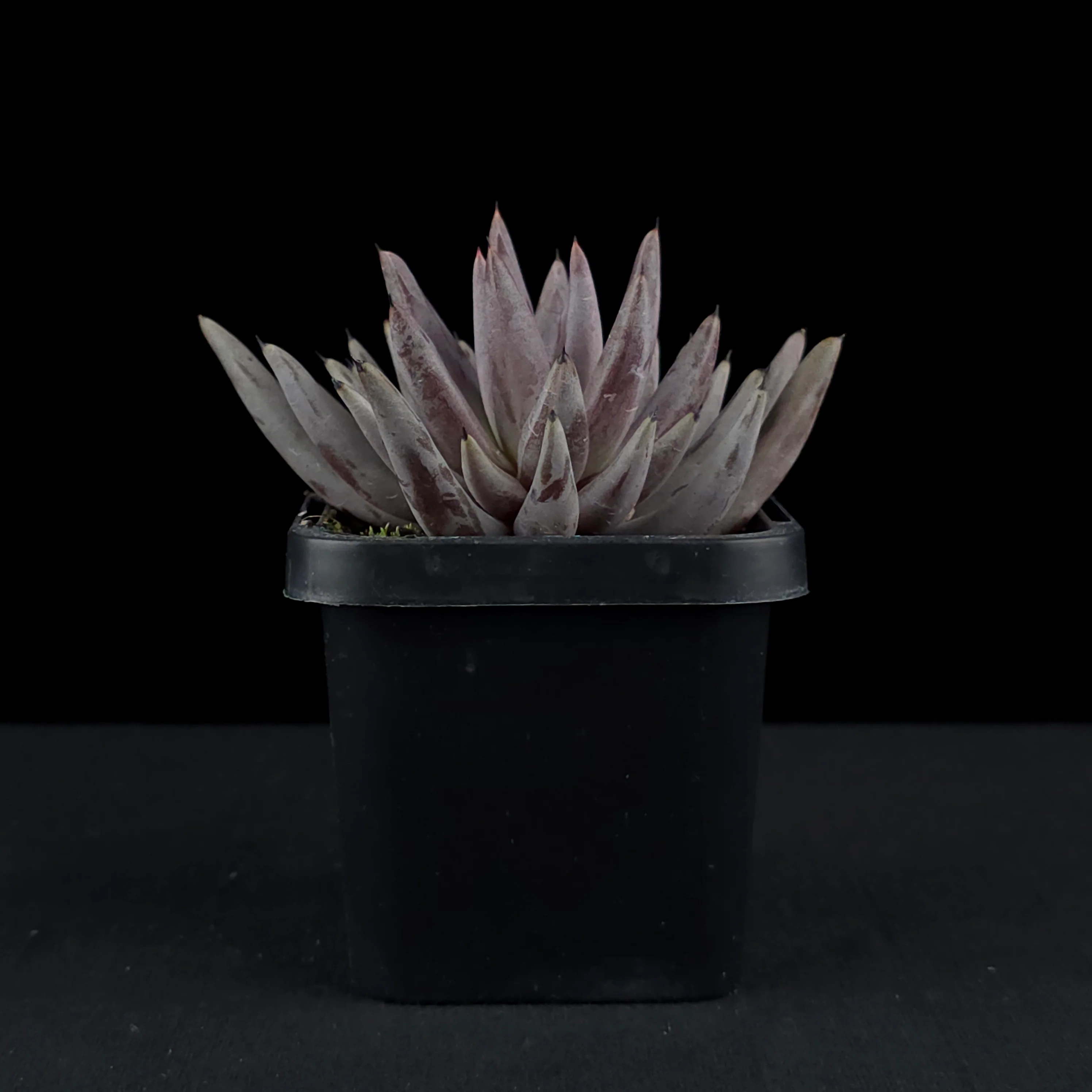
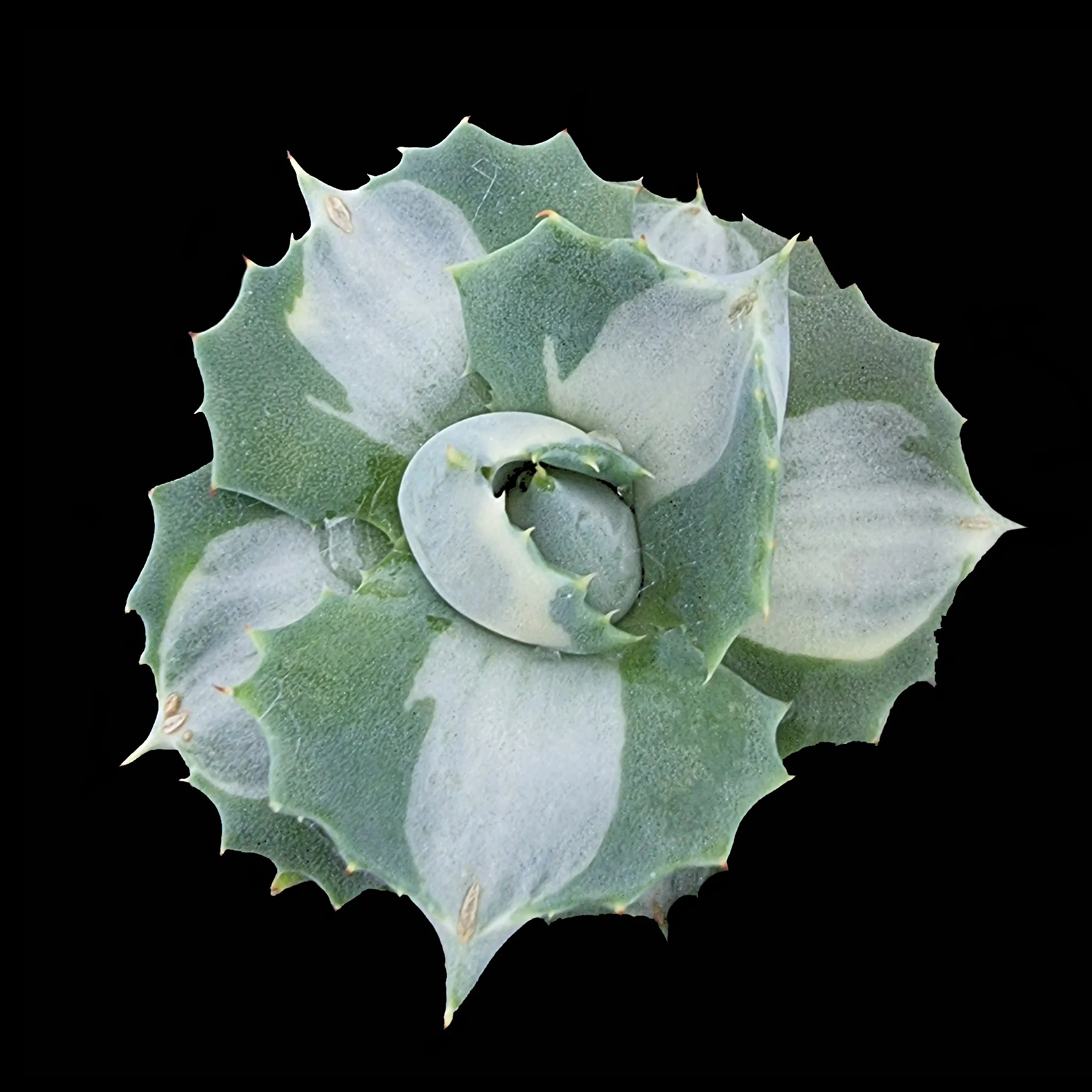
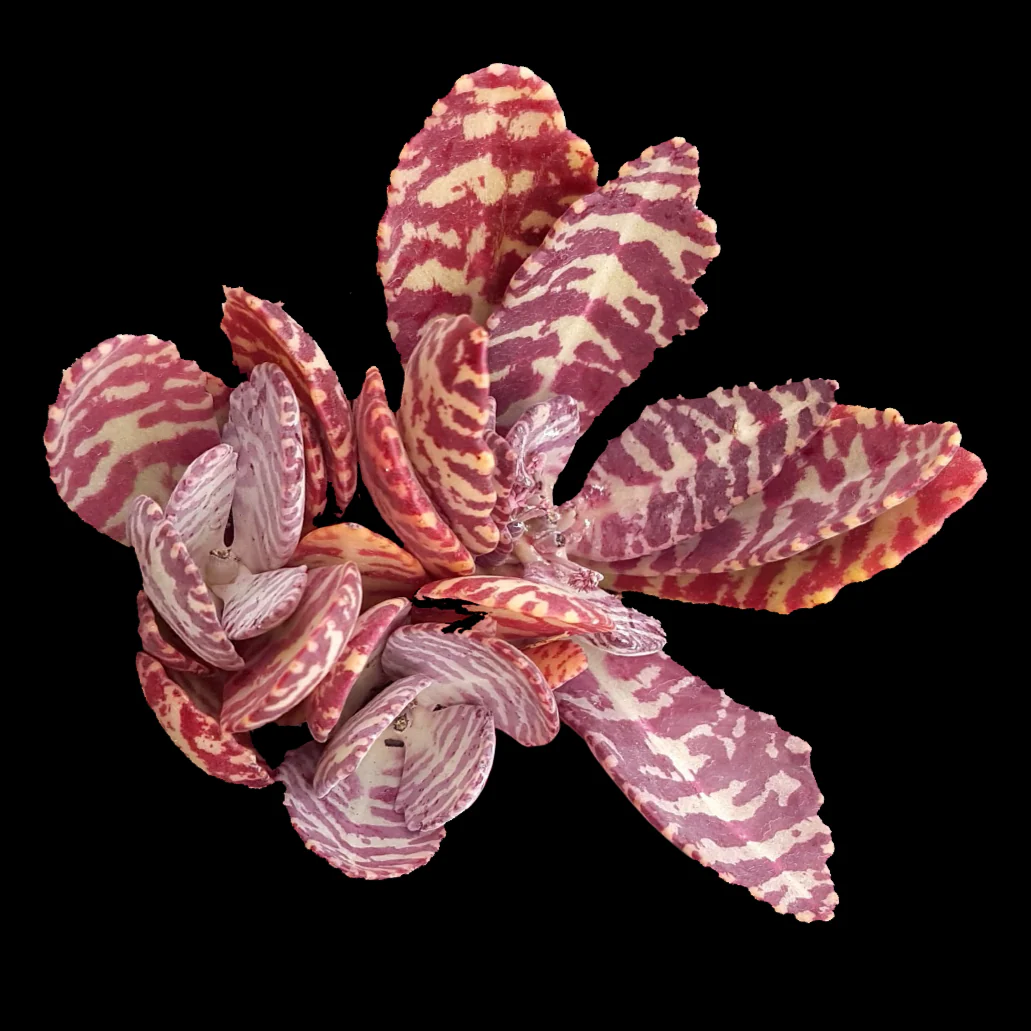
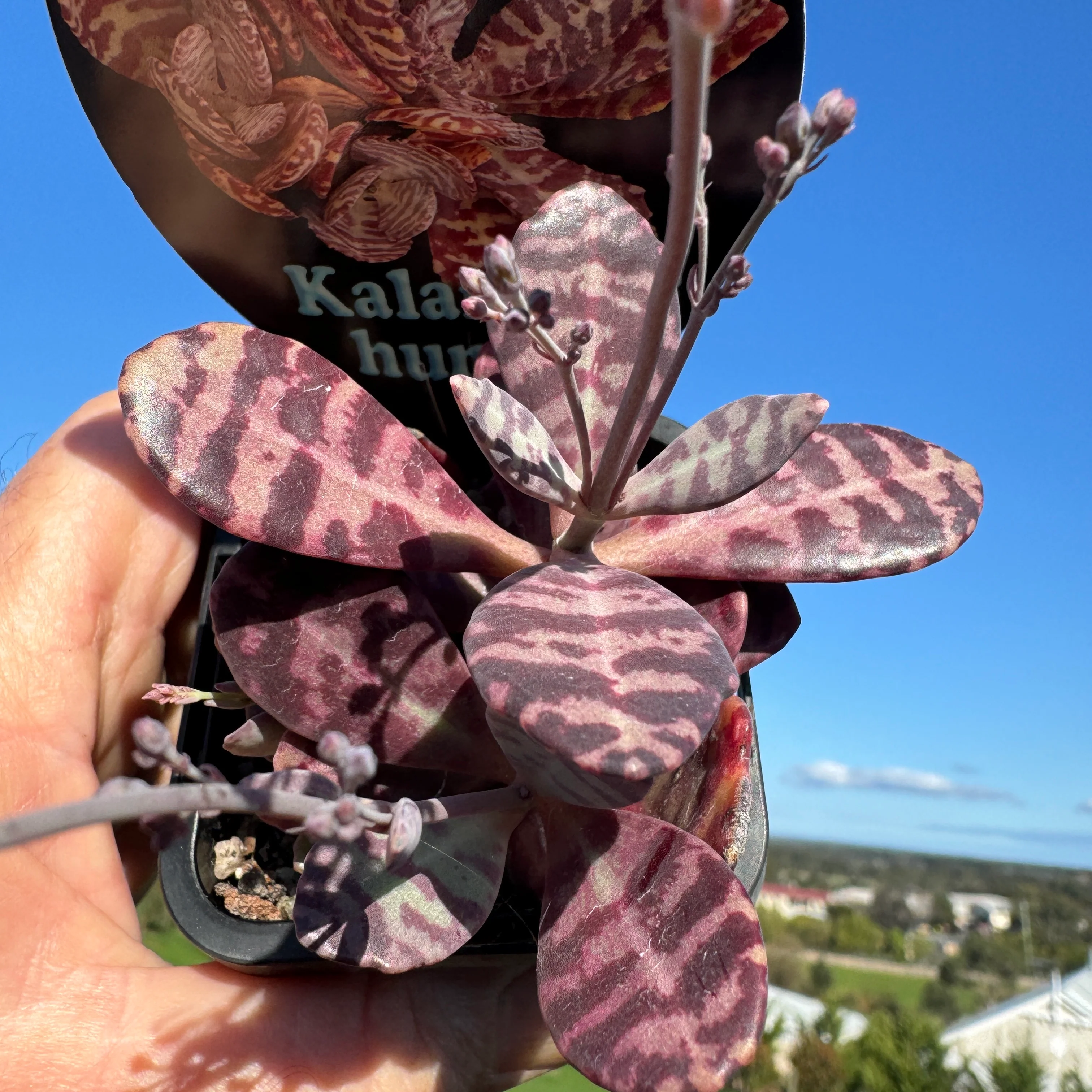
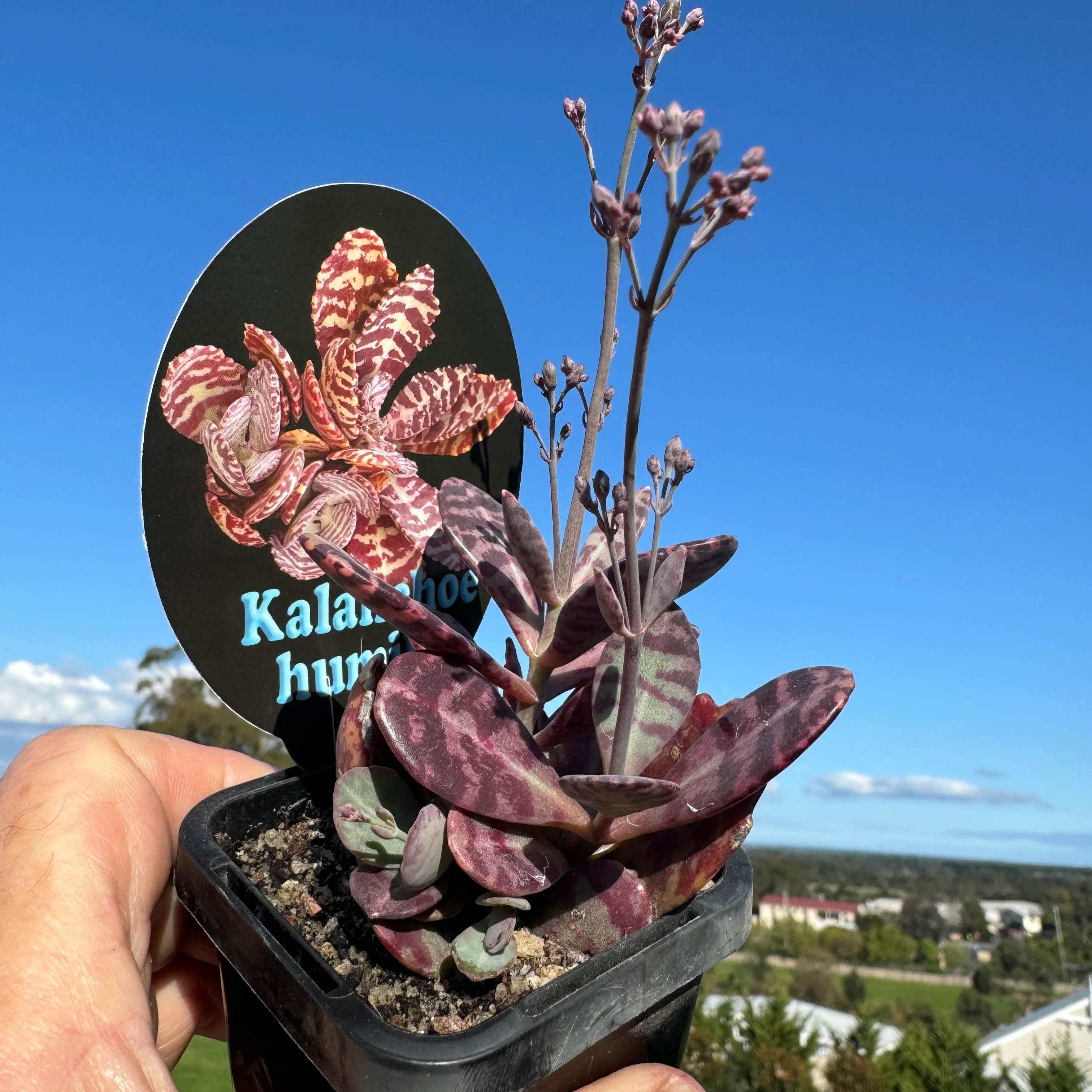
The species produces upright stems that can reach 60–90 cm tall, branching from the base as it matures. Leaves are broad, elliptic to oblong, and coloured grey-green with striking maroon to purple transverse bands across the surface. This patterned foliage is one of its most distinctive features, making it a valued ornamental species for succulent collections.
Flowering occurs in summer, when tall stalks rise above the foliage bearing clusters of small, tubular flowers. The blossoms are greenish-white to pale pink and attract insect pollinators. After flowering, the plant resumes vegetative growth, gradually expanding into a branching shrub over time.
Care Tips:
- Light: Requires bright light with several hours of direct sun daily; strong light enhances leaf markings.
- Water: Water deeply but infrequently during active growth, allowing soil to dry between applications. Keep almost dry in winter.
- Media: Use a free-draining succulent mix with added grit or coarse sand.
- Fertiliser: Apply a diluted succulent fertiliser monthly in spring and summer; withhold feeding in the dormant season.
- Temperature: Best grown between 18–28 °C. Protect from frost and cold below 10 °C.
- Repotting: Repot every 2–3 years as the plant enlarges, trimming woody stems to maintain shape.
Additional Notes:
- Known to be toxic
Original: $10.00
-65%$10.00
$3.50More Images
Kalanchoe humilis 'The Painted Kalanchoe' (WA Prohibited)
Kalanchoe humilis is a succulent shrub native to eastern Africa, particularly Tanzania and Malawi, where it grows on rocky slopes and dry grasslands. Its natural habitat is marked by seasonal rains and prolonged dry periods, conditions to which the plant is well adapted through water-storing leaves and efficient drought tolerance.
The species produces upright stems that can reach 60–90 cm tall, branching from the base as it matures. Leaves are broad, elliptic to oblong, and coloured grey-green with striking maroon to purple transverse bands across the surface. This patterned foliage is one of its most distinctive features, making it a valued ornamental species for succulent collections.
Flowering occurs in summer, when tall stalks rise above the foliage bearing clusters of small, tubular flowers. The blossoms are greenish-white to pale pink and attract insect pollinators. After flowering, the plant resumes vegetative growth, gradually expanding into a branching shrub over time.
Care Tips:
- Light: Requires bright light with several hours of direct sun daily; strong light enhances leaf markings.
- Water: Water deeply but infrequently during active growth, allowing soil to dry between applications. Keep almost dry in winter.
- Media: Use a free-draining succulent mix with added grit or coarse sand.
- Fertiliser: Apply a diluted succulent fertiliser monthly in spring and summer; withhold feeding in the dormant season.
- Temperature: Best grown between 18–28 °C. Protect from frost and cold below 10 °C.
- Repotting: Repot every 2–3 years as the plant enlarges, trimming woody stems to maintain shape.
Additional Notes:
- Known to be toxic
Product Information
Product Information
Shipping & Returns
Shipping & Returns
Description
Kalanchoe humilis is a succulent shrub native to eastern Africa, particularly Tanzania and Malawi, where it grows on rocky slopes and dry grasslands. Its natural habitat is marked by seasonal rains and prolonged dry periods, conditions to which the plant is well adapted through water-storing leaves and efficient drought tolerance.
The species produces upright stems that can reach 60–90 cm tall, branching from the base as it matures. Leaves are broad, elliptic to oblong, and coloured grey-green with striking maroon to purple transverse bands across the surface. This patterned foliage is one of its most distinctive features, making it a valued ornamental species for succulent collections.
Flowering occurs in summer, when tall stalks rise above the foliage bearing clusters of small, tubular flowers. The blossoms are greenish-white to pale pink and attract insect pollinators. After flowering, the plant resumes vegetative growth, gradually expanding into a branching shrub over time.
Care Tips:
- Light: Requires bright light with several hours of direct sun daily; strong light enhances leaf markings.
- Water: Water deeply but infrequently during active growth, allowing soil to dry between applications. Keep almost dry in winter.
- Media: Use a free-draining succulent mix with added grit or coarse sand.
- Fertiliser: Apply a diluted succulent fertiliser monthly in spring and summer; withhold feeding in the dormant season.
- Temperature: Best grown between 18–28 °C. Protect from frost and cold below 10 °C.
- Repotting: Repot every 2–3 years as the plant enlarges, trimming woody stems to maintain shape.
Additional Notes:
- Known to be toxic