Massonia depressa
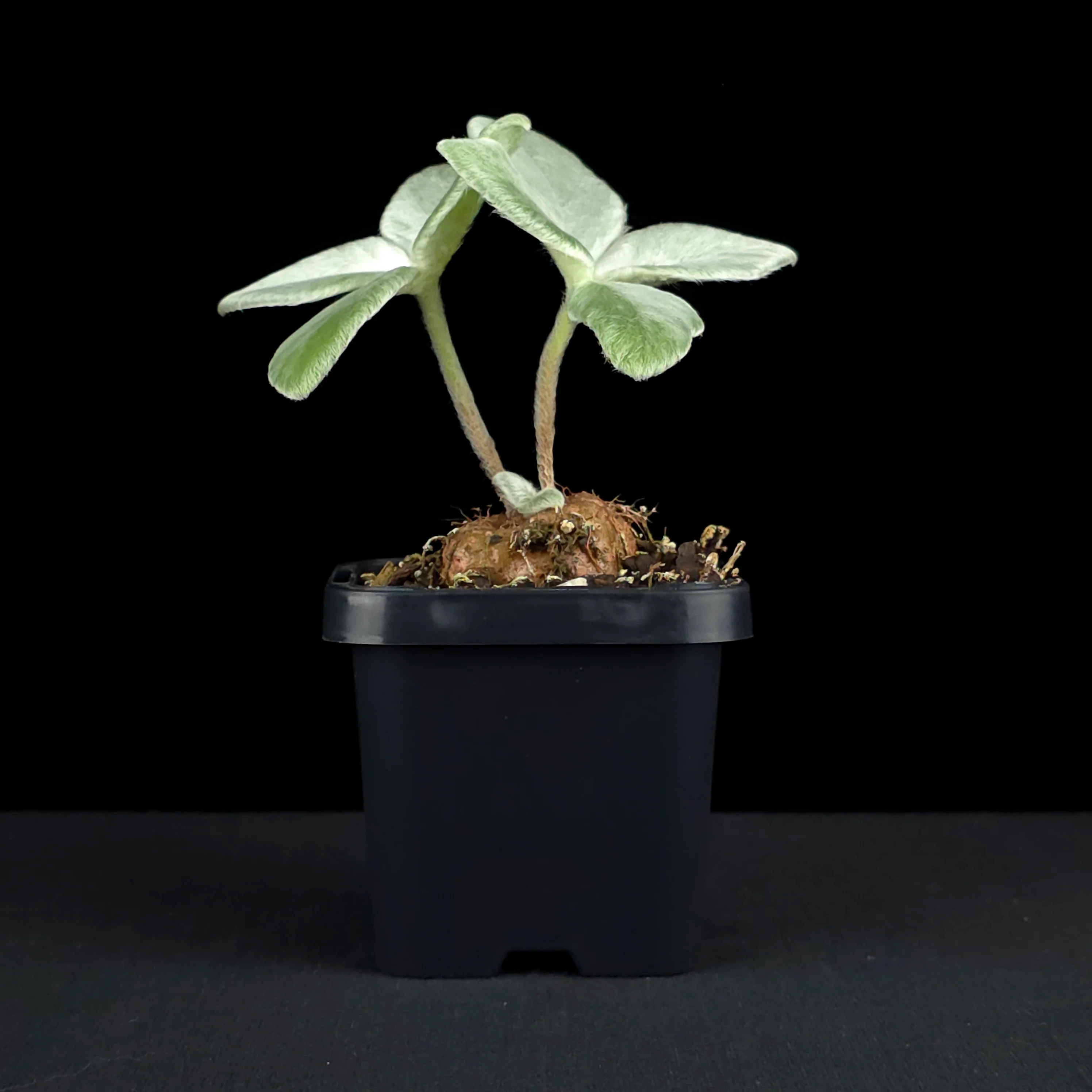
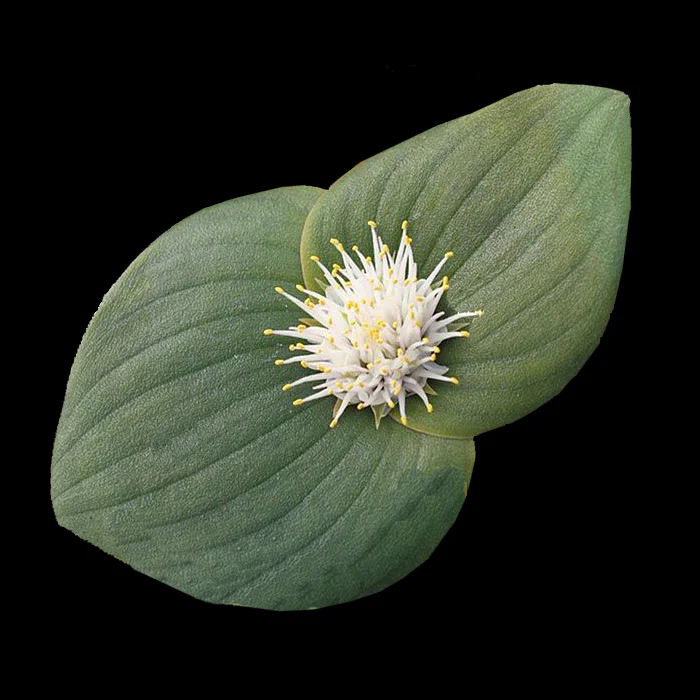
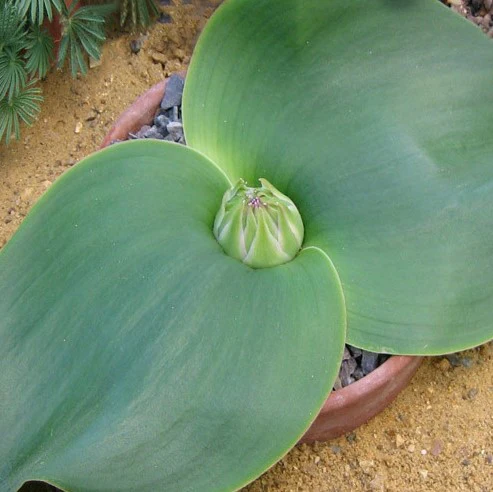
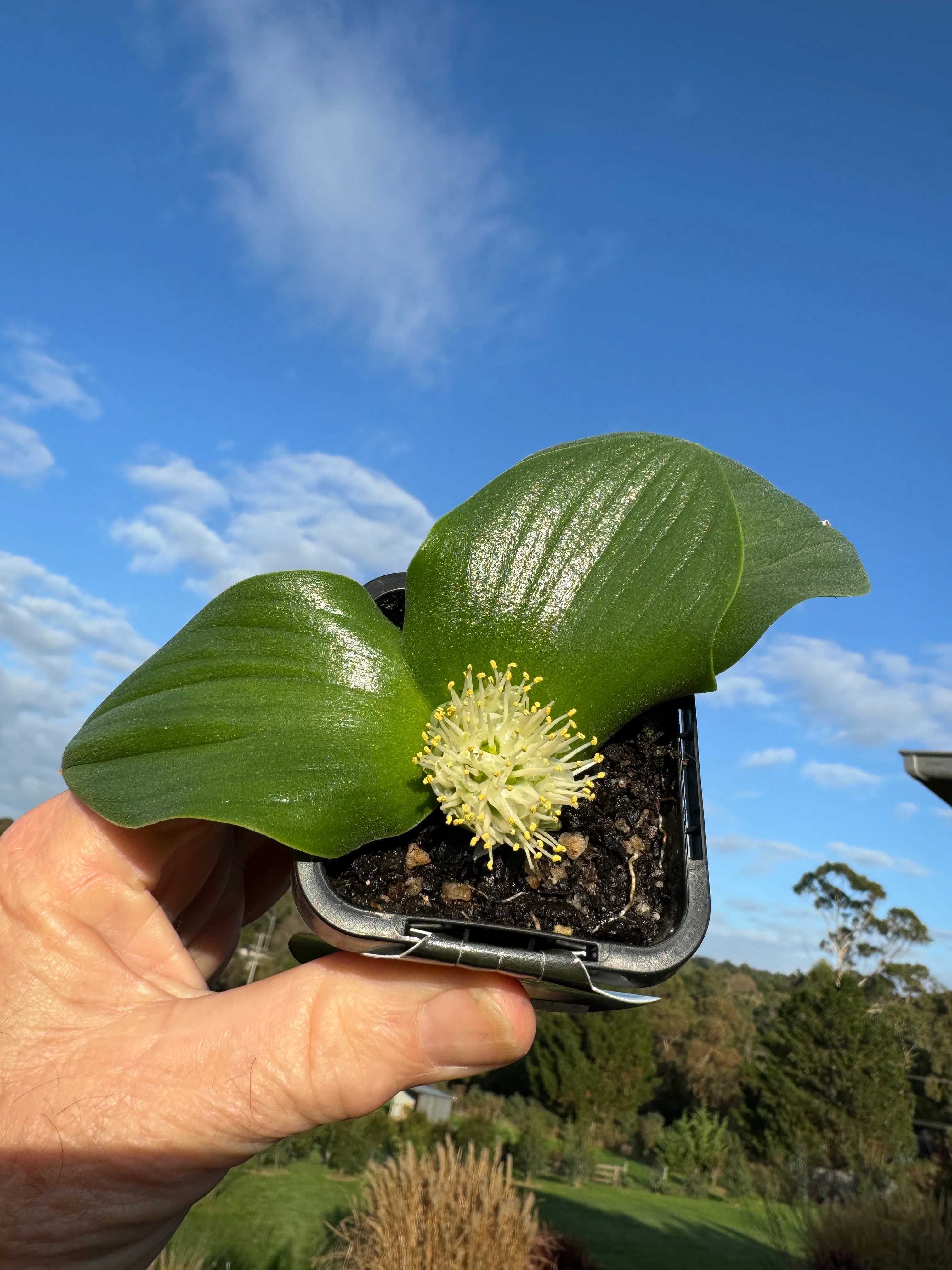
Massonia depressa is a winter-growing bulbous plant in the Asparagaceae family, native to South Africa’s Western and Northern Cape provinces. It is adapted to the region’s Mediterranean climate, remaining dormant through the hot, dry summer and resuming growth with the onset of autumn rains. The plant produces two broad, opposite leaves that lie flat against the ground, often with a slightly rough texture.
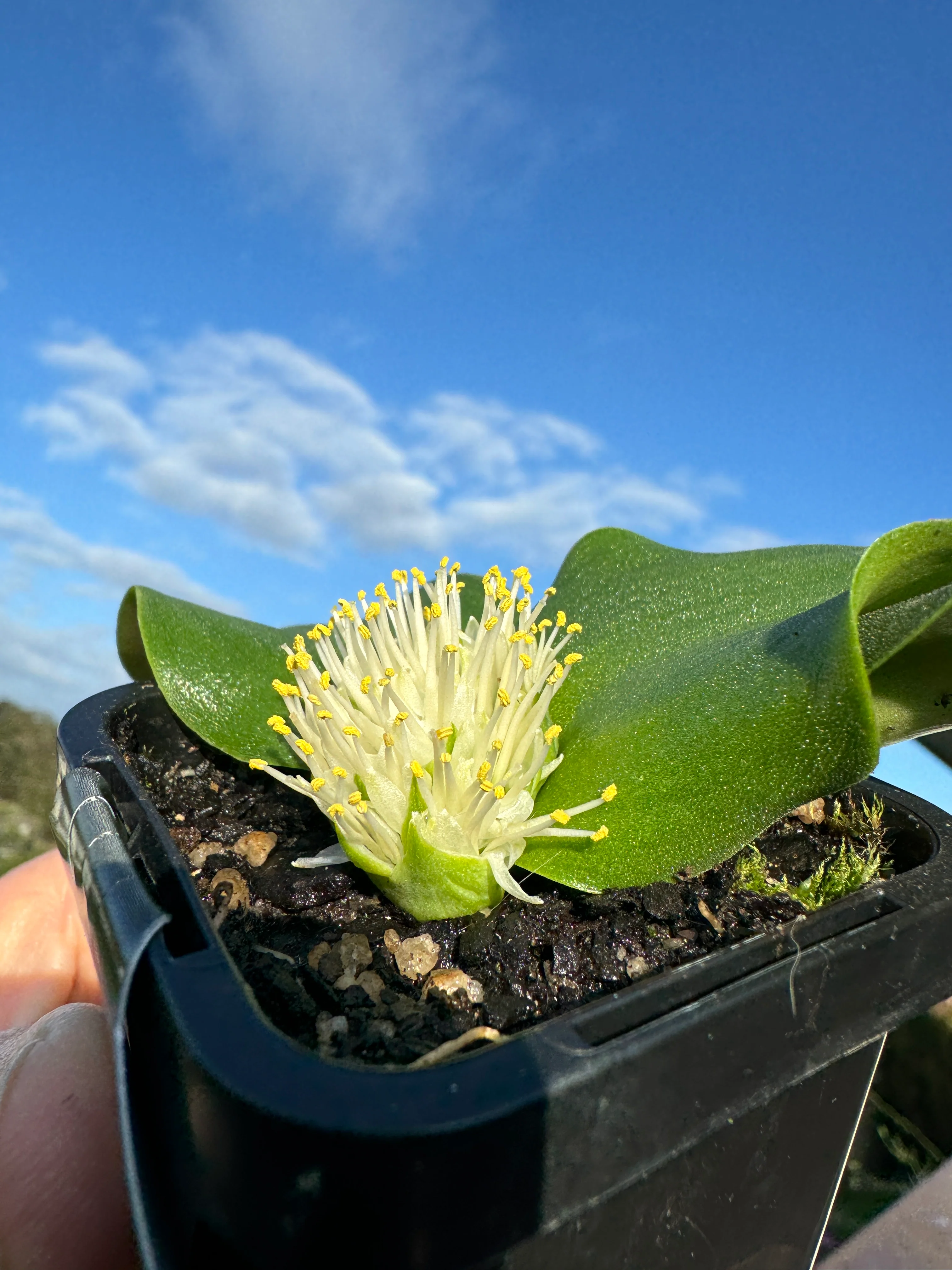
Flowers appear in mid to late winter as a dense cluster at the centre of the leaves, held at ground level. These blooms are usually greenish-white to cream and emit a strong, yeasty scent at night to attract rodent pollinators. This unusual pollination strategy is shared with a few other Massonia species and is an important part of its reproductive ecology. The seed capsules develop close to the soil surface and release fine seeds when mature.
For cultivation, Massonia depressa requires a cool, bright position during the growing season and a dry rest in summer. It grows well in a free-draining, sandy mix and benefits from regular watering while in active growth from autumn to spring. Once flowering is complete, watering should be gradually reduced to allow the plant to enter dormancy naturally.
Care Tips:
- Light: Bright light during growth; some direct sun is beneficial.
- Water: Water regularly in the growing season; keep completely dry in dormancy.
- Humidity: Adapted to low humidity environments.
- Media: Use a free-draining, sandy mix.
- Fertiliser: Apply a balanced fertiliser during leaf growth and flowering.
- Temperature: Best between 10–20 °C in growth; keep warm and dry during summer dormancy.
- Repotting: Repot during dormancy if required, taking care not to damage the bulb.
Original: $15.00
-65%$15.00
$5.25More Images
Massonia depressa
Massonia depressa is a winter-growing bulbous plant in the Asparagaceae family, native to South Africa’s Western and Northern Cape provinces. It is adapted to the region’s Mediterranean climate, remaining dormant through the hot, dry summer and resuming growth with the onset of autumn rains. The plant produces two broad, opposite leaves that lie flat against the ground, often with a slightly rough texture.
Flowers appear in mid to late winter as a dense cluster at the centre of the leaves, held at ground level. These blooms are usually greenish-white to cream and emit a strong, yeasty scent at night to attract rodent pollinators. This unusual pollination strategy is shared with a few other Massonia species and is an important part of its reproductive ecology. The seed capsules develop close to the soil surface and release fine seeds when mature.
For cultivation, Massonia depressa requires a cool, bright position during the growing season and a dry rest in summer. It grows well in a free-draining, sandy mix and benefits from regular watering while in active growth from autumn to spring. Once flowering is complete, watering should be gradually reduced to allow the plant to enter dormancy naturally.
Care Tips:
- Light: Bright light during growth; some direct sun is beneficial.
- Water: Water regularly in the growing season; keep completely dry in dormancy.
- Humidity: Adapted to low humidity environments.
- Media: Use a free-draining, sandy mix.
- Fertiliser: Apply a balanced fertiliser during leaf growth and flowering.
- Temperature: Best between 10–20 °C in growth; keep warm and dry during summer dormancy.
- Repotting: Repot during dormancy if required, taking care not to damage the bulb.
Product Information
Product Information
Shipping & Returns
Shipping & Returns
Description
Massonia depressa is a winter-growing bulbous plant in the Asparagaceae family, native to South Africa’s Western and Northern Cape provinces. It is adapted to the region’s Mediterranean climate, remaining dormant through the hot, dry summer and resuming growth with the onset of autumn rains. The plant produces two broad, opposite leaves that lie flat against the ground, often with a slightly rough texture.
Flowers appear in mid to late winter as a dense cluster at the centre of the leaves, held at ground level. These blooms are usually greenish-white to cream and emit a strong, yeasty scent at night to attract rodent pollinators. This unusual pollination strategy is shared with a few other Massonia species and is an important part of its reproductive ecology. The seed capsules develop close to the soil surface and release fine seeds when mature.
For cultivation, Massonia depressa requires a cool, bright position during the growing season and a dry rest in summer. It grows well in a free-draining, sandy mix and benefits from regular watering while in active growth from autumn to spring. Once flowering is complete, watering should be gradually reduced to allow the plant to enter dormancy naturally.
Care Tips:
- Light: Bright light during growth; some direct sun is beneficial.
- Water: Water regularly in the growing season; keep completely dry in dormancy.
- Humidity: Adapted to low humidity environments.
- Media: Use a free-draining, sandy mix.
- Fertiliser: Apply a balanced fertiliser during leaf growth and flowering.
- Temperature: Best between 10–20 °C in growth; keep warm and dry during summer dormancy.
- Repotting: Repot during dormancy if required, taking care not to damage the bulb.