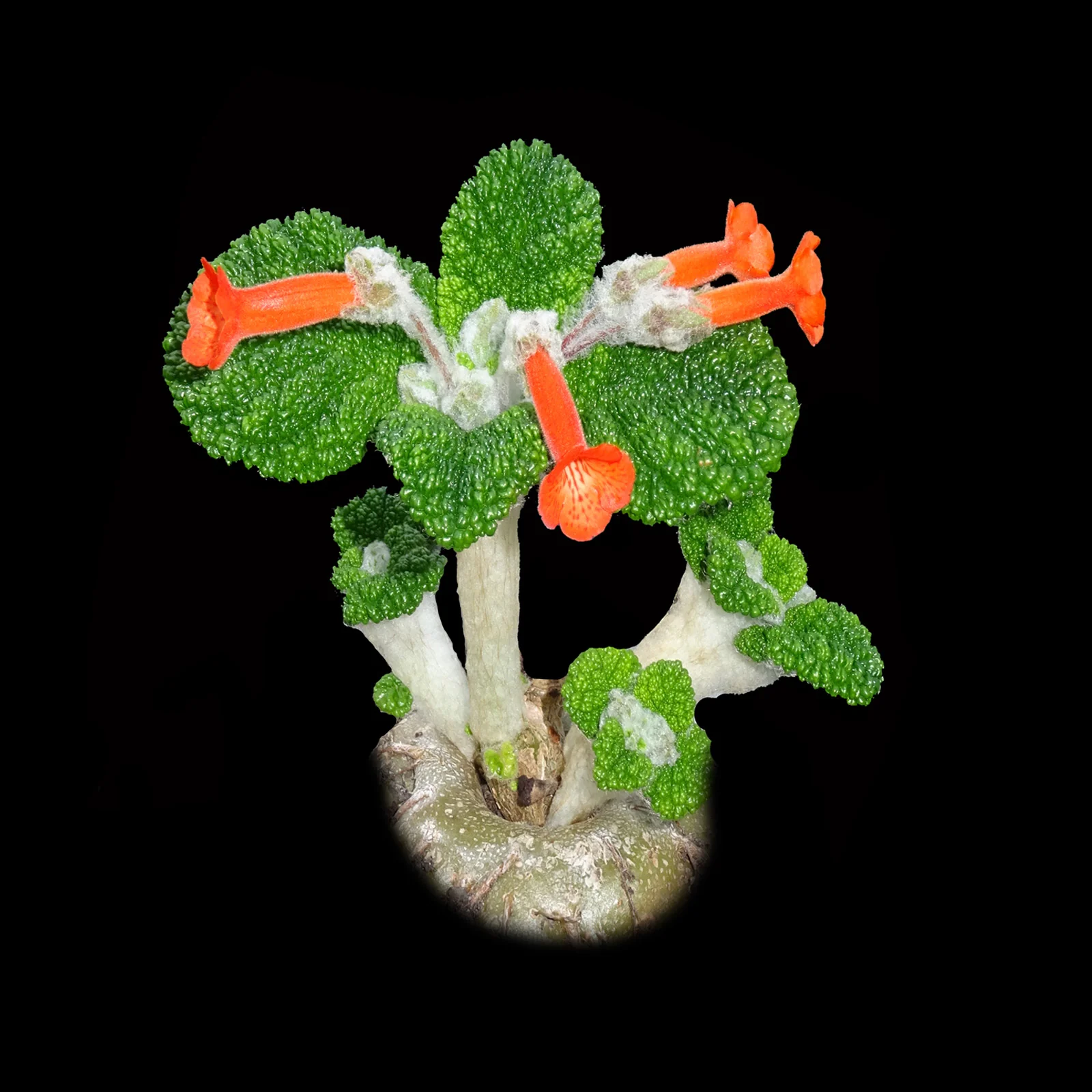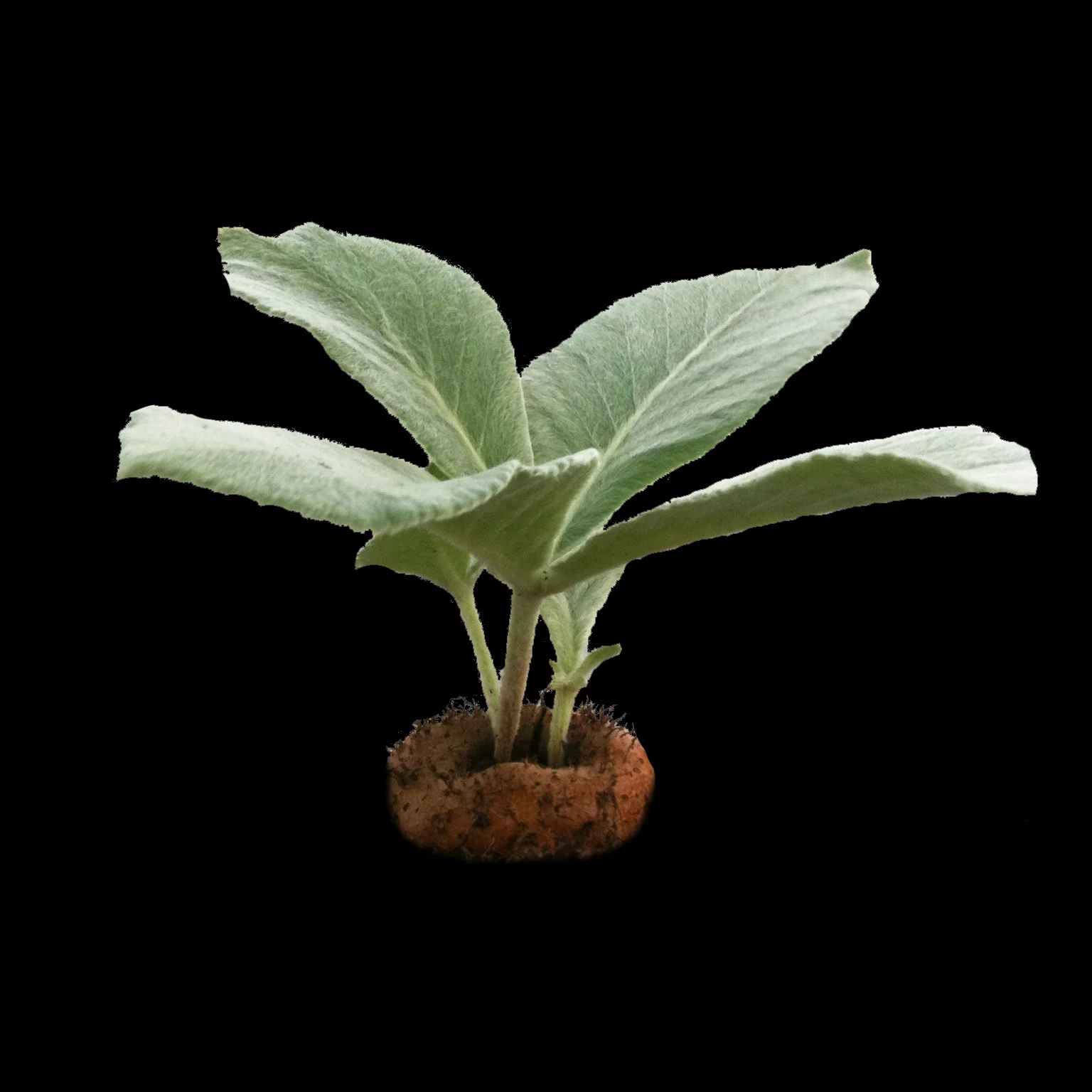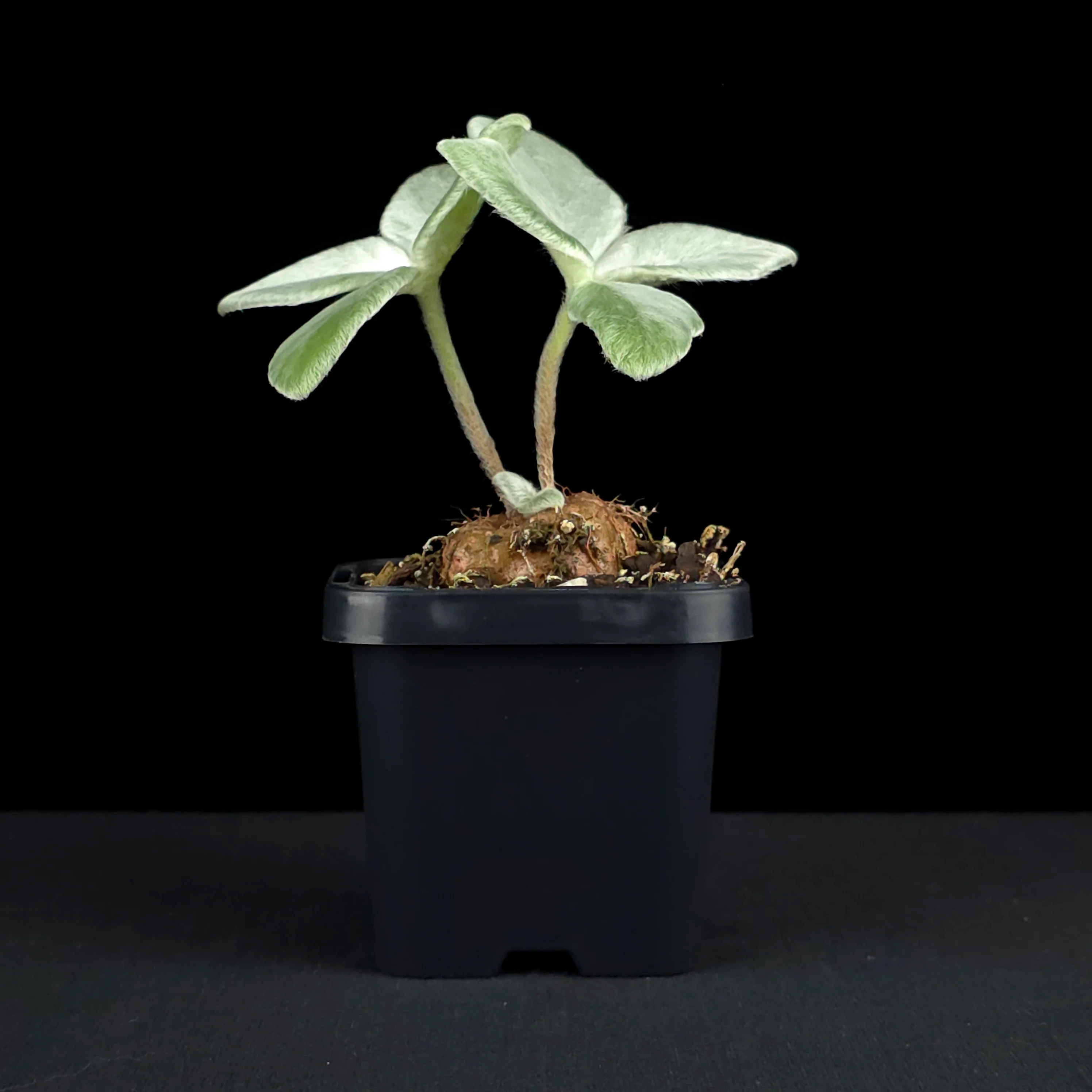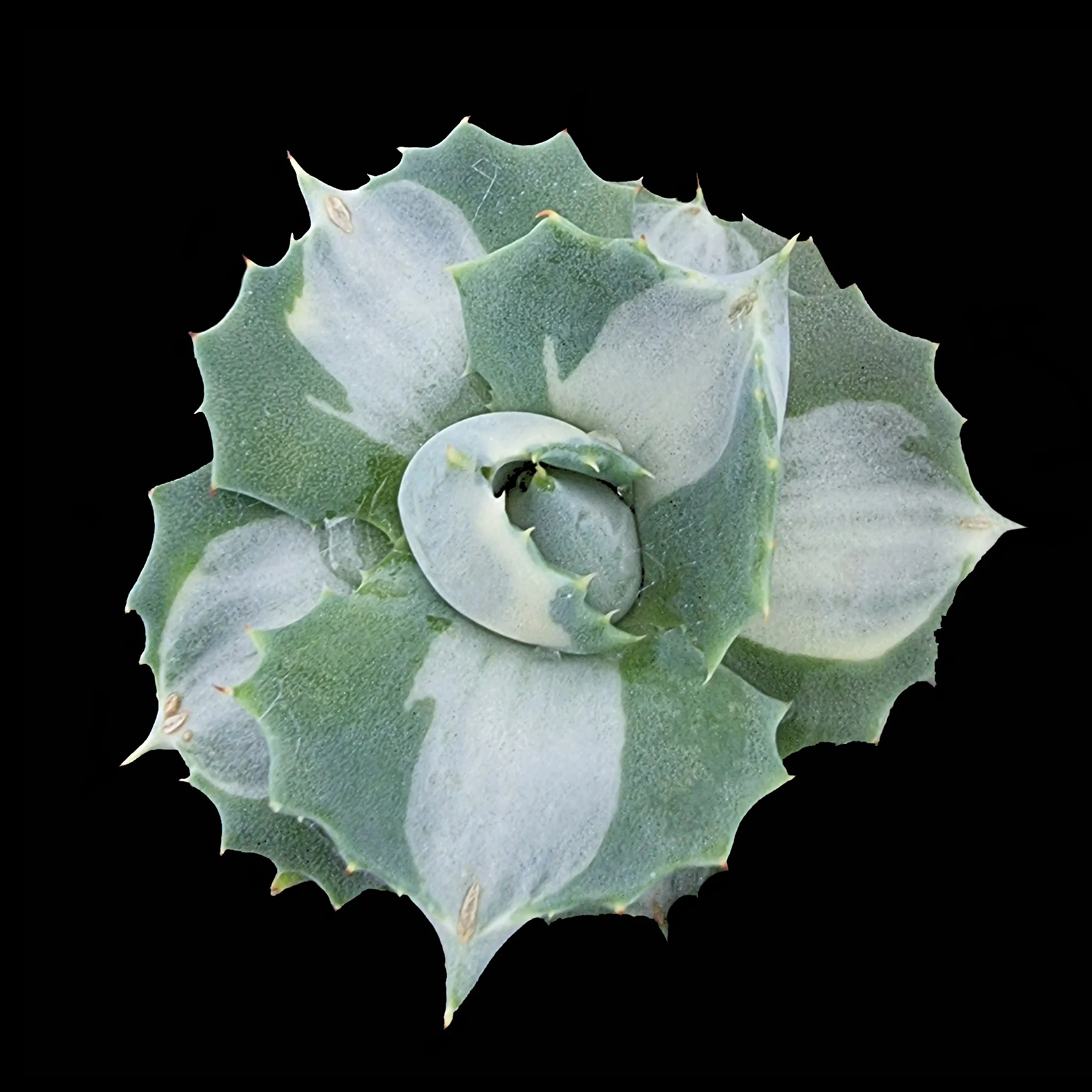
Pinguicula agnata x potosiensis
Pinguicula agnata x potosiensis is a hybrid butterwort combining traits from two Mexican species. It inherits a tolerance for bright light and seasonal moisture changes, growing naturally in conditions that alternate between warm, wet summers and cooler, drier winters. Like its parent species, it is adapted to limestone-based substrates with minimal available nutrients.
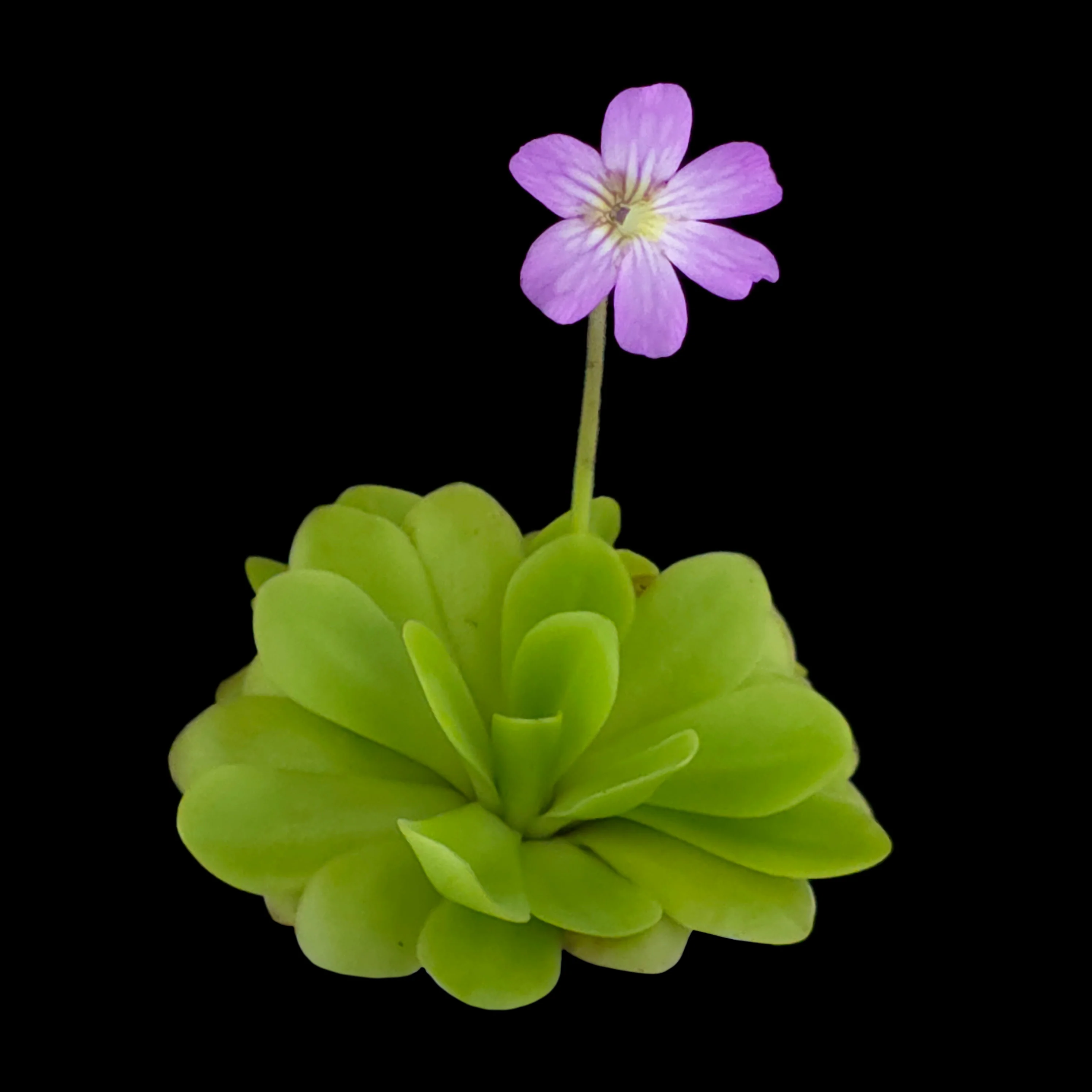
The plant forms a rosette of smooth, fleshy leaves covered in minute glands that secrete sticky mucilage to trap small insects. Leaf colour ranges from green to shades of pink or red when grown under higher light levels. In the drier winter period, it produces a compact, non-carnivorous rosette to conserve water until the growing season resumes.
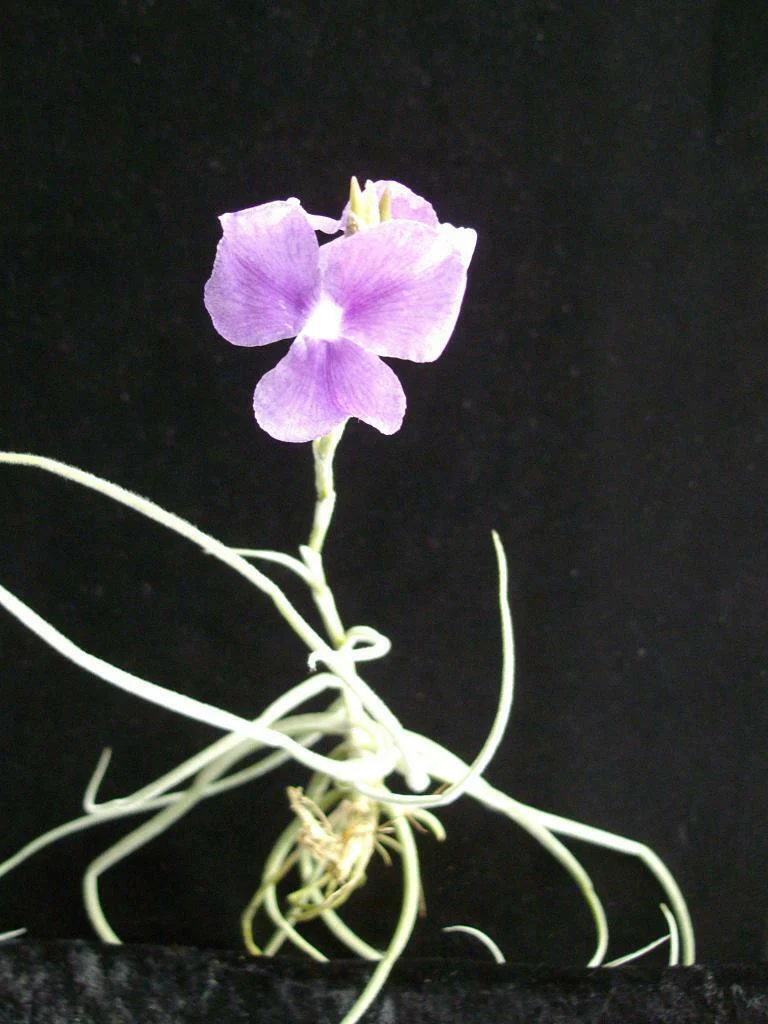
Flowers are produced on slender stalks held above the foliage and can appear during the active growing period. Blooms often display shades of pink to purple with a lighter throat, combining features of both parents. Multiple flowers may be produced in succession on a healthy plant.
Care Tips:
- Light: Bright, indirect light; some gentle direct sun can enhance leaf colour.
- Water: Use only rainwater, distilled, or reverse-osmosis water. Keep moist in summer; reduce watering in winter.
- Humidity: Moderate humidity with good air circulation.
- Media: Low-nutrient mix such as peat with sand or perlite; avoid fertiliser in the soil.
- Fertiliser: Not required in the medium; may be fed small insects occasionally if prey is scarce.
- Temperature: Prefers mild conditions between 15–25 °C; protect from frost.
- Repotting: Repot annually before the growing season to maintain fresh media.
Original: $22.50
-65%$22.50
$7.87More Images


Pinguicula agnata x potosiensis
Pinguicula agnata x potosiensis is a hybrid butterwort combining traits from two Mexican species. It inherits a tolerance for bright light and seasonal moisture changes, growing naturally in conditions that alternate between warm, wet summers and cooler, drier winters. Like its parent species, it is adapted to limestone-based substrates with minimal available nutrients.
The plant forms a rosette of smooth, fleshy leaves covered in minute glands that secrete sticky mucilage to trap small insects. Leaf colour ranges from green to shades of pink or red when grown under higher light levels. In the drier winter period, it produces a compact, non-carnivorous rosette to conserve water until the growing season resumes.
Flowers are produced on slender stalks held above the foliage and can appear during the active growing period. Blooms often display shades of pink to purple with a lighter throat, combining features of both parents. Multiple flowers may be produced in succession on a healthy plant.
Care Tips:
- Light: Bright, indirect light; some gentle direct sun can enhance leaf colour.
- Water: Use only rainwater, distilled, or reverse-osmosis water. Keep moist in summer; reduce watering in winter.
- Humidity: Moderate humidity with good air circulation.
- Media: Low-nutrient mix such as peat with sand or perlite; avoid fertiliser in the soil.
- Fertiliser: Not required in the medium; may be fed small insects occasionally if prey is scarce.
- Temperature: Prefers mild conditions between 15–25 °C; protect from frost.
- Repotting: Repot annually before the growing season to maintain fresh media.
Product Information
Product Information
Shipping & Returns
Shipping & Returns
Description
Pinguicula agnata x potosiensis is a hybrid butterwort combining traits from two Mexican species. It inherits a tolerance for bright light and seasonal moisture changes, growing naturally in conditions that alternate between warm, wet summers and cooler, drier winters. Like its parent species, it is adapted to limestone-based substrates with minimal available nutrients.
The plant forms a rosette of smooth, fleshy leaves covered in minute glands that secrete sticky mucilage to trap small insects. Leaf colour ranges from green to shades of pink or red when grown under higher light levels. In the drier winter period, it produces a compact, non-carnivorous rosette to conserve water until the growing season resumes.
Flowers are produced on slender stalks held above the foliage and can appear during the active growing period. Blooms often display shades of pink to purple with a lighter throat, combining features of both parents. Multiple flowers may be produced in succession on a healthy plant.
Care Tips:
- Light: Bright, indirect light; some gentle direct sun can enhance leaf colour.
- Water: Use only rainwater, distilled, or reverse-osmosis water. Keep moist in summer; reduce watering in winter.
- Humidity: Moderate humidity with good air circulation.
- Media: Low-nutrient mix such as peat with sand or perlite; avoid fertiliser in the soil.
- Fertiliser: Not required in the medium; may be fed small insects occasionally if prey is scarce.
- Temperature: Prefers mild conditions between 15–25 °C; protect from frost.
- Repotting: Repot annually before the growing season to maintain fresh media.