Sarracenia Hybrids
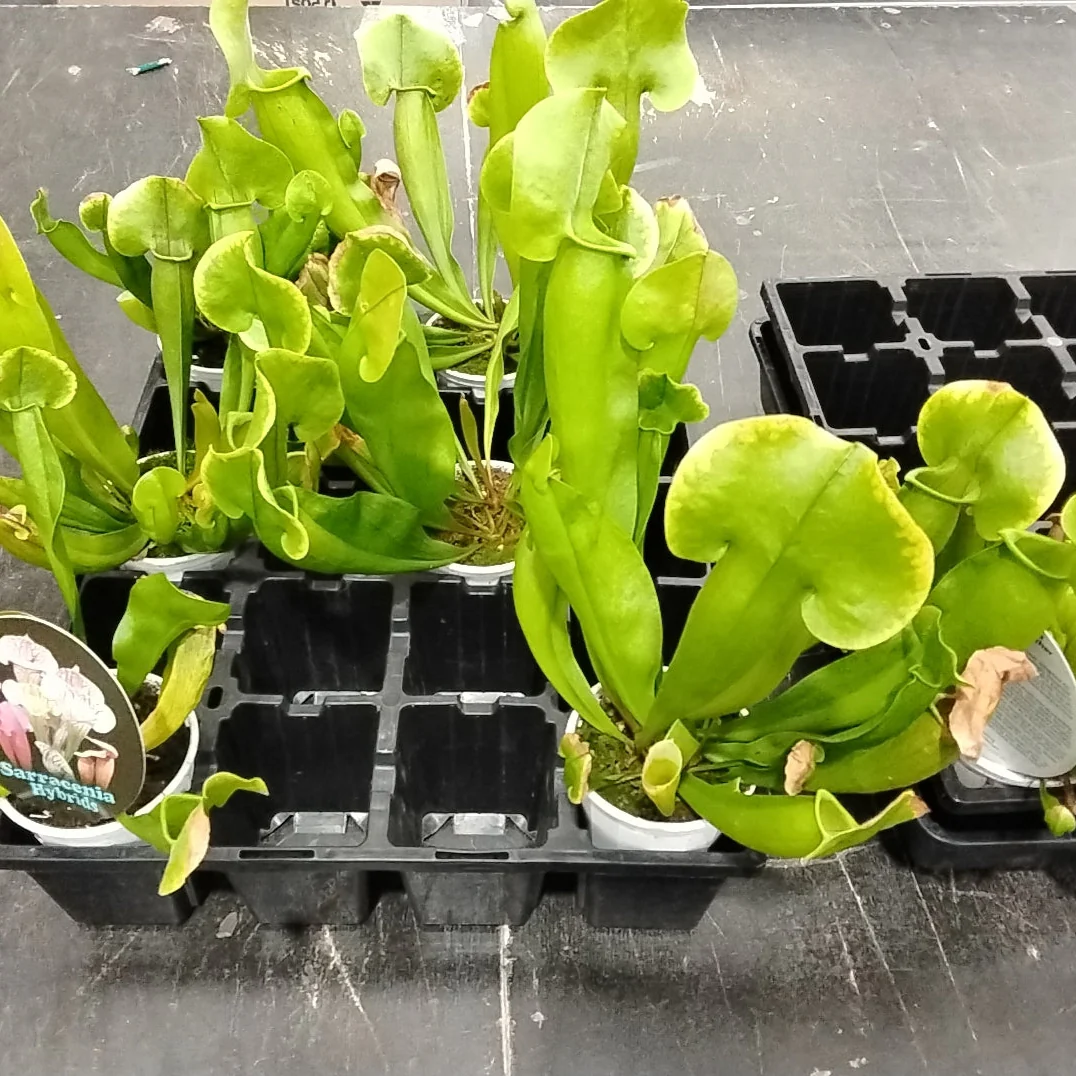
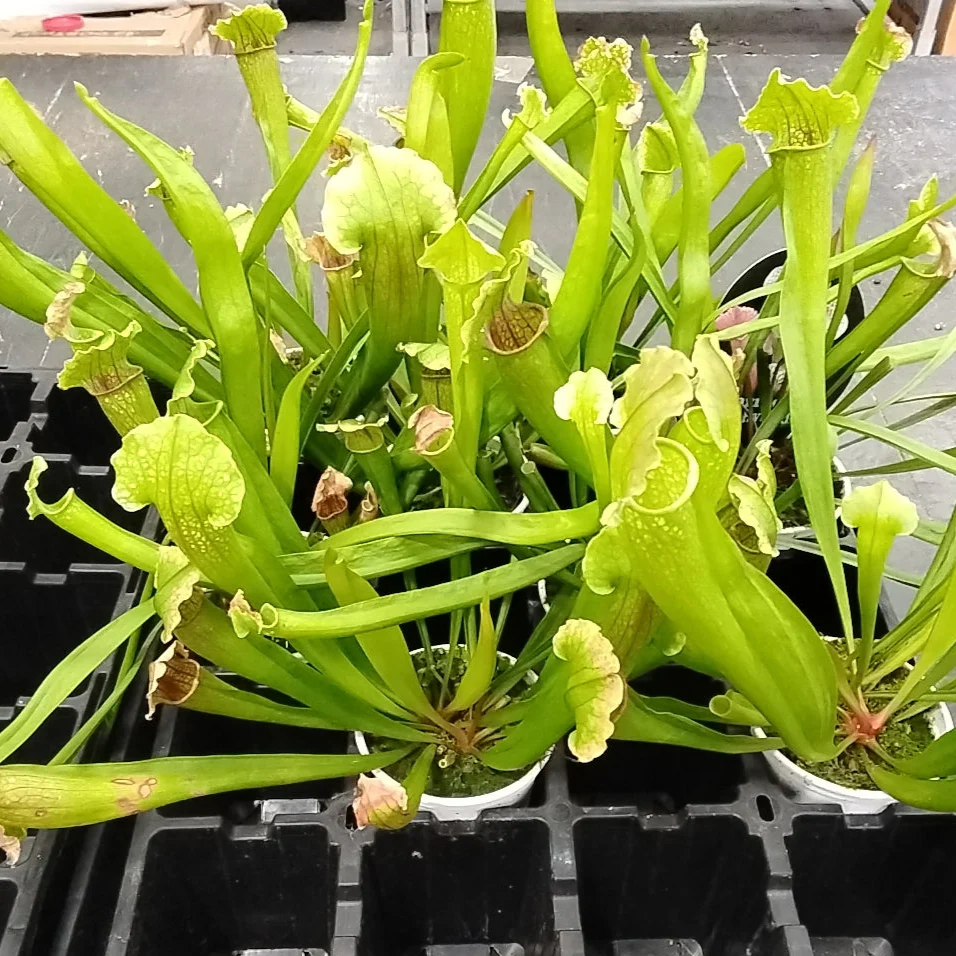
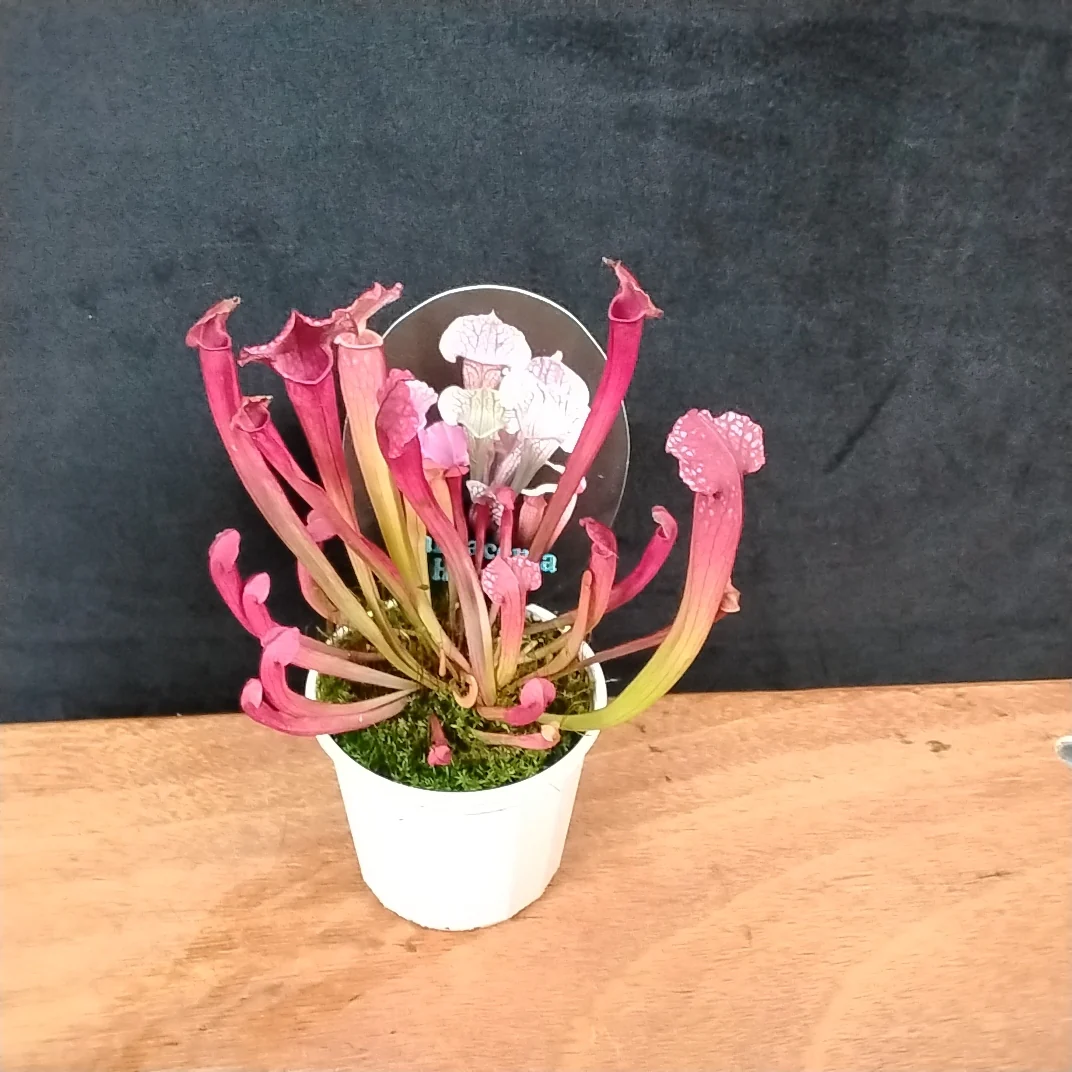
Sarracenia hybrids are cultivated pitcher plants within the Sarraceniaceae family, developed by crossing different North American species to combine desirable traits. The parent species are native to nutrient-poor wetlands, bogs, and wet savannas of the eastern United States and parts of Canada. In the wild, these plants thrive in sunny, open habitats with acidic, waterlogged soils, relying on their tubular leaves to trap and digest insects for nutrients.
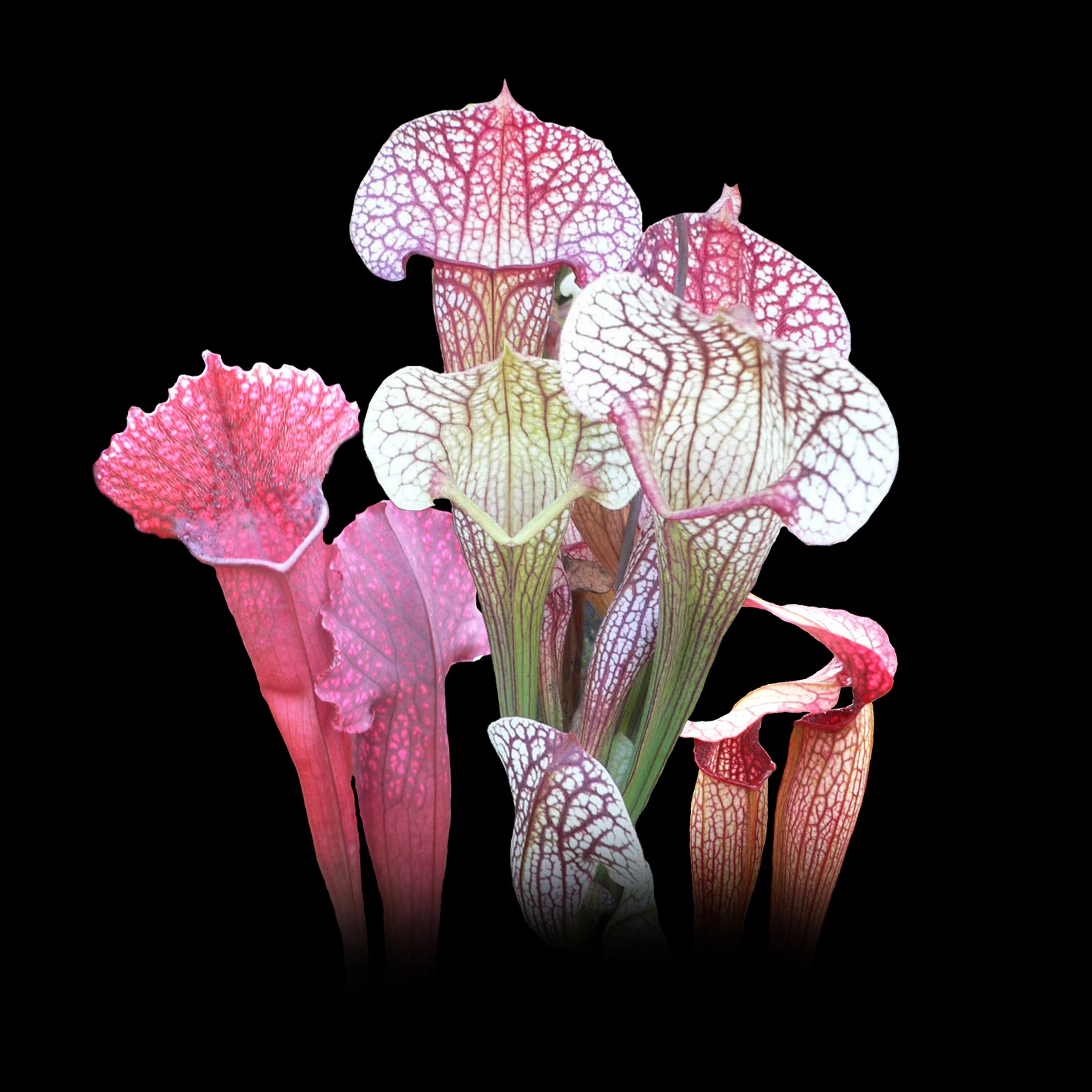
The modified leaves form upright, tubular pitchers, each topped with a hood or lid that helps prevent excess rainwater from diluting digestive fluids. Colouration varies widely in hybrids, from green and yellow to deep red or purple, often with intricate veining and patterning. These visual features help attract insects, which are lured into the slippery interior where downward-pointing hairs and digestive enzymes facilitate capture and digestion. In spring, mature plants produce tall, nodding flowers in shades of red, yellow, or pink, which are pollinated by insects before new pitchers emerge.
Hybrids are bred for features such as hardiness, larger or more colourful pitchers, extended seasonal performance, and greater tolerance to varied growing conditions. They are popular among collectors and carnivorous plant enthusiasts for their ornamental appeal and insect-catching abilities.
Care Tips:
- Light: Requires full sun for at least 6 hours daily to produce well-formed, colourful pitchers.
- Water: Keep soil consistently wet using rainwater, distilled water, or reverse osmosis water. Avoid tap water, as dissolved minerals can harm the plant.
- Humidity: Prefers moderate to high humidity, though many hybrids tolerate lower levels if soil moisture is maintained.
- Media: Plant in a nutrient-free, acidic mix such as 50:50 sphagnum peat moss and perlite or coarse sand.
- Fertiliser: Do not fertilise the soil; the plant obtains nutrients from captured prey. Supplemental feeding is unnecessary if grown outdoors where insects are available.
- Temperature: Most hybrids are temperate and require a cool winter dormancy of 2–4 months at 0–10°C.
- Repotting: Repot every 2–3 years in late winter or early spring before active growth begins.
- Propagation: Divide rhizomes in early spring, ensuring each division has healthy roots and at least one growing point.
Additional Notes:
- Known to be toxic if ingested
Original: $10.00
-65%$10.00
$3.50More Images
Sarracenia Hybrids
Sarracenia hybrids are cultivated pitcher plants within the Sarraceniaceae family, developed by crossing different North American species to combine desirable traits. The parent species are native to nutrient-poor wetlands, bogs, and wet savannas of the eastern United States and parts of Canada. In the wild, these plants thrive in sunny, open habitats with acidic, waterlogged soils, relying on their tubular leaves to trap and digest insects for nutrients.
The modified leaves form upright, tubular pitchers, each topped with a hood or lid that helps prevent excess rainwater from diluting digestive fluids. Colouration varies widely in hybrids, from green and yellow to deep red or purple, often with intricate veining and patterning. These visual features help attract insects, which are lured into the slippery interior where downward-pointing hairs and digestive enzymes facilitate capture and digestion. In spring, mature plants produce tall, nodding flowers in shades of red, yellow, or pink, which are pollinated by insects before new pitchers emerge.
Hybrids are bred for features such as hardiness, larger or more colourful pitchers, extended seasonal performance, and greater tolerance to varied growing conditions. They are popular among collectors and carnivorous plant enthusiasts for their ornamental appeal and insect-catching abilities.
Care Tips:
- Light: Requires full sun for at least 6 hours daily to produce well-formed, colourful pitchers.
- Water: Keep soil consistently wet using rainwater, distilled water, or reverse osmosis water. Avoid tap water, as dissolved minerals can harm the plant.
- Humidity: Prefers moderate to high humidity, though many hybrids tolerate lower levels if soil moisture is maintained.
- Media: Plant in a nutrient-free, acidic mix such as 50:50 sphagnum peat moss and perlite or coarse sand.
- Fertiliser: Do not fertilise the soil; the plant obtains nutrients from captured prey. Supplemental feeding is unnecessary if grown outdoors where insects are available.
- Temperature: Most hybrids are temperate and require a cool winter dormancy of 2–4 months at 0–10°C.
- Repotting: Repot every 2–3 years in late winter or early spring before active growth begins.
- Propagation: Divide rhizomes in early spring, ensuring each division has healthy roots and at least one growing point.
Additional Notes:
- Known to be toxic if ingested
Product Information
Product Information
Shipping & Returns
Shipping & Returns
Description
Sarracenia hybrids are cultivated pitcher plants within the Sarraceniaceae family, developed by crossing different North American species to combine desirable traits. The parent species are native to nutrient-poor wetlands, bogs, and wet savannas of the eastern United States and parts of Canada. In the wild, these plants thrive in sunny, open habitats with acidic, waterlogged soils, relying on their tubular leaves to trap and digest insects for nutrients.
The modified leaves form upright, tubular pitchers, each topped with a hood or lid that helps prevent excess rainwater from diluting digestive fluids. Colouration varies widely in hybrids, from green and yellow to deep red or purple, often with intricate veining and patterning. These visual features help attract insects, which are lured into the slippery interior where downward-pointing hairs and digestive enzymes facilitate capture and digestion. In spring, mature plants produce tall, nodding flowers in shades of red, yellow, or pink, which are pollinated by insects before new pitchers emerge.
Hybrids are bred for features such as hardiness, larger or more colourful pitchers, extended seasonal performance, and greater tolerance to varied growing conditions. They are popular among collectors and carnivorous plant enthusiasts for their ornamental appeal and insect-catching abilities.
Care Tips:
- Light: Requires full sun for at least 6 hours daily to produce well-formed, colourful pitchers.
- Water: Keep soil consistently wet using rainwater, distilled water, or reverse osmosis water. Avoid tap water, as dissolved minerals can harm the plant.
- Humidity: Prefers moderate to high humidity, though many hybrids tolerate lower levels if soil moisture is maintained.
- Media: Plant in a nutrient-free, acidic mix such as 50:50 sphagnum peat moss and perlite or coarse sand.
- Fertiliser: Do not fertilise the soil; the plant obtains nutrients from captured prey. Supplemental feeding is unnecessary if grown outdoors where insects are available.
- Temperature: Most hybrids are temperate and require a cool winter dormancy of 2–4 months at 0–10°C.
- Repotting: Repot every 2–3 years in late winter or early spring before active growth begins.
- Propagation: Divide rhizomes in early spring, ensuring each division has healthy roots and at least one growing point.
Additional Notes:
- Known to be toxic if ingested