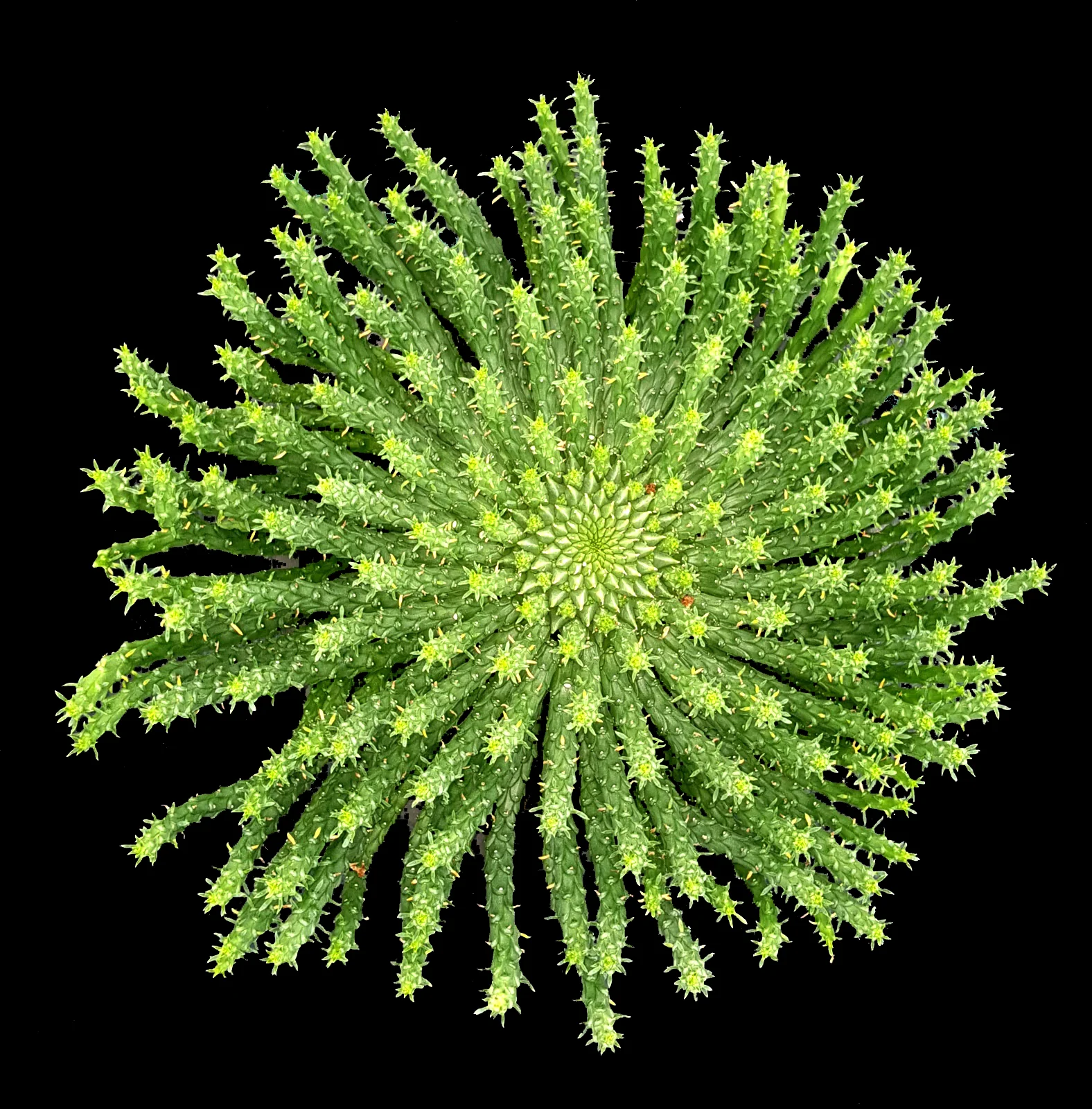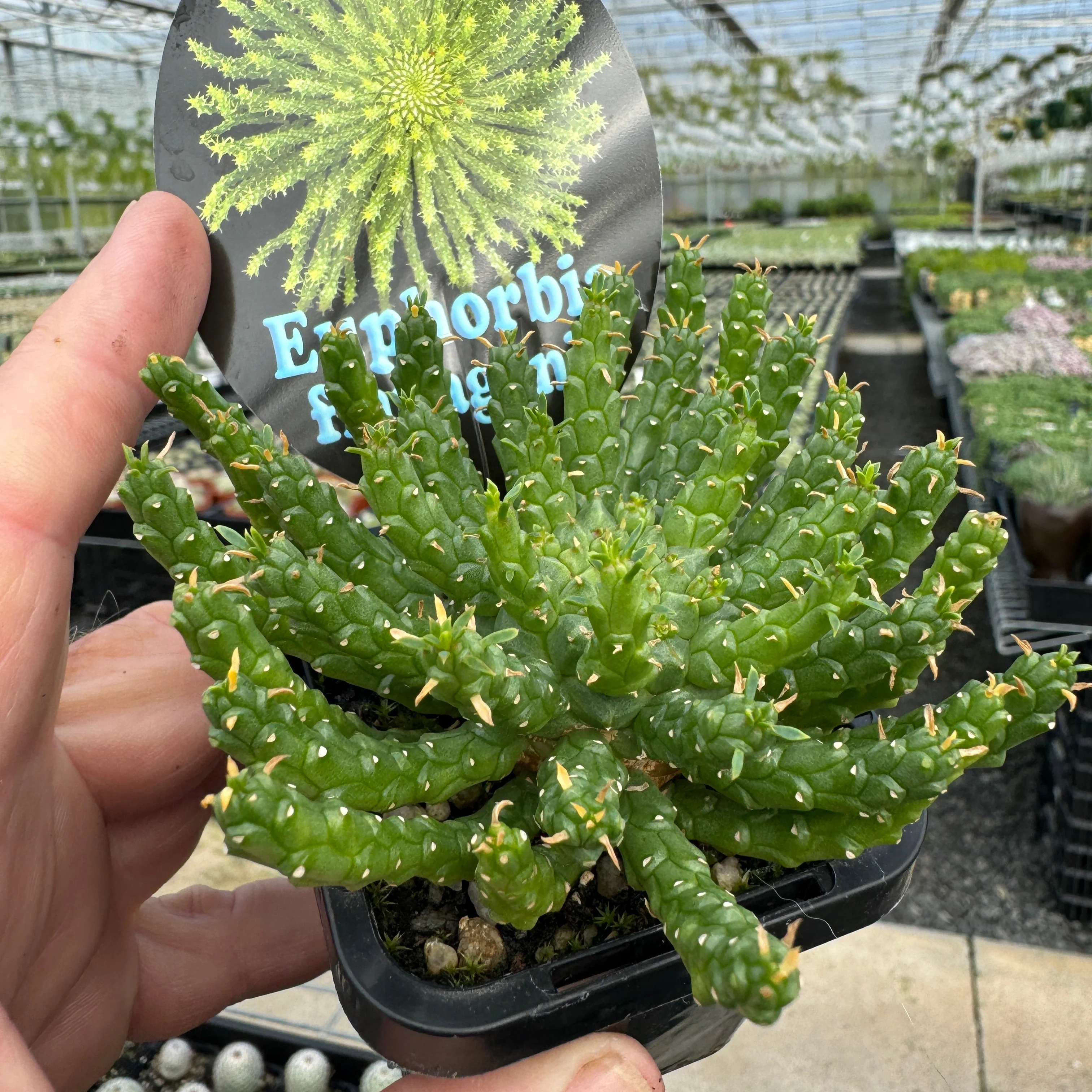
Euphorbia bupleurifolia (WA Prohibited)
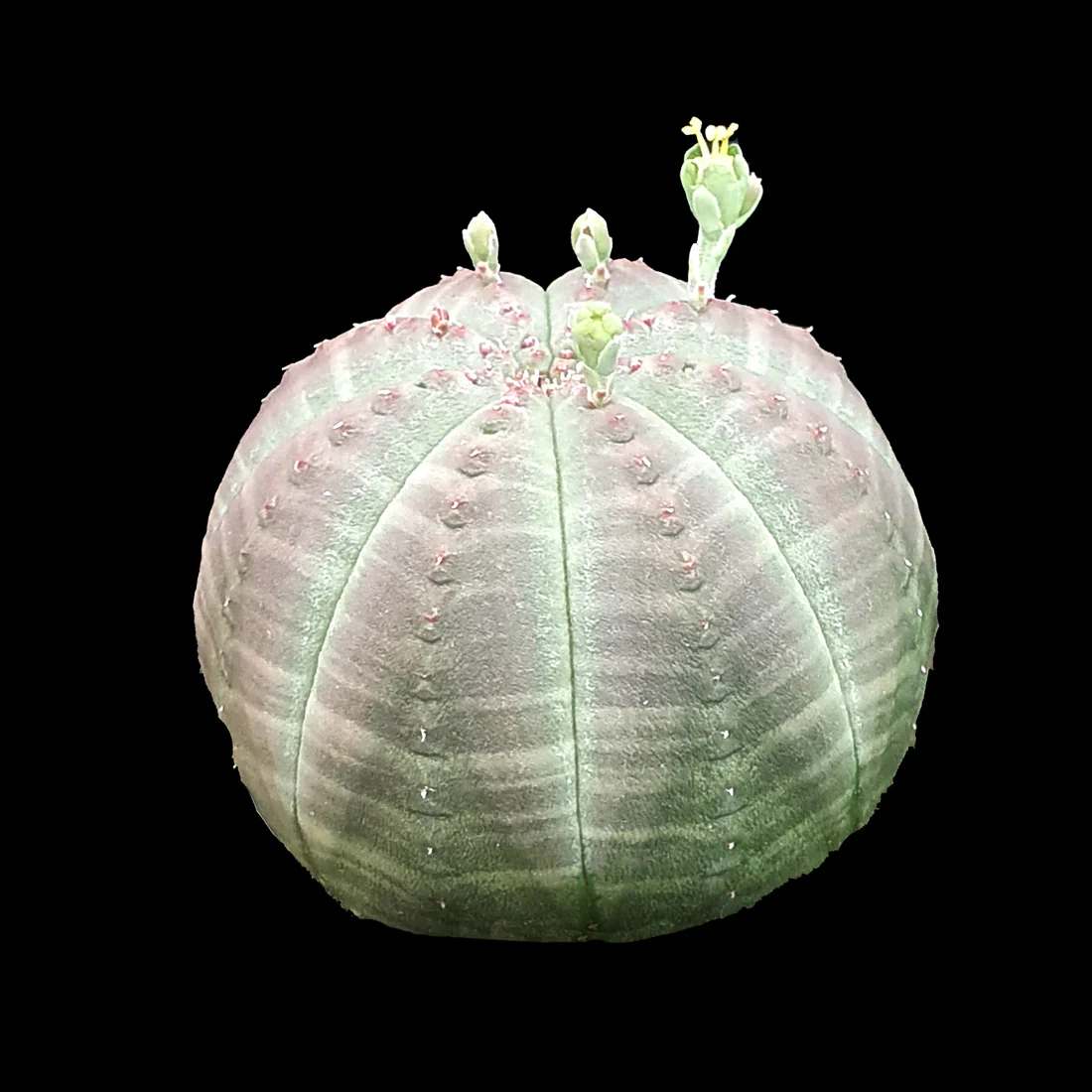
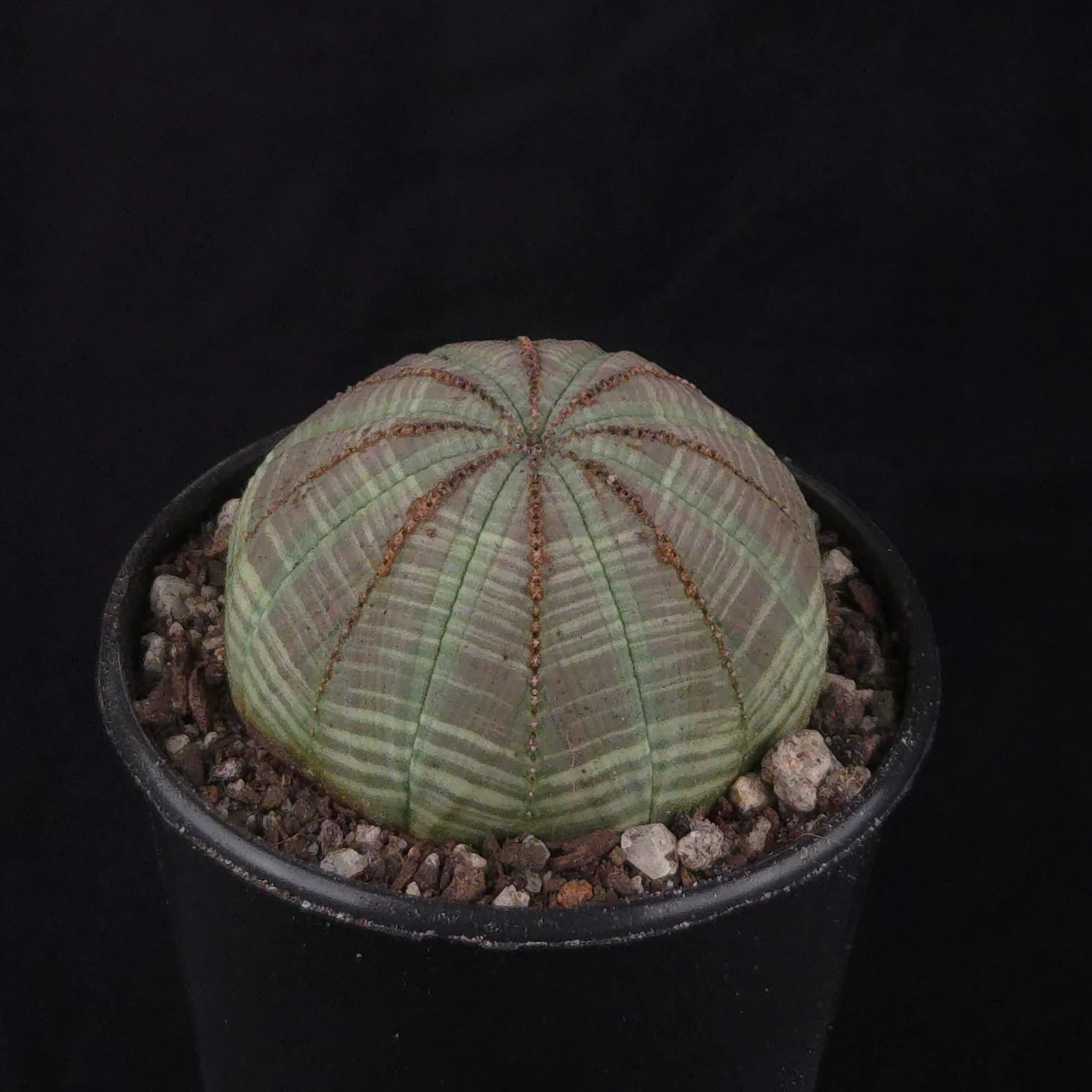
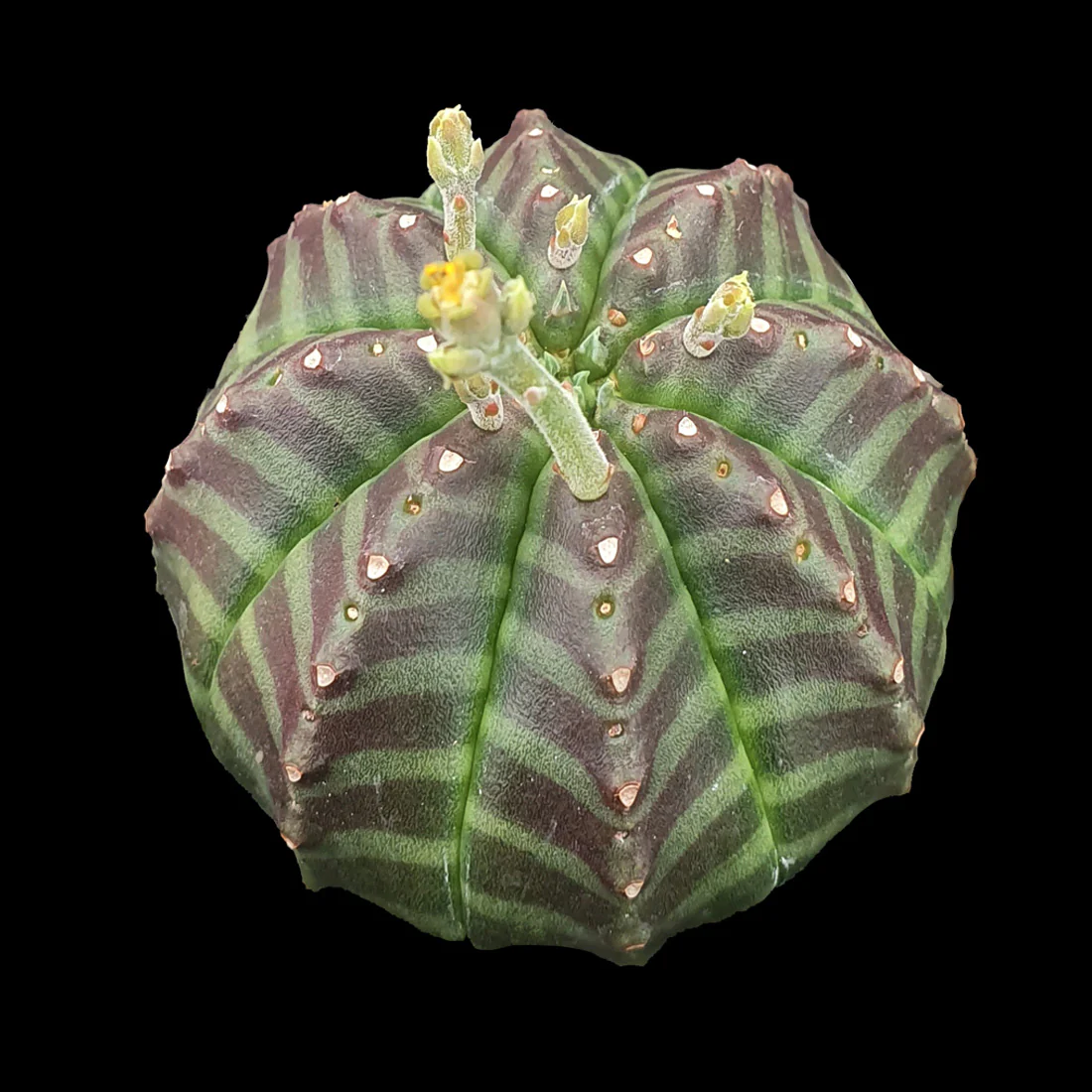
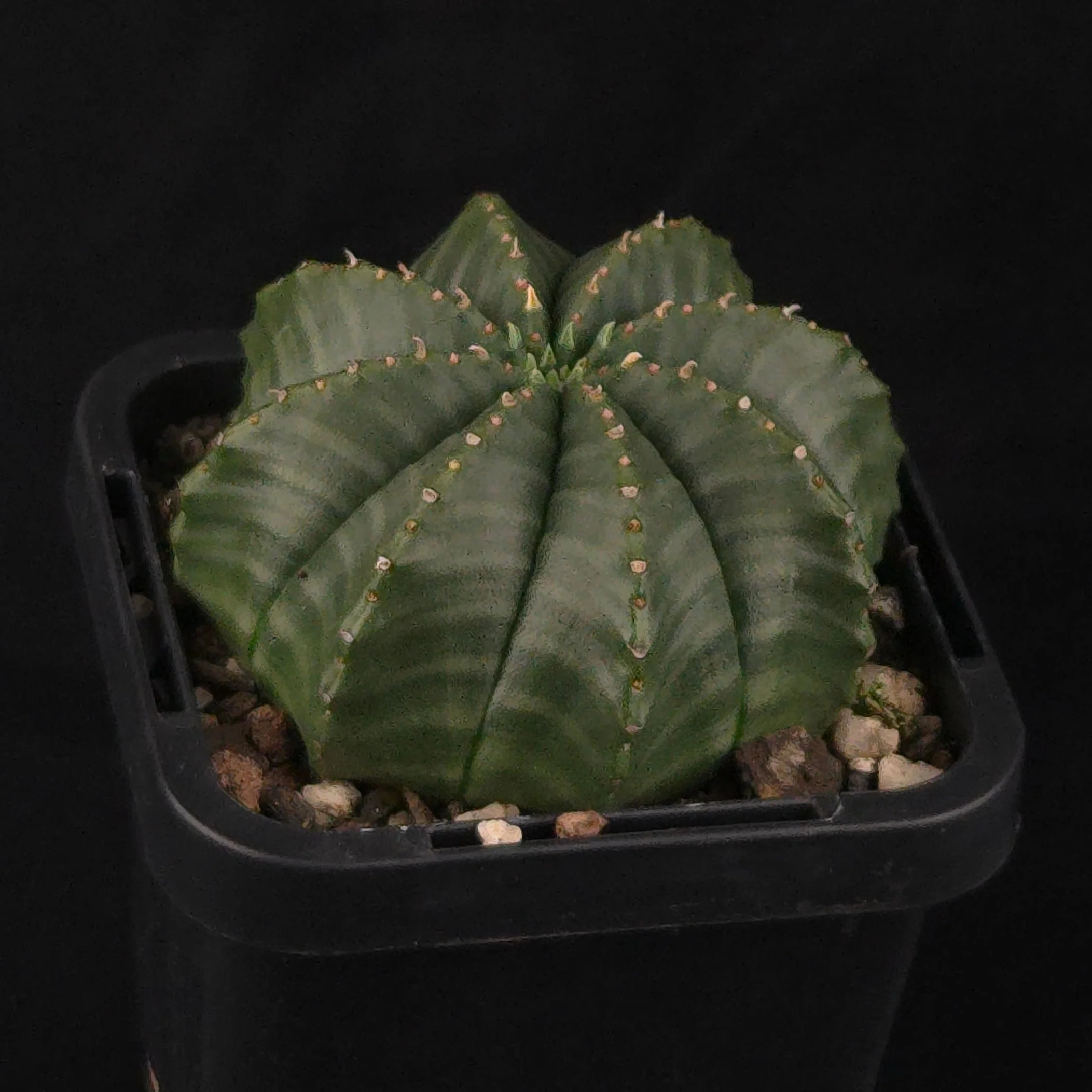
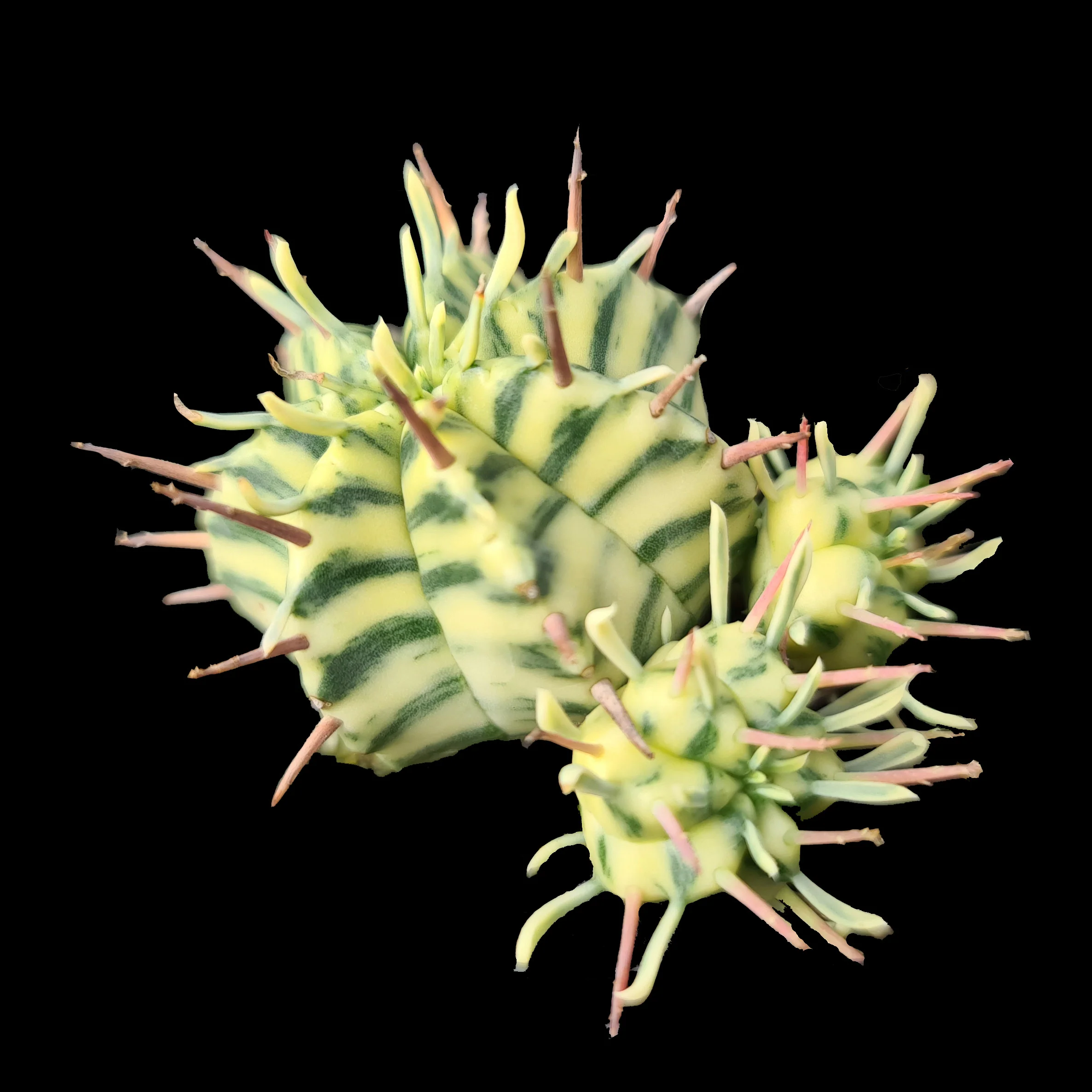
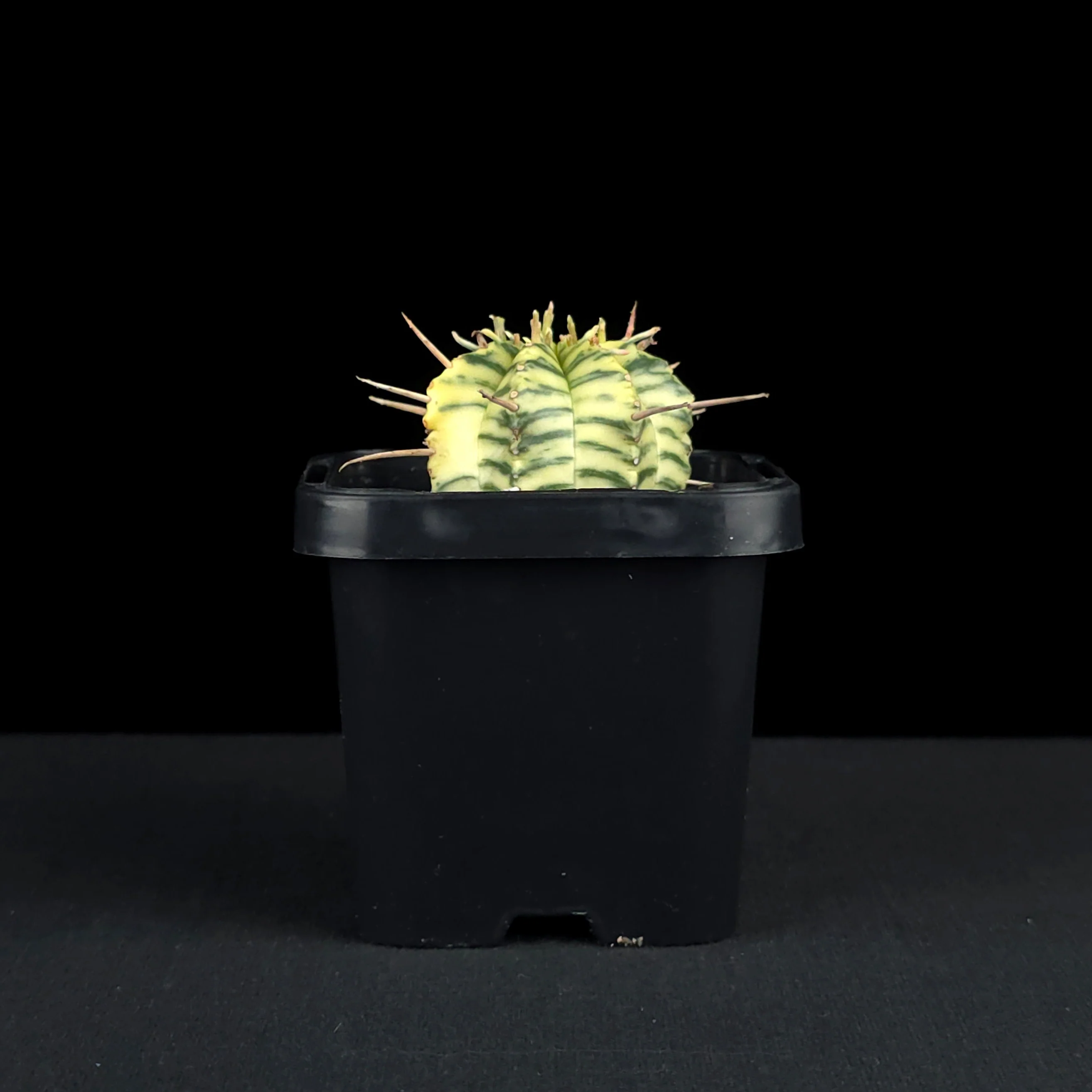
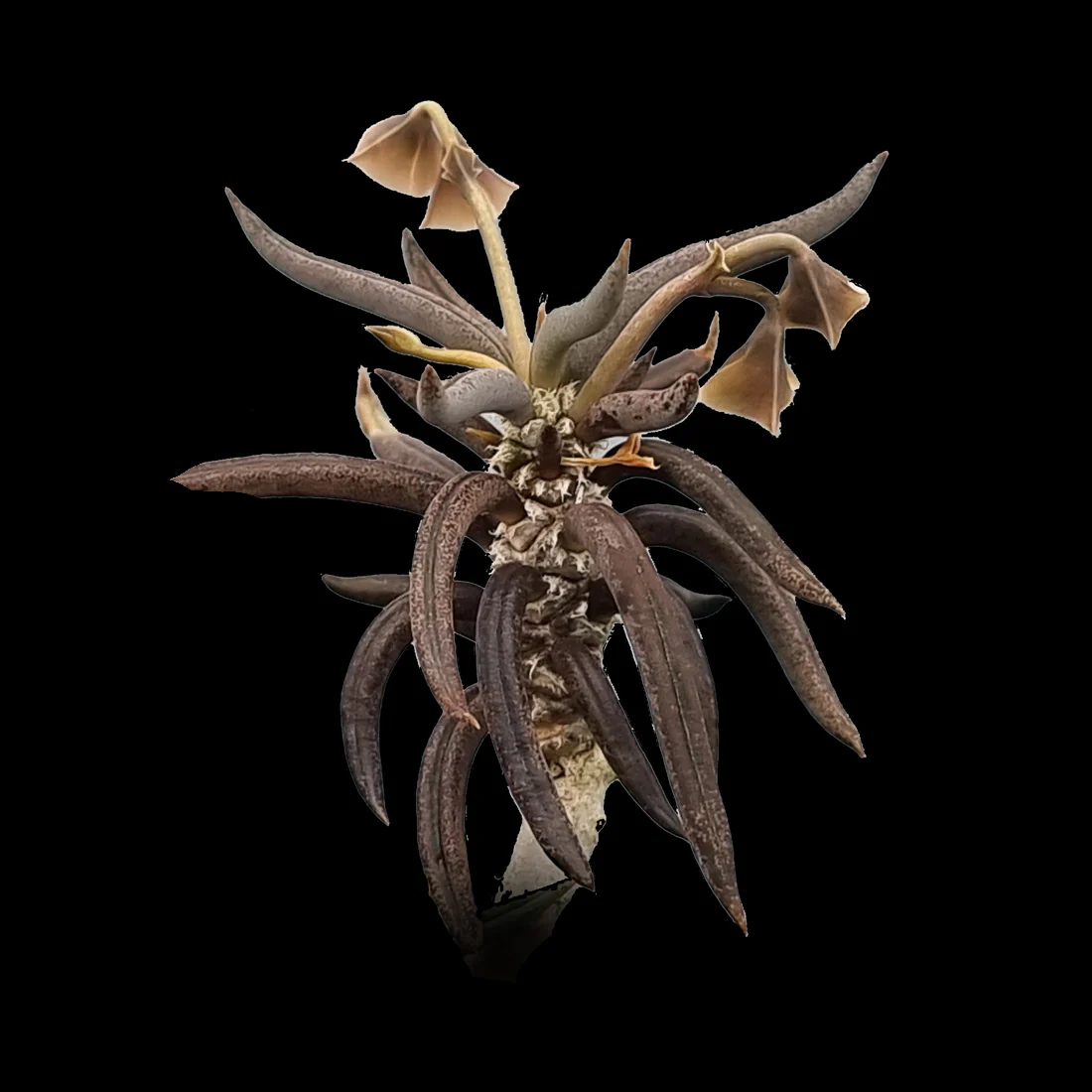
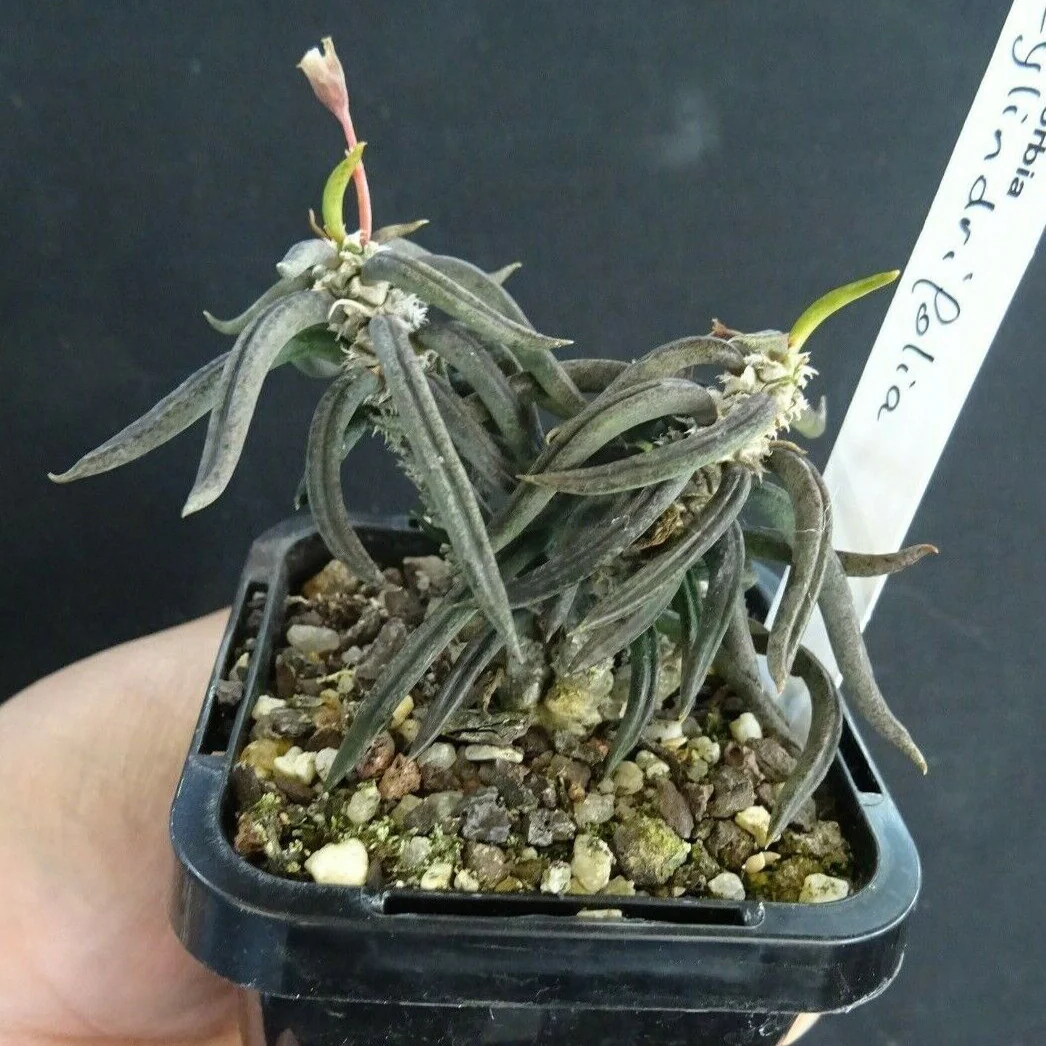
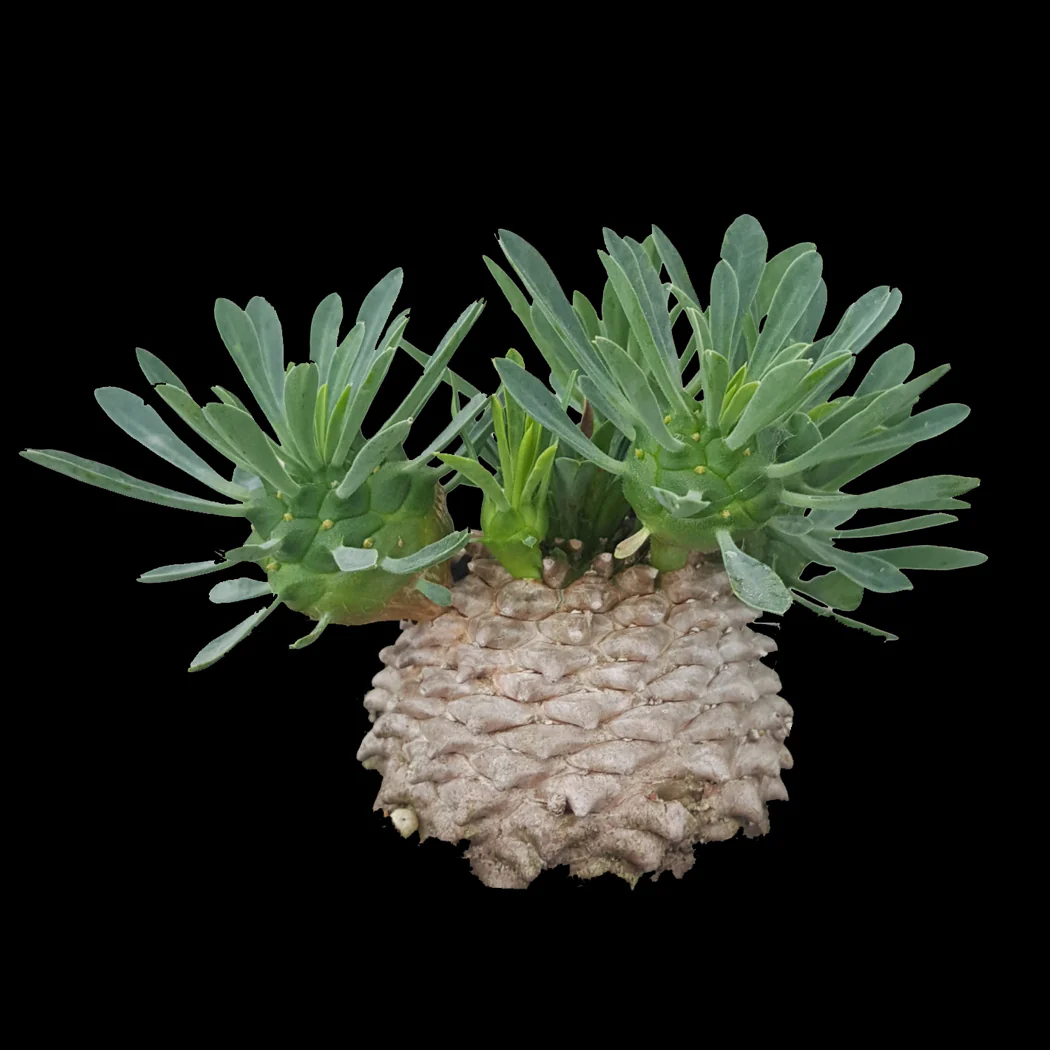
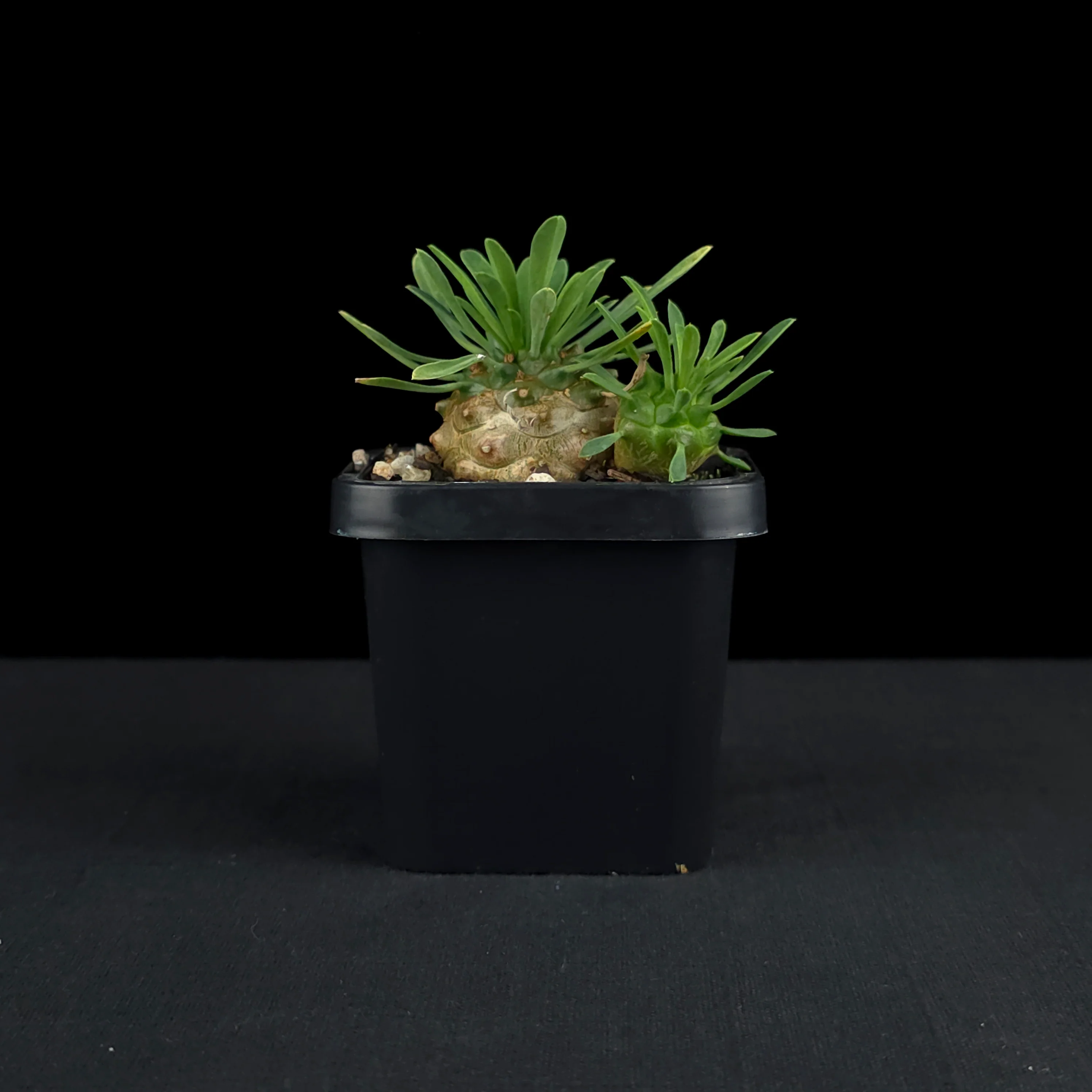
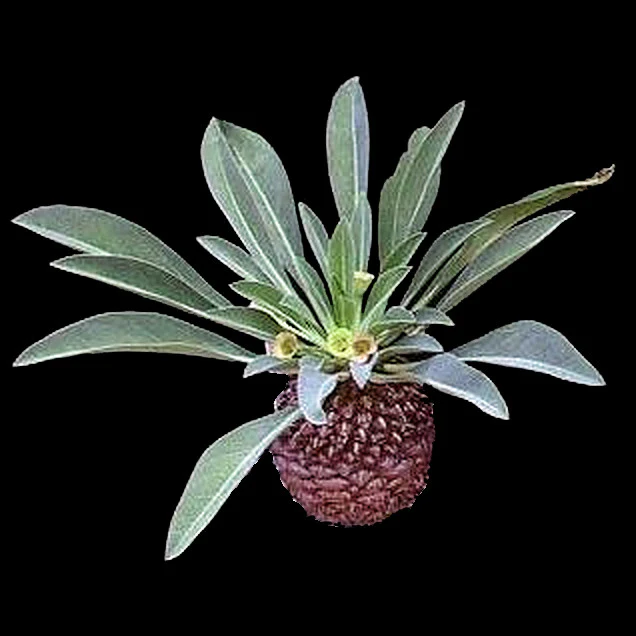
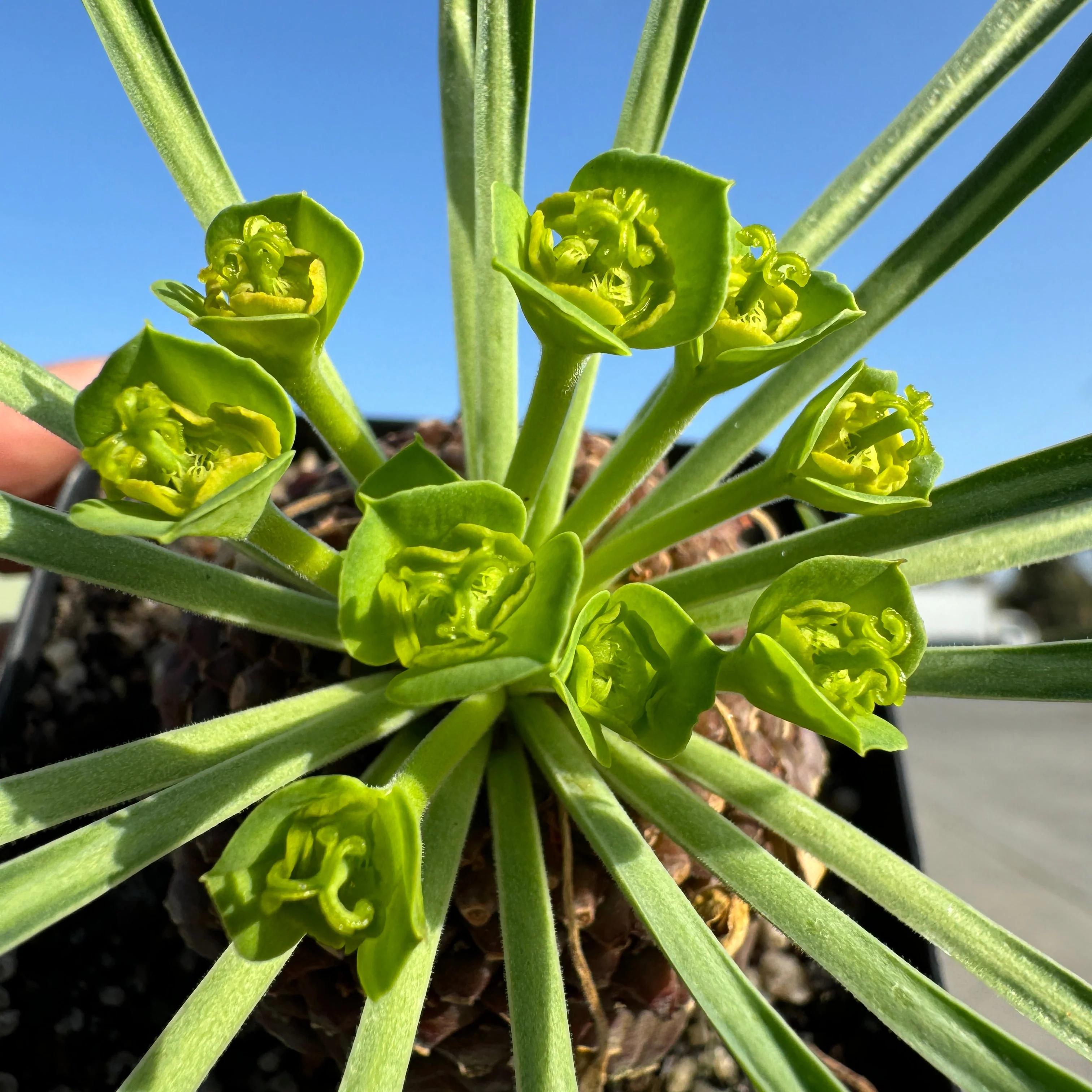
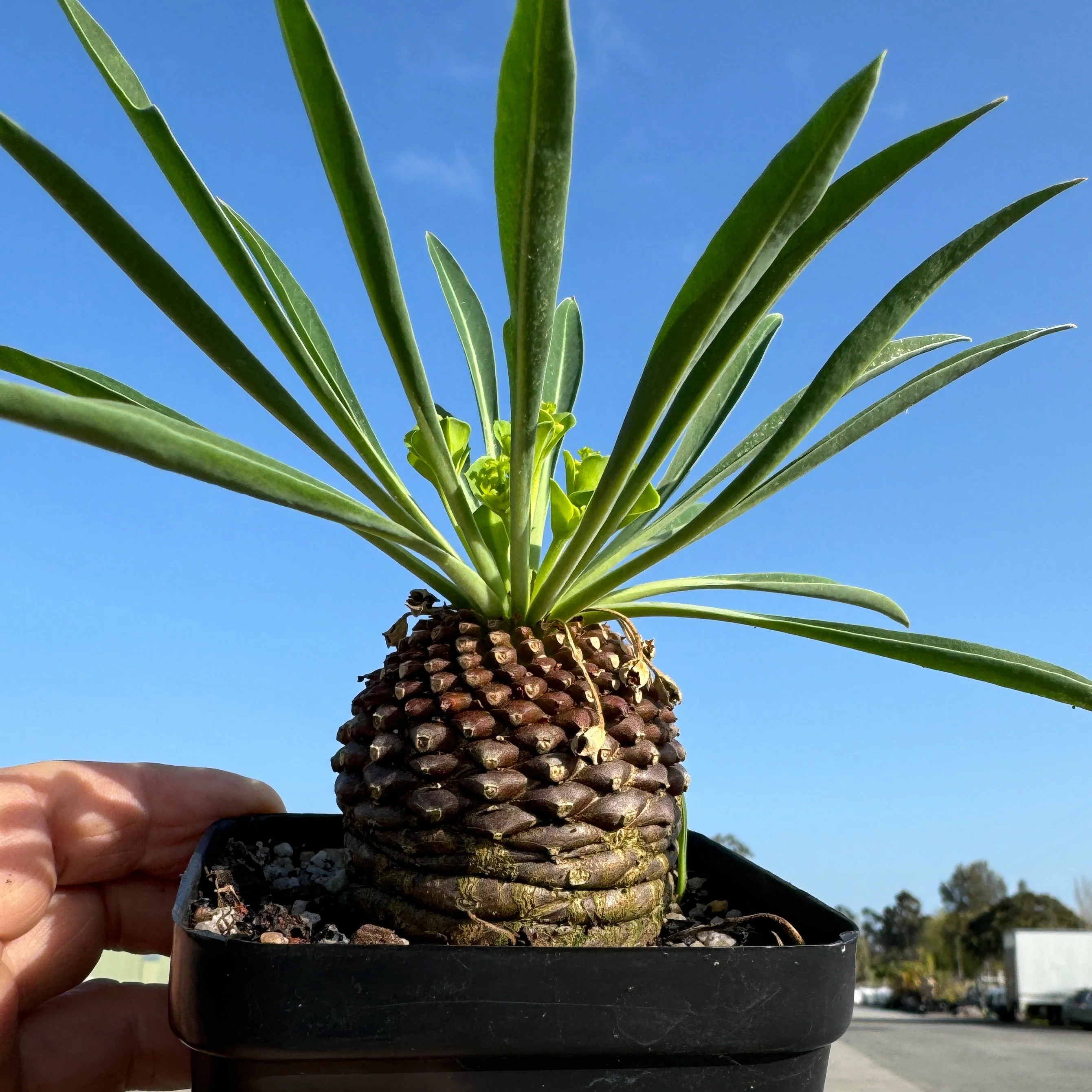
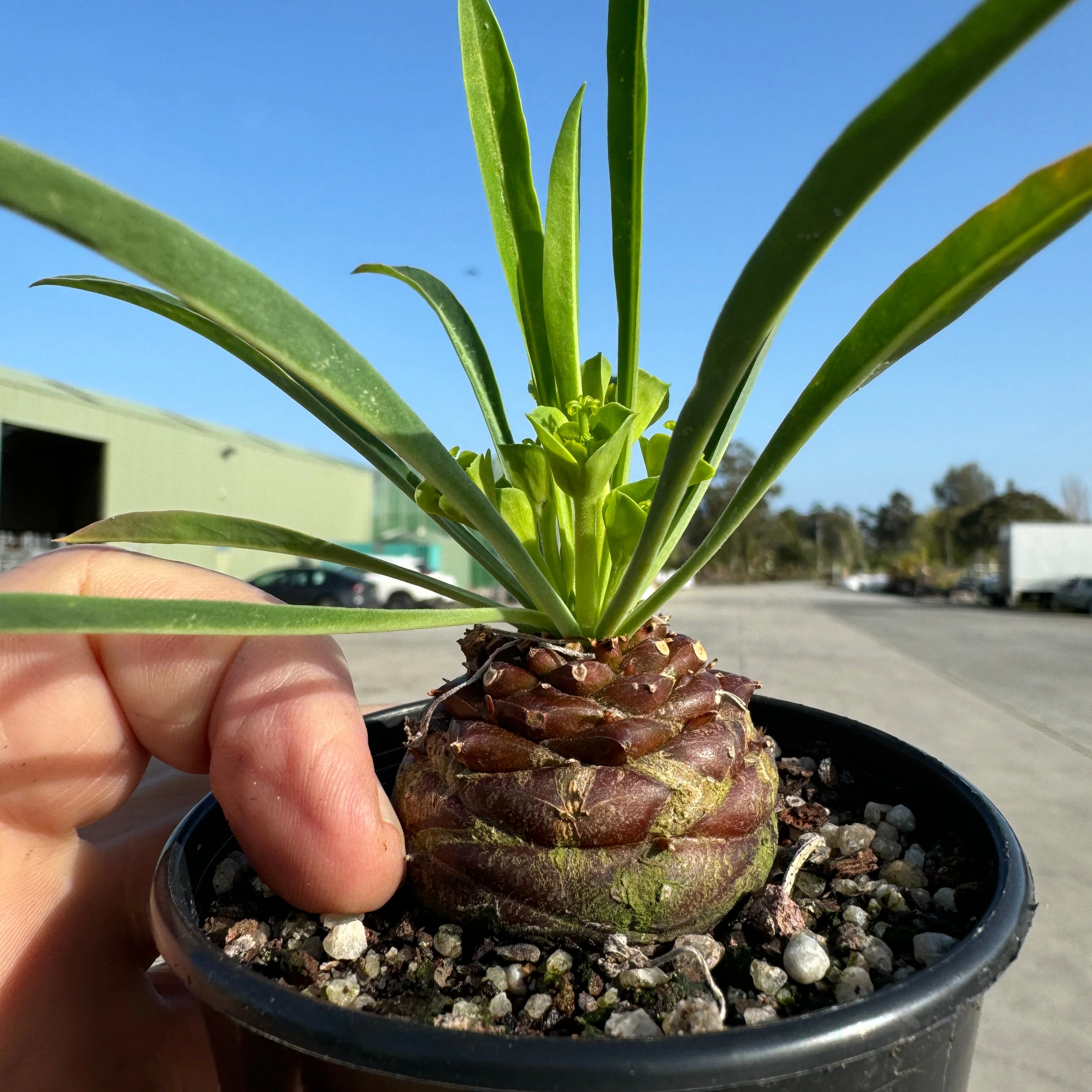
Euphorbia bupleurifolia is a tuberous succulent species endemic to the Eastern Cape of South Africa, where it grows in dry, rocky grassland and scrub. It develops a rounded, often textured caudex resembling a pine cone or woody bulb, from which a rosette of narrow, leathery green leaves emerges during the growing season. The leaves are typically spoon-shaped to lanceolate and may have a reddish margin in strong light. This species is deciduous, shedding its foliage during winter dormancy. Small, greenish-yellow cyathia are borne on short peduncles near the leaf bases in spring or summer.
Care Tips:
- Light – Requires bright light to full sun; morning sun is ideal for best form and leaf colour
- Water – Water sparingly during active growth; keep mostly dry during dormancy
- Humidity – Best in dry air; avoid humid, stagnant conditions
- Media – Use a sharply draining cactus mix with added pumice or mineral grit
- Temperature – Maintain above 10°C; not frost-tolerant
- Fertiliser – Apply a diluted fertiliser during the growing season only
- Repotting – Repot only when necessary; avoid damaging the caudex and roots
Additional Notes:
- Known to be toxic
Original: $20.00
-65%$20.00
$7.00More Images
Euphorbia bupleurifolia (WA Prohibited)
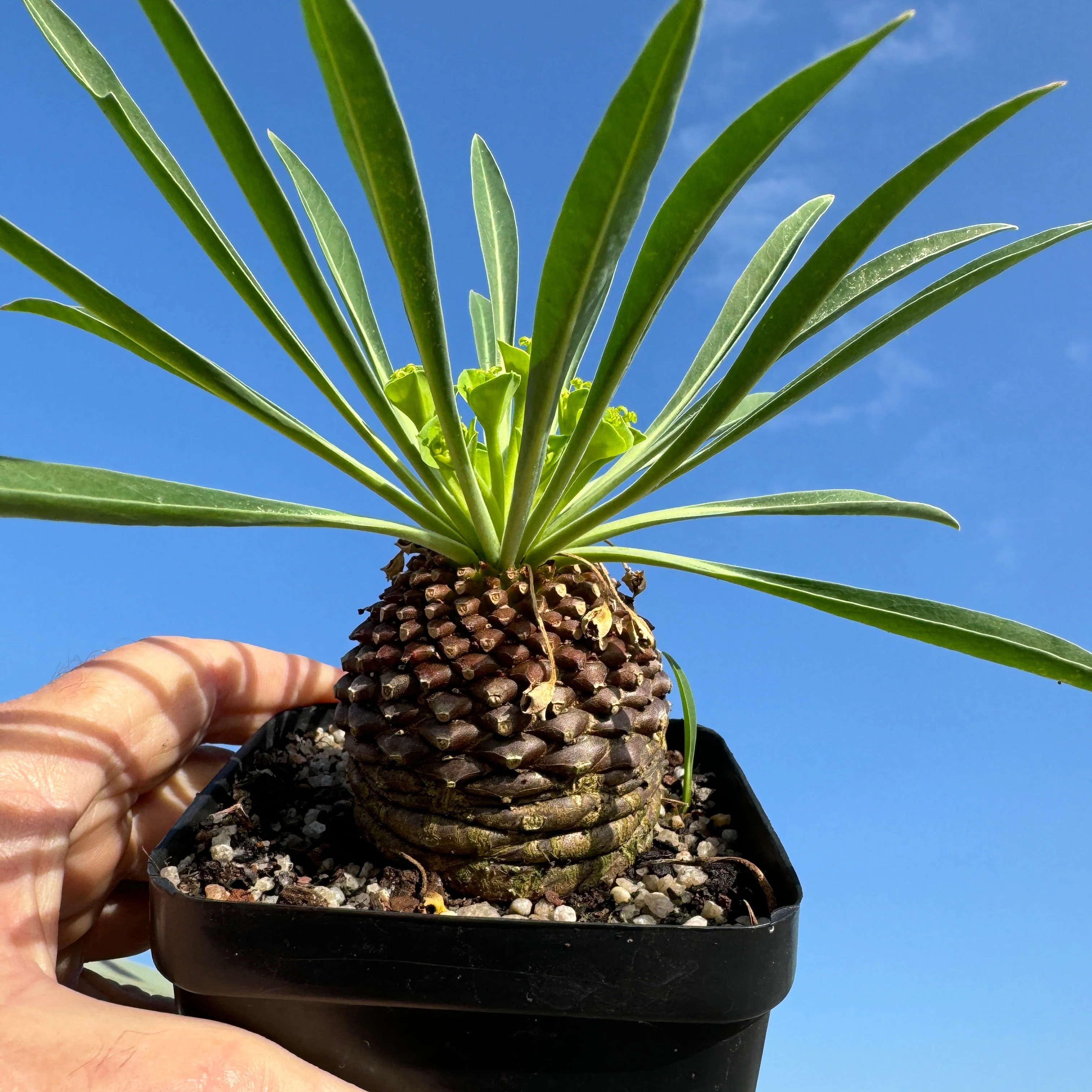
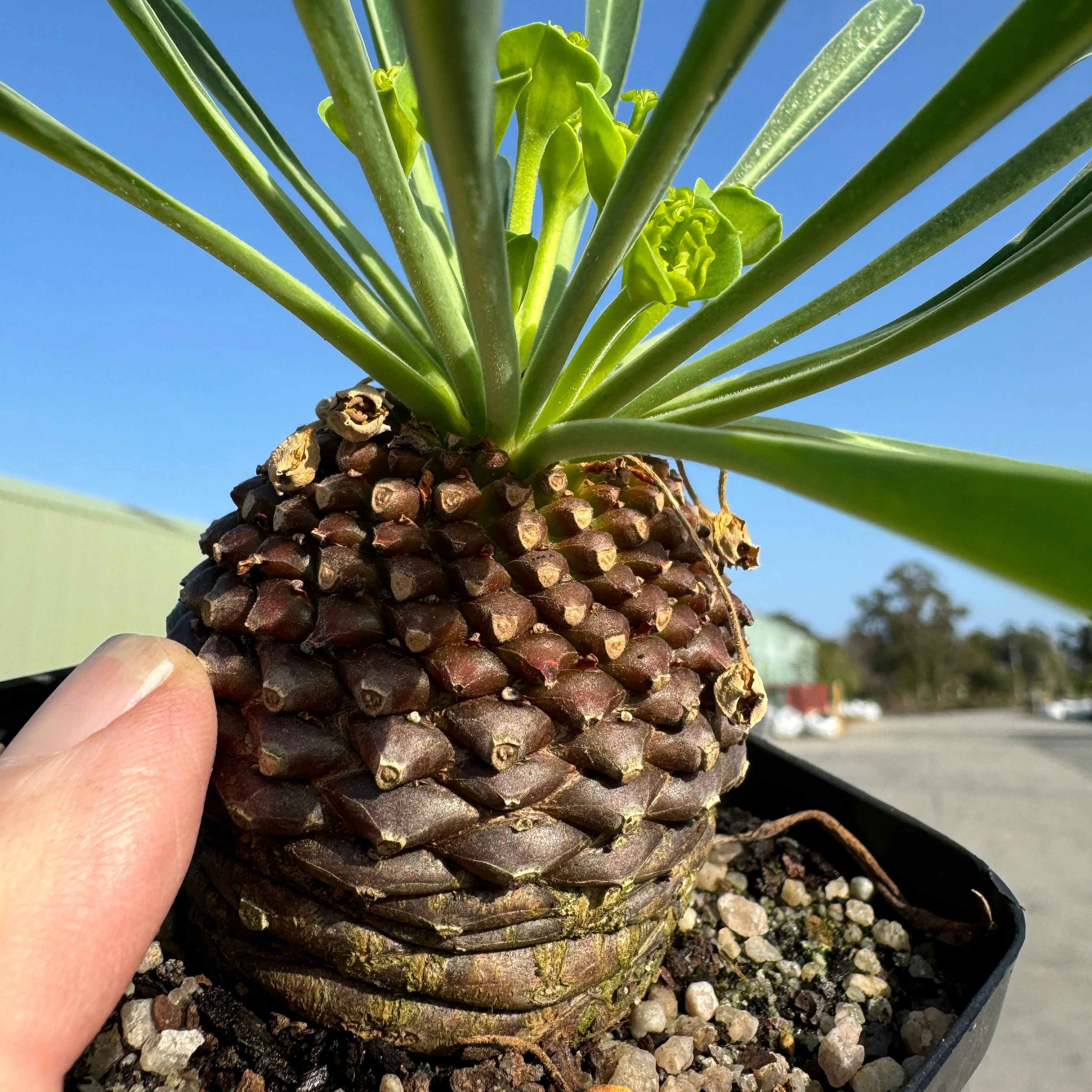
Euphorbia bupleurifolia is a tuberous succulent species endemic to the Eastern Cape of South Africa, where it grows in dry, rocky grassland and scrub. It develops a rounded, often textured caudex resembling a pine cone or woody bulb, from which a rosette of narrow, leathery green leaves emerges during the growing season. The leaves are typically spoon-shaped to lanceolate and may have a reddish margin in strong light. This species is deciduous, shedding its foliage during winter dormancy. Small, greenish-yellow cyathia are borne on short peduncles near the leaf bases in spring or summer.
Care Tips:
- Light – Requires bright light to full sun; morning sun is ideal for best form and leaf colour
- Water – Water sparingly during active growth; keep mostly dry during dormancy
- Humidity – Best in dry air; avoid humid, stagnant conditions
- Media – Use a sharply draining cactus mix with added pumice or mineral grit
- Temperature – Maintain above 10°C; not frost-tolerant
- Fertiliser – Apply a diluted fertiliser during the growing season only
- Repotting – Repot only when necessary; avoid damaging the caudex and roots
Additional Notes:
- Known to be toxic
Product Information
Product Information
Shipping & Returns
Shipping & Returns
Description
Euphorbia bupleurifolia is a tuberous succulent species endemic to the Eastern Cape of South Africa, where it grows in dry, rocky grassland and scrub. It develops a rounded, often textured caudex resembling a pine cone or woody bulb, from which a rosette of narrow, leathery green leaves emerges during the growing season. The leaves are typically spoon-shaped to lanceolate and may have a reddish margin in strong light. This species is deciduous, shedding its foliage during winter dormancy. Small, greenish-yellow cyathia are borne on short peduncles near the leaf bases in spring or summer.
Care Tips:
- Light – Requires bright light to full sun; morning sun is ideal for best form and leaf colour
- Water – Water sparingly during active growth; keep mostly dry during dormancy
- Humidity – Best in dry air; avoid humid, stagnant conditions
- Media – Use a sharply draining cactus mix with added pumice or mineral grit
- Temperature – Maintain above 10°C; not frost-tolerant
- Fertiliser – Apply a diluted fertiliser during the growing season only
- Repotting – Repot only when necessary; avoid damaging the caudex and roots
Additional Notes:
- Known to be toxic