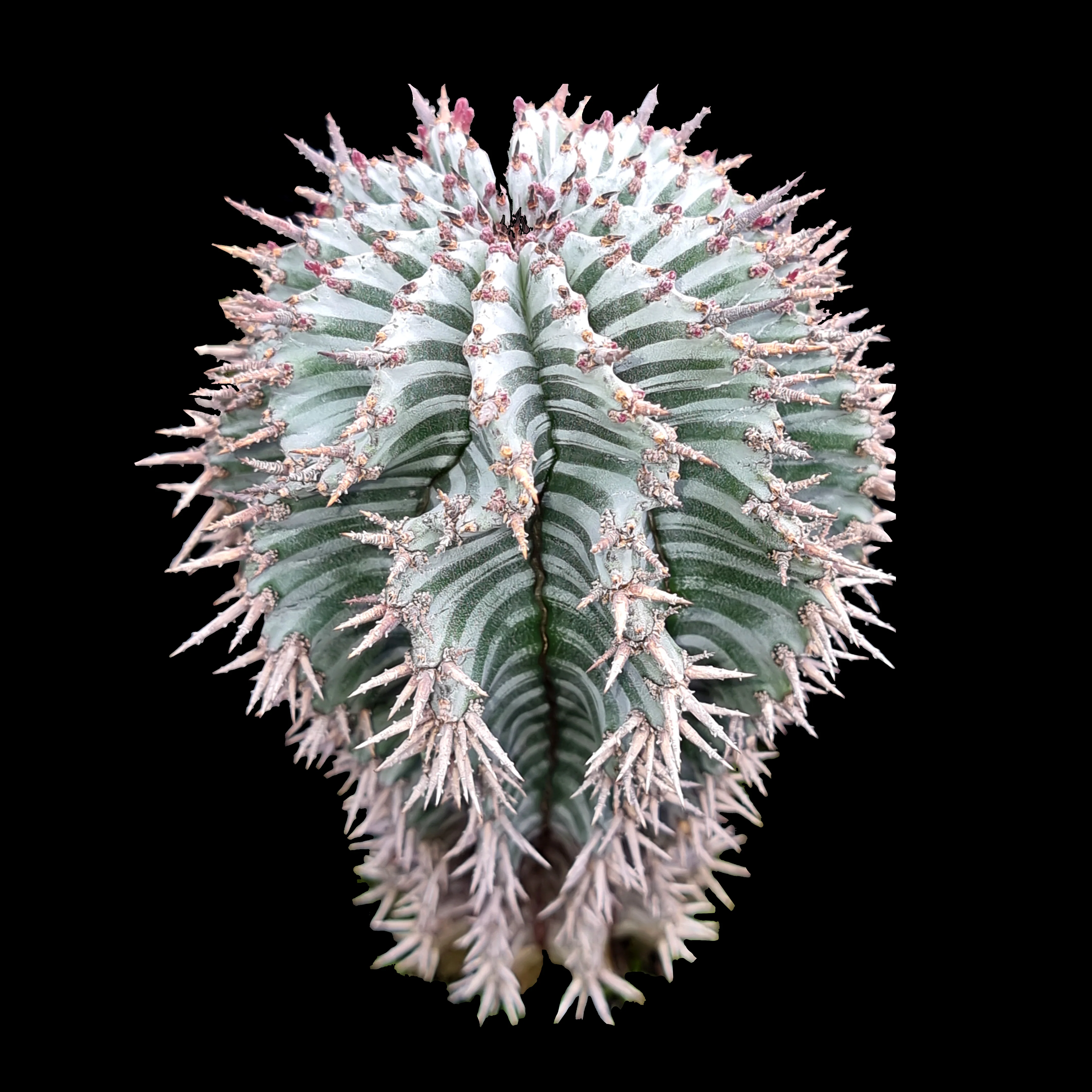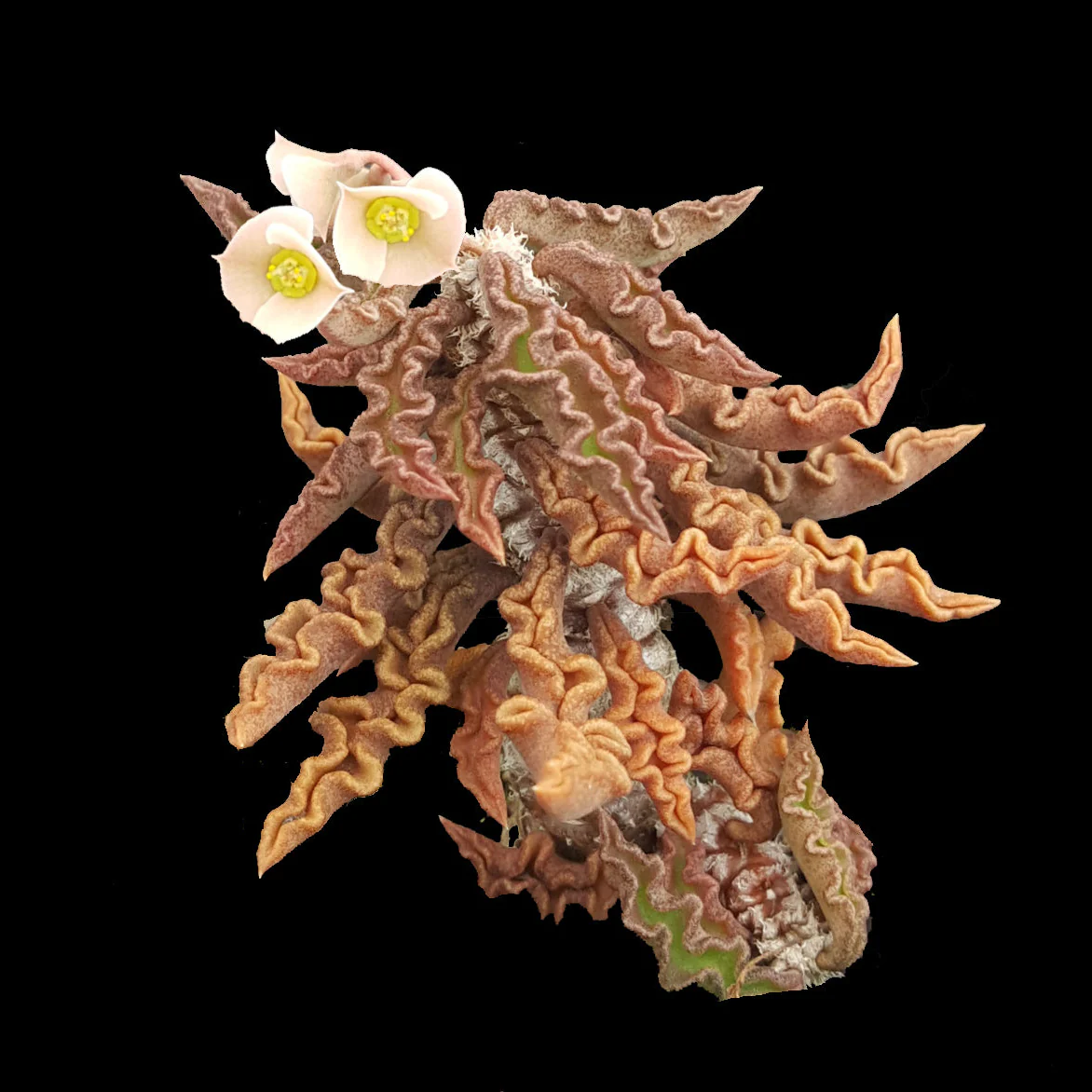
Euphorbia decaryi 'The Dead Plant' (WA Prohibited)
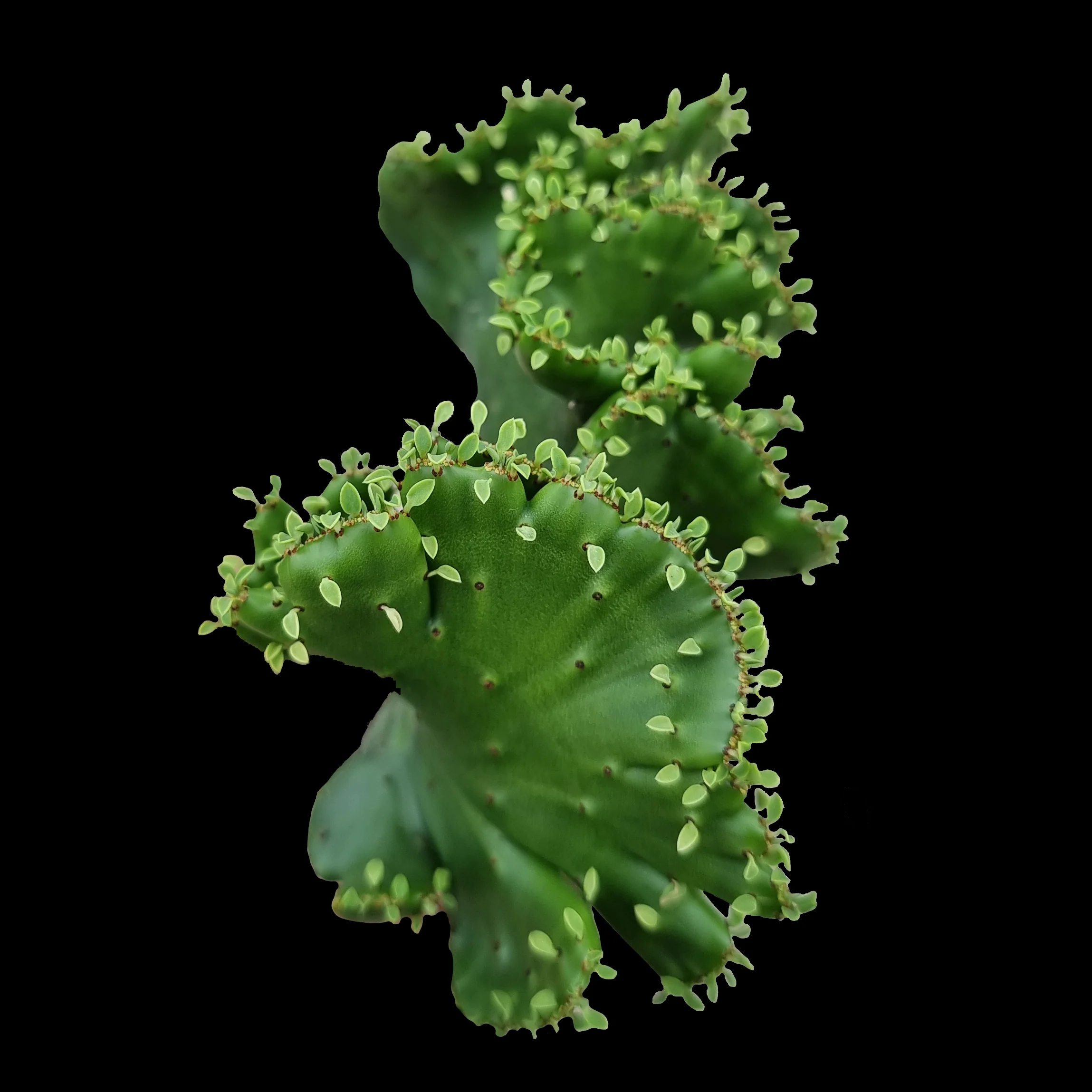
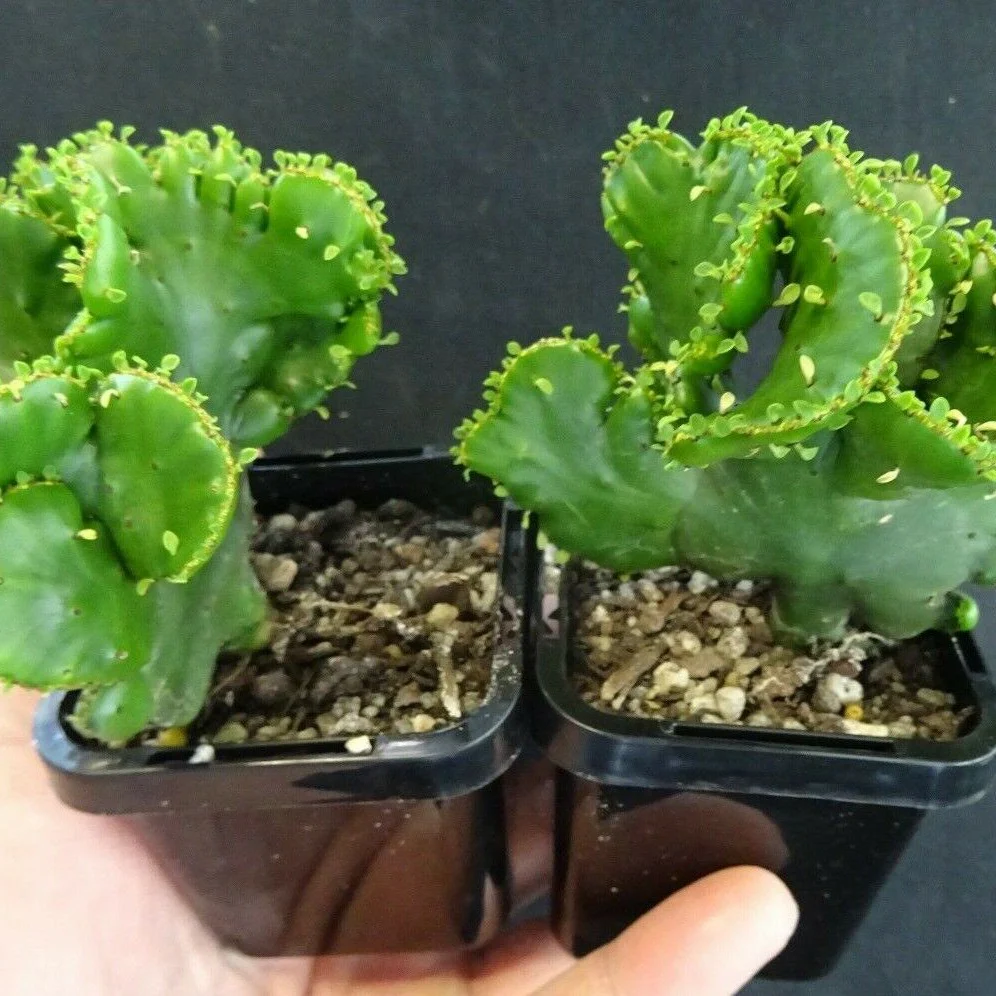
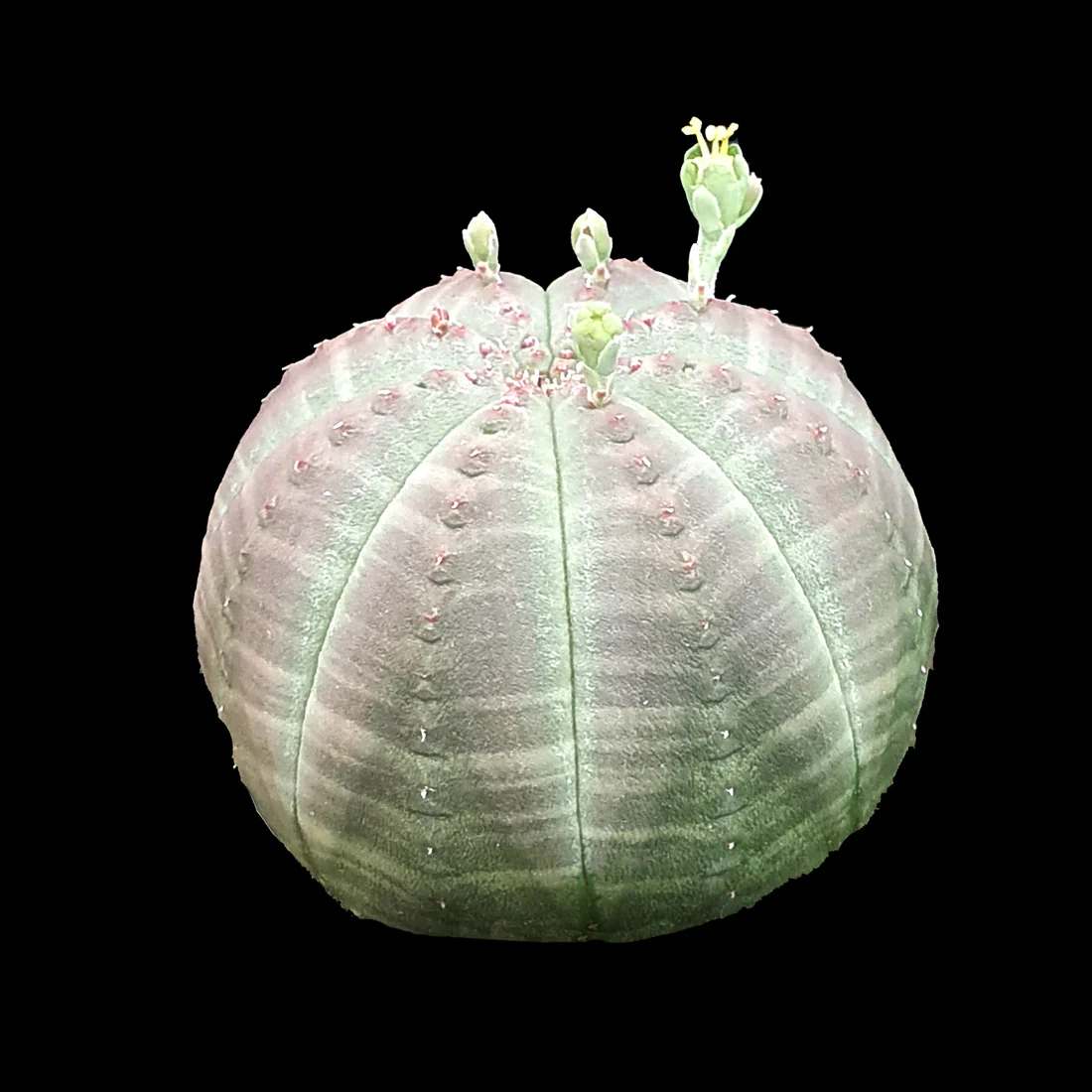
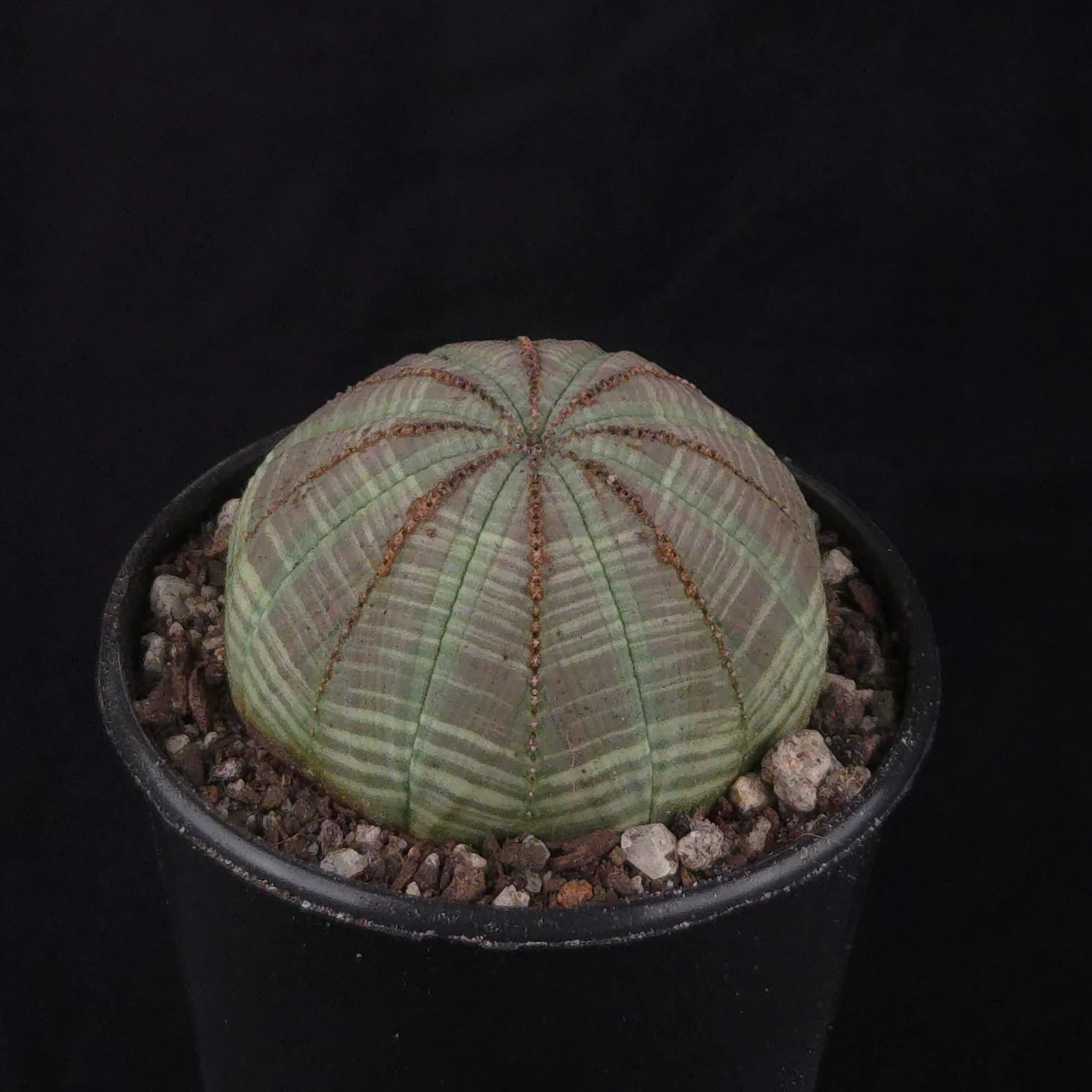
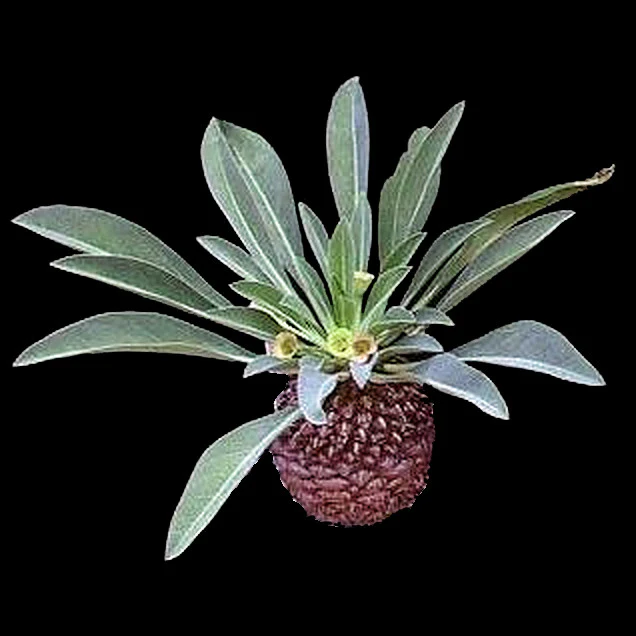
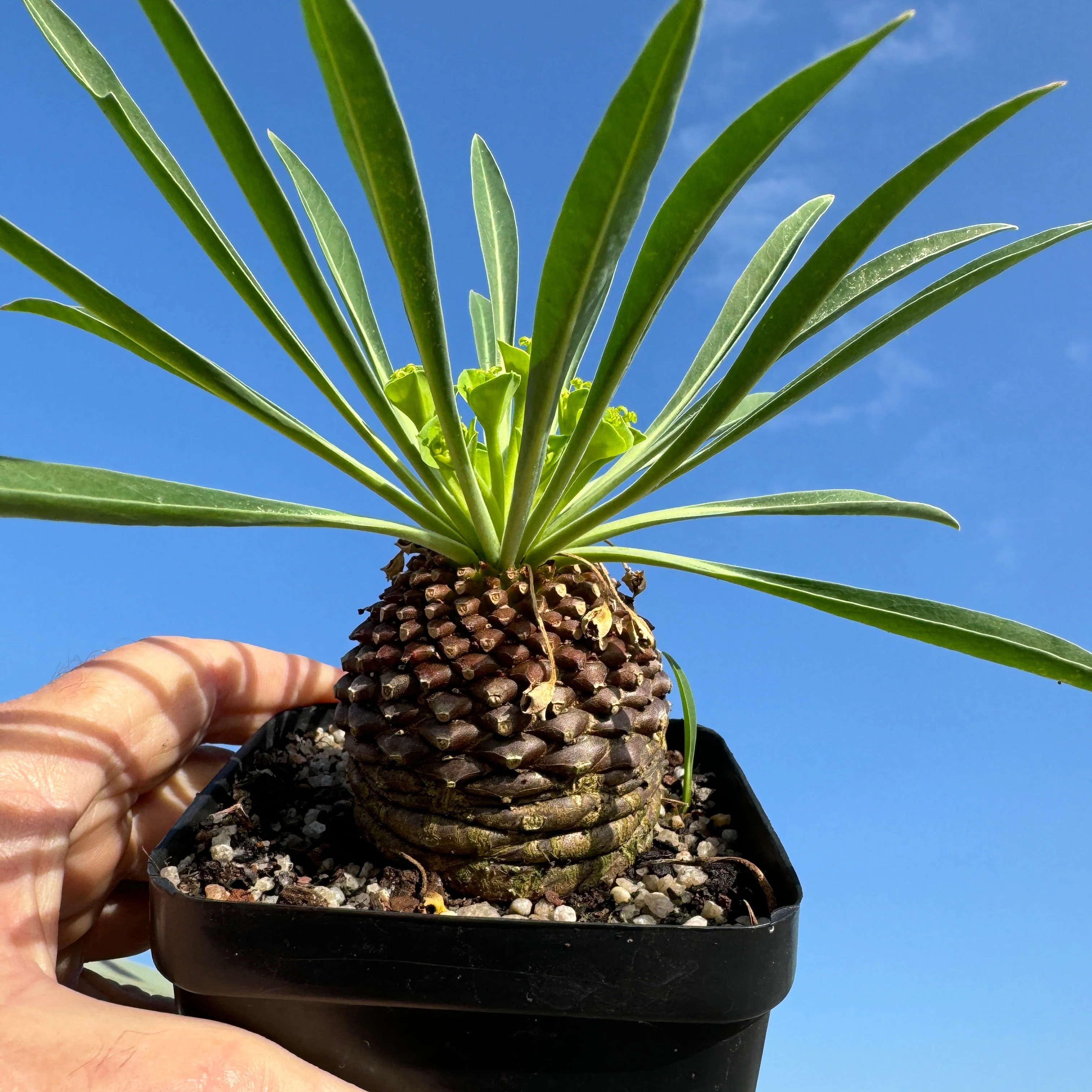
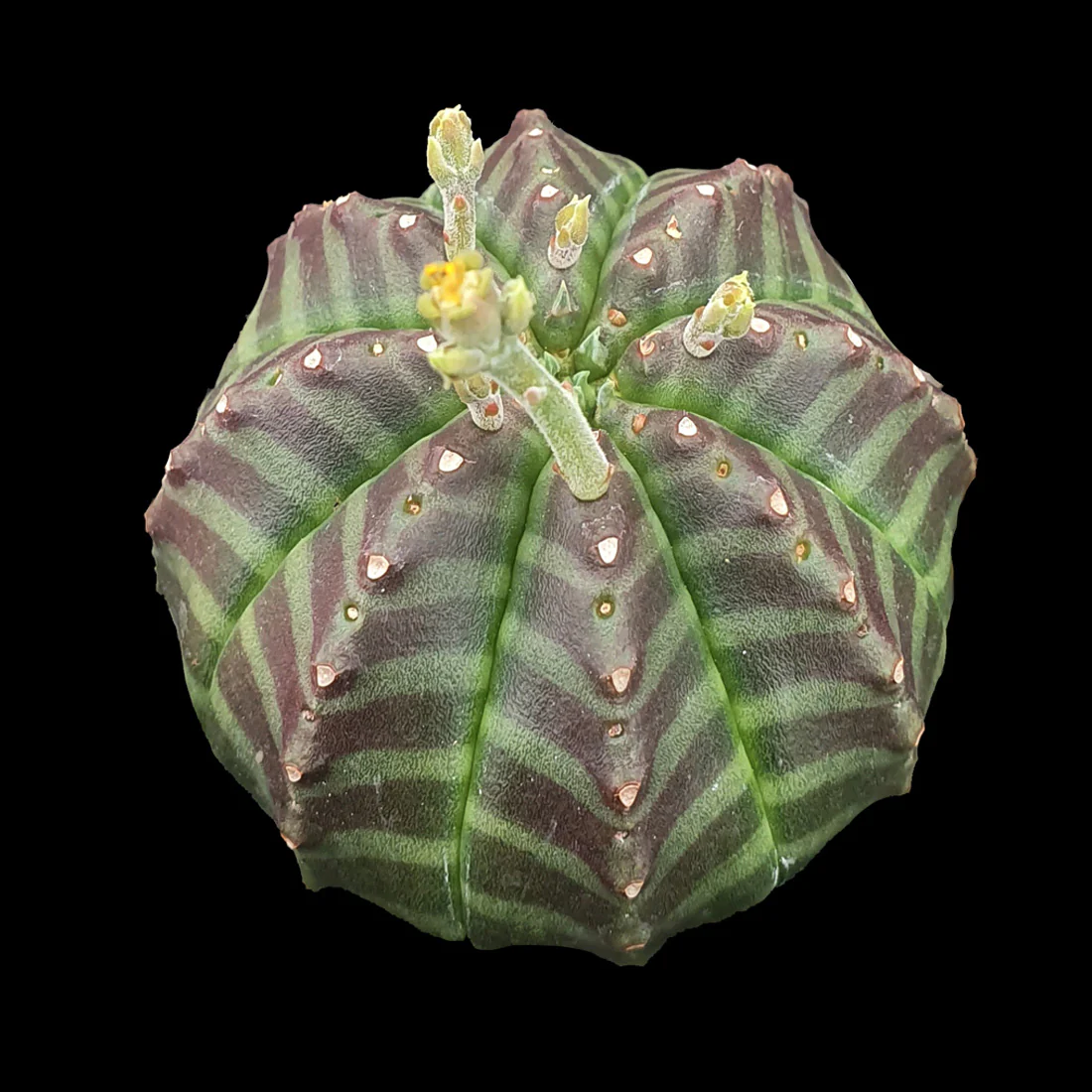
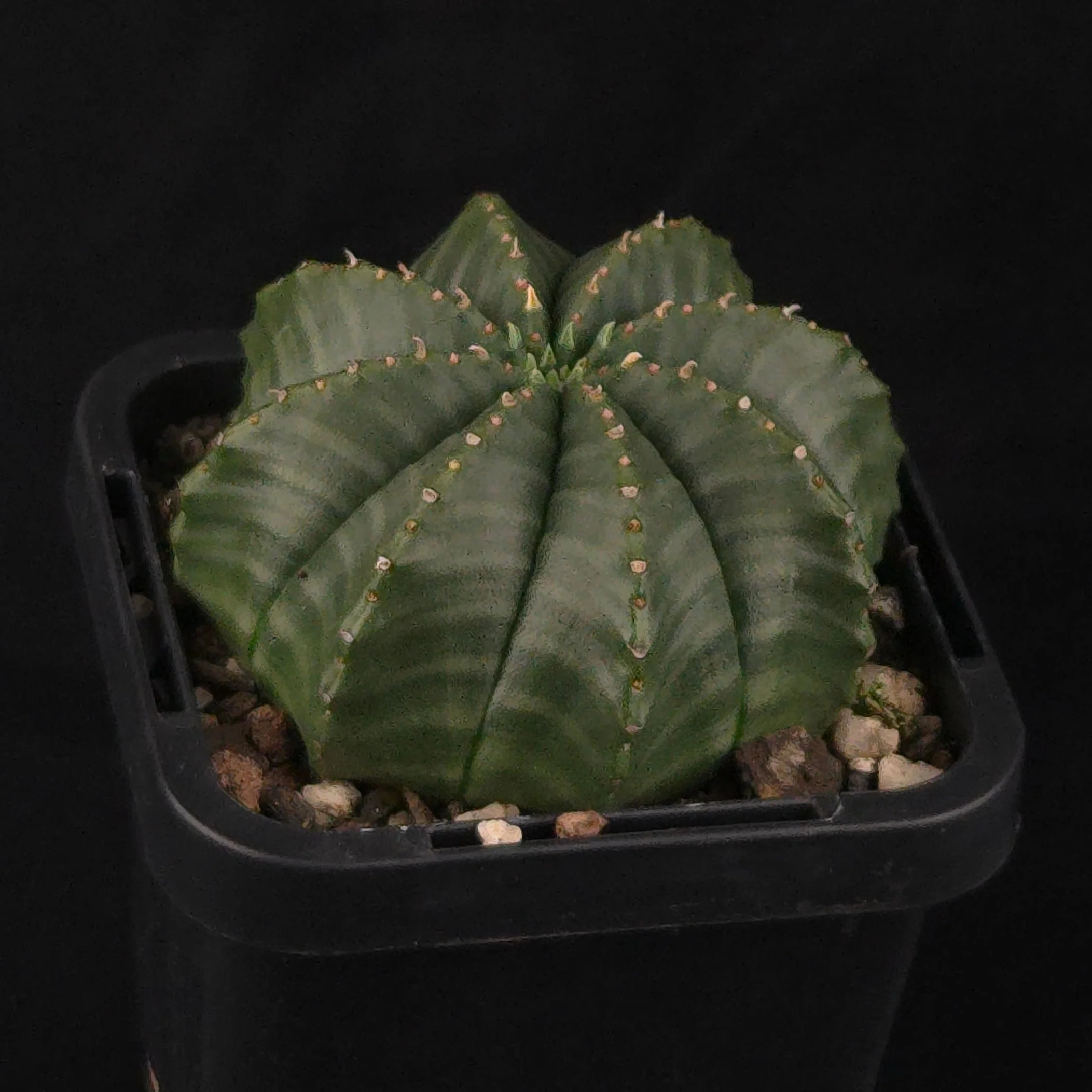
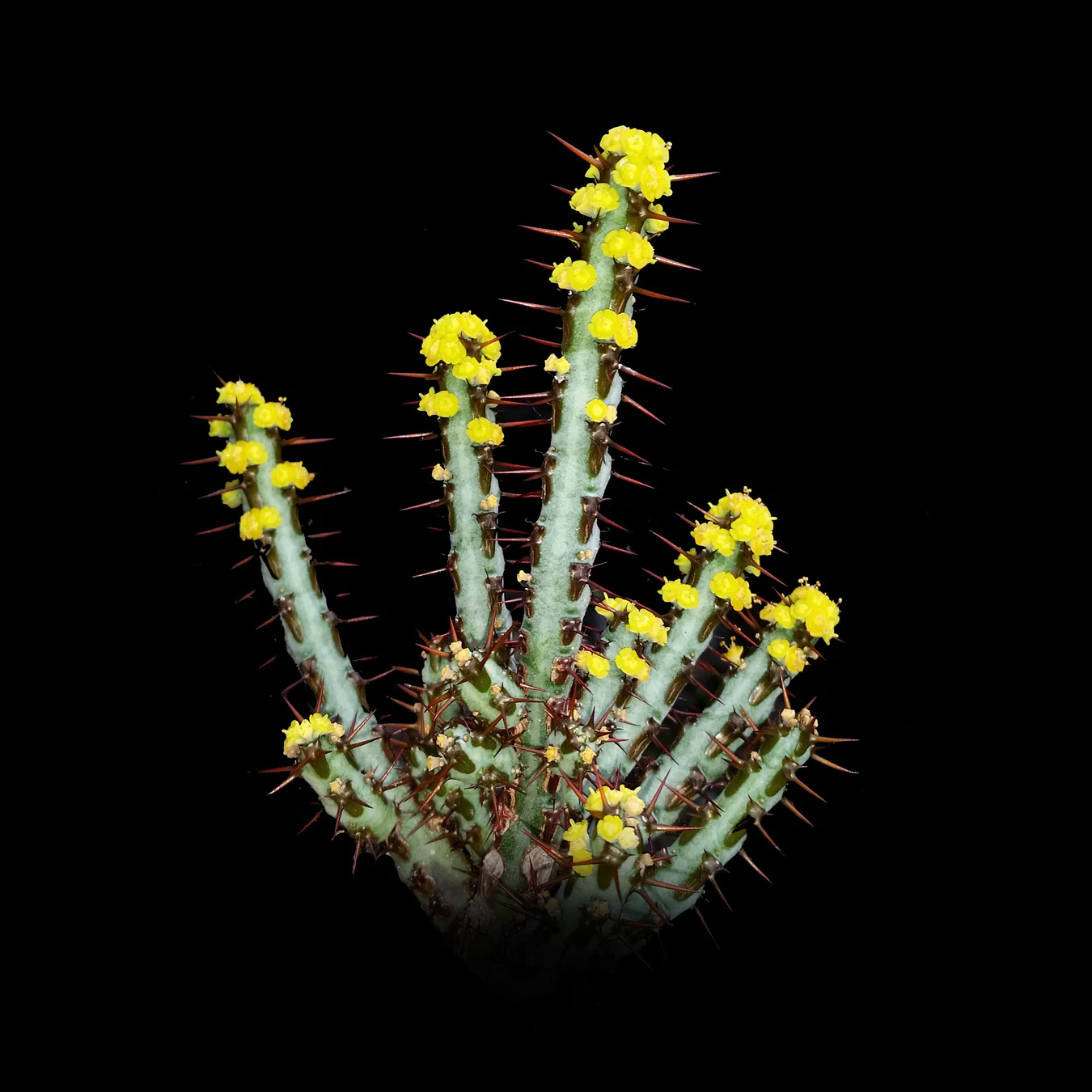
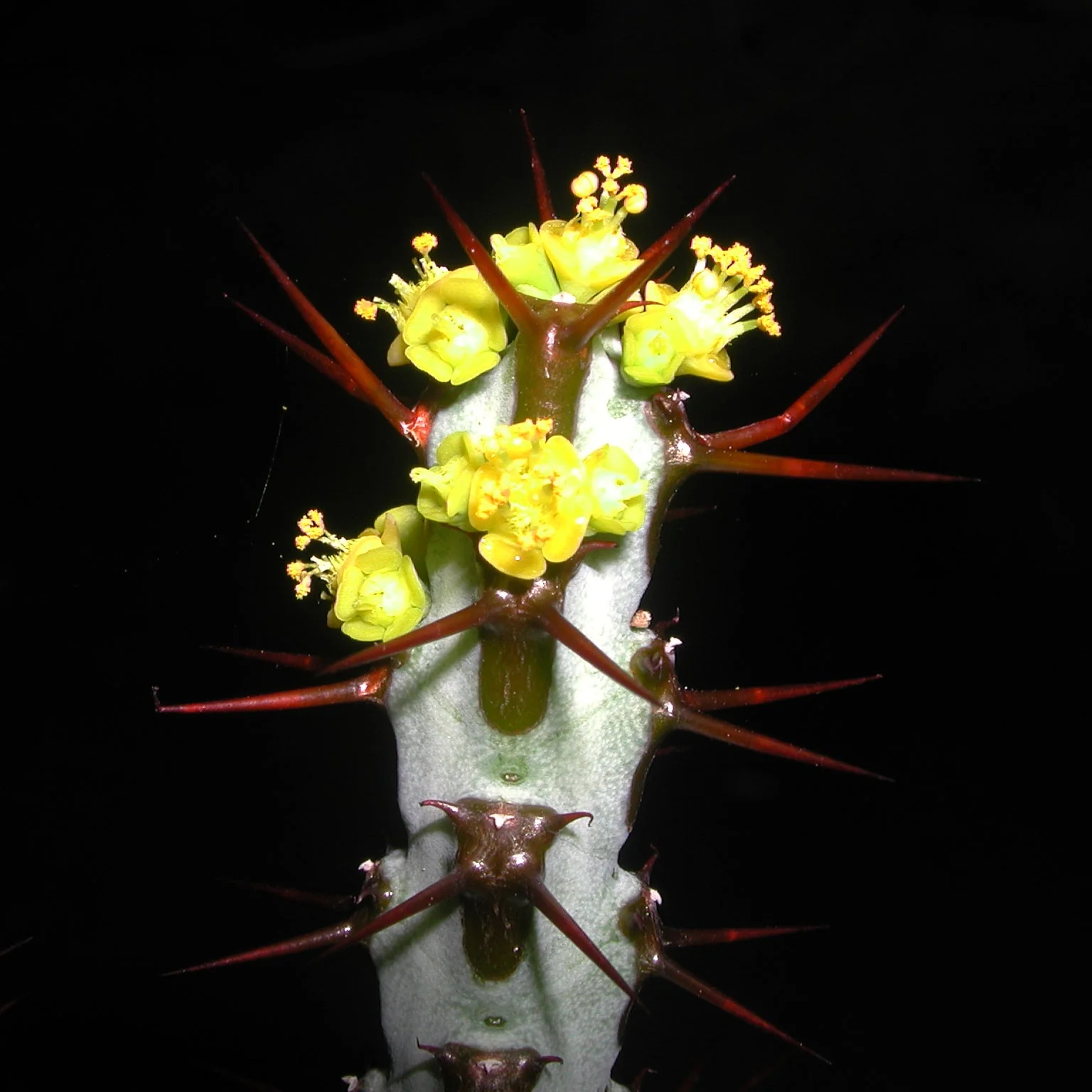
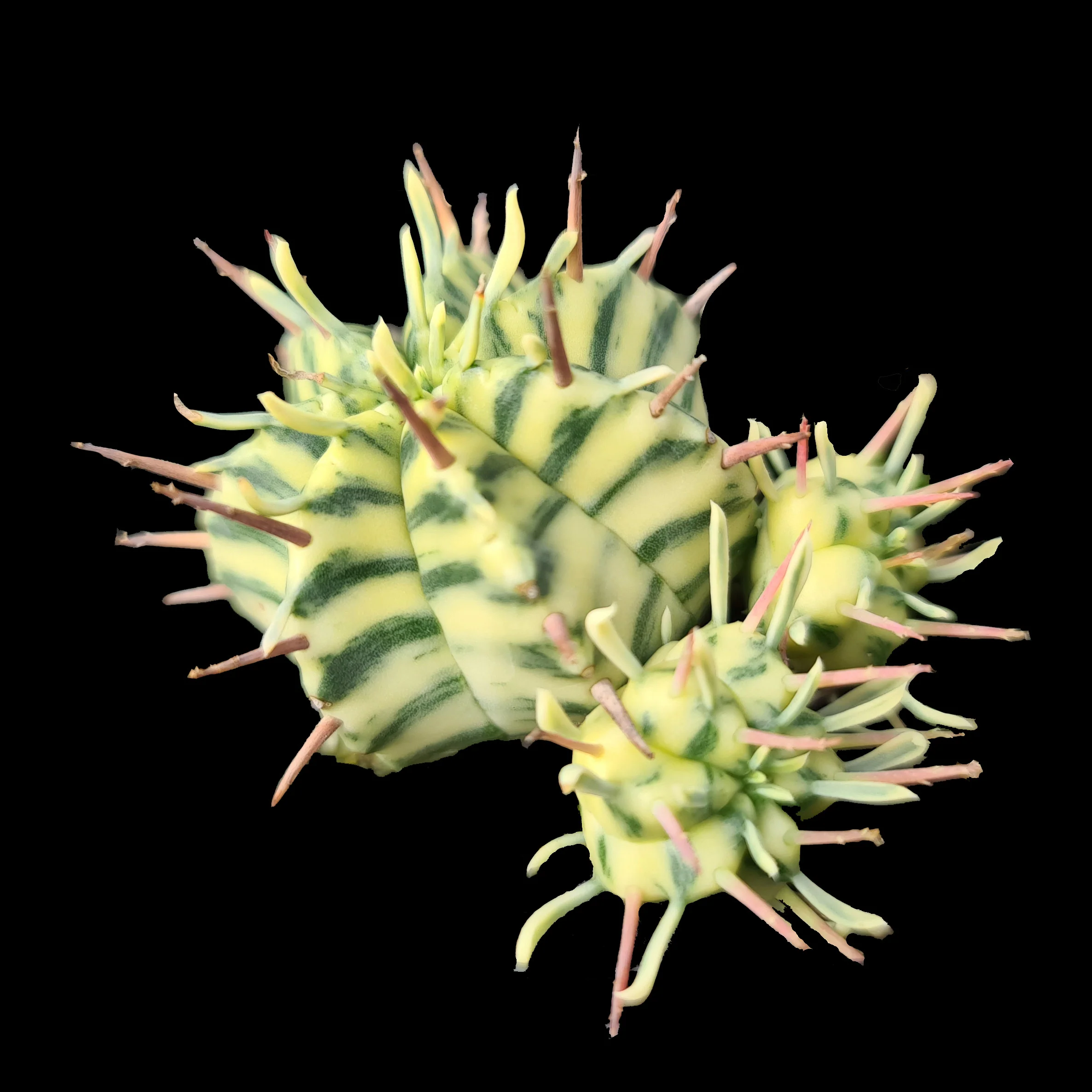
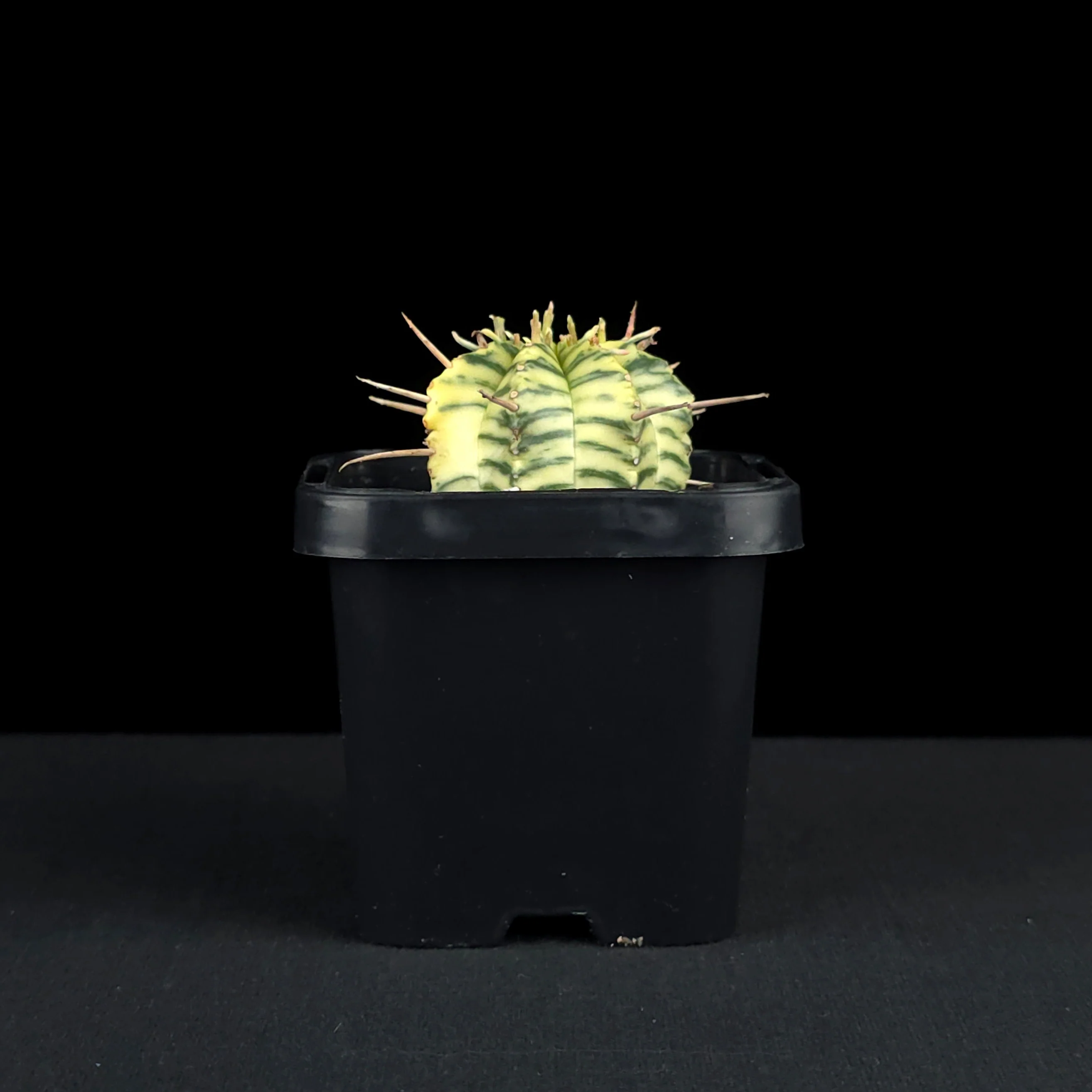
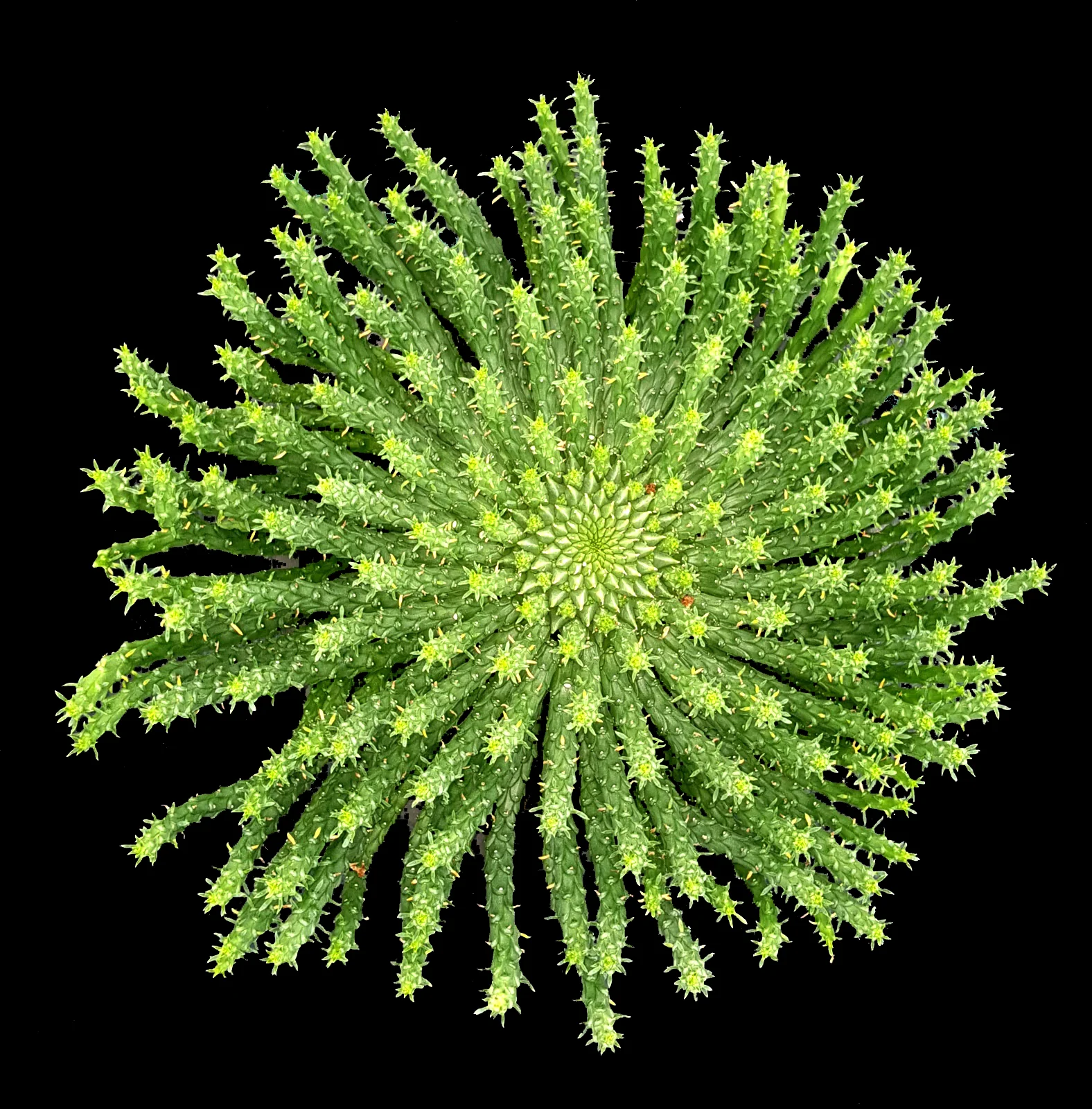
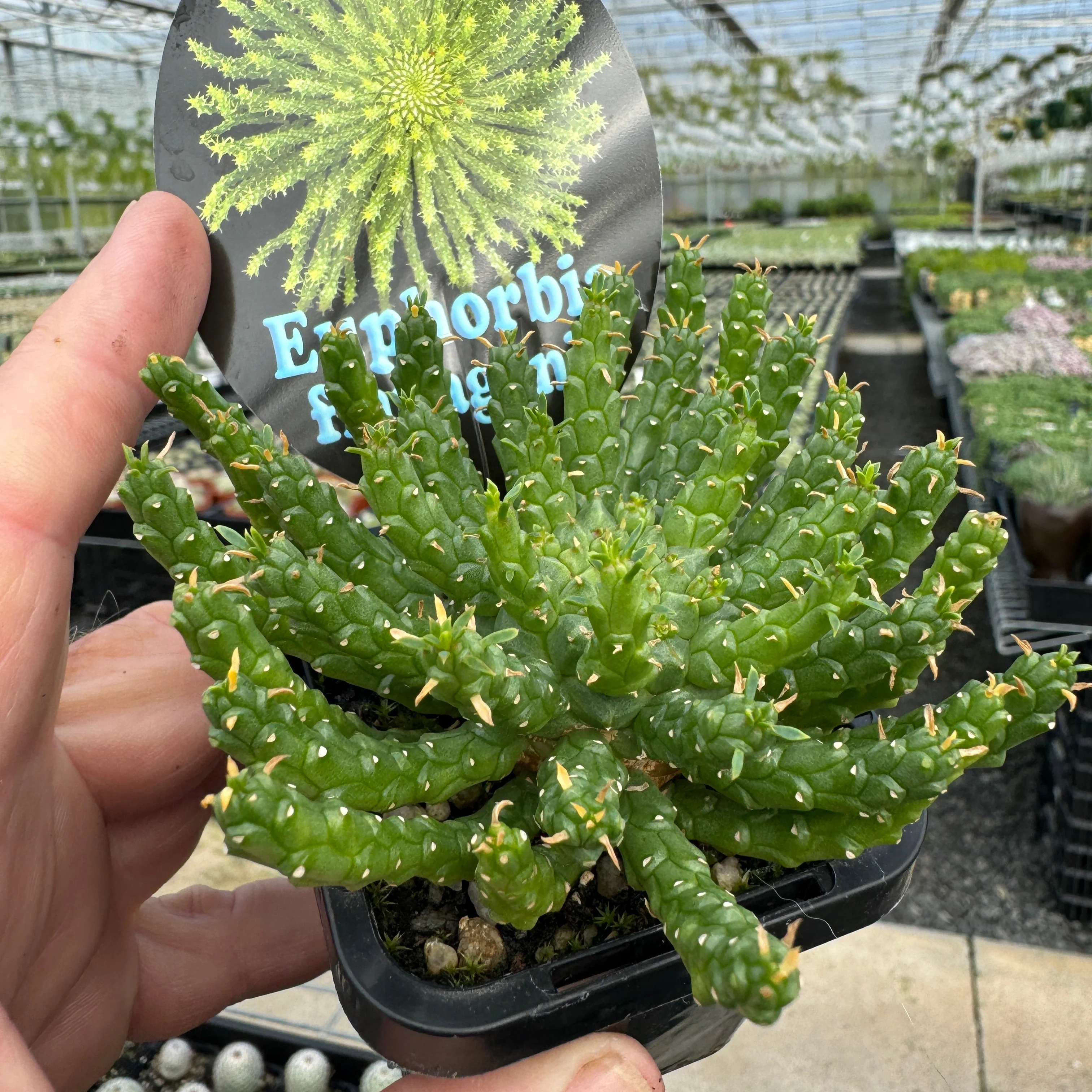
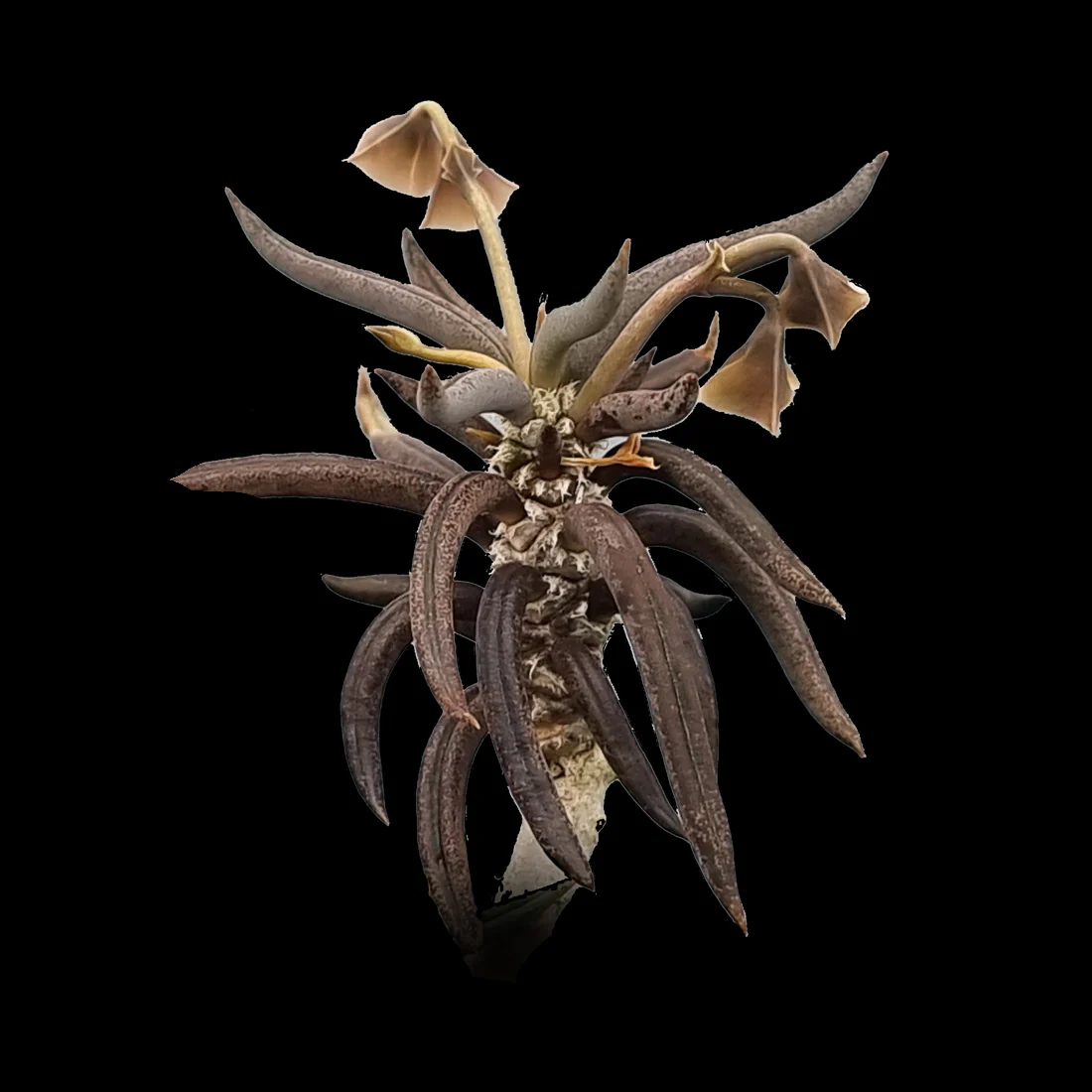
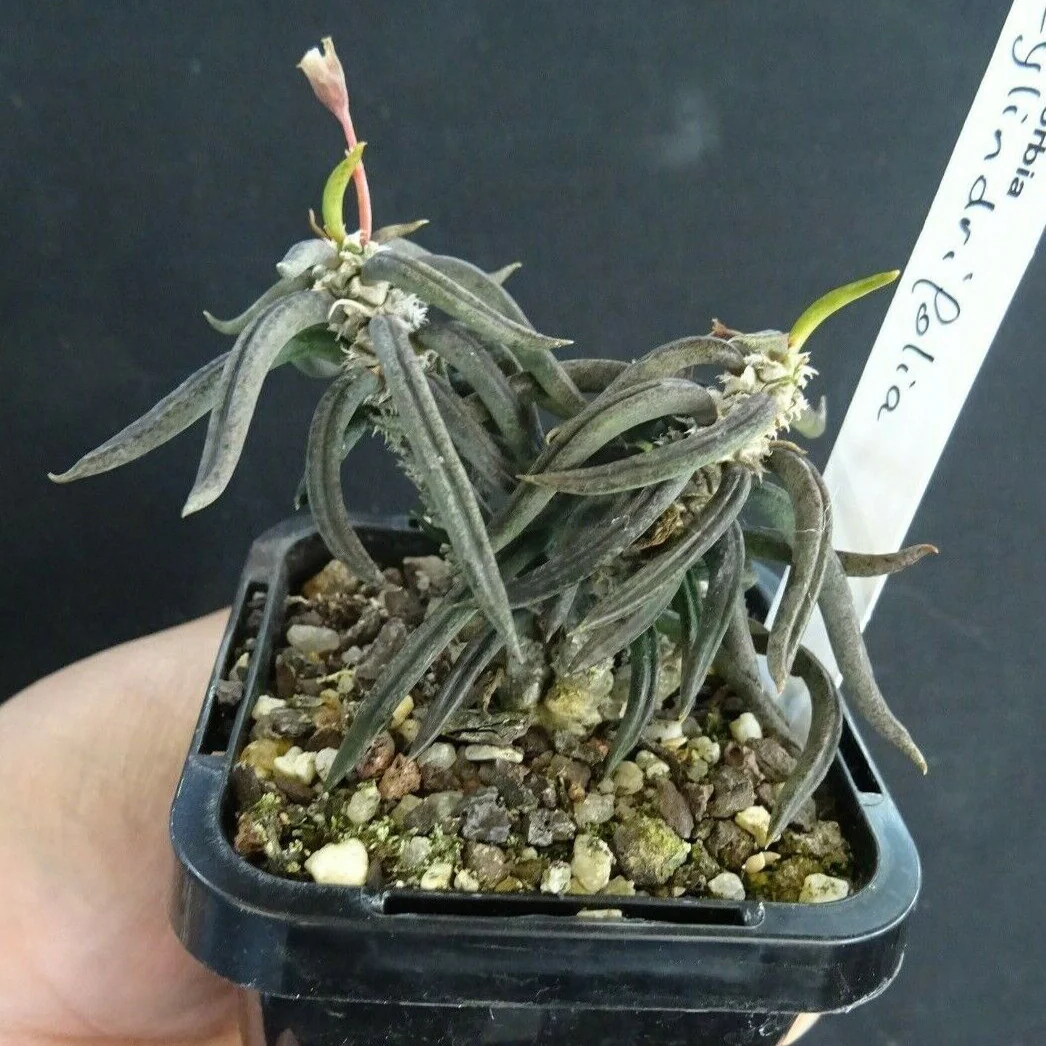
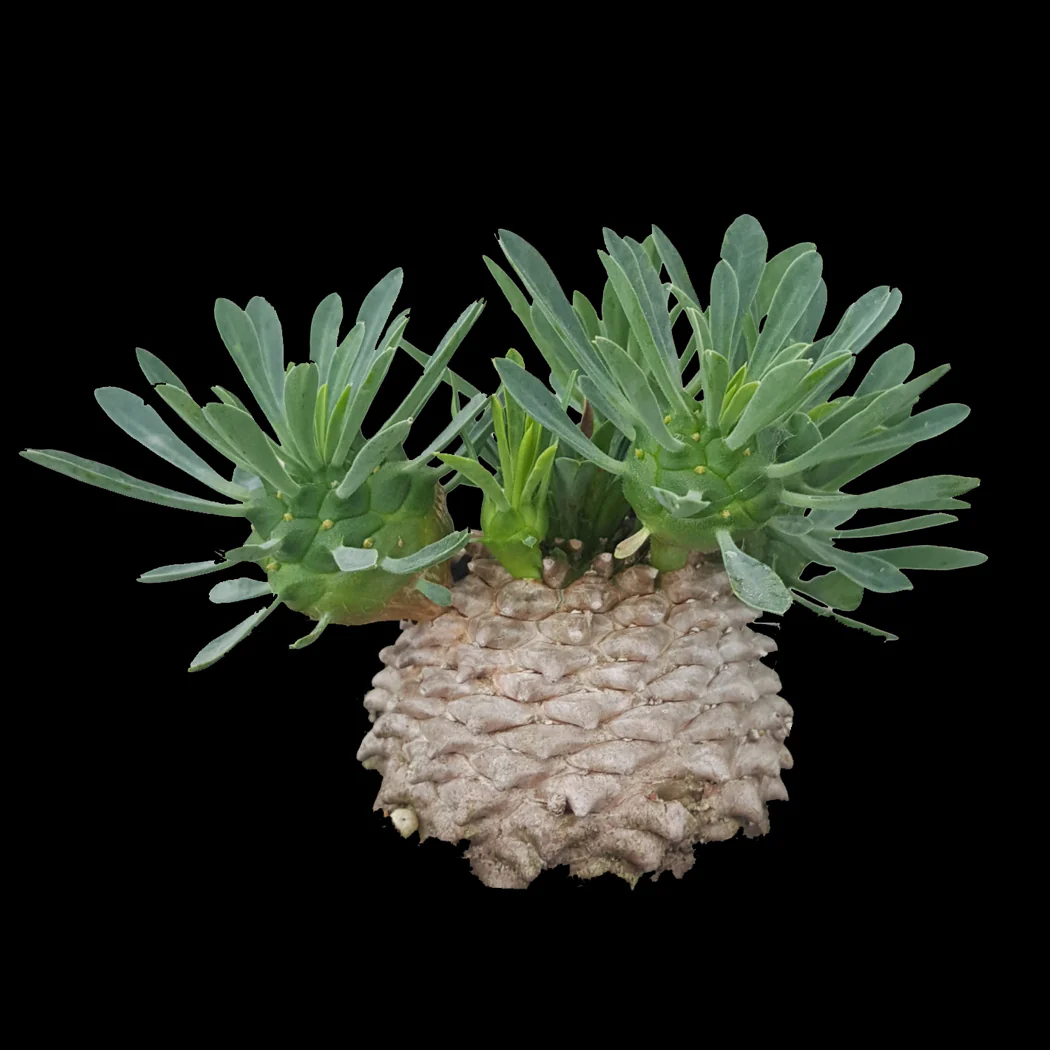
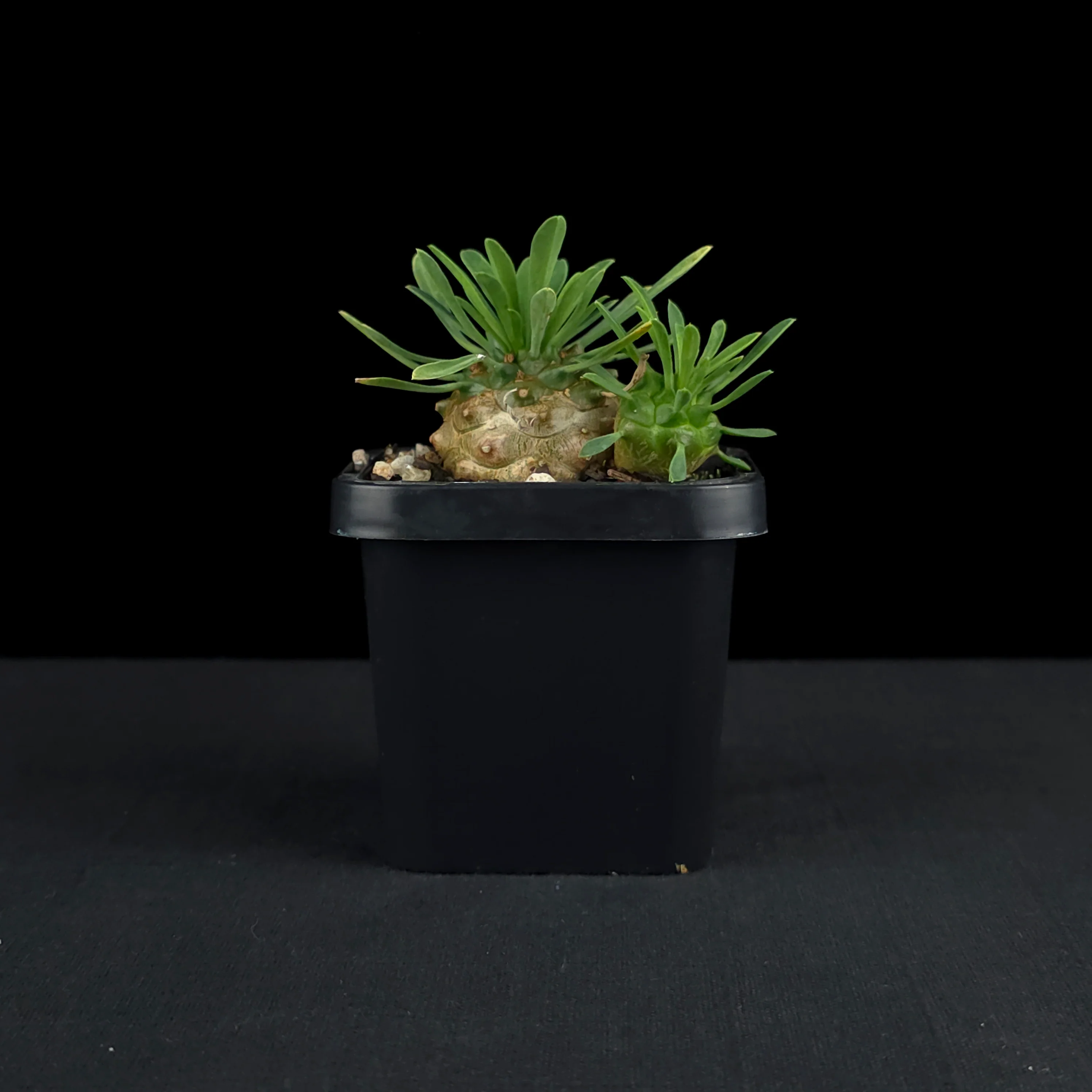
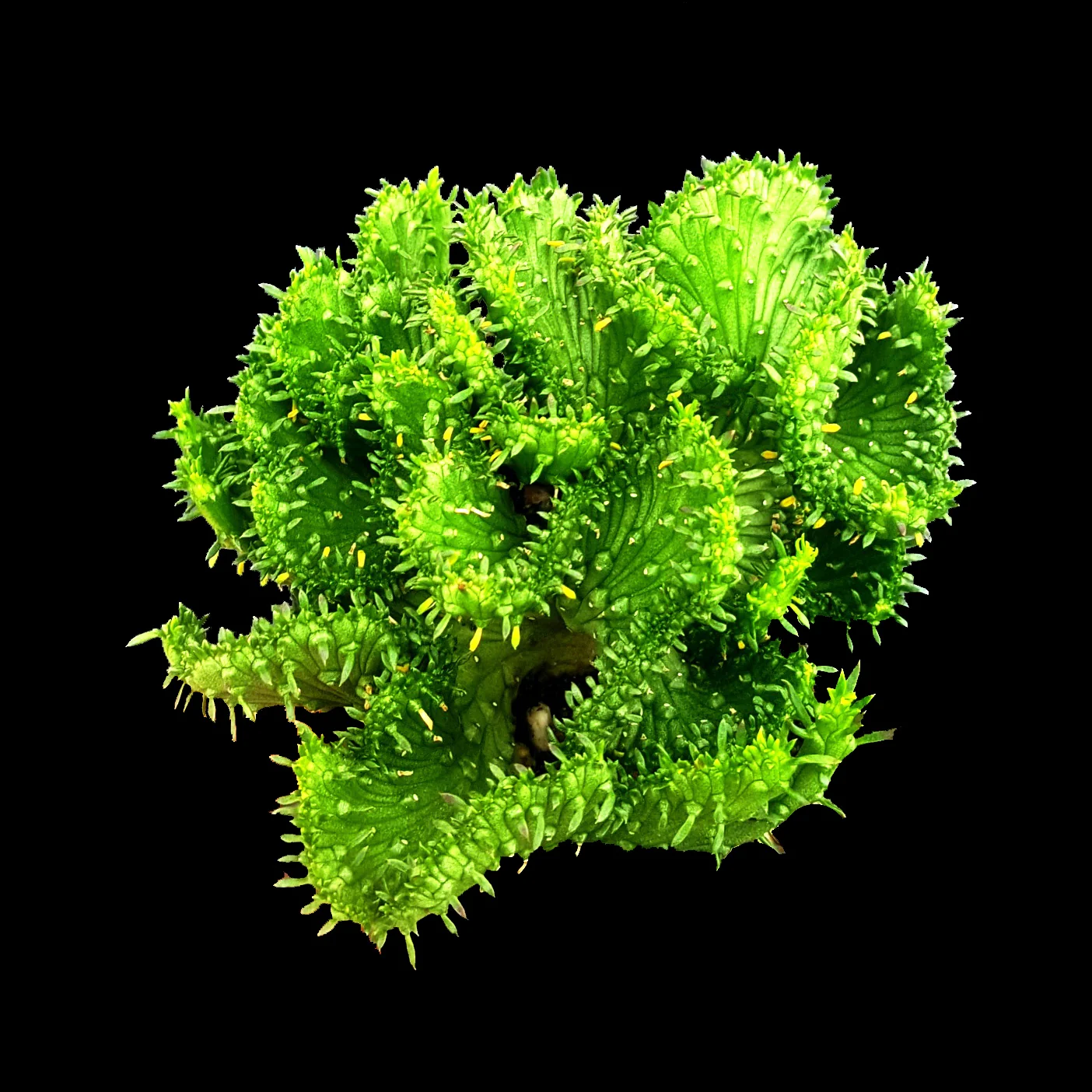
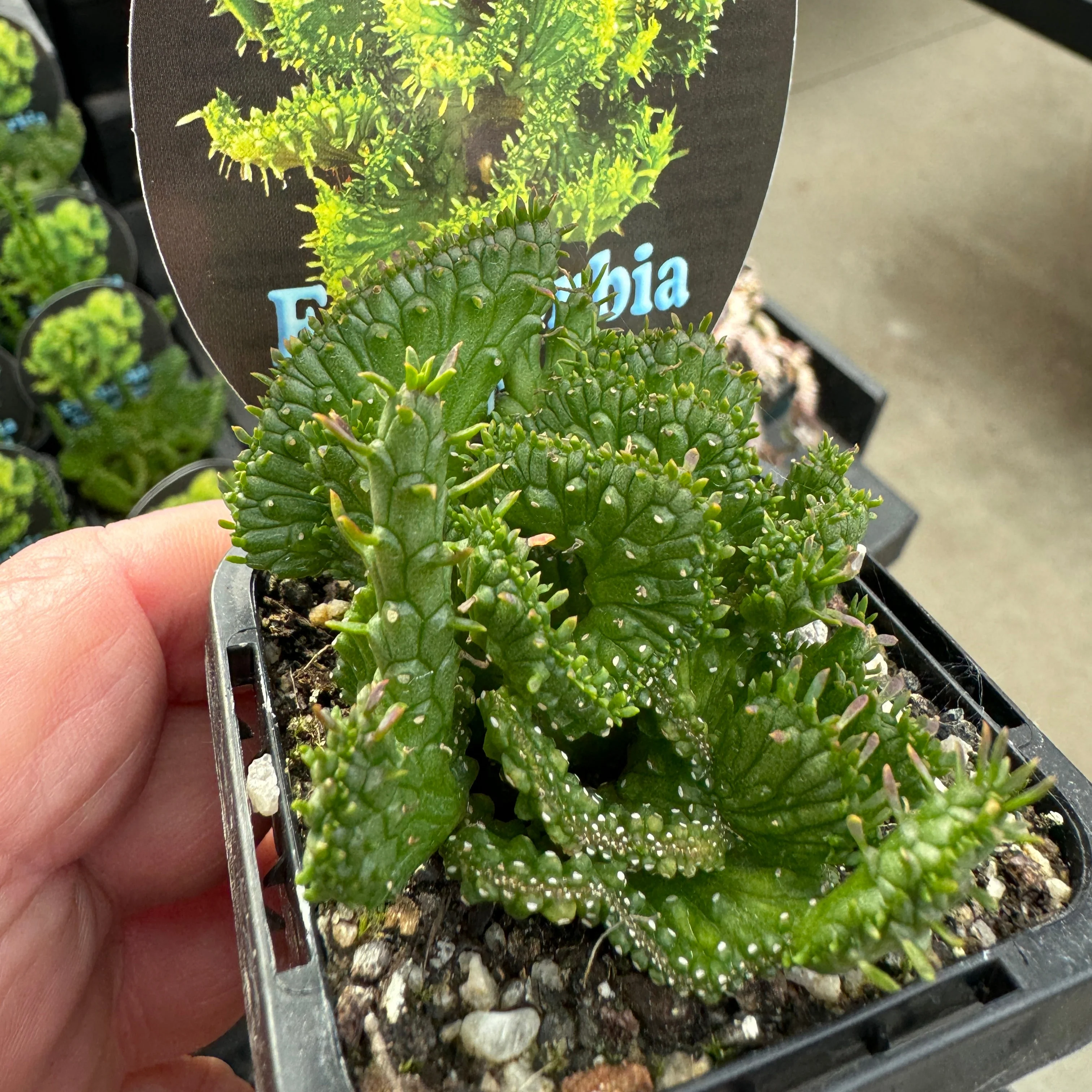
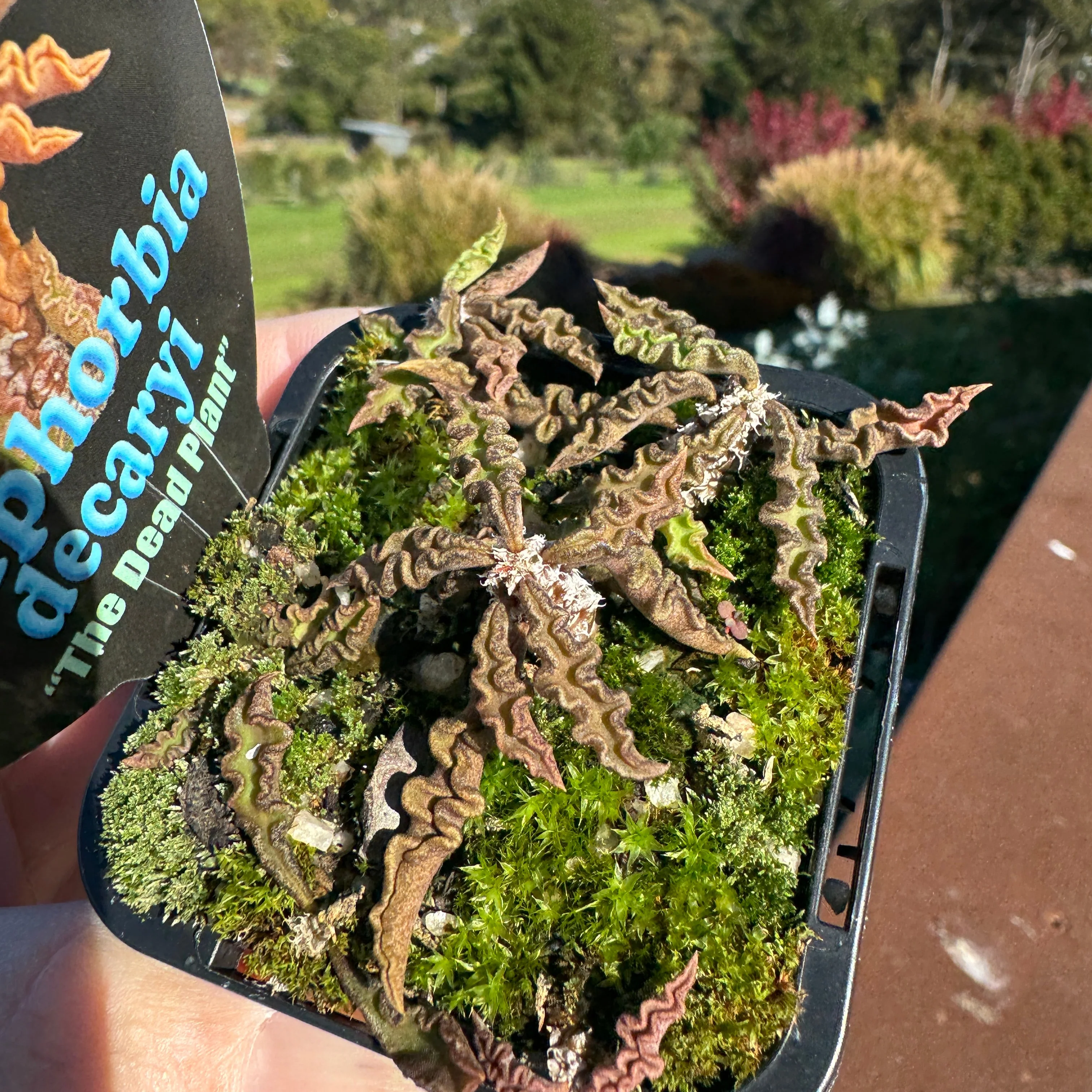
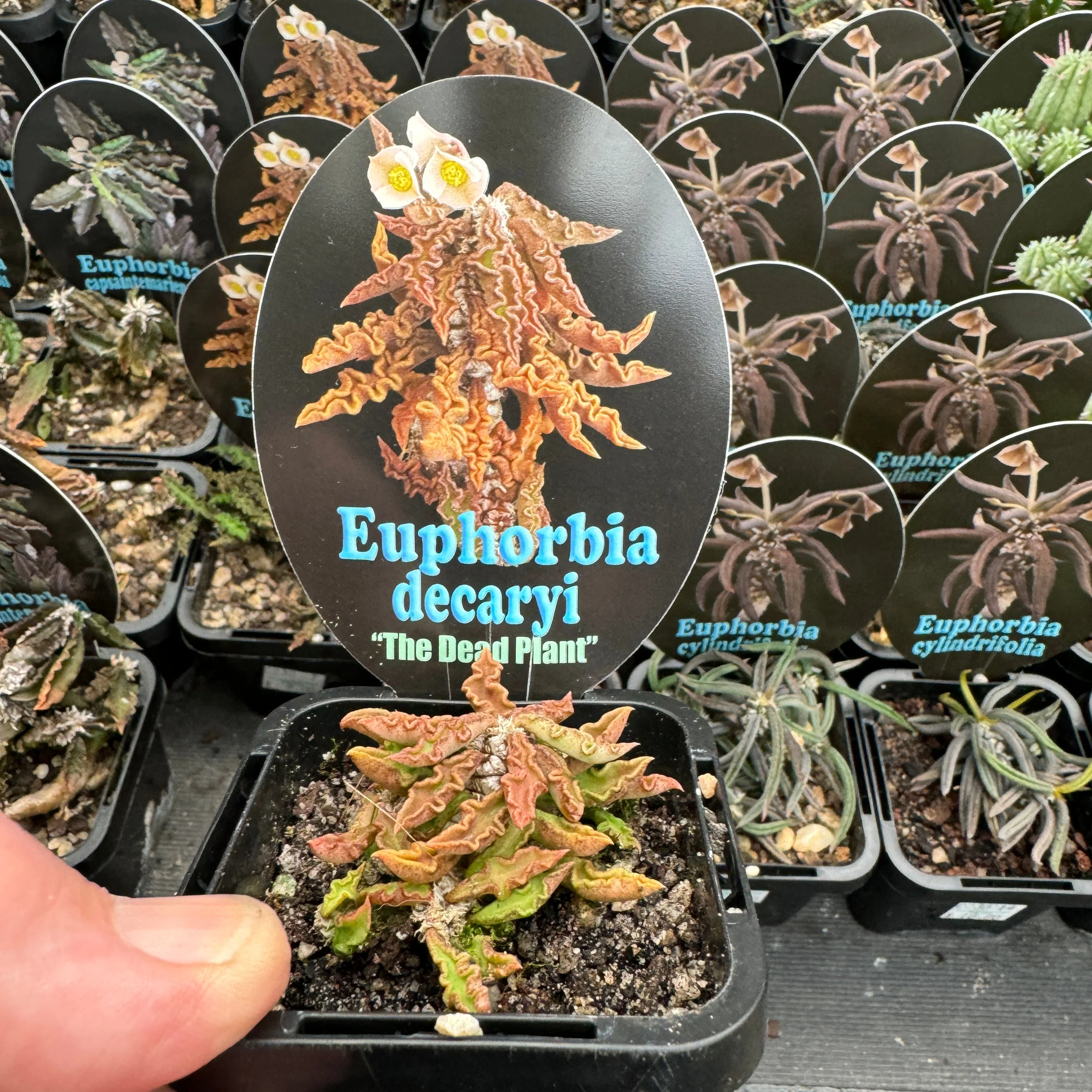
Euphorbia decaryi is a low-growing Madagascan species from the south-western region near Toliara, typically found on dry, stony slopes and among limestone outcrops. It grows as a sprawling, mat-forming succulent, with twisted, wiry stems and small, thickened leaves that are often deciduous in the dry season. This species belongs to a group of Madagascan Euphorbias adapted to arid conditions. Its small yellow to reddish cyathia emerge intermittently from stem tips, often in pairs.
Distinctive features:
- Twisting, serpentine stems forming a ground-hugging mat
- Small, leathery leaves that may be shed in dry conditions
- Inflorescences are cyathia with yellow to reddish tones
- Warty, ridged stem surfaces often tinged purplish or brownish
- Develops a thickened rootstock over time
Care Tips:
- Light: Prefers bright, indirect light to full sun; avoid deep shade
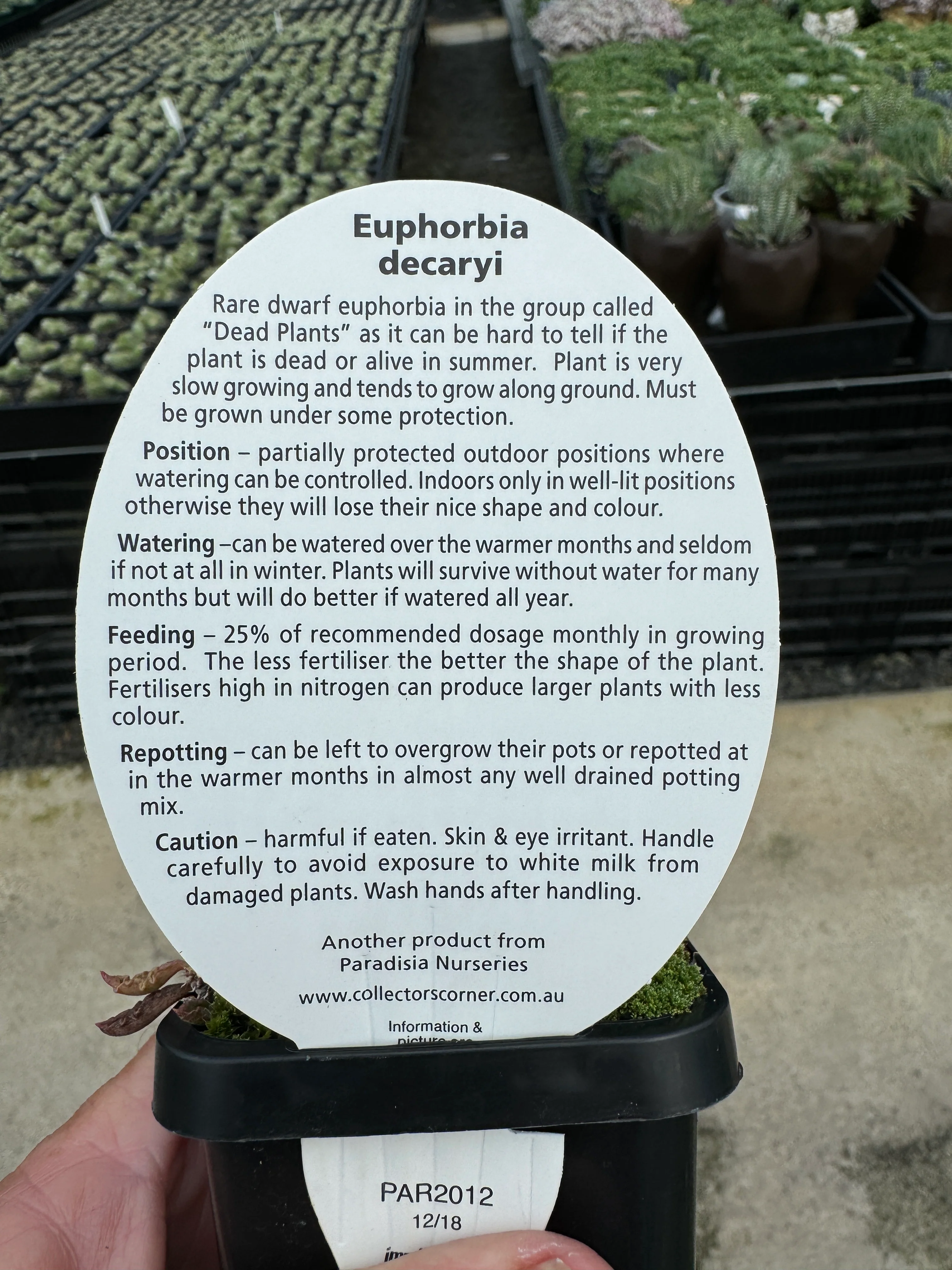
- Water: Water sparingly, allowing the soil to dry out completely between waterings
- Humidity: Tolerant of dry air; no need for added humidity
- Media: Use a gritty, well-drained succulent mix; add extra mineral material like pumice or coarse sand
- Temperature: Thrives between 18–28 °C; protect from cold below 10 °C
- Fertiliser: Feed lightly during active growth with a diluted succulent fertiliser
- Repotting: Infrequently required; best done when the plant outgrows its container or becomes rootbound
Additional Notes:
- Known to be toxic
Original: $18.00
-65%$18.00
$6.30More Images
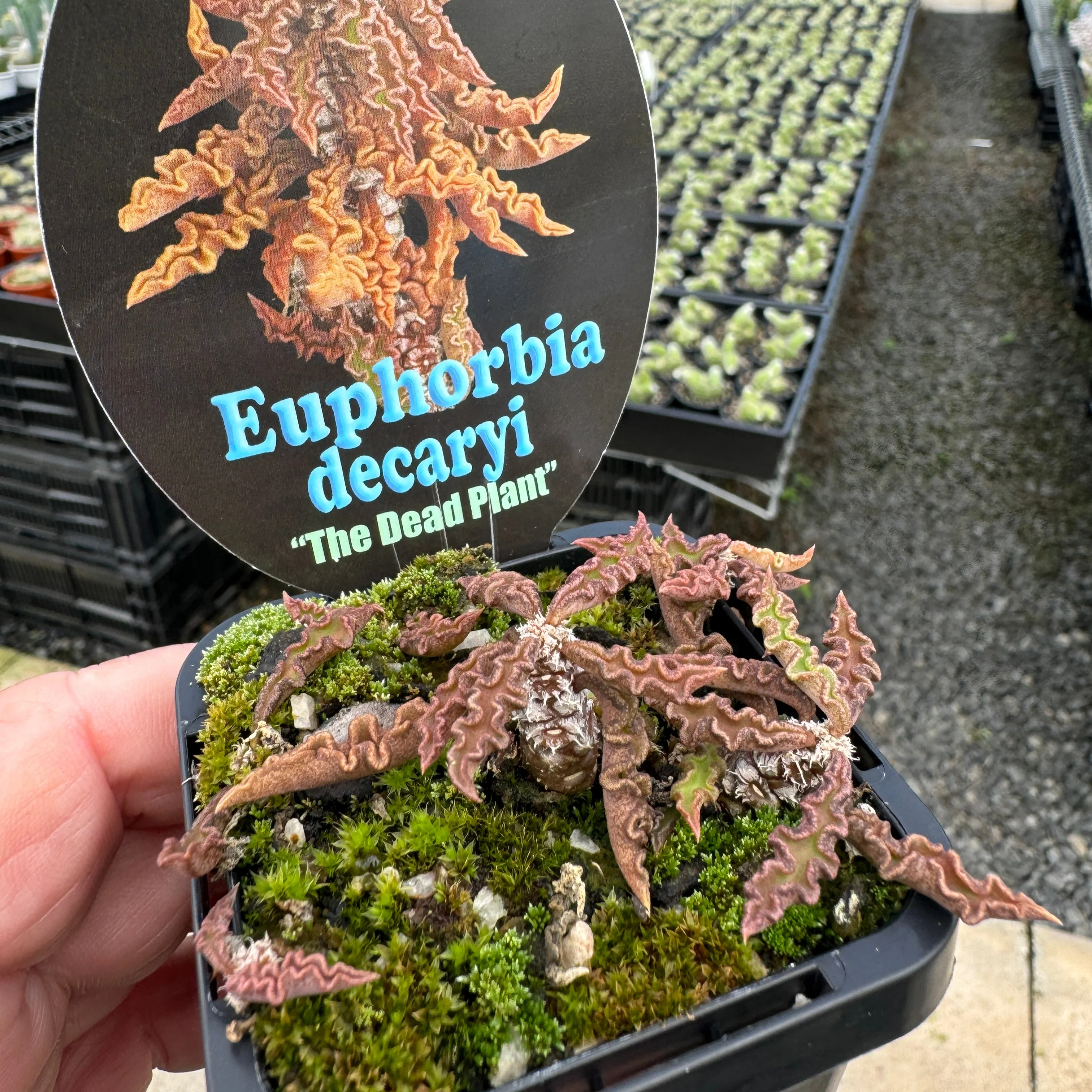
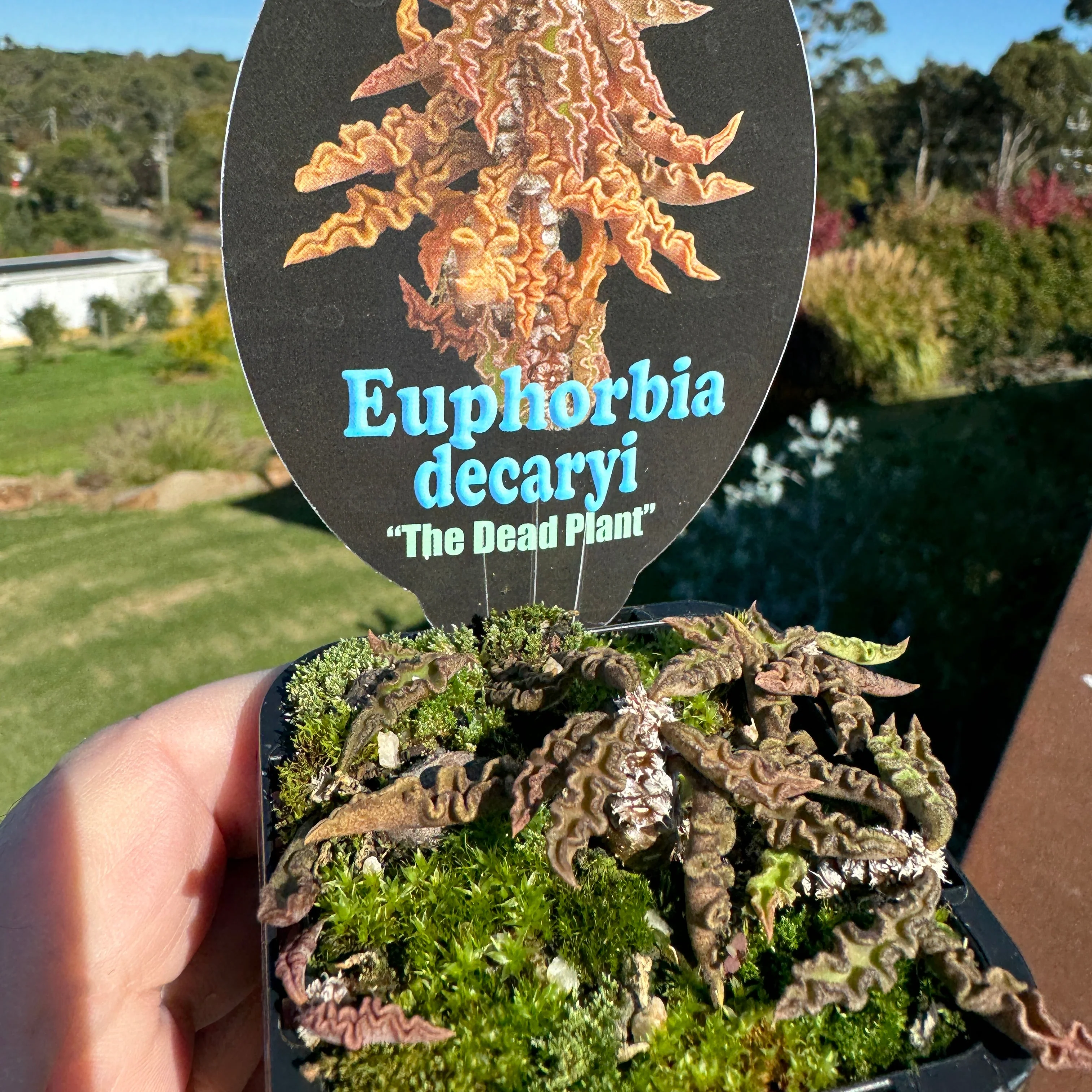
Euphorbia decaryi 'The Dead Plant' (WA Prohibited)
Euphorbia decaryi is a low-growing Madagascan species from the south-western region near Toliara, typically found on dry, stony slopes and among limestone outcrops. It grows as a sprawling, mat-forming succulent, with twisted, wiry stems and small, thickened leaves that are often deciduous in the dry season. This species belongs to a group of Madagascan Euphorbias adapted to arid conditions. Its small yellow to reddish cyathia emerge intermittently from stem tips, often in pairs.
Distinctive features:
- Twisting, serpentine stems forming a ground-hugging mat
- Small, leathery leaves that may be shed in dry conditions
- Inflorescences are cyathia with yellow to reddish tones
- Warty, ridged stem surfaces often tinged purplish or brownish
- Develops a thickened rootstock over time
Care Tips:
- Light: Prefers bright, indirect light to full sun; avoid deep shade
- Water: Water sparingly, allowing the soil to dry out completely between waterings
- Humidity: Tolerant of dry air; no need for added humidity
- Media: Use a gritty, well-drained succulent mix; add extra mineral material like pumice or coarse sand
- Temperature: Thrives between 18–28 °C; protect from cold below 10 °C
- Fertiliser: Feed lightly during active growth with a diluted succulent fertiliser
- Repotting: Infrequently required; best done when the plant outgrows its container or becomes rootbound
Additional Notes:
- Known to be toxic
Product Information
Product Information
Shipping & Returns
Shipping & Returns
Description
Euphorbia decaryi is a low-growing Madagascan species from the south-western region near Toliara, typically found on dry, stony slopes and among limestone outcrops. It grows as a sprawling, mat-forming succulent, with twisted, wiry stems and small, thickened leaves that are often deciduous in the dry season. This species belongs to a group of Madagascan Euphorbias adapted to arid conditions. Its small yellow to reddish cyathia emerge intermittently from stem tips, often in pairs.
Distinctive features:
- Twisting, serpentine stems forming a ground-hugging mat
- Small, leathery leaves that may be shed in dry conditions
- Inflorescences are cyathia with yellow to reddish tones
- Warty, ridged stem surfaces often tinged purplish or brownish
- Develops a thickened rootstock over time
Care Tips:
- Light: Prefers bright, indirect light to full sun; avoid deep shade
- Water: Water sparingly, allowing the soil to dry out completely between waterings
- Humidity: Tolerant of dry air; no need for added humidity
- Media: Use a gritty, well-drained succulent mix; add extra mineral material like pumice or coarse sand
- Temperature: Thrives between 18–28 °C; protect from cold below 10 °C
- Fertiliser: Feed lightly during active growth with a diluted succulent fertiliser
- Repotting: Infrequently required; best done when the plant outgrows its container or becomes rootbound
Additional Notes:
- Known to be toxic