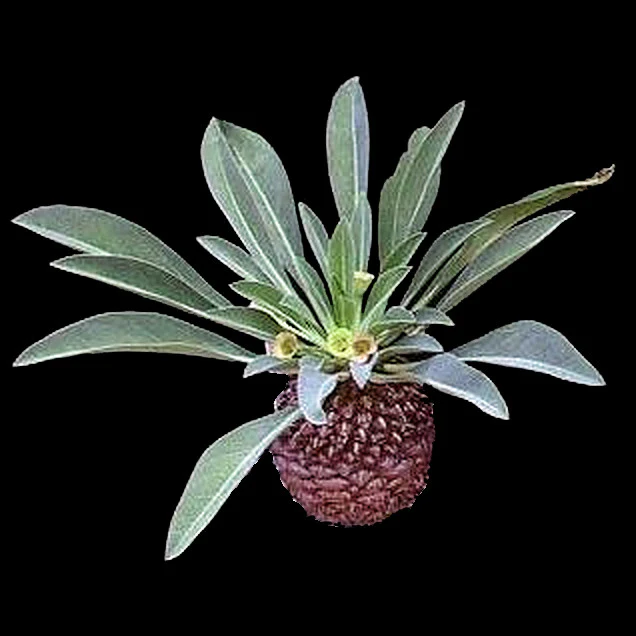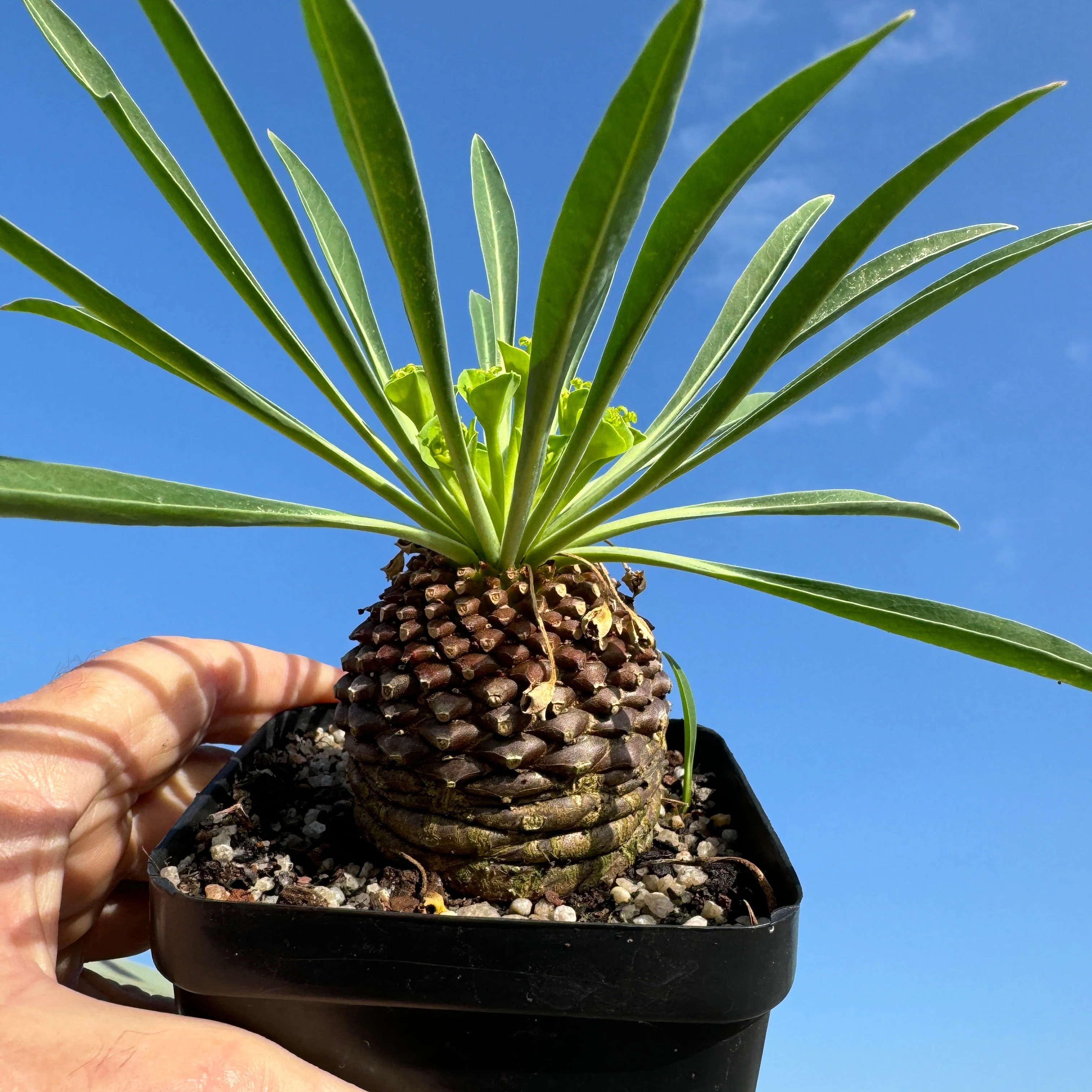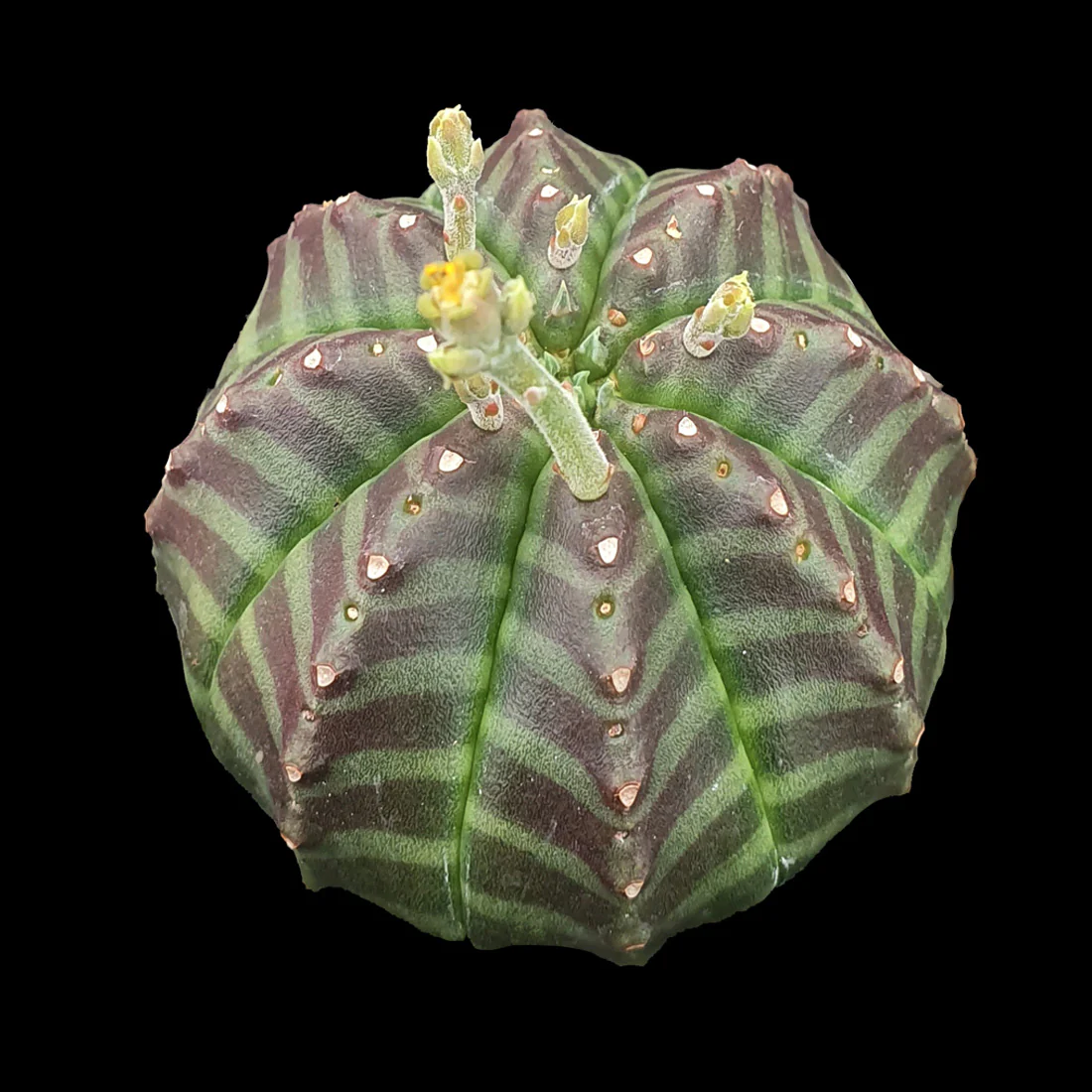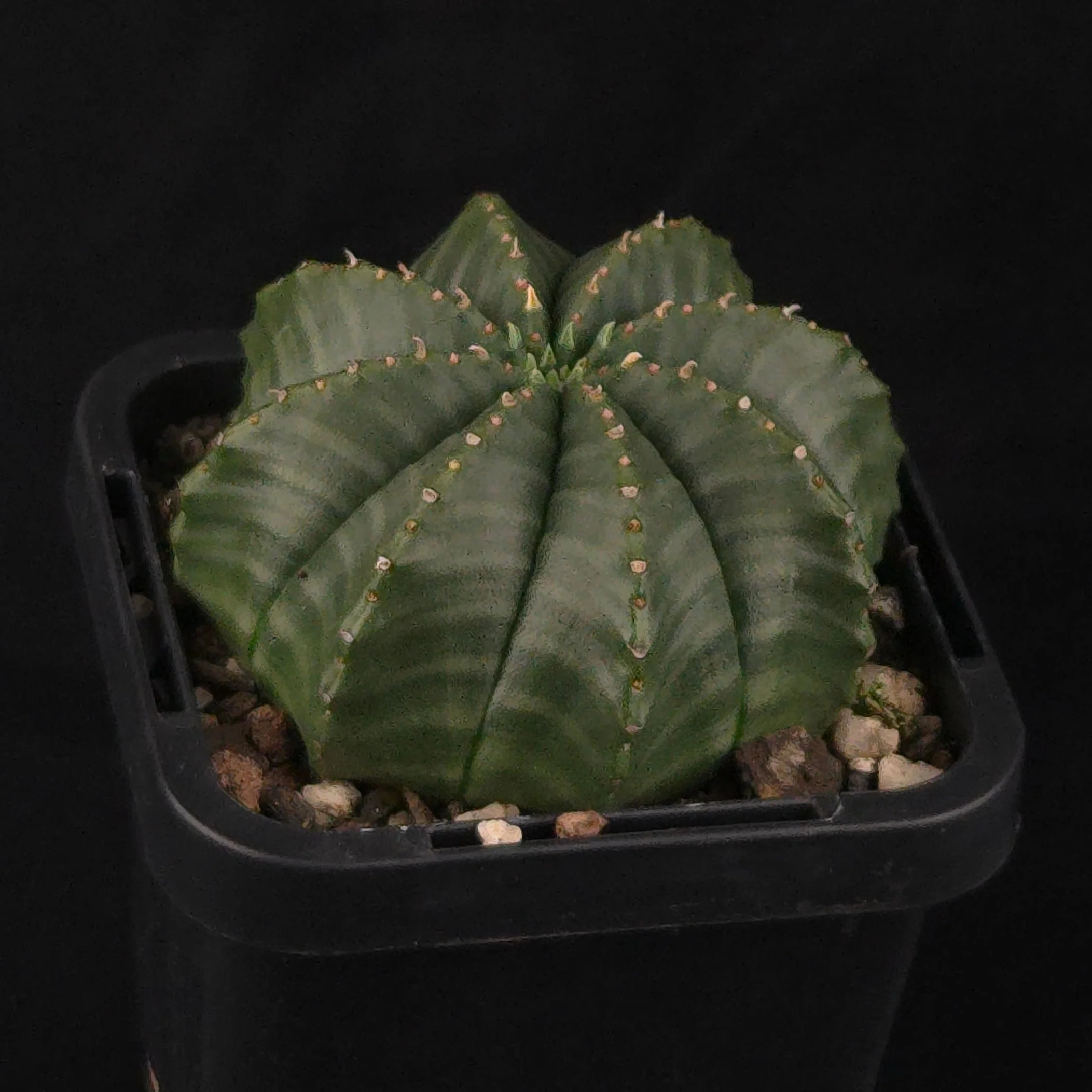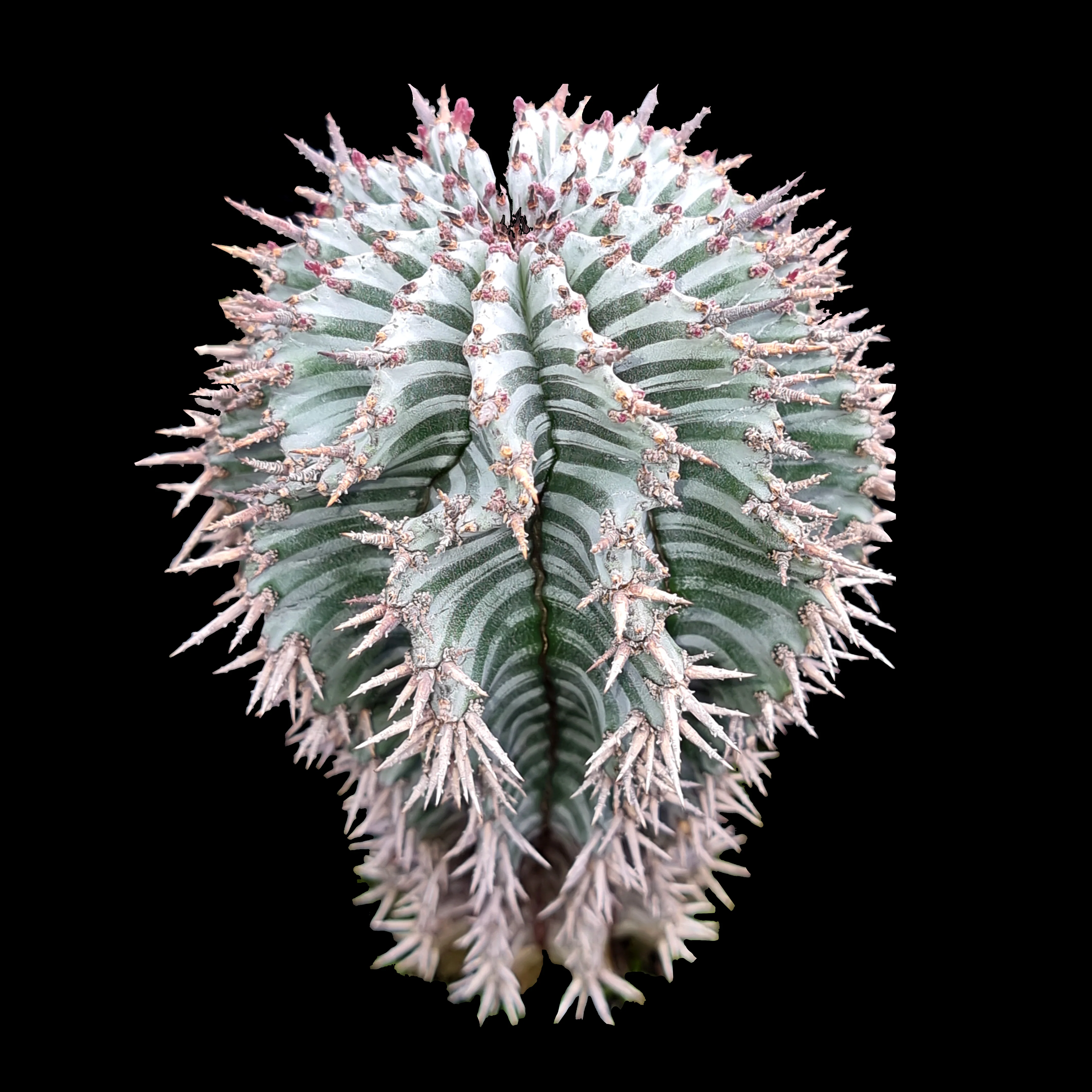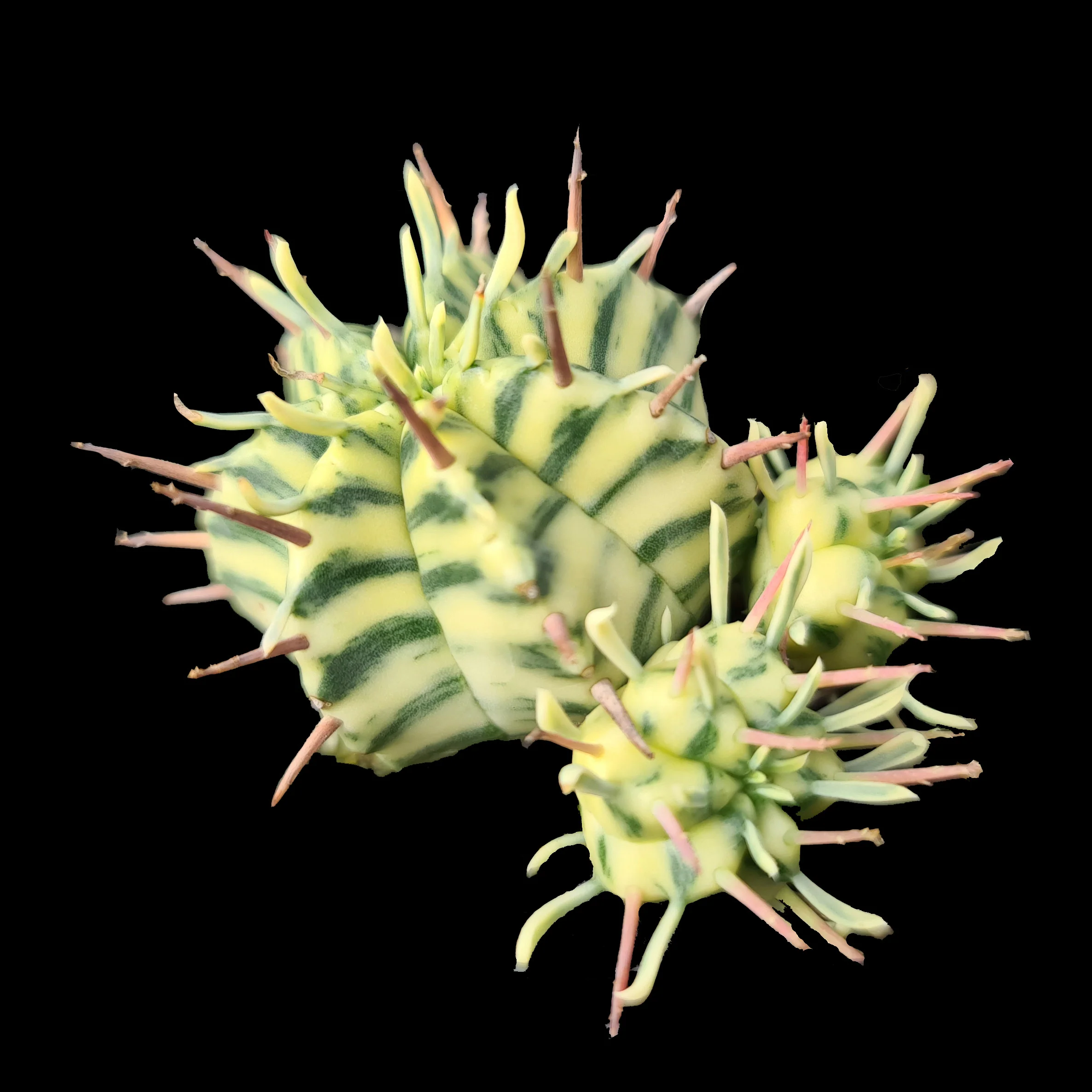
Euphorbia meloformis x pulvinata variegata (WA Prohibited)
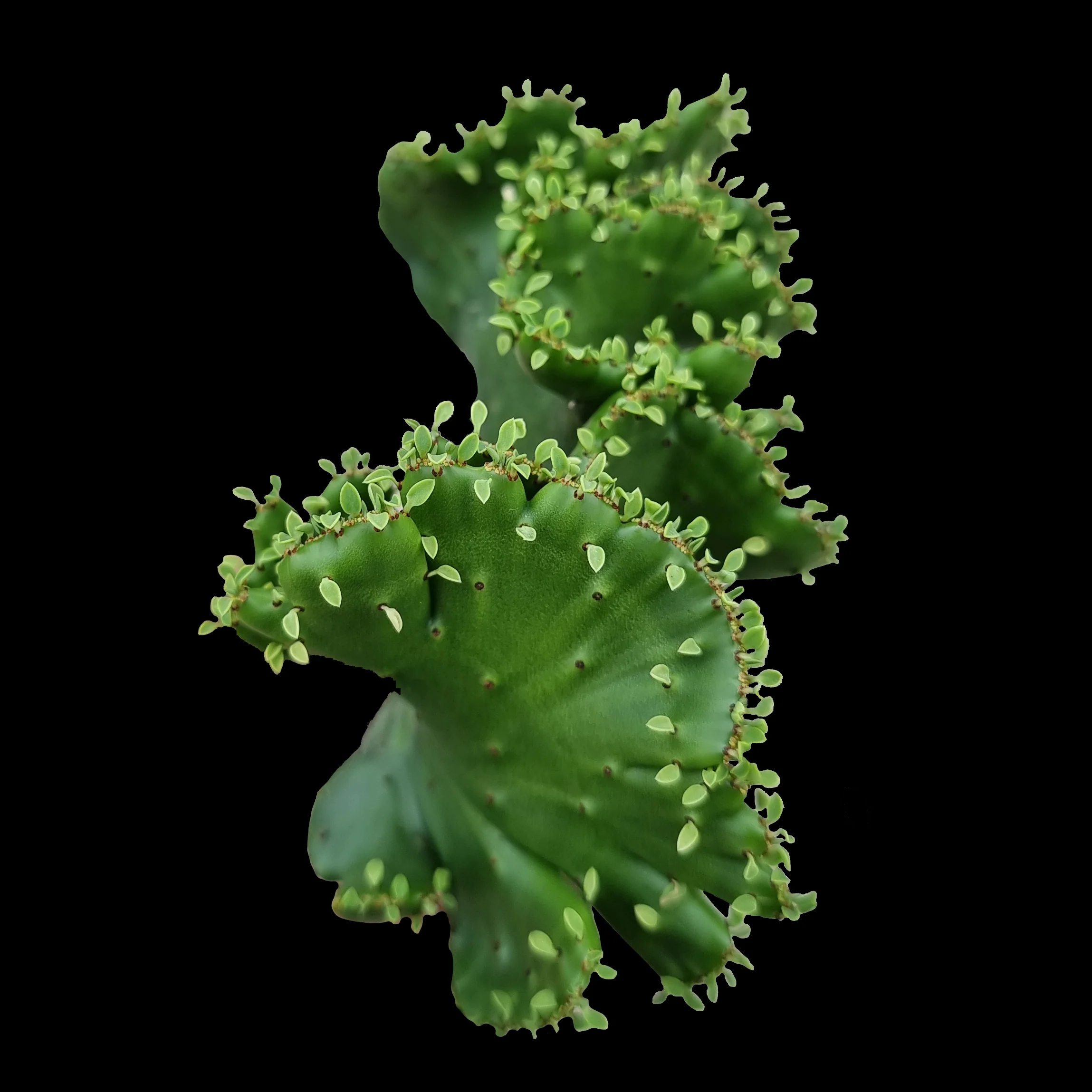
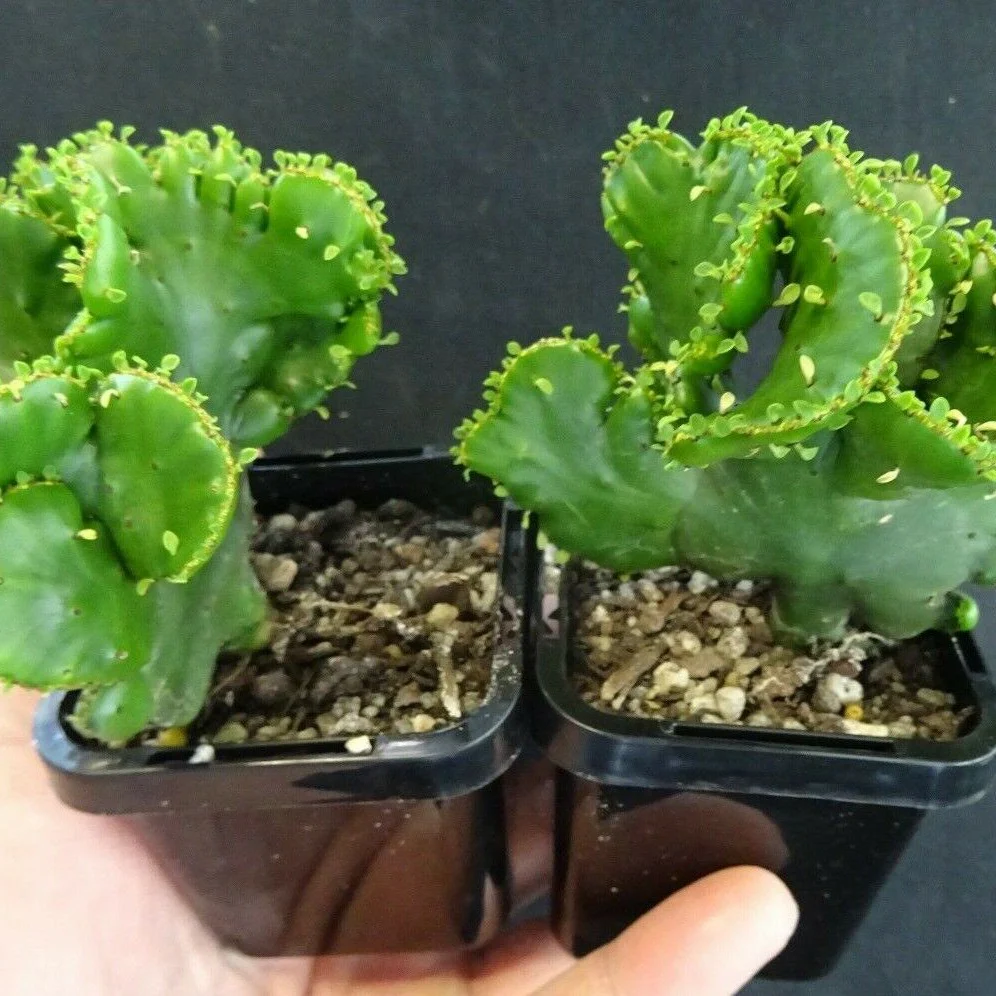
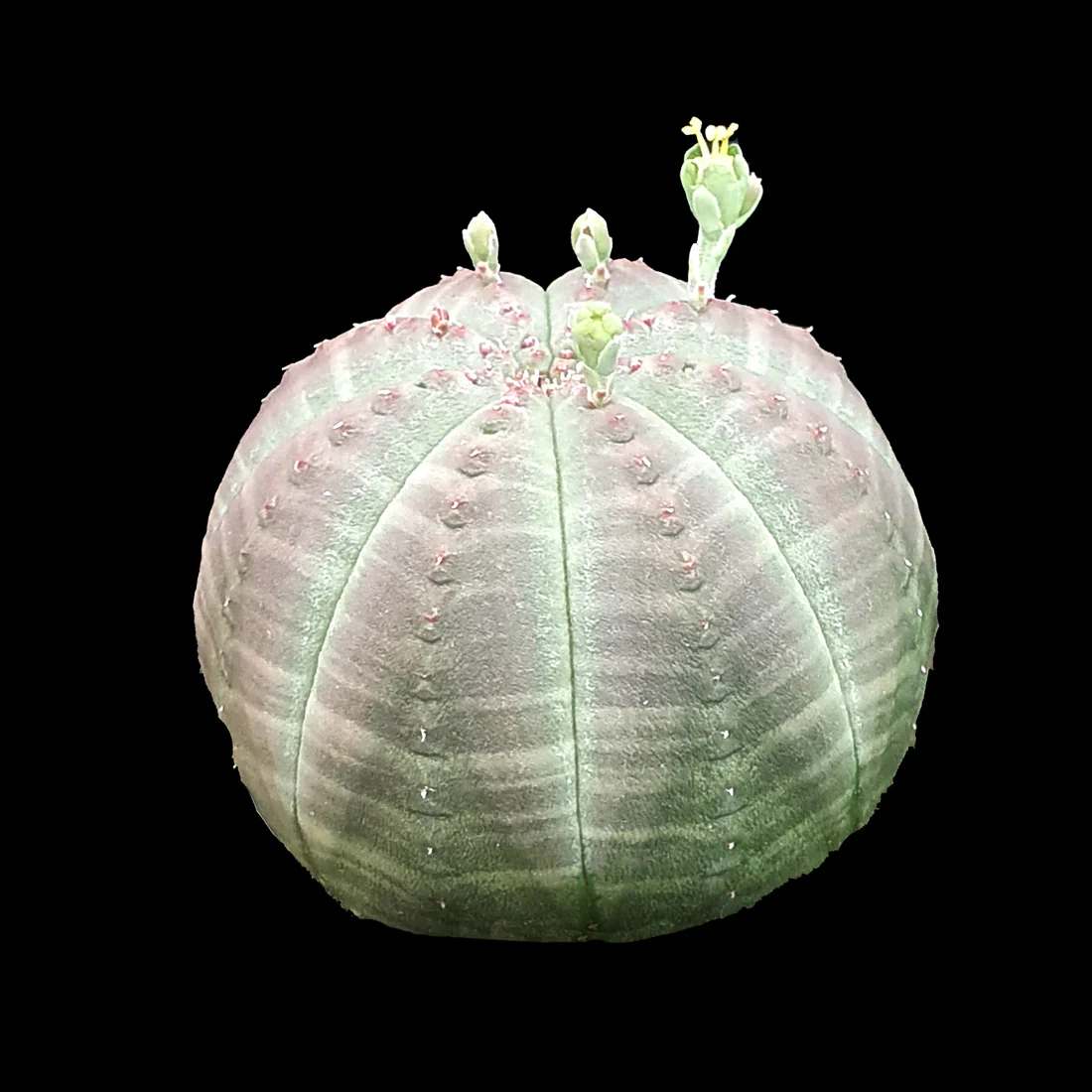
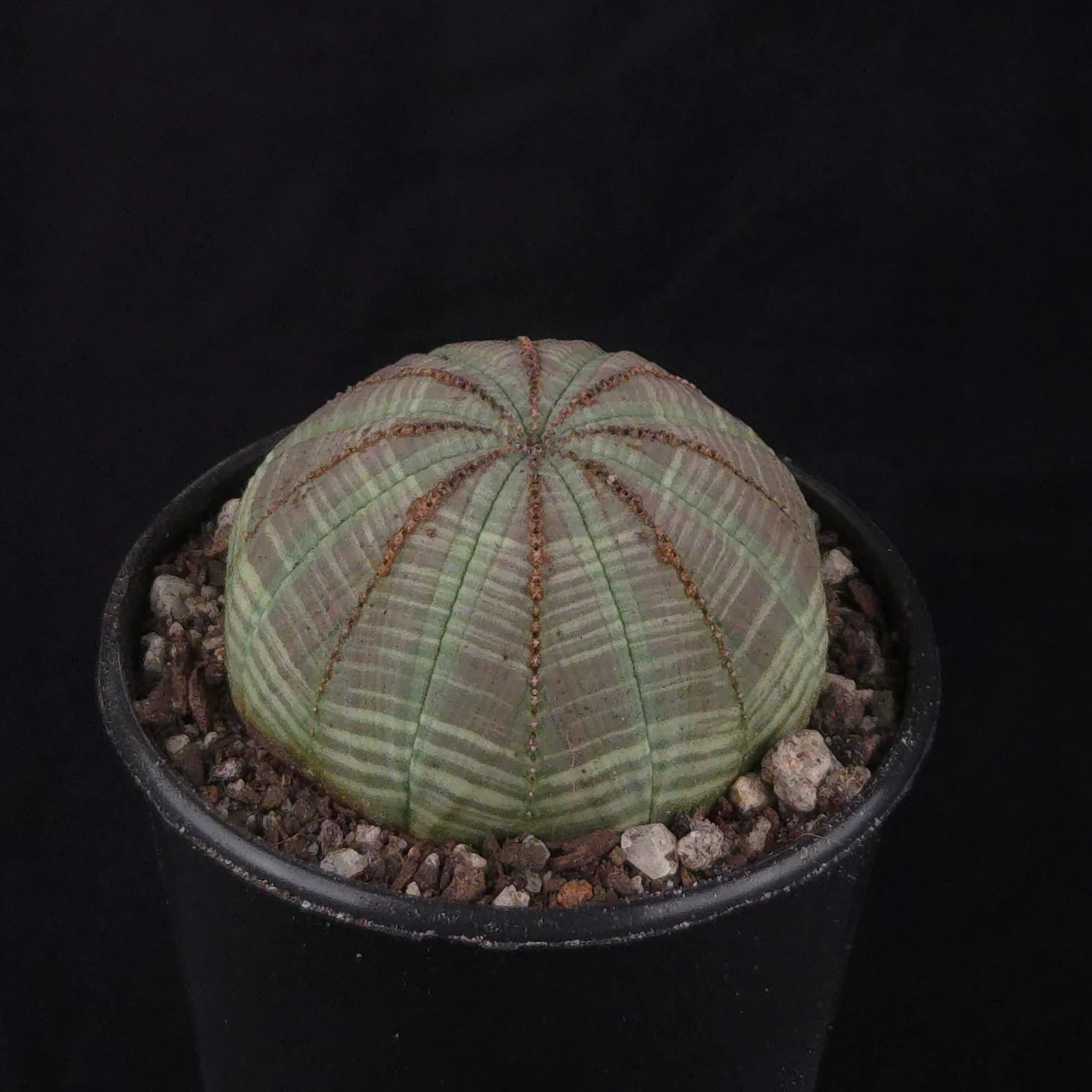
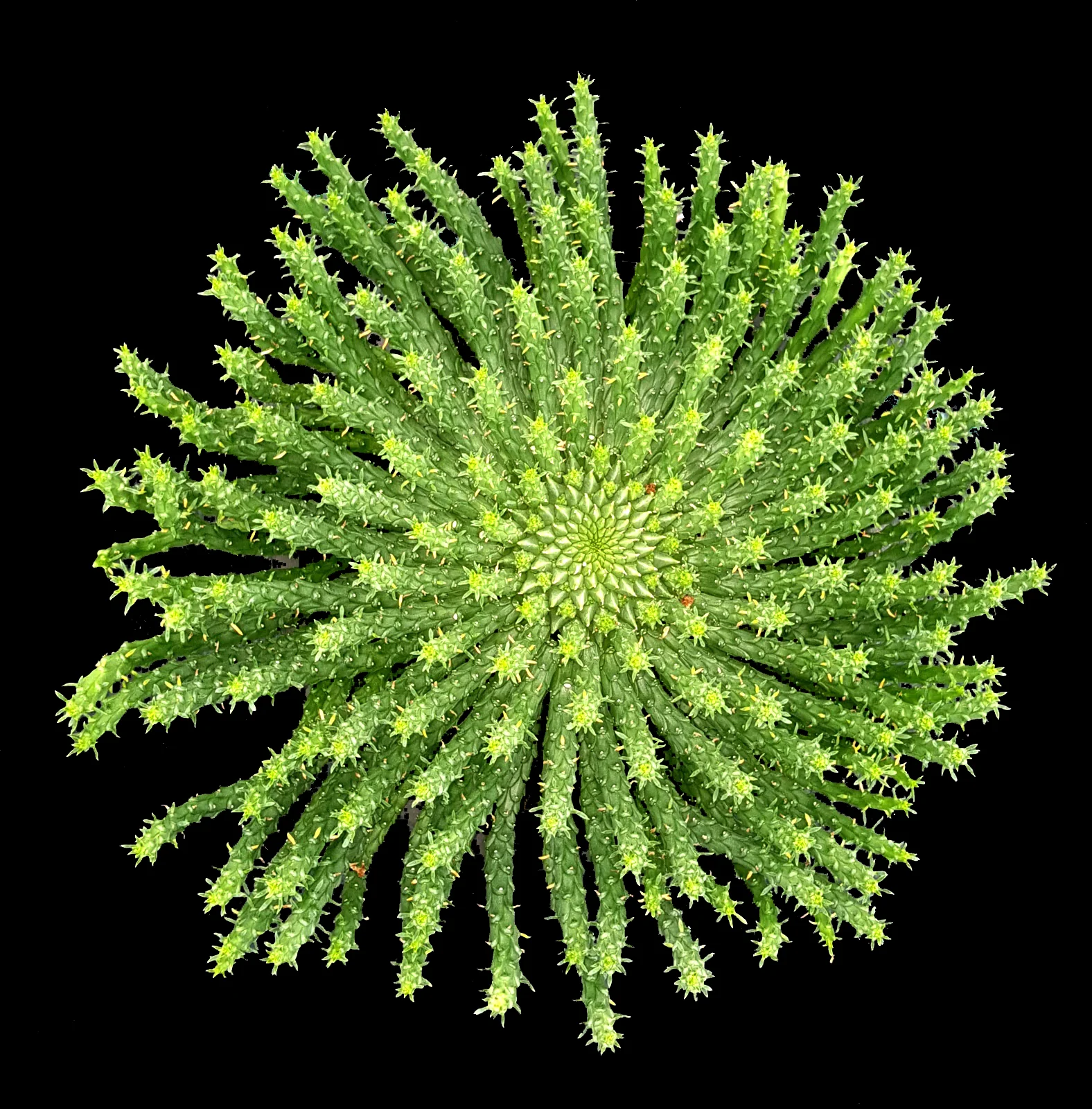
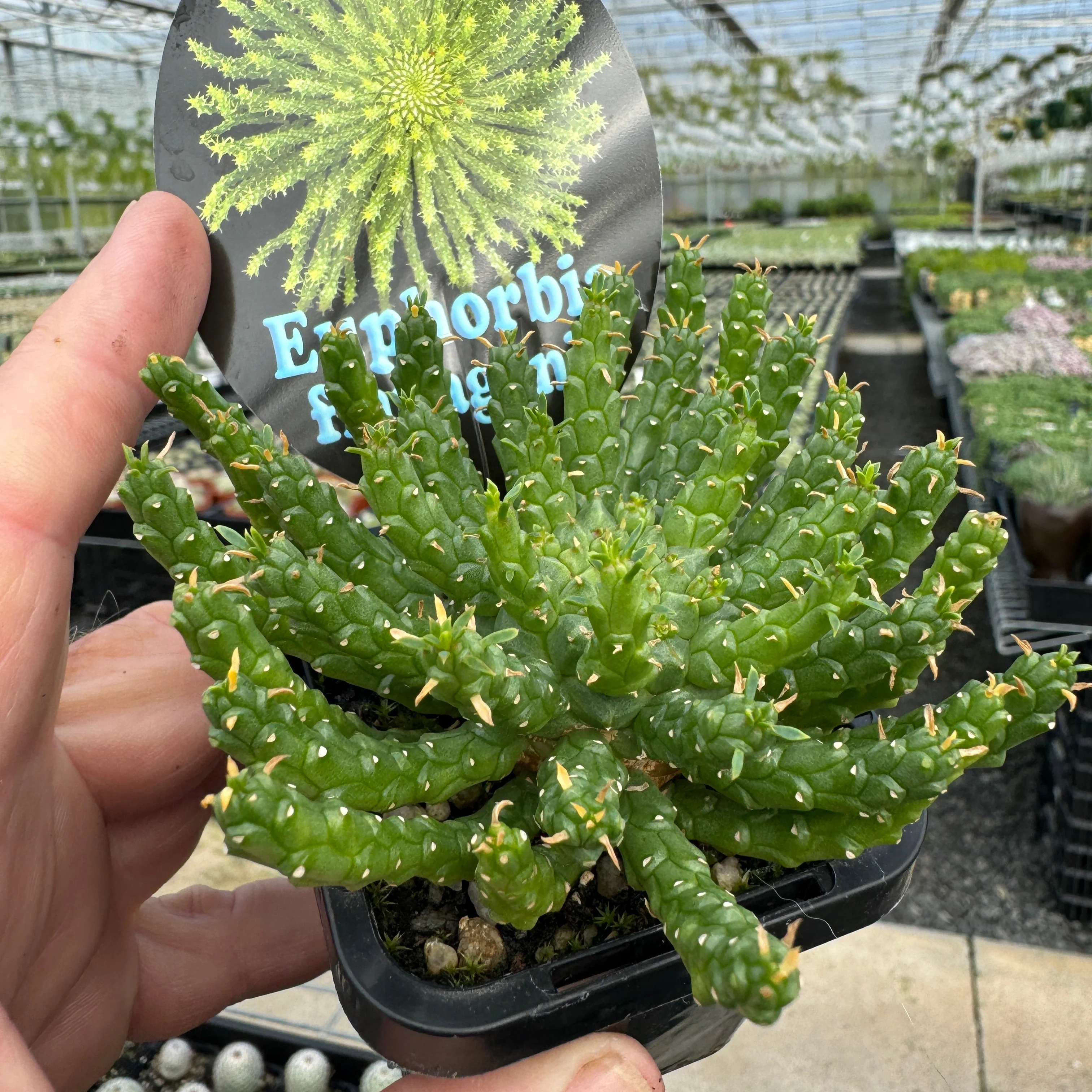
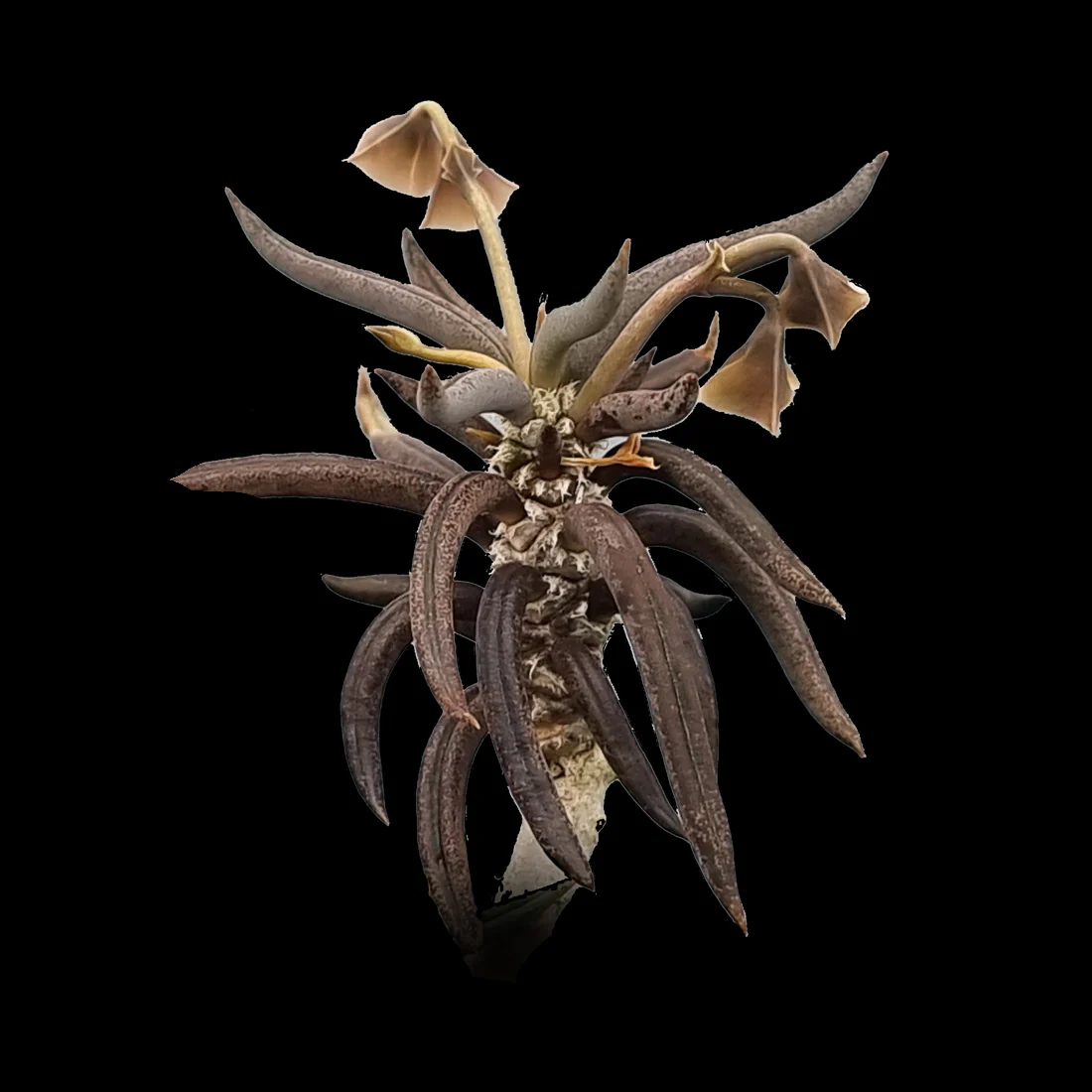
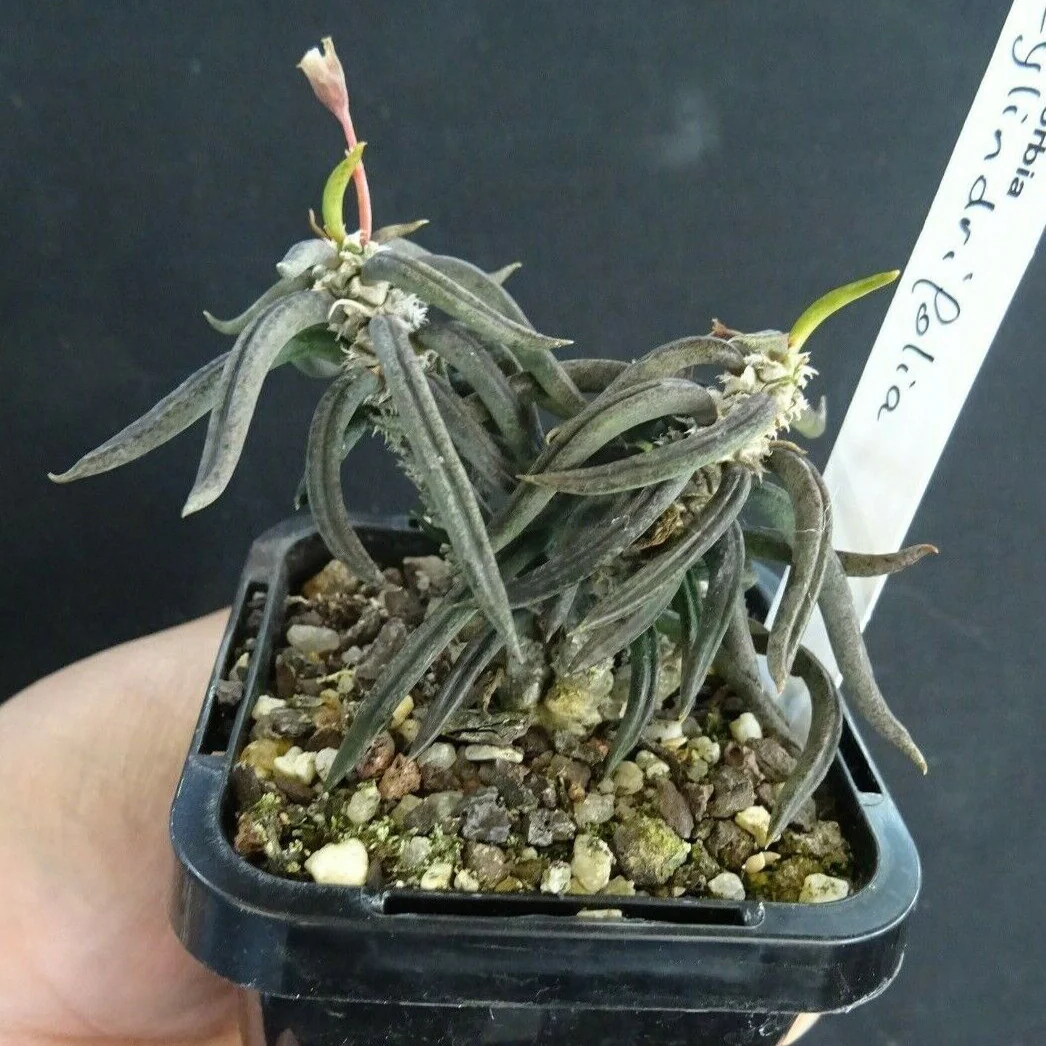
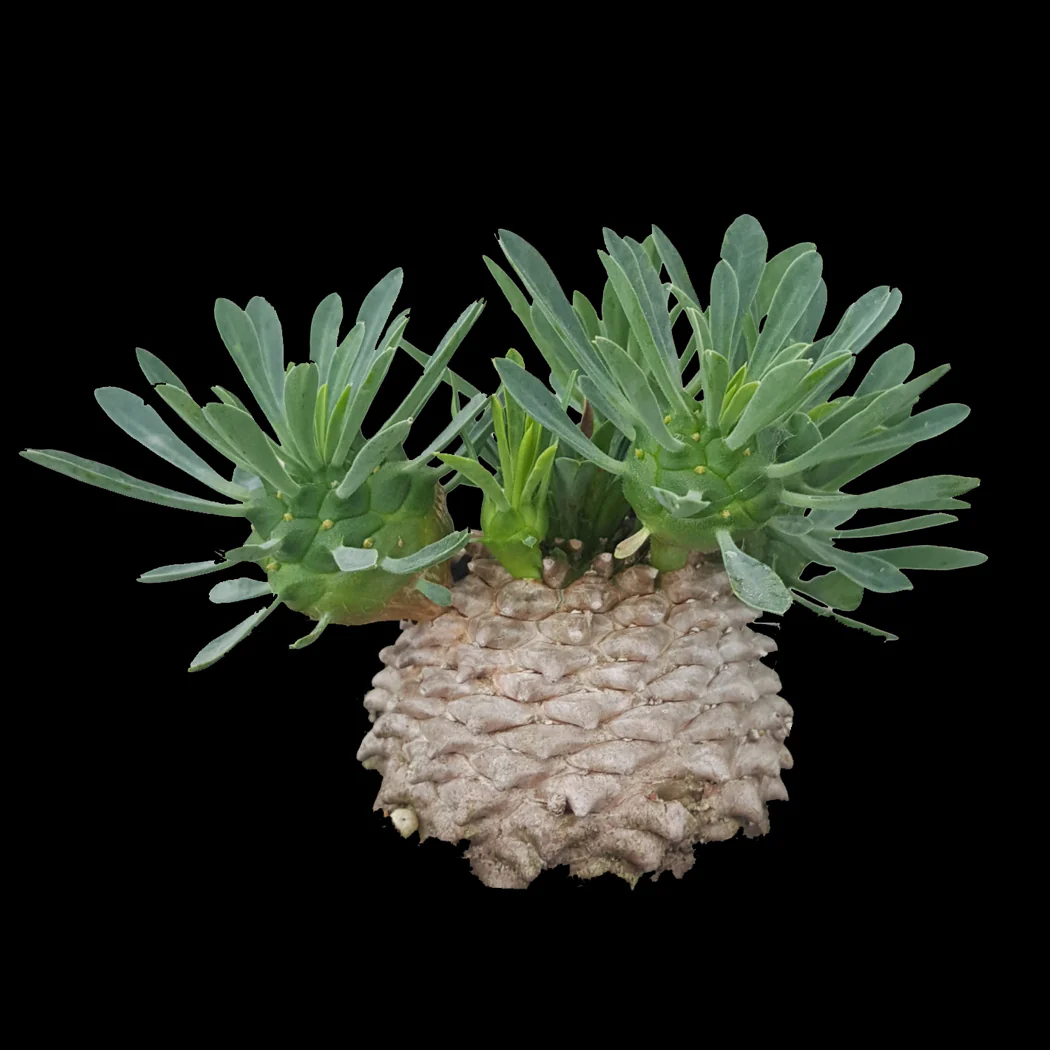
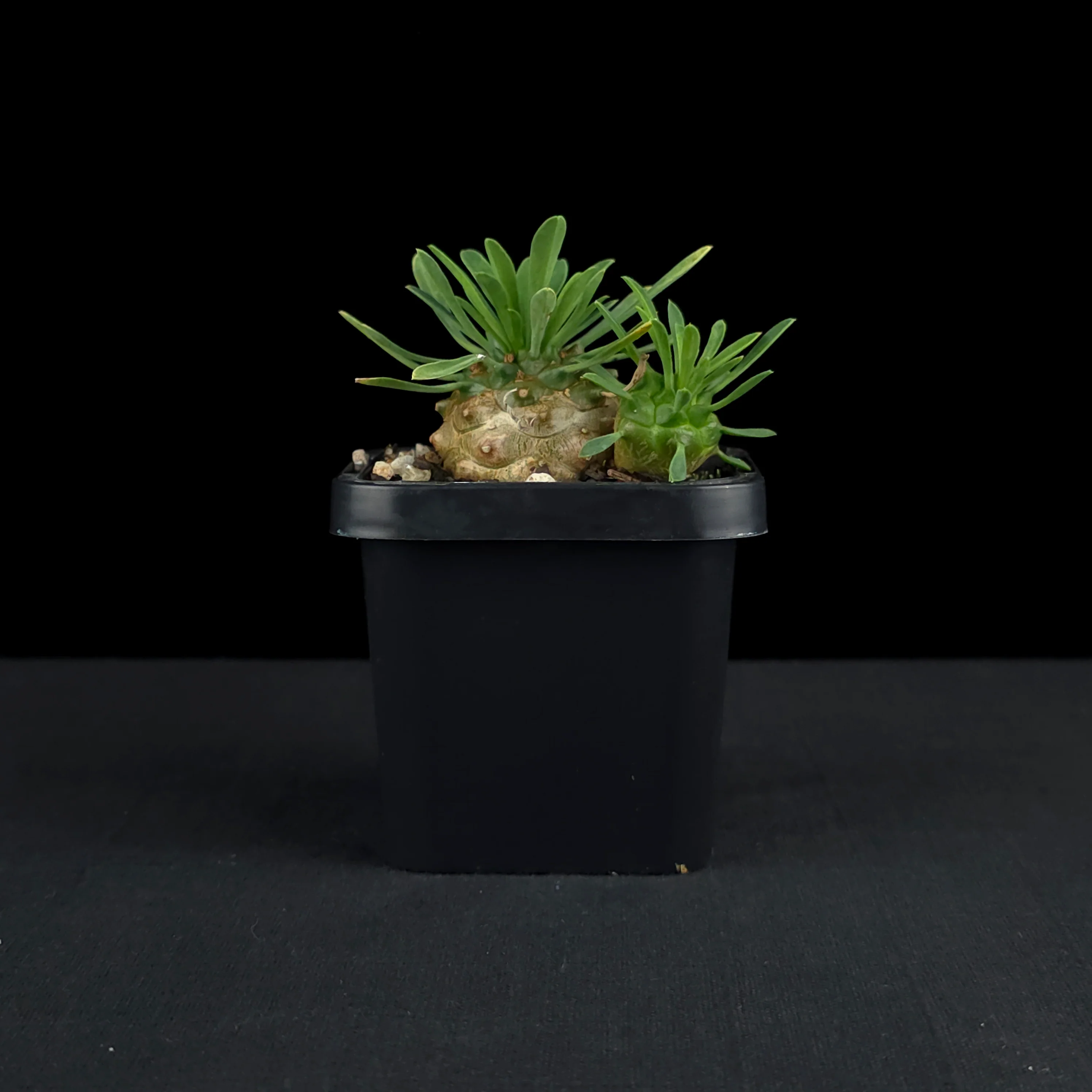
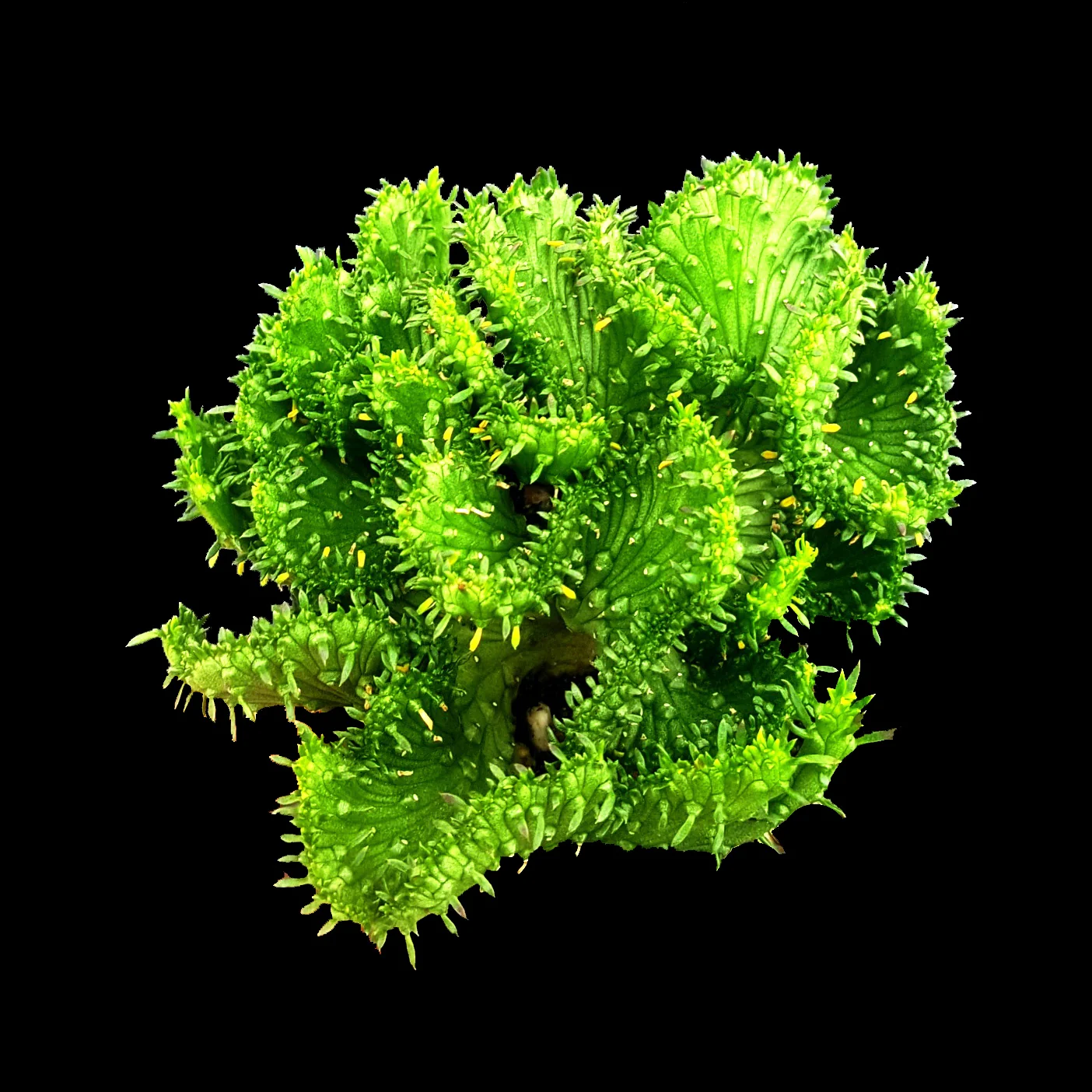
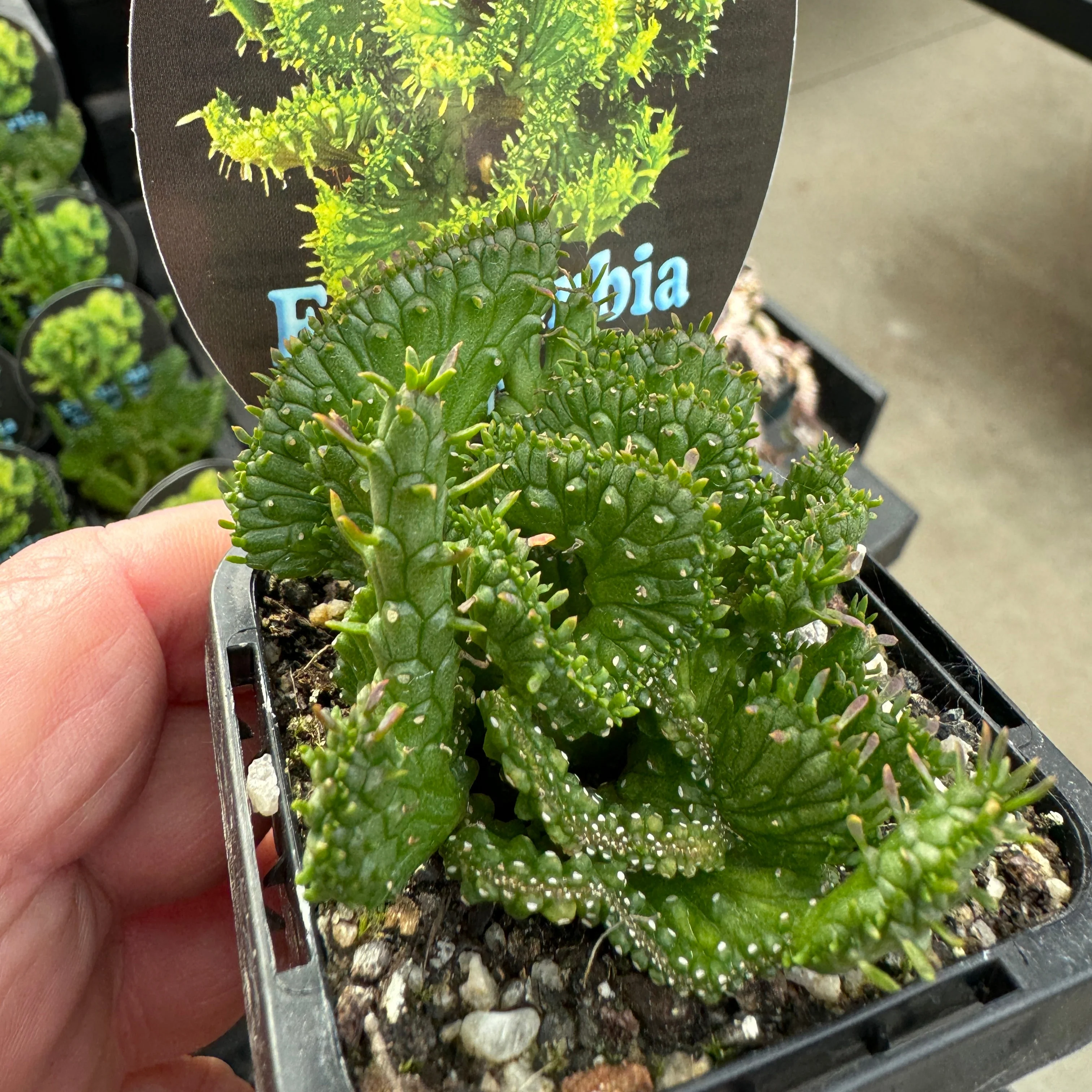
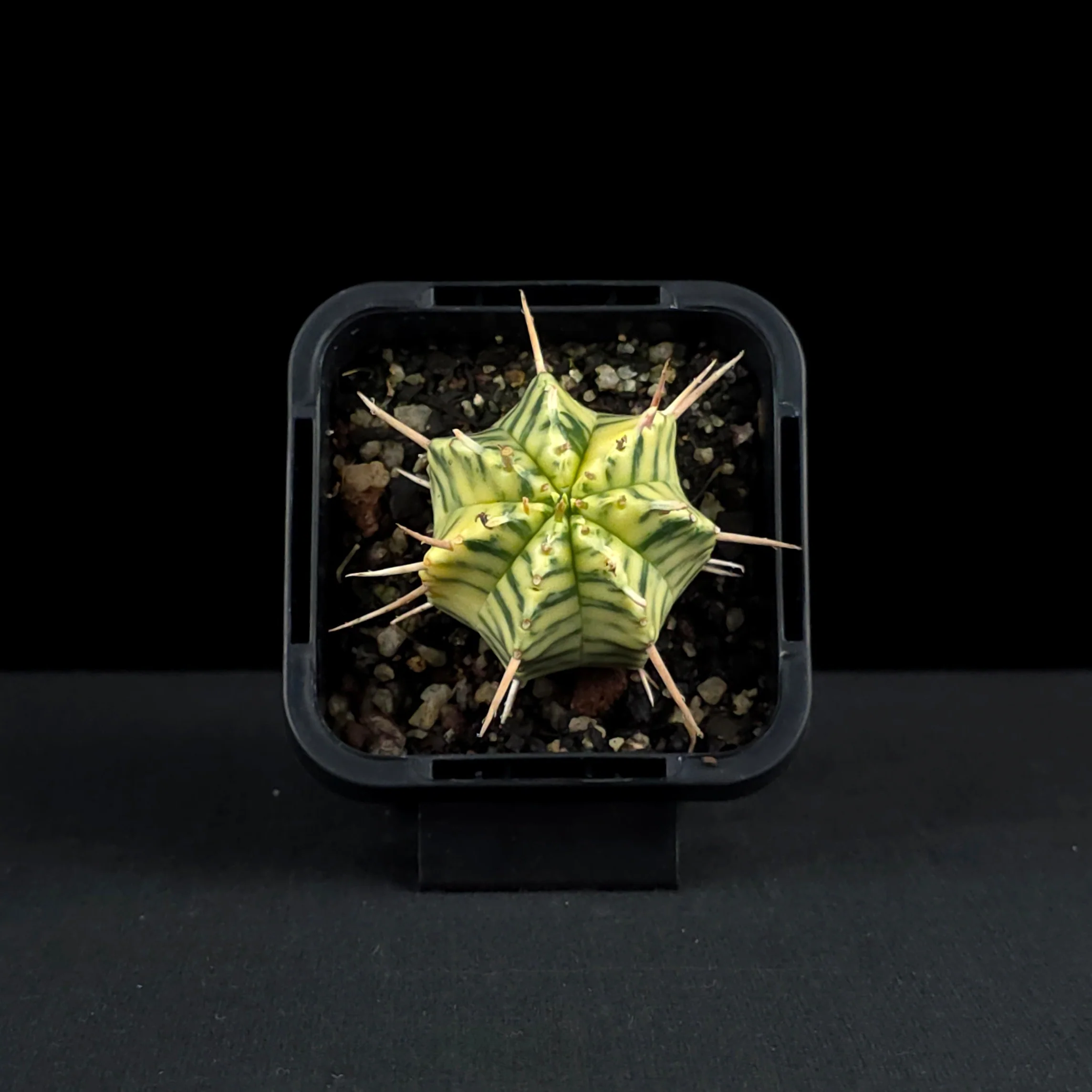
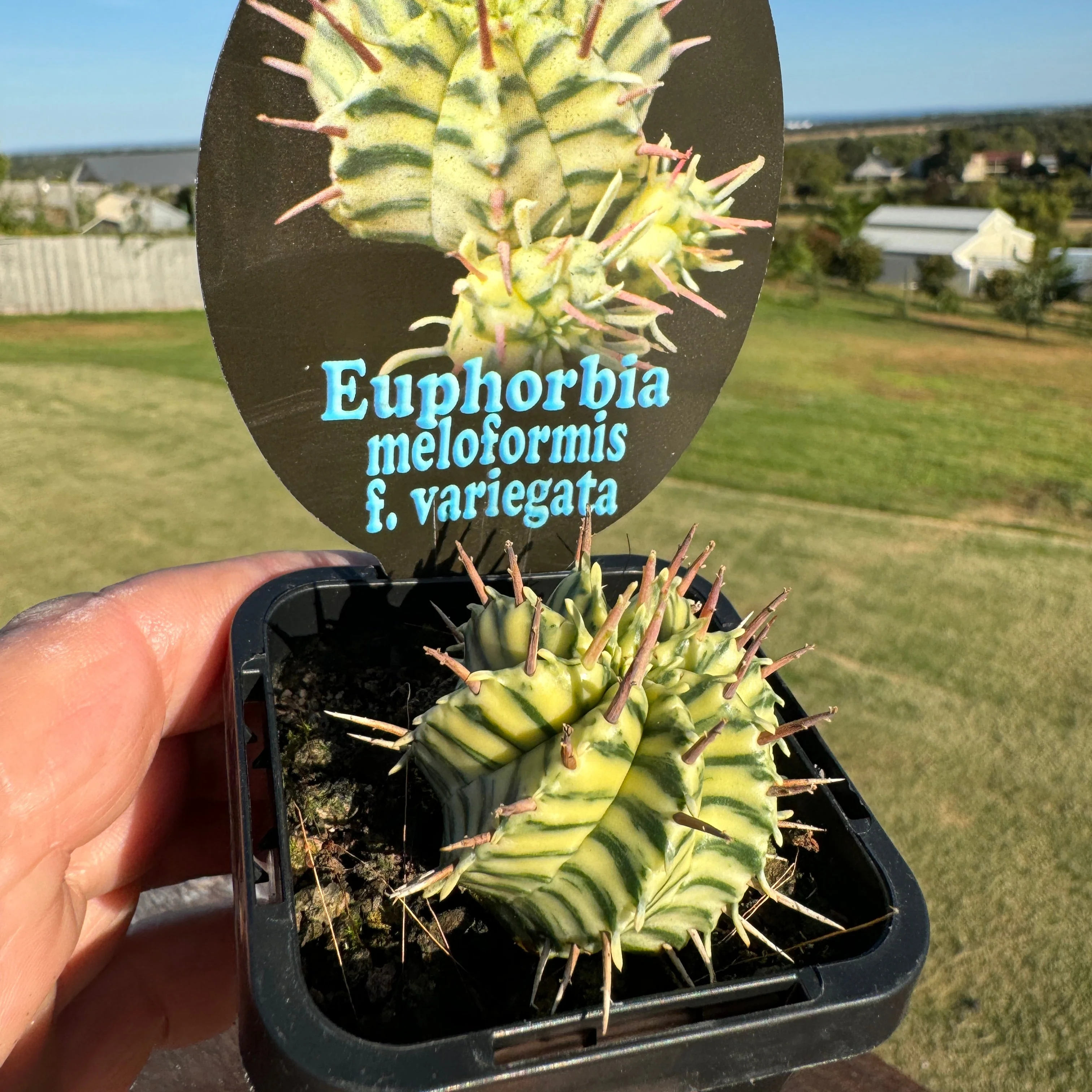
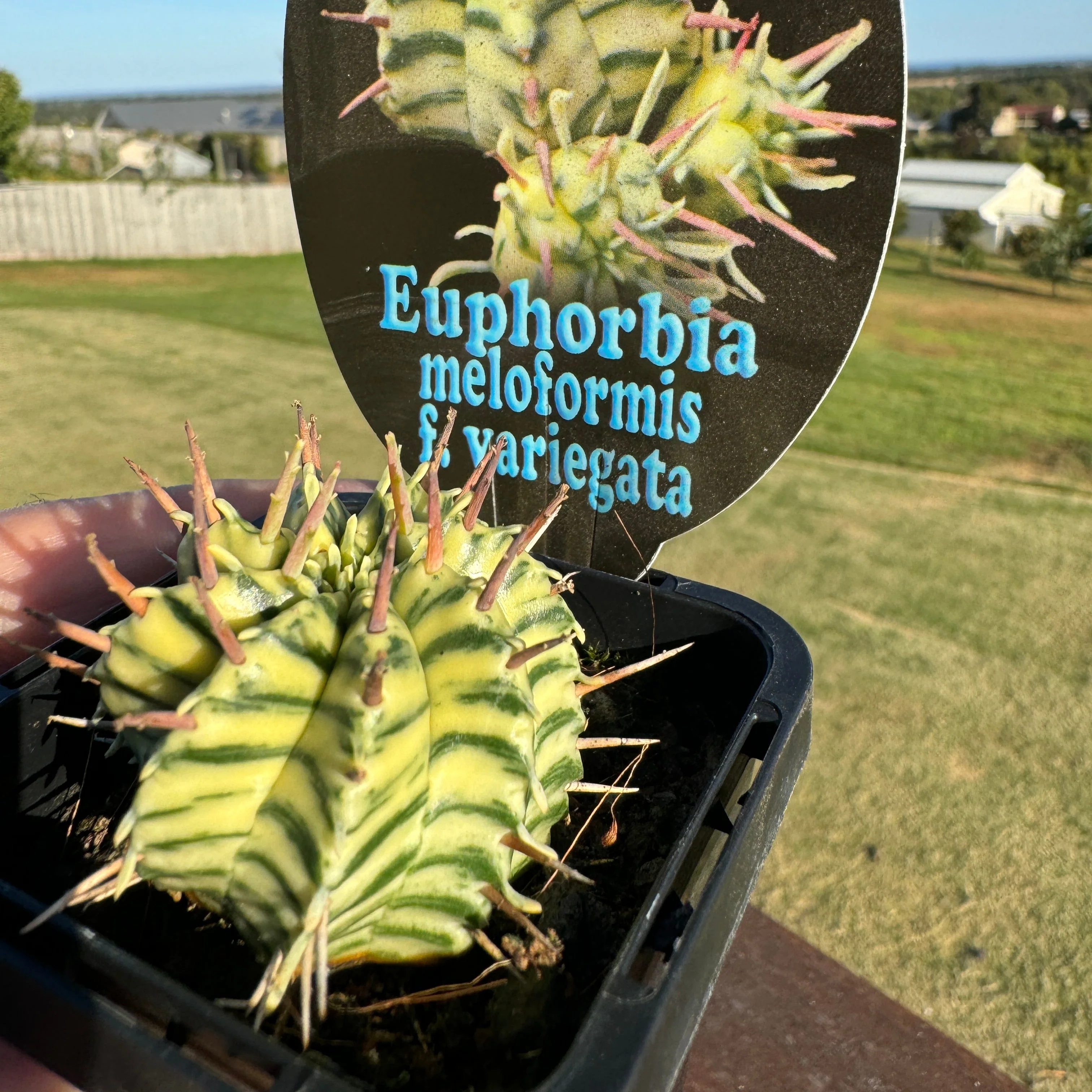
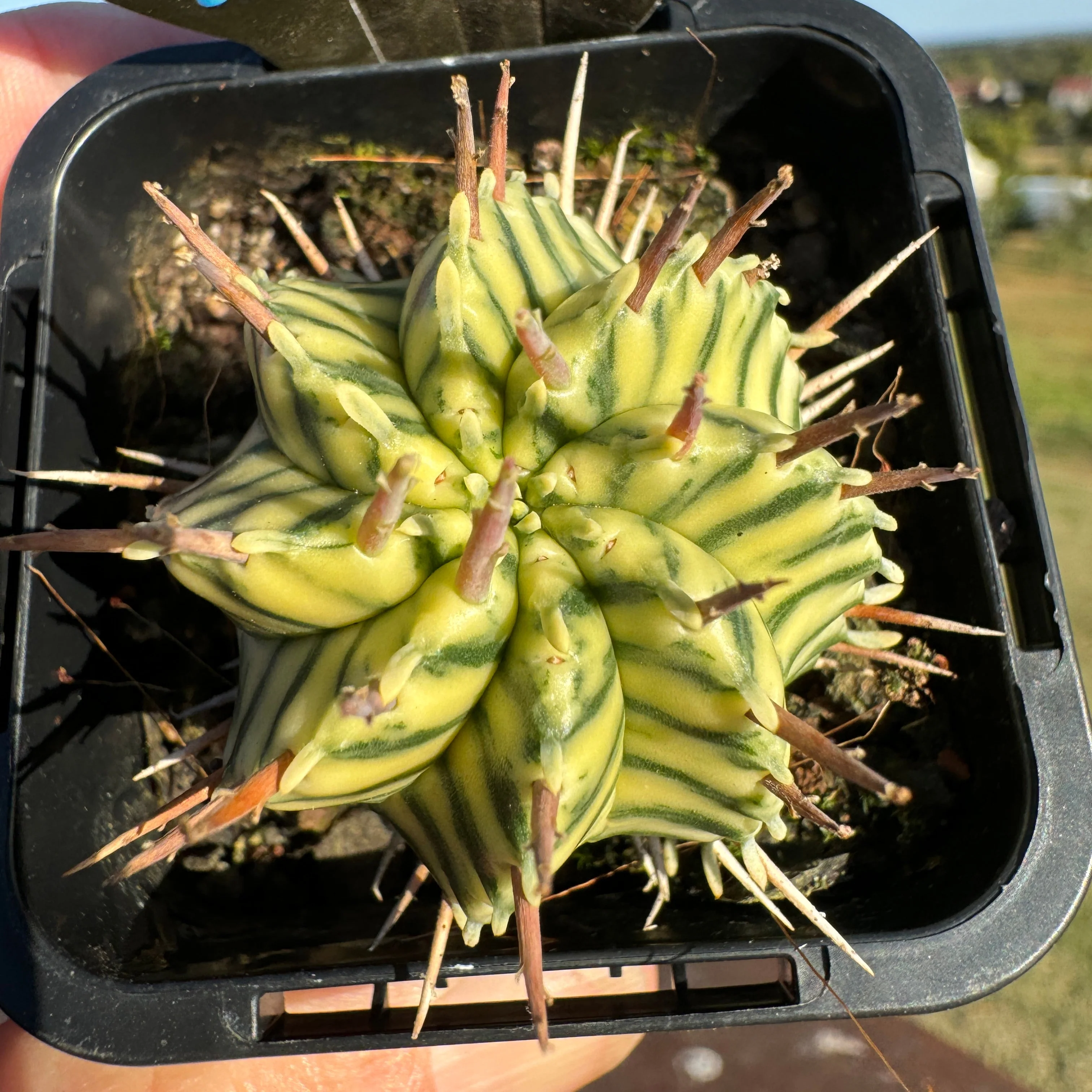
A variegated hybrid between Euphorbia meloformis and Euphorbia pulvinata, forming compact globular heads with strong rib structure and contrasting cream-yellow variegation. Spines are typically paired and reddish, giving the plant a bold architectural appearance.
Care
- Light: Bright light to full sun. Increase sun gradually to avoid scorch on variegated tissue.
- Water: Water thoroughly during active growth, allowing soil to dry between waterings. Keep almost dry in winter.
- Temperature: Protect from frost. Prefers warm, dry conditions.
- Media: Very free-draining cactus/succulent mix with added mineral content.
- Feeding: Light feeding during active growth only.
Key Characteristics
- Growth Habit: Compact, globular clustering succulent
- Colour: Green with cream to yellow variegation
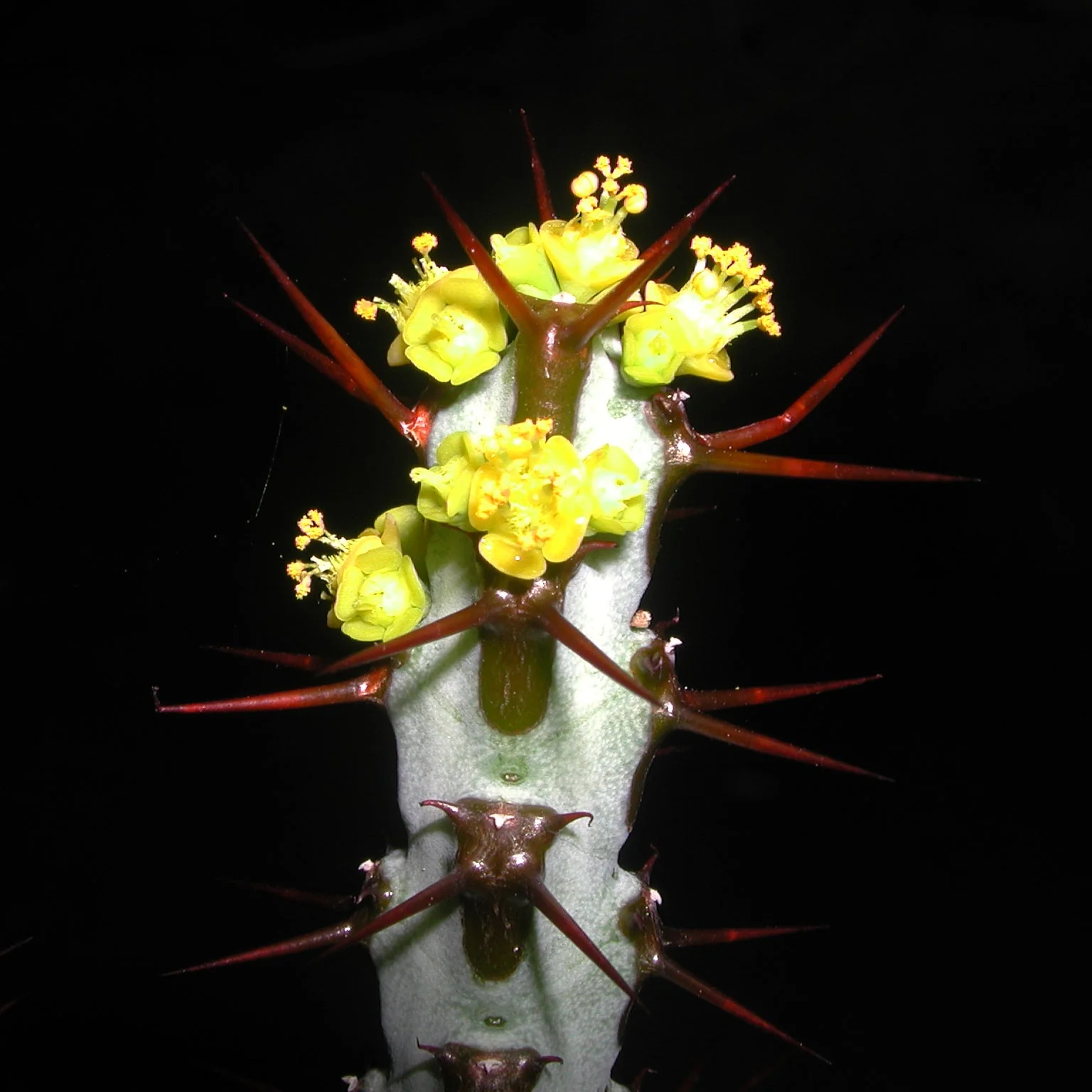
- Spines: Paired, often reddish
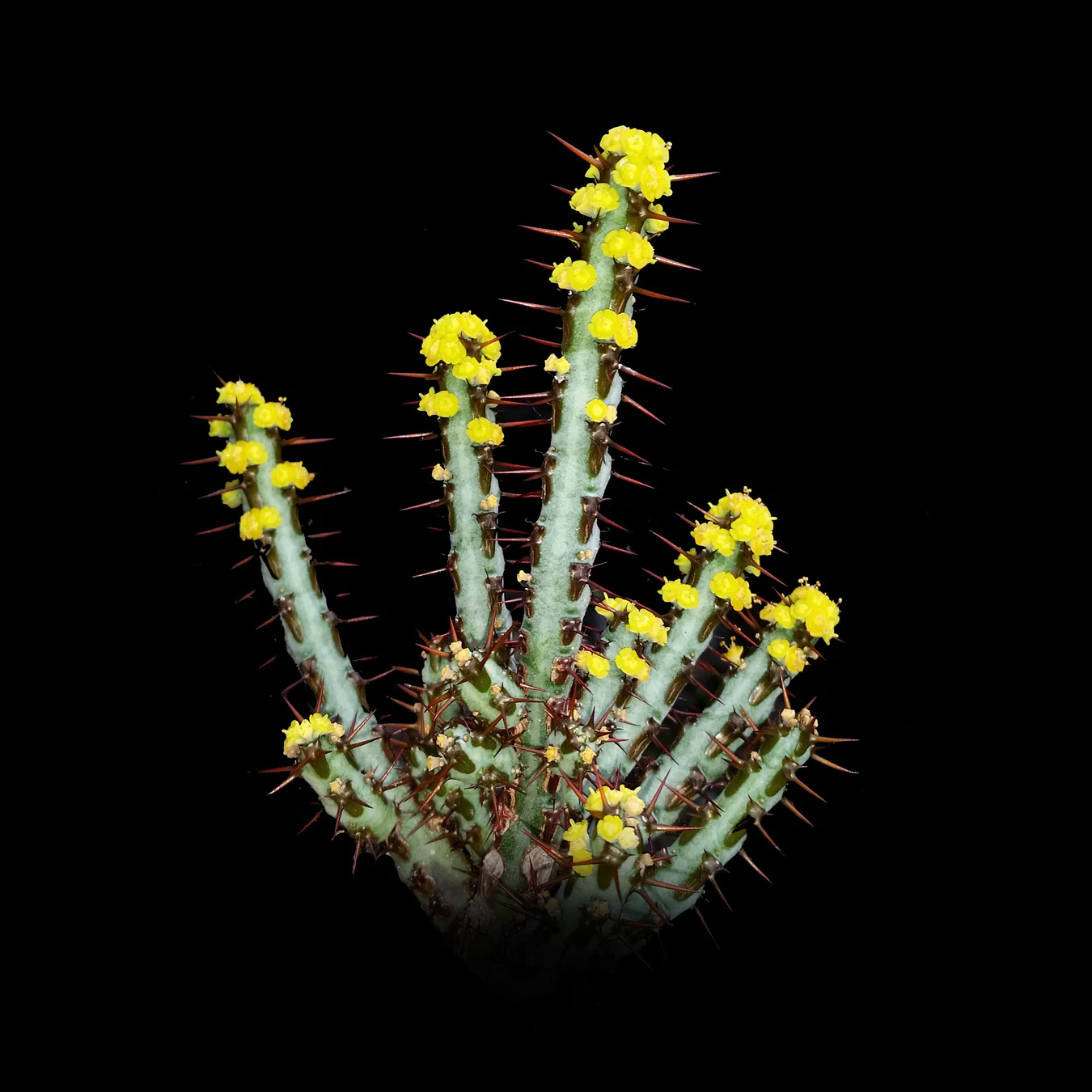
- Flowers: Small yellow cyathia in warmer months
- Mature Size: Typically 6–12 cm per head
- Special Note: Variegation intensity increases in bright light
Compliance
- WA Prohibited
- Latex sap is toxic if ingested and may irritate skin
More Images
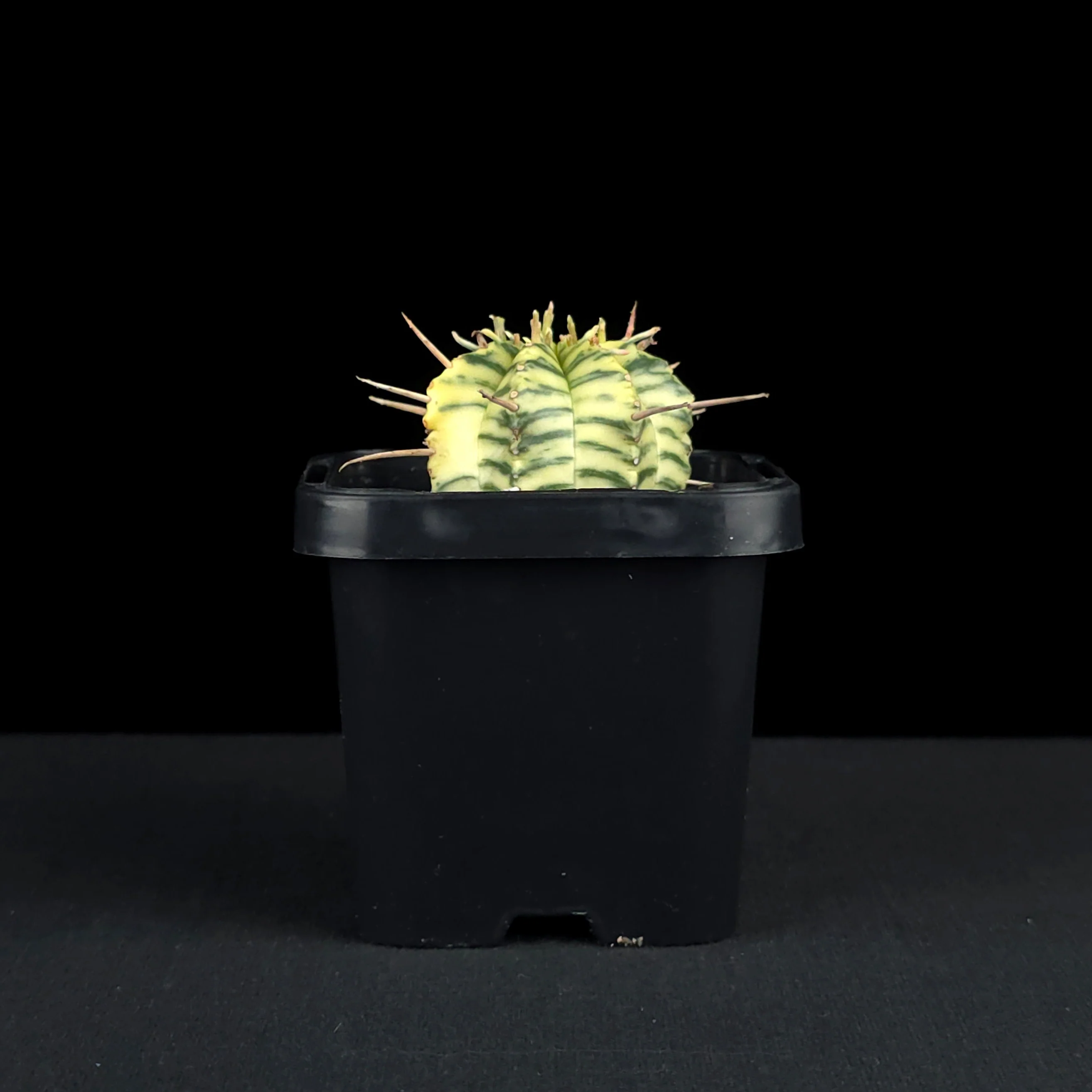
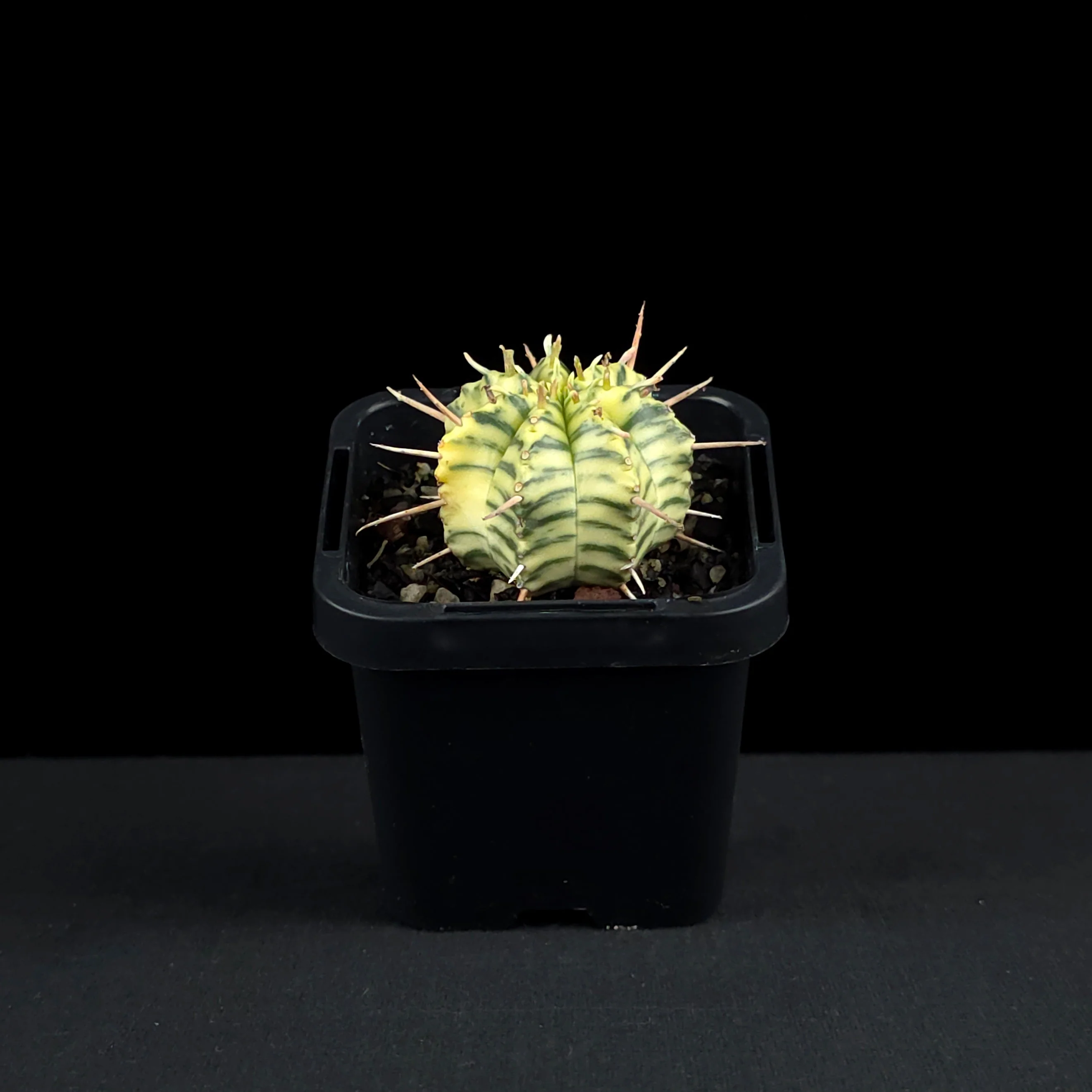
Euphorbia meloformis x pulvinata variegata (WA Prohibited)
A variegated hybrid between Euphorbia meloformis and Euphorbia pulvinata, forming compact globular heads with strong rib structure and contrasting cream-yellow variegation. Spines are typically paired and reddish, giving the plant a bold architectural appearance.
Care
- Light: Bright light to full sun. Increase sun gradually to avoid scorch on variegated tissue.
- Water: Water thoroughly during active growth, allowing soil to dry between waterings. Keep almost dry in winter.
- Temperature: Protect from frost. Prefers warm, dry conditions.
- Media: Very free-draining cactus/succulent mix with added mineral content.
- Feeding: Light feeding during active growth only.
Key Characteristics
- Growth Habit: Compact, globular clustering succulent
- Colour: Green with cream to yellow variegation
- Spines: Paired, often reddish
- Flowers: Small yellow cyathia in warmer months
- Mature Size: Typically 6–12 cm per head
- Special Note: Variegation intensity increases in bright light
Compliance
- WA Prohibited
- Latex sap is toxic if ingested and may irritate skin
Product Information
Product Information
Shipping & Returns
Shipping & Returns
Description
A variegated hybrid between Euphorbia meloformis and Euphorbia pulvinata, forming compact globular heads with strong rib structure and contrasting cream-yellow variegation. Spines are typically paired and reddish, giving the plant a bold architectural appearance.
Care
- Light: Bright light to full sun. Increase sun gradually to avoid scorch on variegated tissue.
- Water: Water thoroughly during active growth, allowing soil to dry between waterings. Keep almost dry in winter.
- Temperature: Protect from frost. Prefers warm, dry conditions.
- Media: Very free-draining cactus/succulent mix with added mineral content.
- Feeding: Light feeding during active growth only.
Key Characteristics
- Growth Habit: Compact, globular clustering succulent
- Colour: Green with cream to yellow variegation
- Spines: Paired, often reddish
- Flowers: Small yellow cyathia in warmer months
- Mature Size: Typically 6–12 cm per head
- Special Note: Variegation intensity increases in bright light
Compliance
- WA Prohibited
- Latex sap is toxic if ingested and may irritate skin