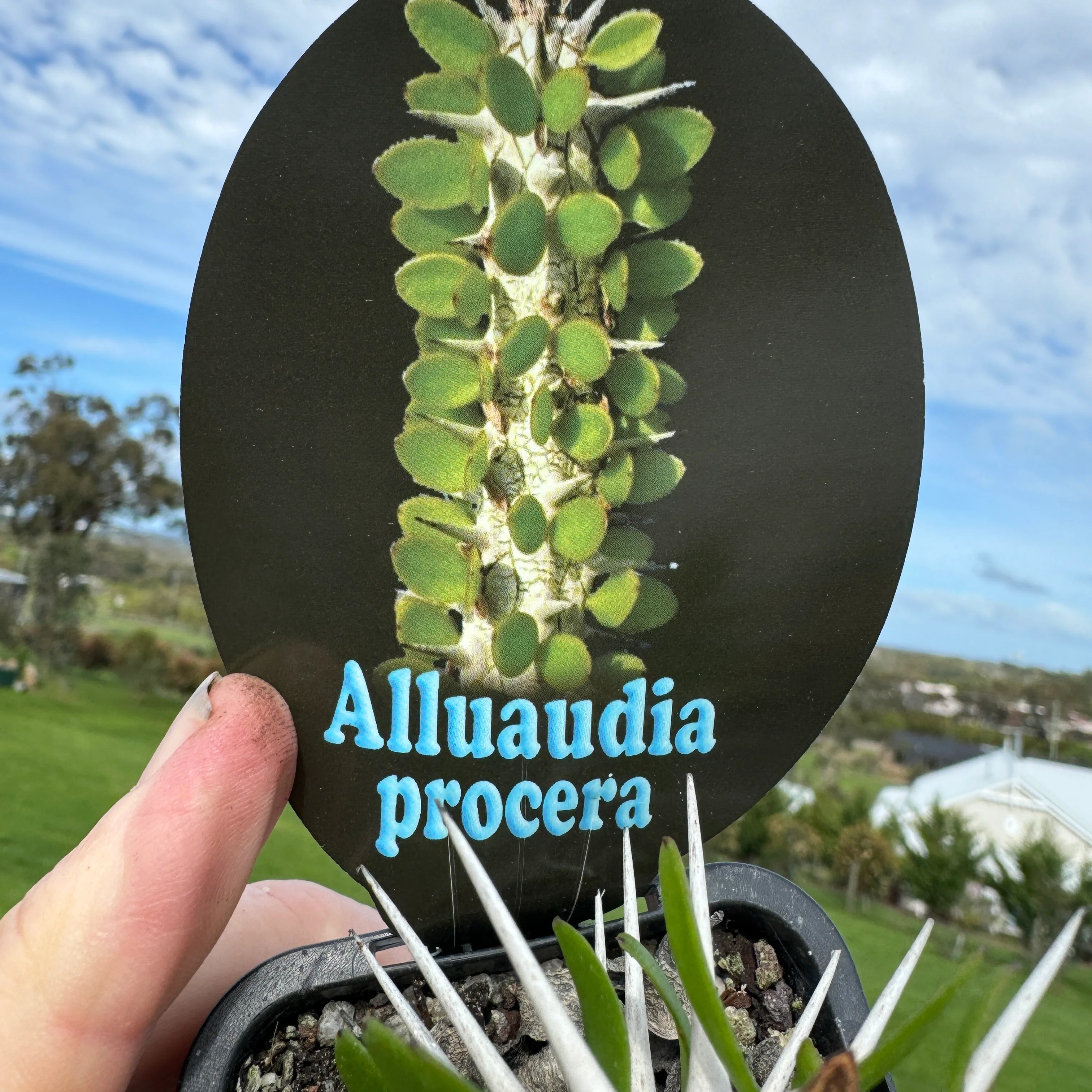
Alluaudia procera - Madagascan Ocotillo
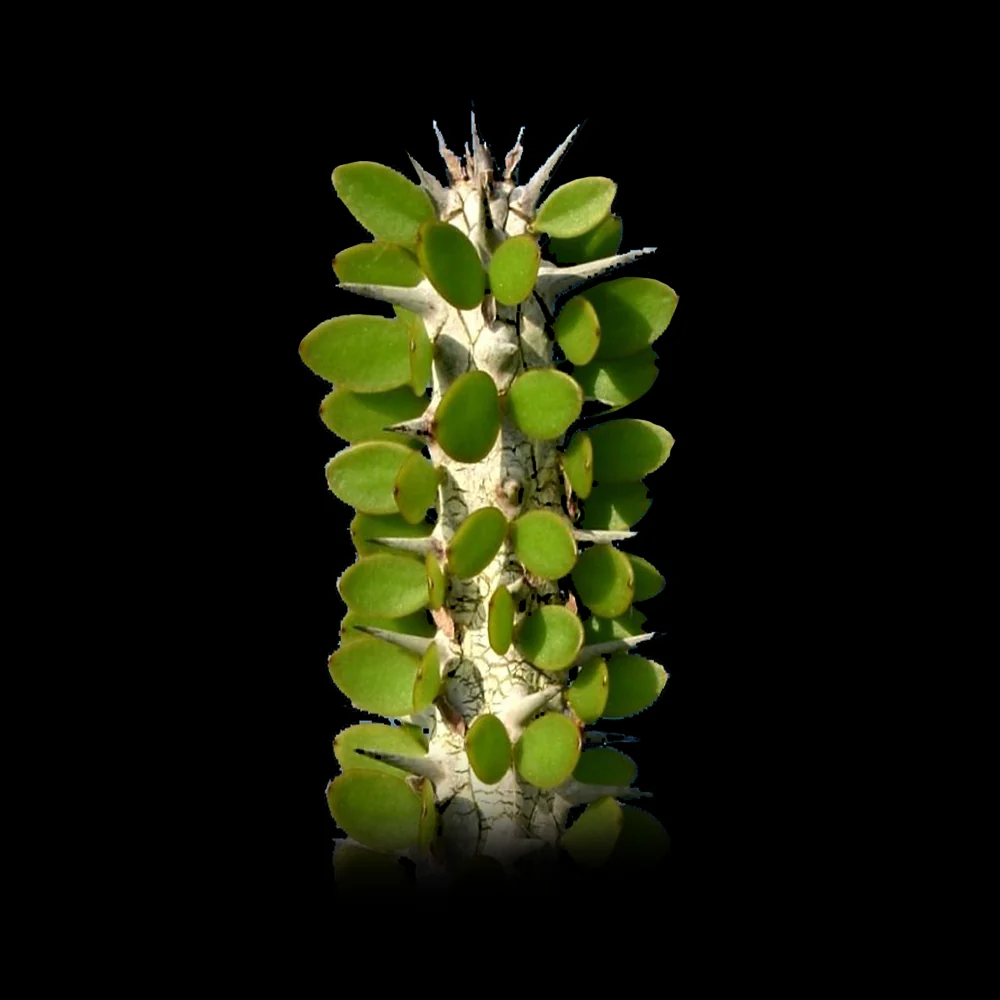
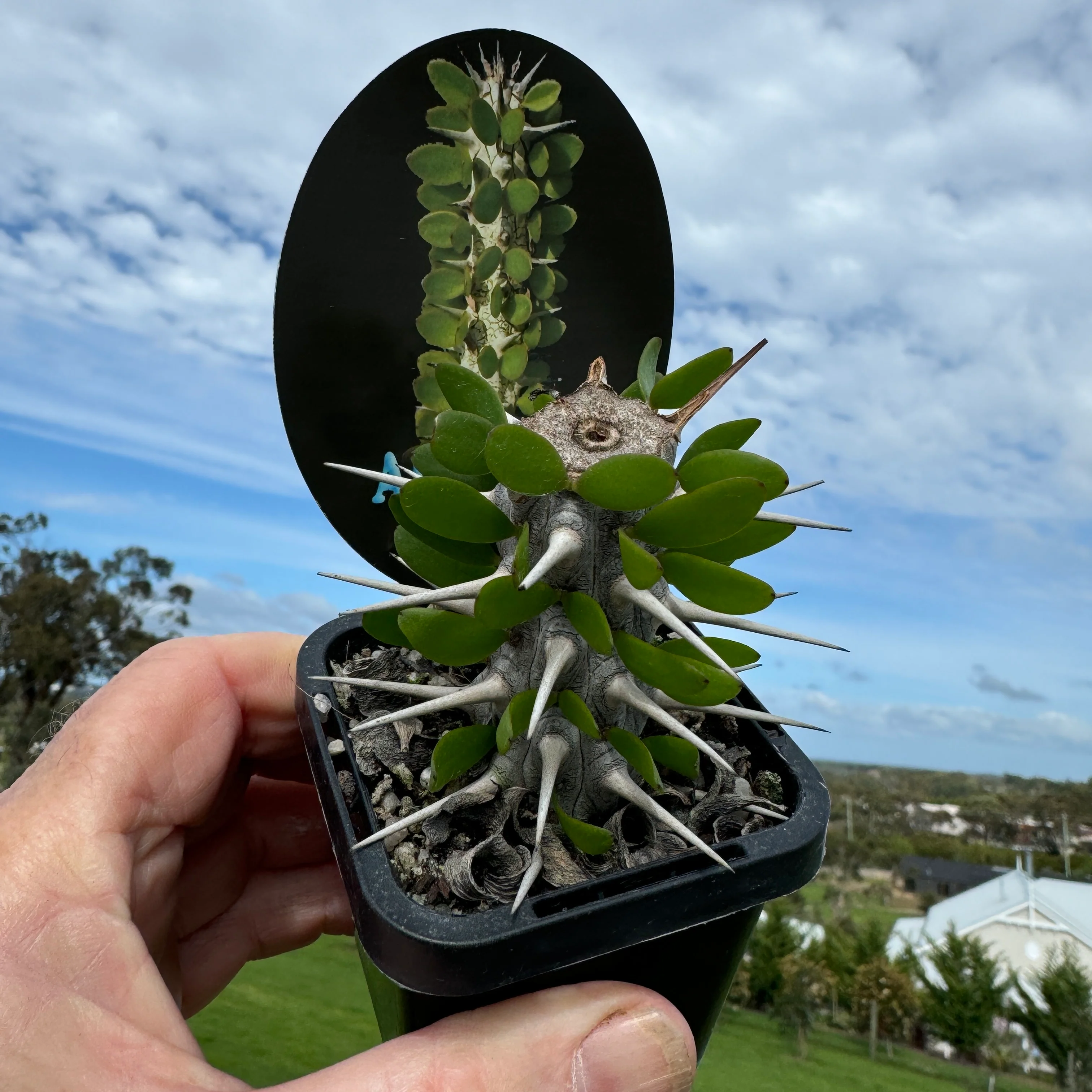
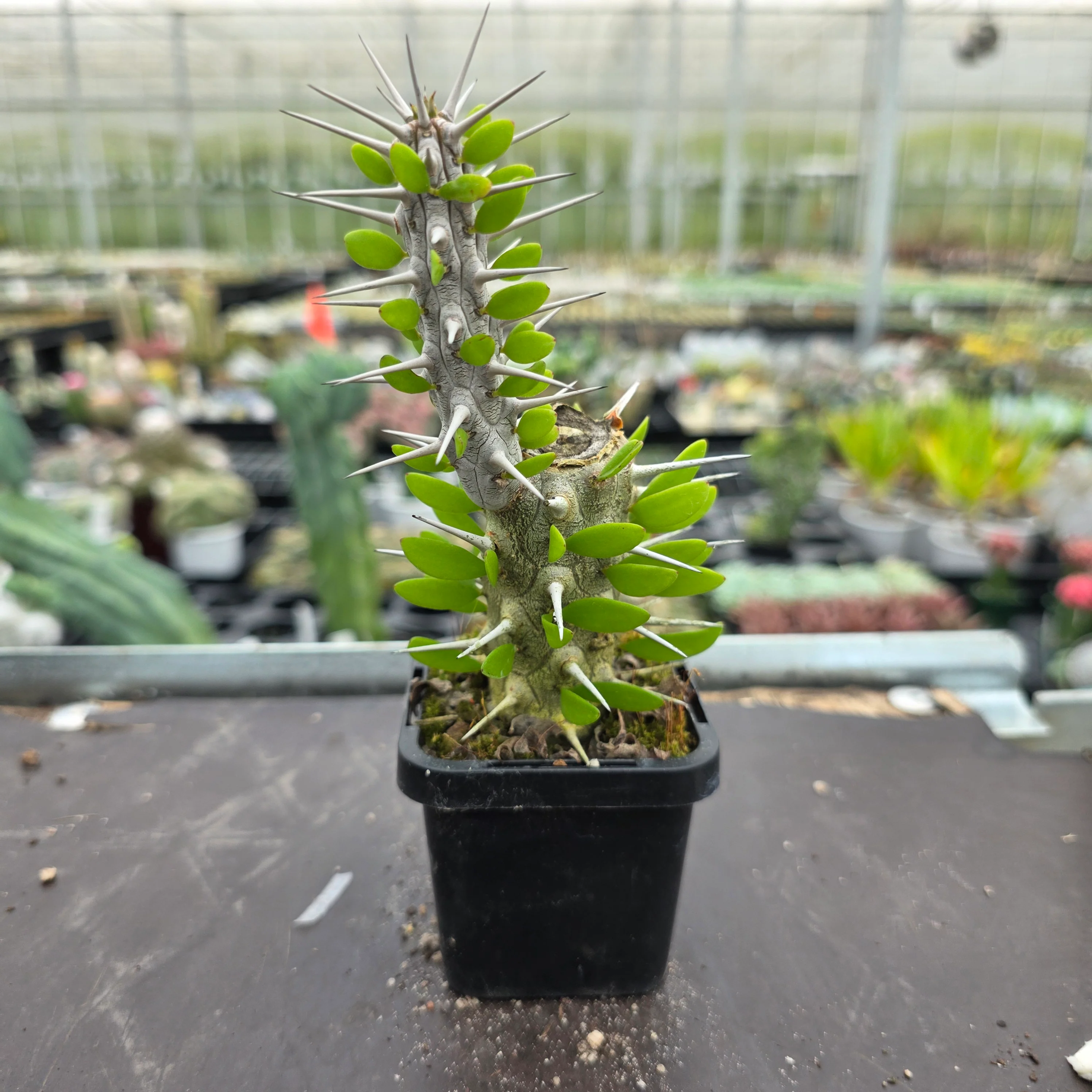
Alluaudia procera, commonly called the Madagascar Ocotillo, is a succulent tree endemic to southern Madagascar. It is characteristic of the island’s spiny forest habitats, where it can reach 10–15 m in height. The species produces tall, upright, grey-green stems covered with pairs of sharp spines arranged opposite one another. Between these spines, small oval leaves emerge during the growing season, aiding photosynthesis before being shed in the dry season to conserve water. This deciduous adaptation, together with the spiny defences, allows the plant to survive in Madagascar’s harsh, arid environment. In cultivation, its architectural form and resilience make it an unusual collector’s specimen.
Care Tips
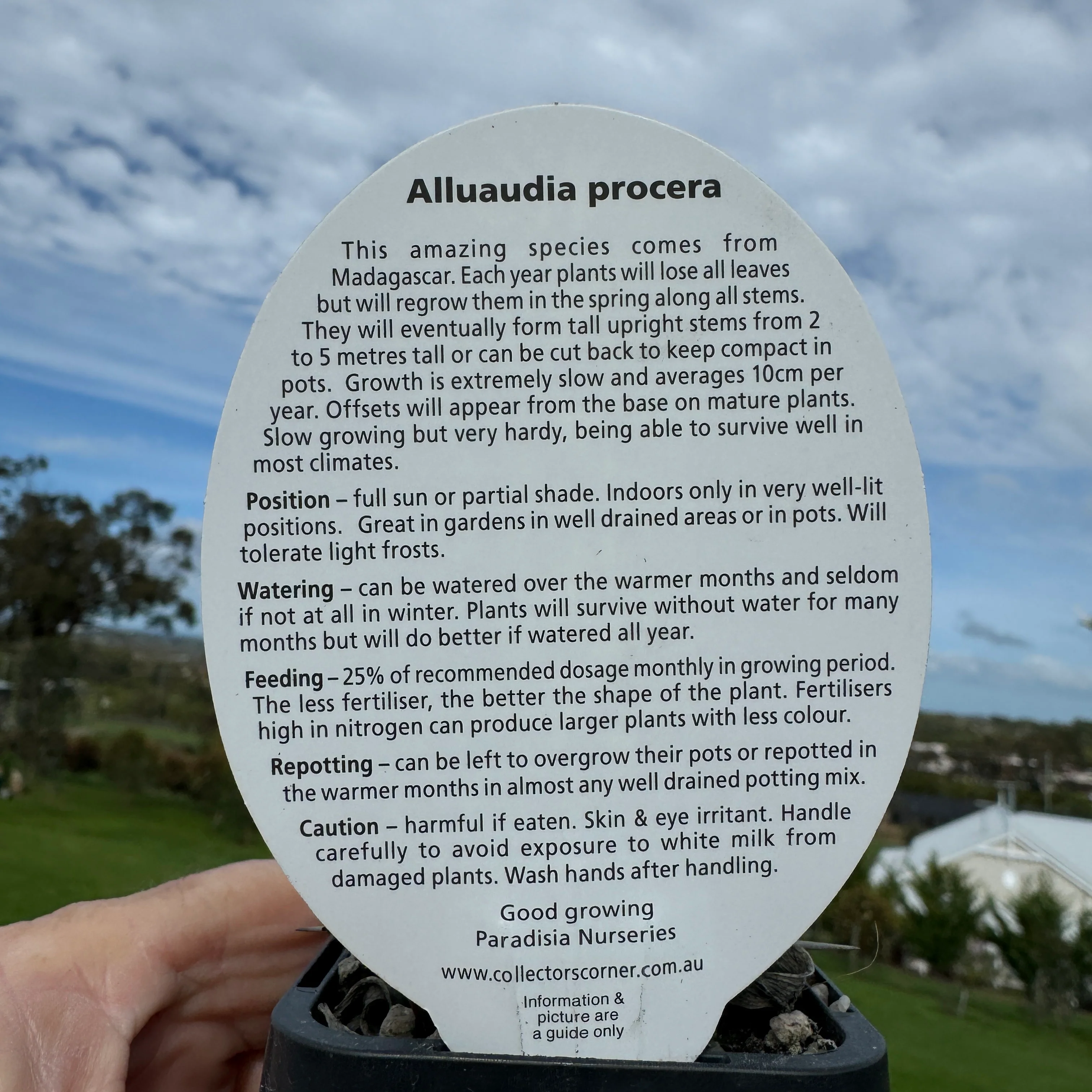
- Light: Requires full sun to very bright light for strong, upright growth.
- Water: Water moderately in the growing season, allowing the soil to dry between waterings; keep drier in winter dormancy.
- Media: Use a free-draining, sandy-gritty succulent mix to avoid waterlogging.
- Fertiliser: Apply a diluted balanced fertiliser occasionally during the warm growing months.
- Temperature: Prefers warm conditions; protect from frost and temperatures below 10 °C.
- Repotting: Repot as required into a deeper container to support upright stems; stake young plants if needed.
Original: $25.00
-65%$25.00
$8.75More Images
Alluaudia procera - Madagascan Ocotillo
Alluaudia procera, commonly called the Madagascar Ocotillo, is a succulent tree endemic to southern Madagascar. It is characteristic of the island’s spiny forest habitats, where it can reach 10–15 m in height. The species produces tall, upright, grey-green stems covered with pairs of sharp spines arranged opposite one another. Between these spines, small oval leaves emerge during the growing season, aiding photosynthesis before being shed in the dry season to conserve water. This deciduous adaptation, together with the spiny defences, allows the plant to survive in Madagascar’s harsh, arid environment. In cultivation, its architectural form and resilience make it an unusual collector’s specimen.
Care Tips
- Light: Requires full sun to very bright light for strong, upright growth.
- Water: Water moderately in the growing season, allowing the soil to dry between waterings; keep drier in winter dormancy.
- Media: Use a free-draining, sandy-gritty succulent mix to avoid waterlogging.
- Fertiliser: Apply a diluted balanced fertiliser occasionally during the warm growing months.
- Temperature: Prefers warm conditions; protect from frost and temperatures below 10 °C.
- Repotting: Repot as required into a deeper container to support upright stems; stake young plants if needed.
Product Information
Product Information
Shipping & Returns
Shipping & Returns
Description
Alluaudia procera, commonly called the Madagascar Ocotillo, is a succulent tree endemic to southern Madagascar. It is characteristic of the island’s spiny forest habitats, where it can reach 10–15 m in height. The species produces tall, upright, grey-green stems covered with pairs of sharp spines arranged opposite one another. Between these spines, small oval leaves emerge during the growing season, aiding photosynthesis before being shed in the dry season to conserve water. This deciduous adaptation, together with the spiny defences, allows the plant to survive in Madagascar’s harsh, arid environment. In cultivation, its architectural form and resilience make it an unusual collector’s specimen.
Care Tips
- Light: Requires full sun to very bright light for strong, upright growth.
- Water: Water moderately in the growing season, allowing the soil to dry between waterings; keep drier in winter dormancy.
- Media: Use a free-draining, sandy-gritty succulent mix to avoid waterlogging.
- Fertiliser: Apply a diluted balanced fertiliser occasionally during the warm growing months.
- Temperature: Prefers warm conditions; protect from frost and temperatures below 10 °C.
- Repotting: Repot as required into a deeper container to support upright stems; stake young plants if needed.