Avonia papyracea (syn. Anacampseros)
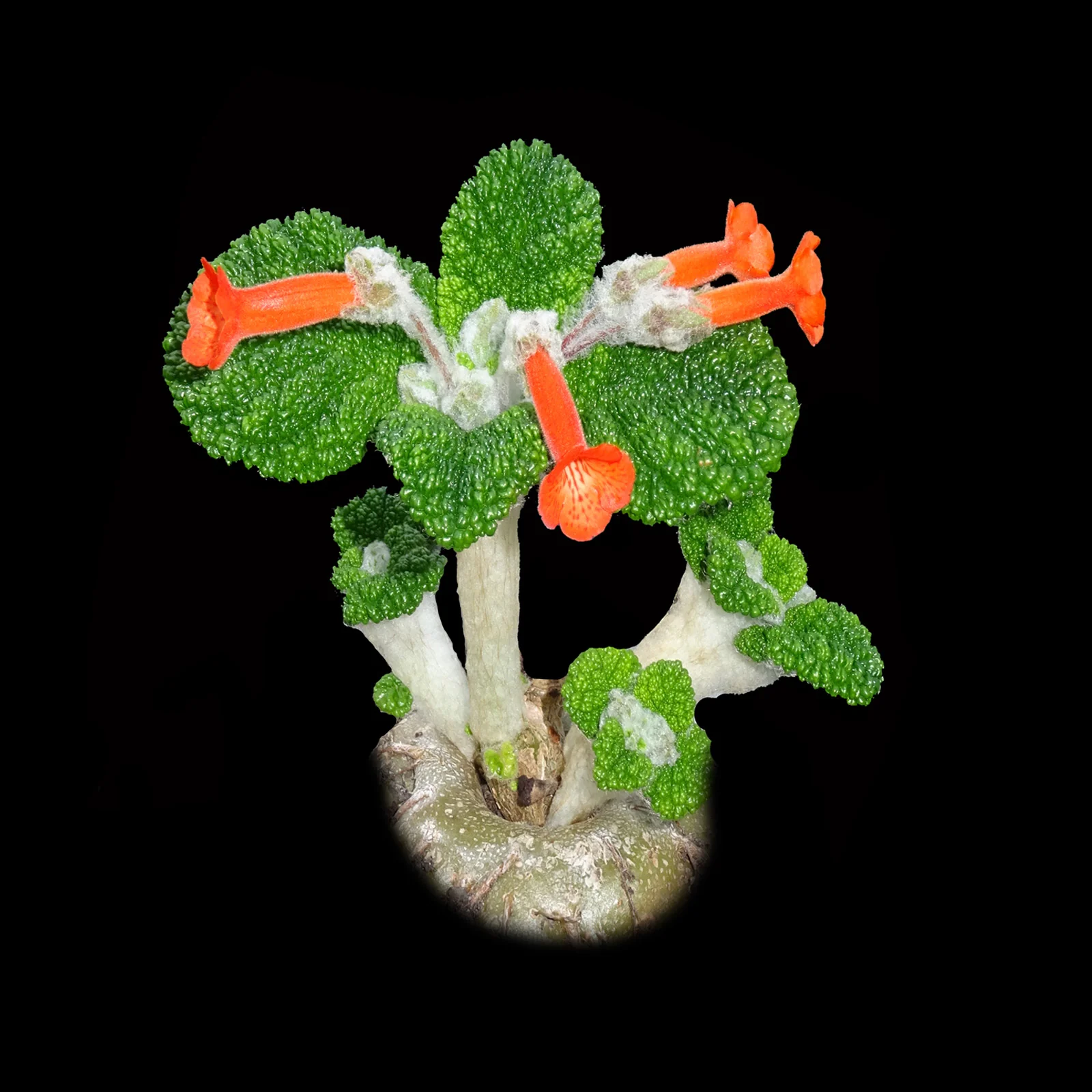
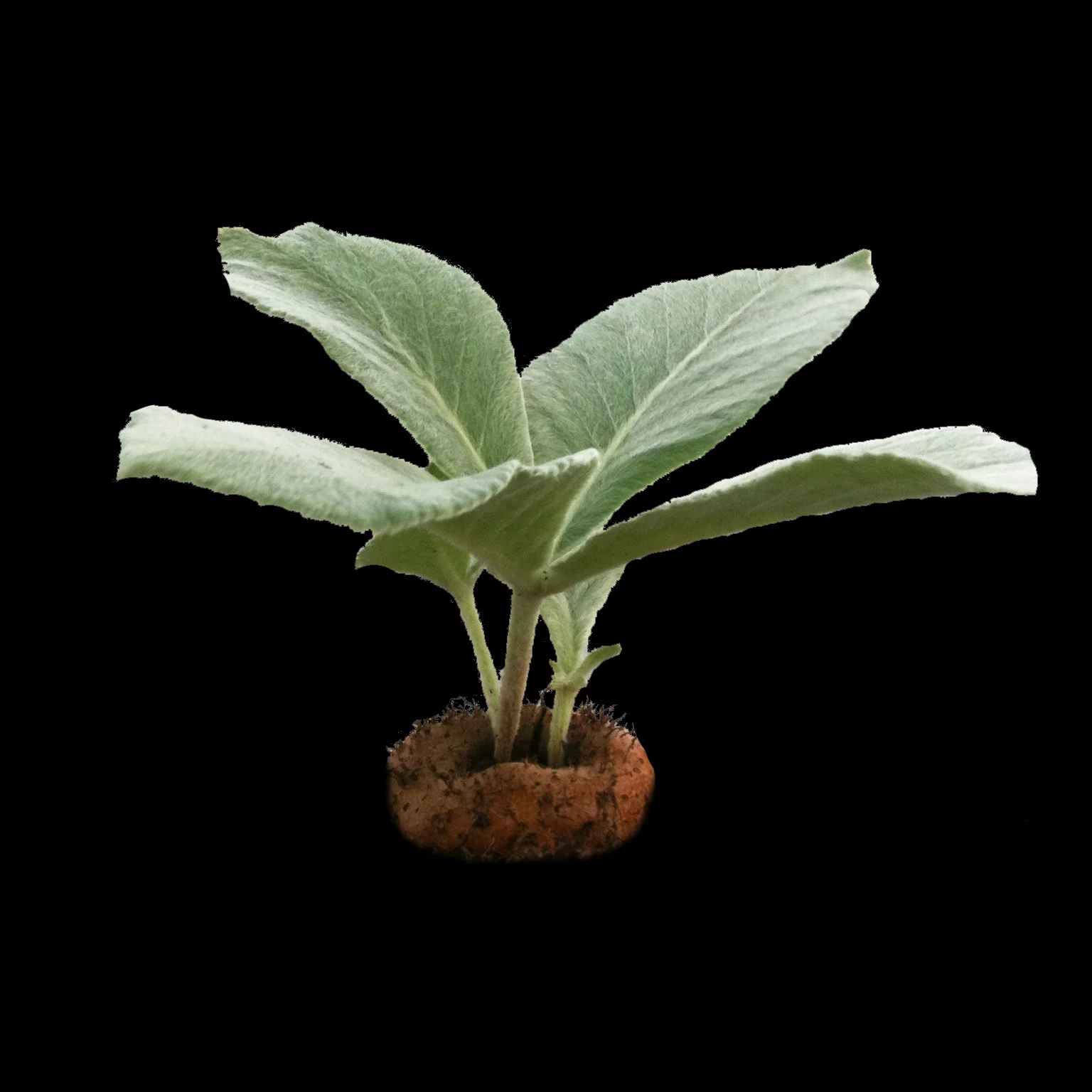
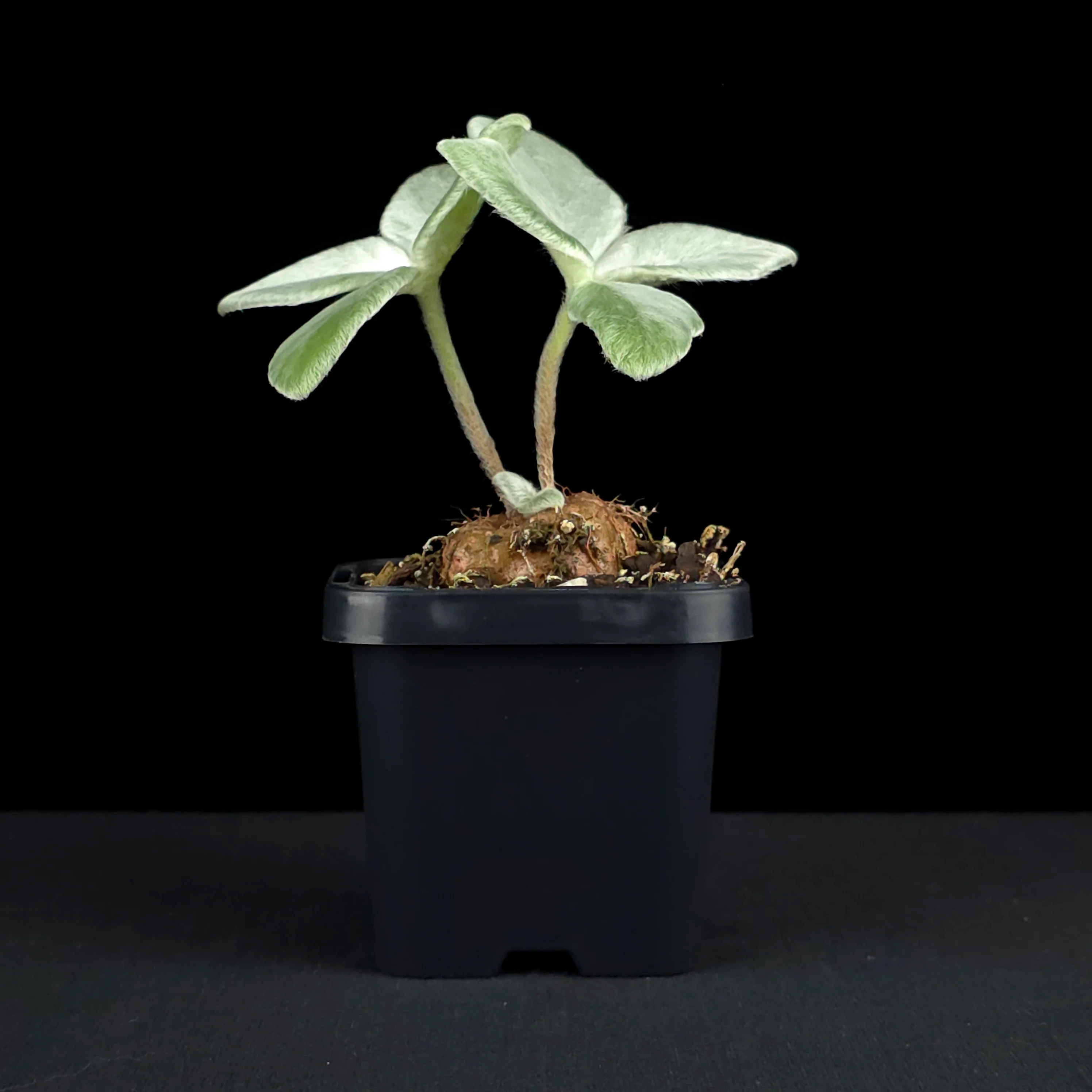
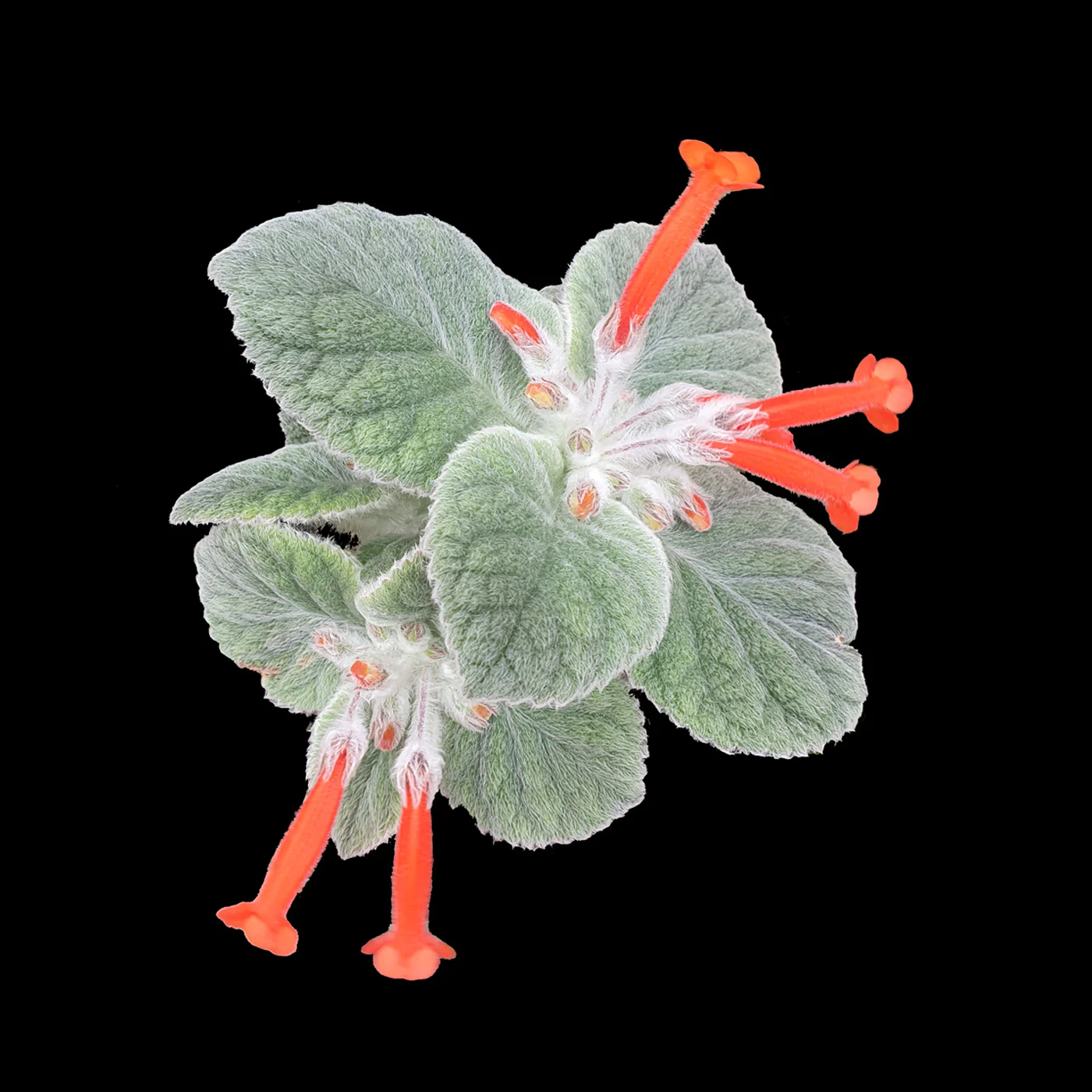
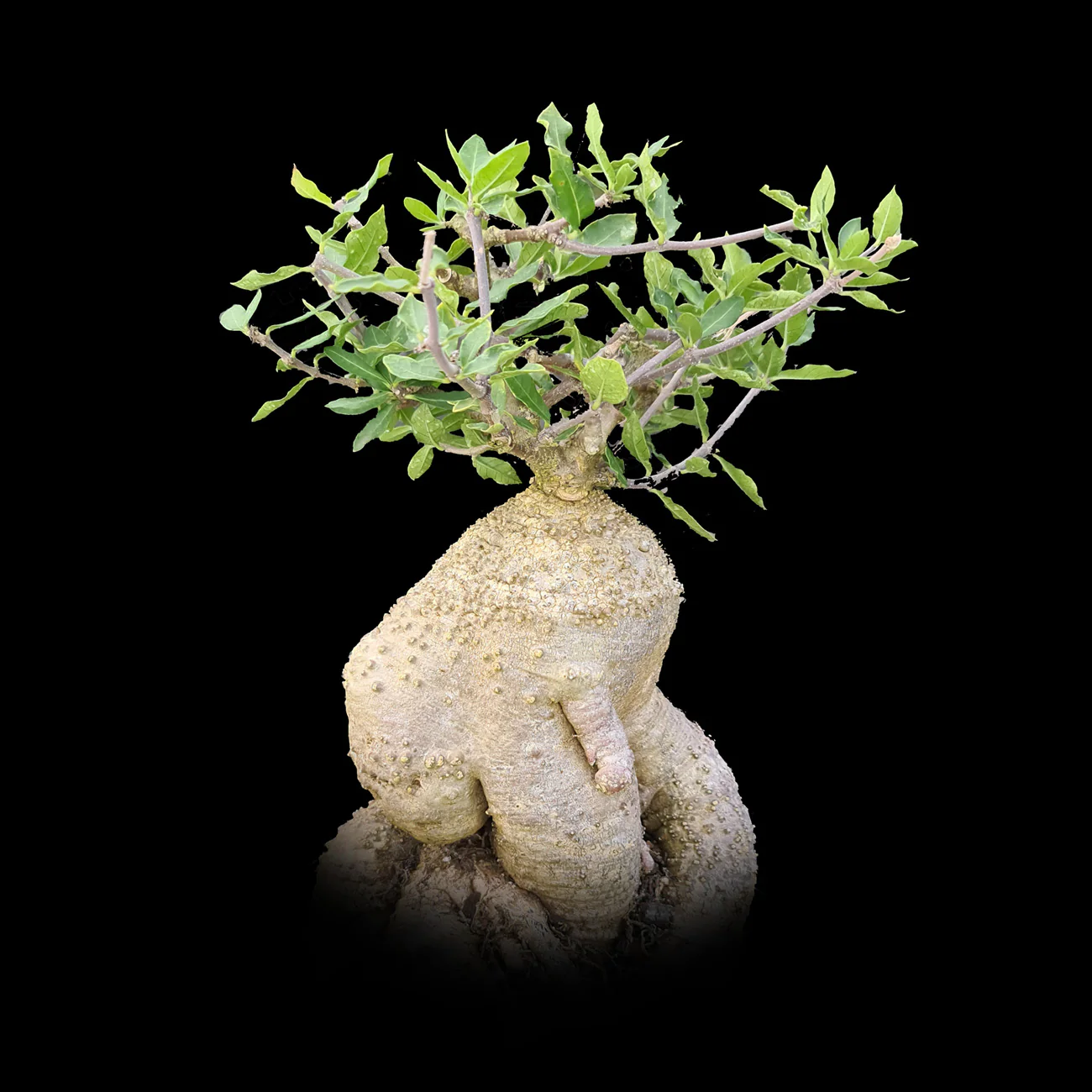
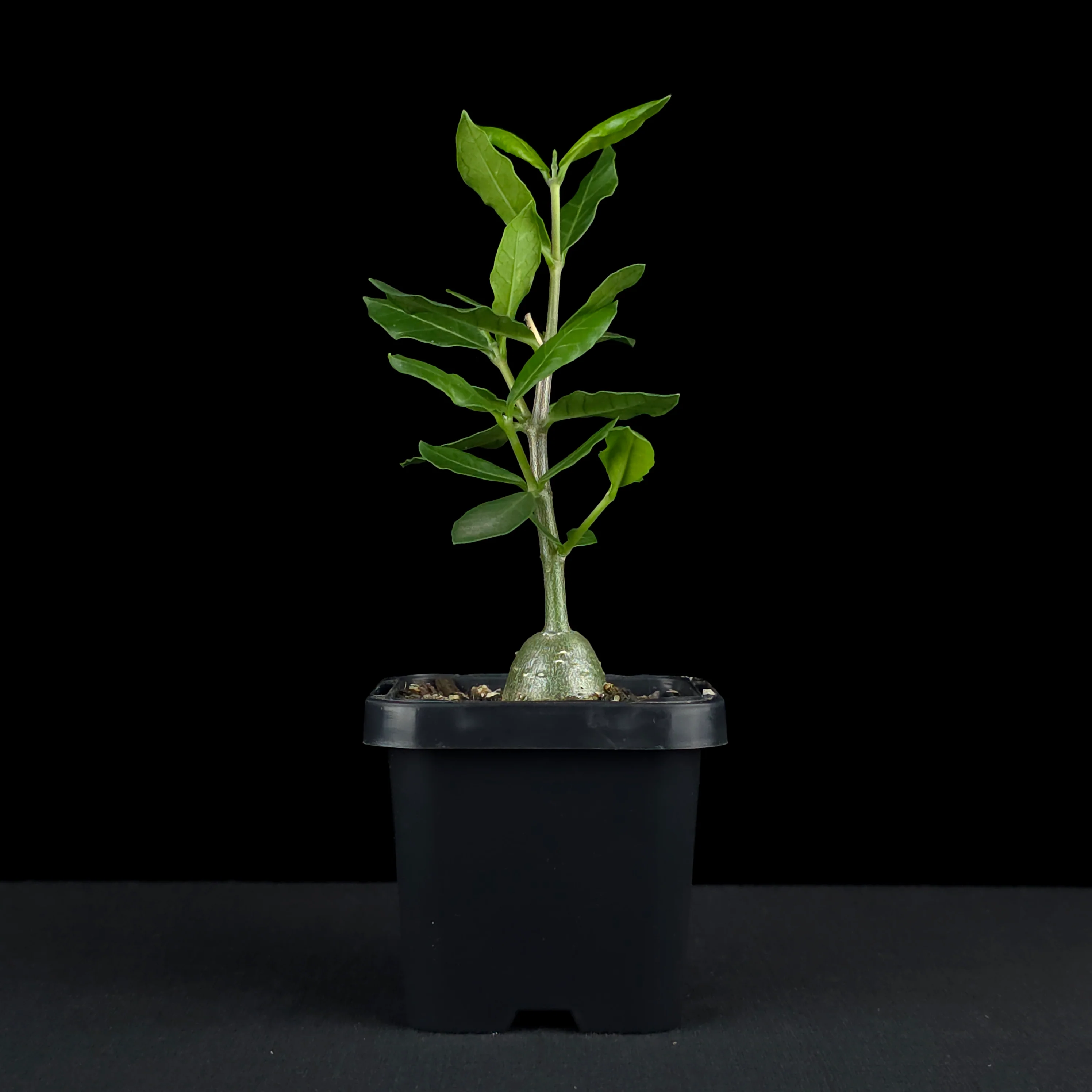
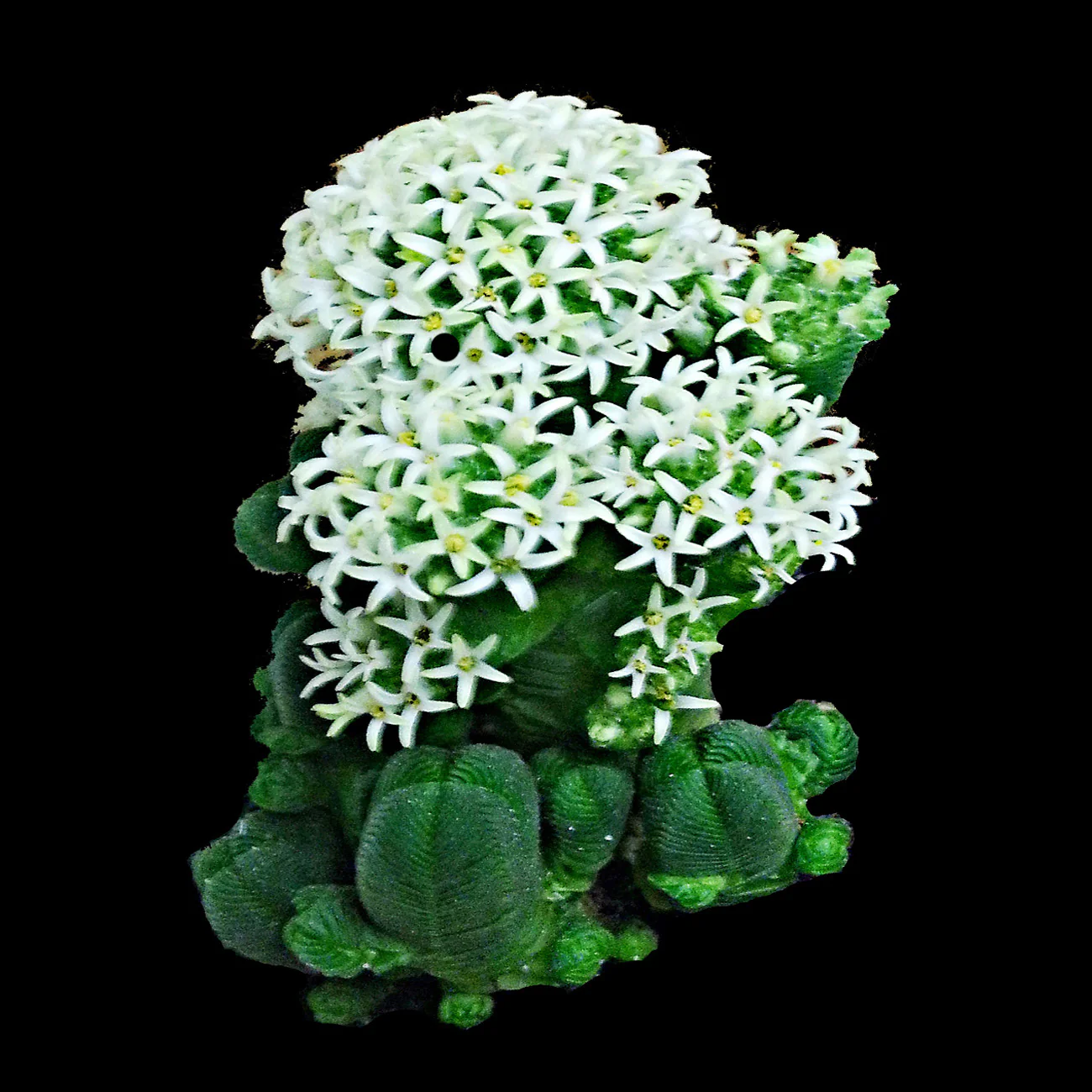
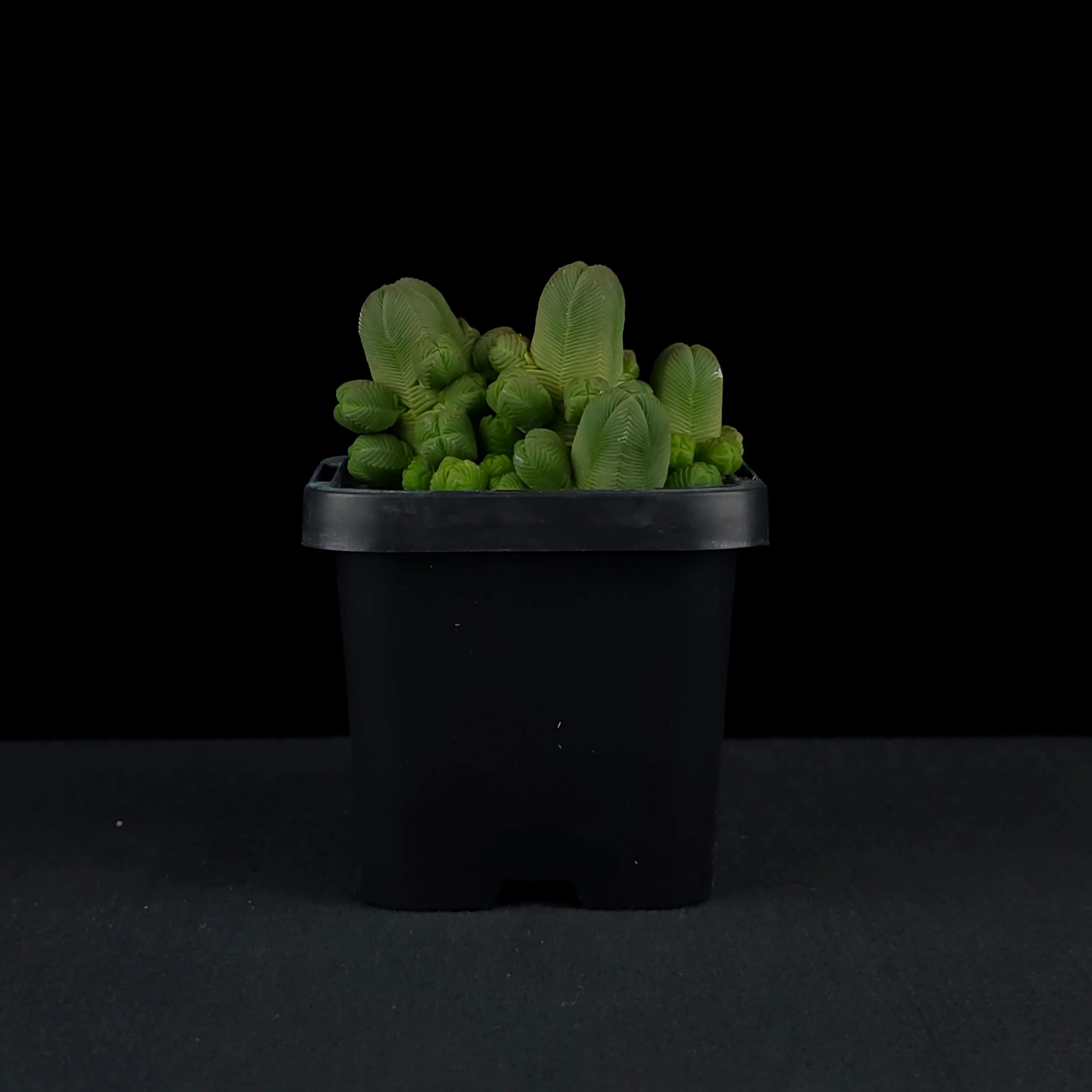
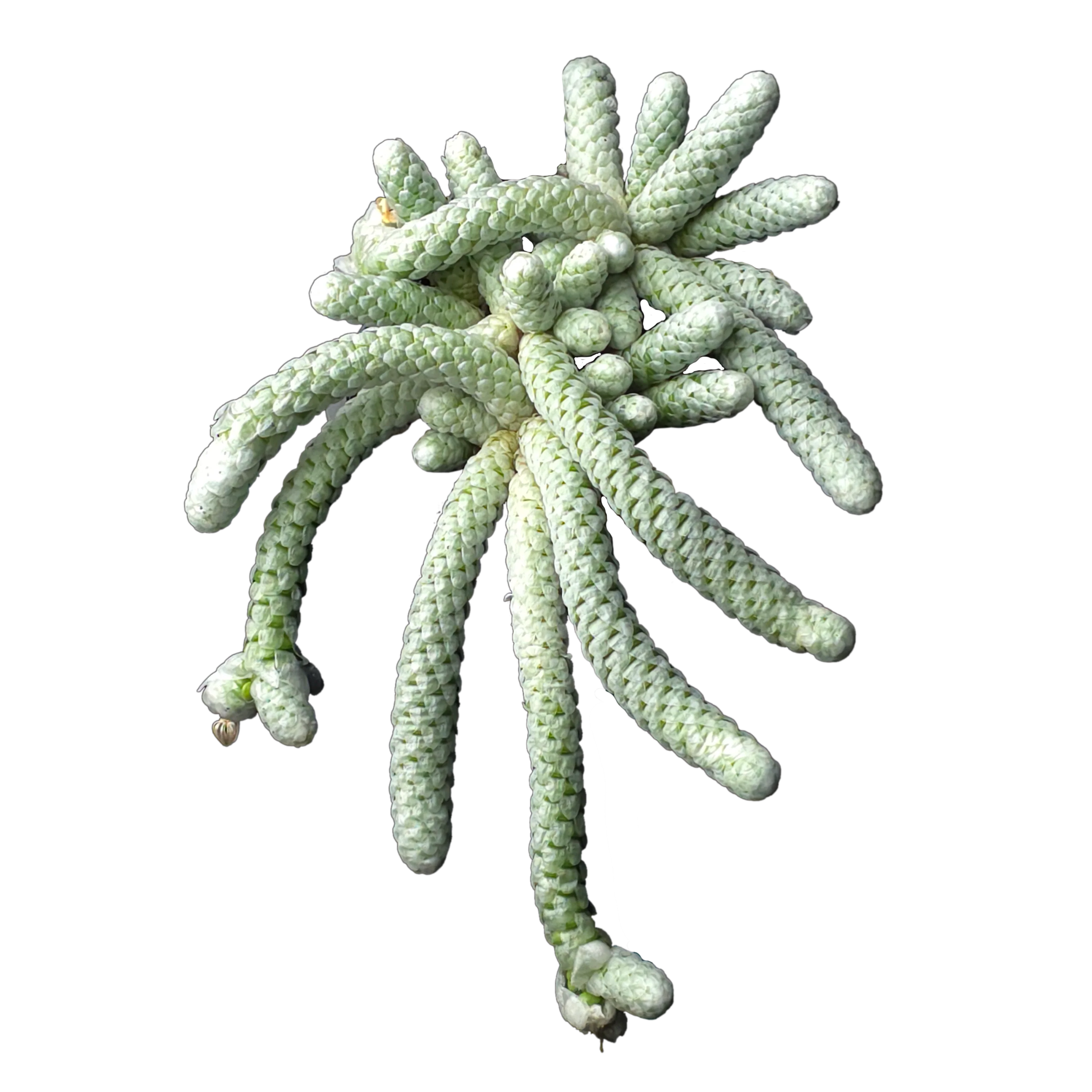
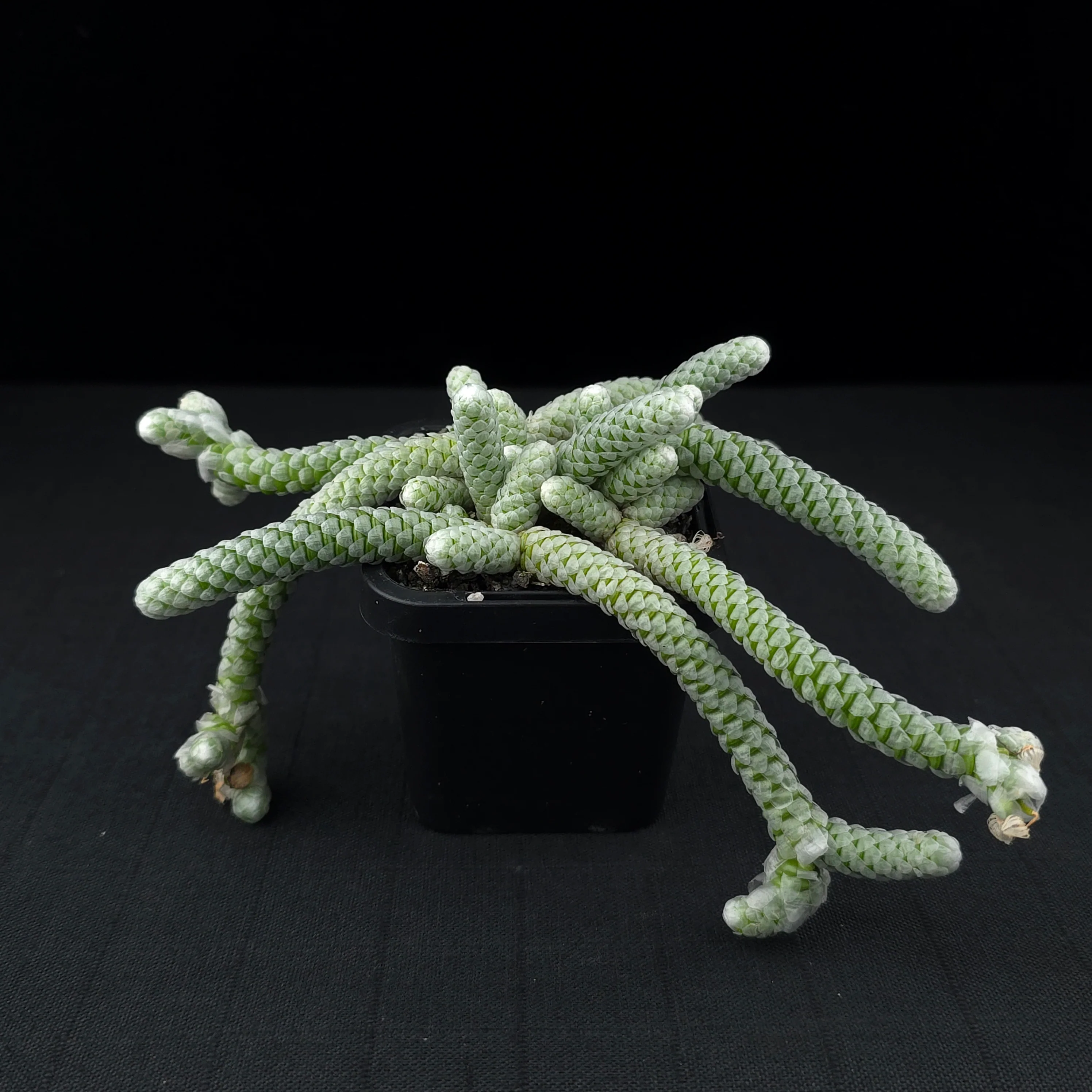
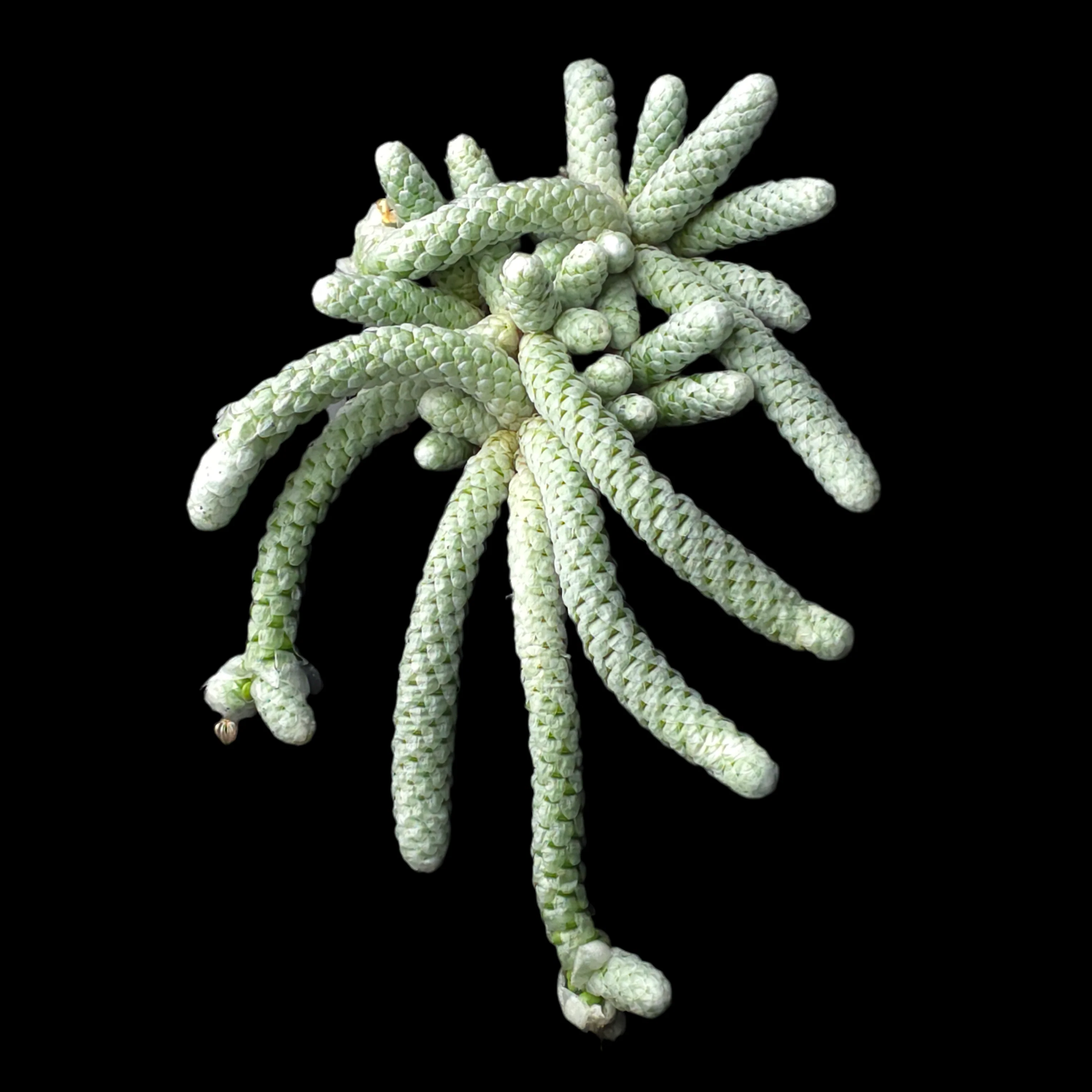
Avonia papyracea is a small succulent species native to southern Africa, where it grows in exposed, rocky terrain. It produces slender, ascending stems densely covered in silvery-white, scale-like stipules that obscure the green stem beneath. This arrangement gives the plant a braided appearance and helps reduce water loss in arid conditions. The stems curve slightly upwards as they grow. In summer, the plant produces small white flowers that open for just a few hours in the afternoon, often appearing singly and only briefly.
Care Tips:
- Light – Provide bright light to full sun to maintain healthy growth and enhance the silvery appearance of the stems.
- Water – Water sparingly, allowing the soil to dry thoroughly between watering; reduce significantly during winter.
- Humidity – Prefers low humidity and good airflow.
- Media – Use a gritty, free-draining cactus and succulent mix.
- Temperature – Best grown at 15–27 °C; protect from frost.
- Fertiliser – Feed with a diluted, balanced fertiliser during active growth to support flowering and stem development.
- Repotting – Repot every 2–3 years, handling the delicate stems with care to avoid breakage.
Original: $25.00
-65%$25.00
$8.75More Images
Avonia papyracea (syn. Anacampseros)
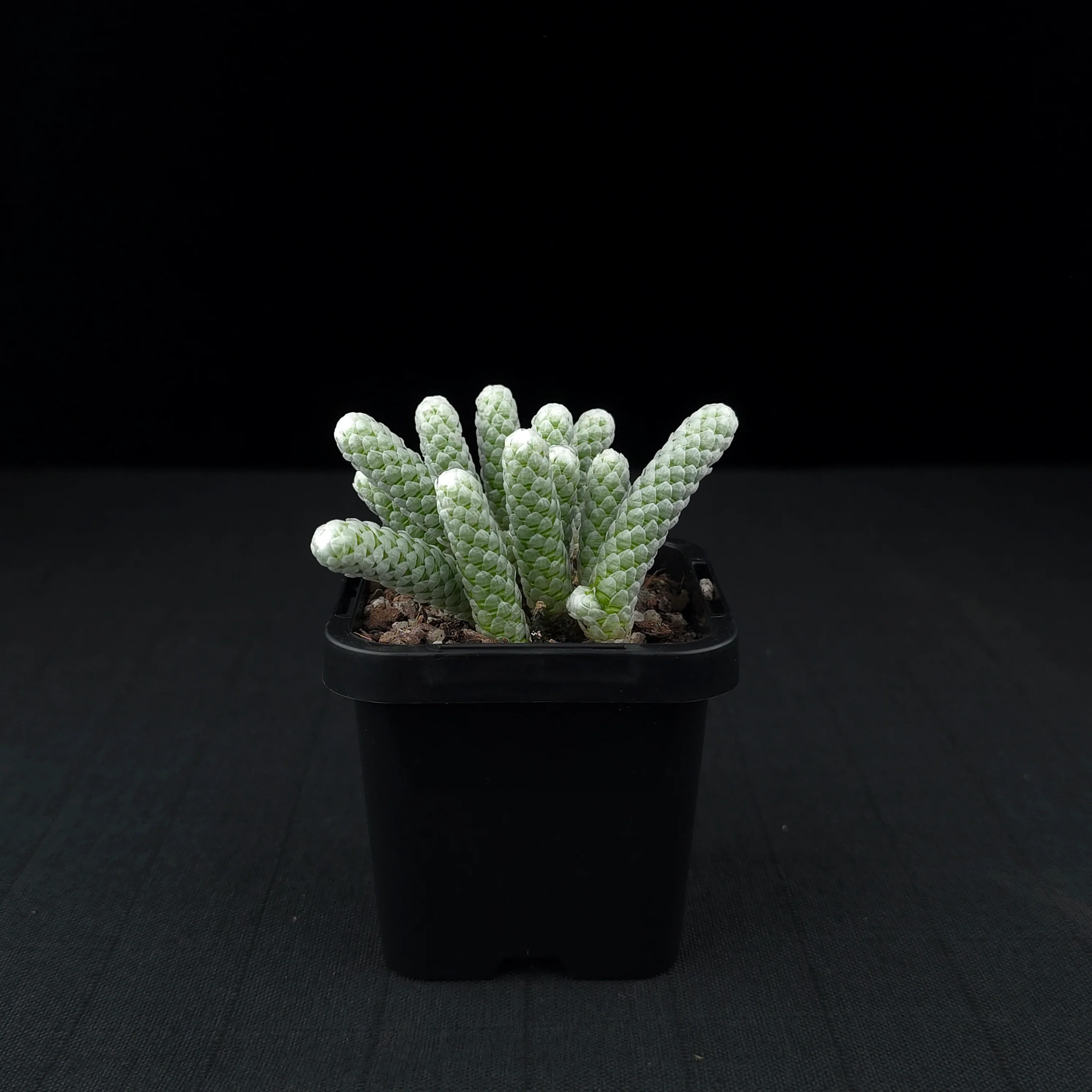
Avonia papyracea is a small succulent species native to southern Africa, where it grows in exposed, rocky terrain. It produces slender, ascending stems densely covered in silvery-white, scale-like stipules that obscure the green stem beneath. This arrangement gives the plant a braided appearance and helps reduce water loss in arid conditions. The stems curve slightly upwards as they grow. In summer, the plant produces small white flowers that open for just a few hours in the afternoon, often appearing singly and only briefly.
Care Tips:
- Light – Provide bright light to full sun to maintain healthy growth and enhance the silvery appearance of the stems.
- Water – Water sparingly, allowing the soil to dry thoroughly between watering; reduce significantly during winter.
- Humidity – Prefers low humidity and good airflow.
- Media – Use a gritty, free-draining cactus and succulent mix.
- Temperature – Best grown at 15–27 °C; protect from frost.
- Fertiliser – Feed with a diluted, balanced fertiliser during active growth to support flowering and stem development.
- Repotting – Repot every 2–3 years, handling the delicate stems with care to avoid breakage.
Product Information
Product Information
Shipping & Returns
Shipping & Returns
Description
Avonia papyracea is a small succulent species native to southern Africa, where it grows in exposed, rocky terrain. It produces slender, ascending stems densely covered in silvery-white, scale-like stipules that obscure the green stem beneath. This arrangement gives the plant a braided appearance and helps reduce water loss in arid conditions. The stems curve slightly upwards as they grow. In summer, the plant produces small white flowers that open for just a few hours in the afternoon, often appearing singly and only briefly.
Care Tips:
- Light – Provide bright light to full sun to maintain healthy growth and enhance the silvery appearance of the stems.
- Water – Water sparingly, allowing the soil to dry thoroughly between watering; reduce significantly during winter.
- Humidity – Prefers low humidity and good airflow.
- Media – Use a gritty, free-draining cactus and succulent mix.
- Temperature – Best grown at 15–27 °C; protect from frost.
- Fertiliser – Feed with a diluted, balanced fertiliser during active growth to support flowering and stem development.
- Repotting – Repot every 2–3 years, handling the delicate stems with care to avoid breakage.