Conophytum hians - Living Stone
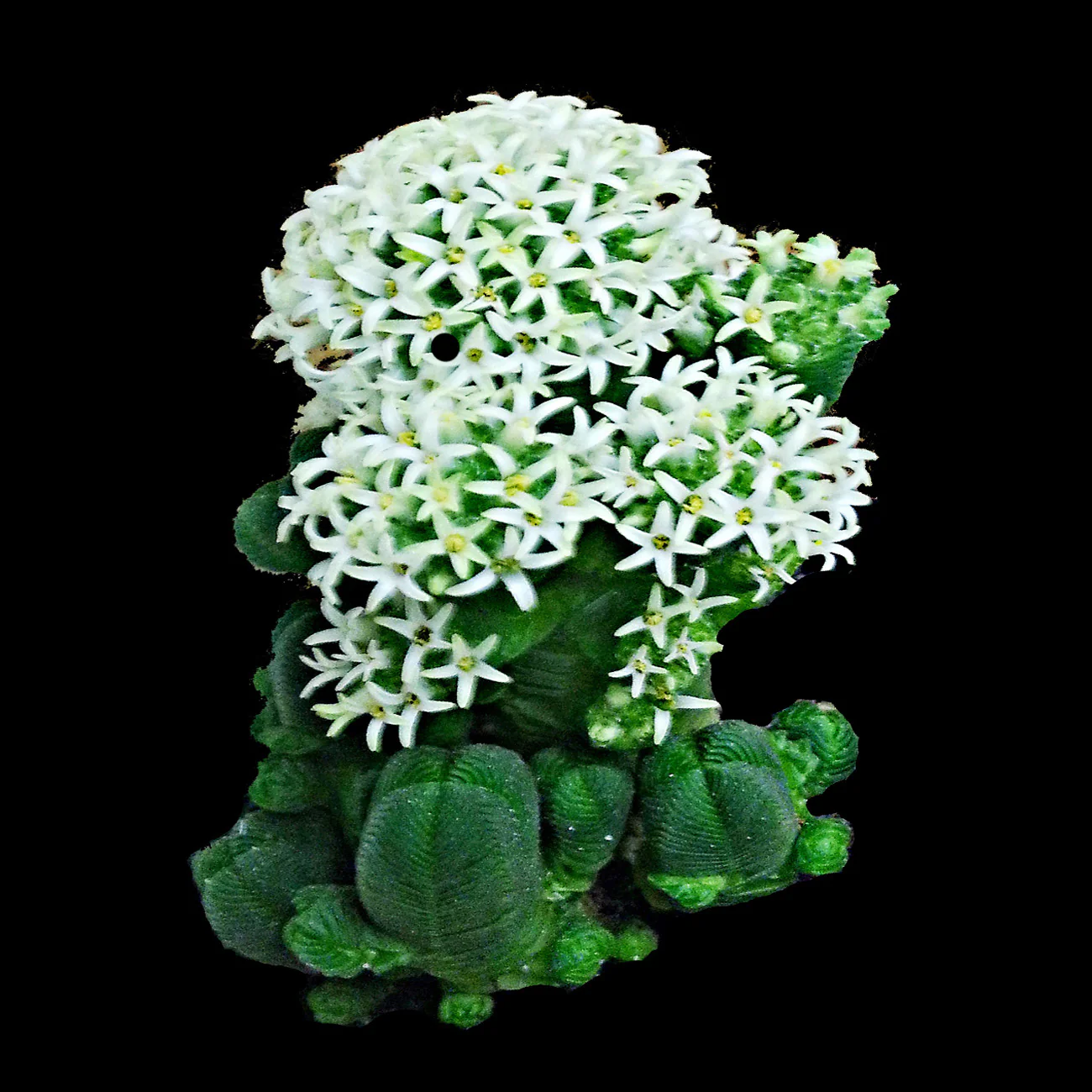
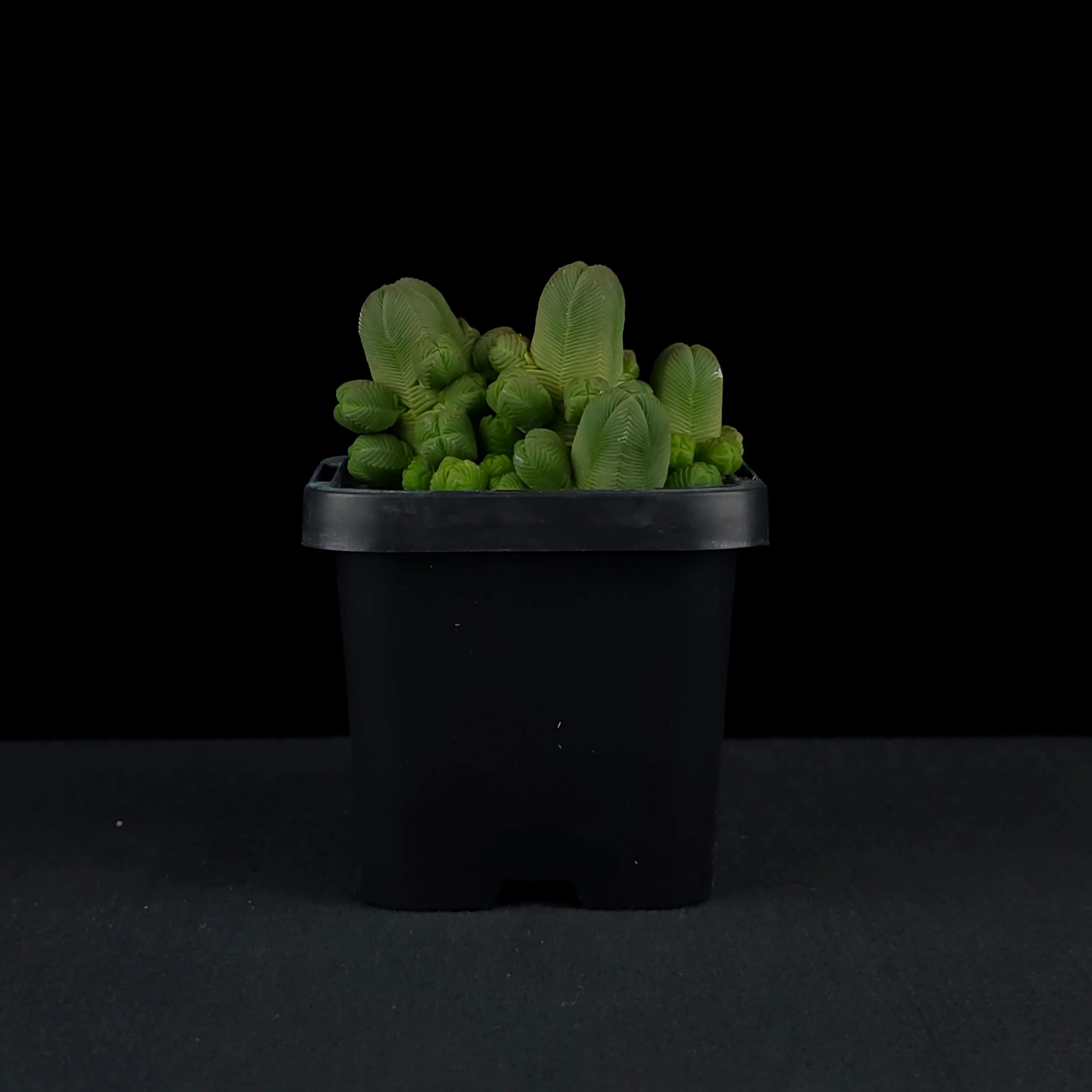
Conophytum hians is a small, clump-forming succulent native to the arid regions of Namaqualand, South Africa. Known for its sharply split body resembling two conjoined domes, this mesemb undergoes a dramatic seasonal transformation, retreating into dormancy during the summer. It is sought after by collectors for its peculiar appearance and compact growth habit.
Distinctive Features
- Deep fissure: Each body consists of two fused leaves with a pronounced central cleft, giving it a beak-like form.
- Night-blooming flowers: Small, daisy-like blooms emerge from the fissure in autumn, often pink to pale magenta in hue.
- Seasonal growth rhythm: Actively grows during the cool months and enters full dormancy in the heat of summer.
Care Tips
- Light: Bright, indirect sunlight or filtered light; protect from intense summer sun.
- Water: Water only during active growth (autumn to spring); keep completely dry in summer dormancy.
- Humidity: Prefers dry air; avoid humid environments.
- Media: Use a gritty, mineral-rich mix with excellent drainage.
- Temperature: Ideal range is 10–25°C; protect from frost.
- Fertiliser: Apply a diluted low-nitrogen fertiliser once during the growing season.
- Repotting: Seldom needed; best done after dormancy if clumps become congested.
Original: $17.50
-65%$17.50
$6.12More Images
Conophytum hians - Living Stone
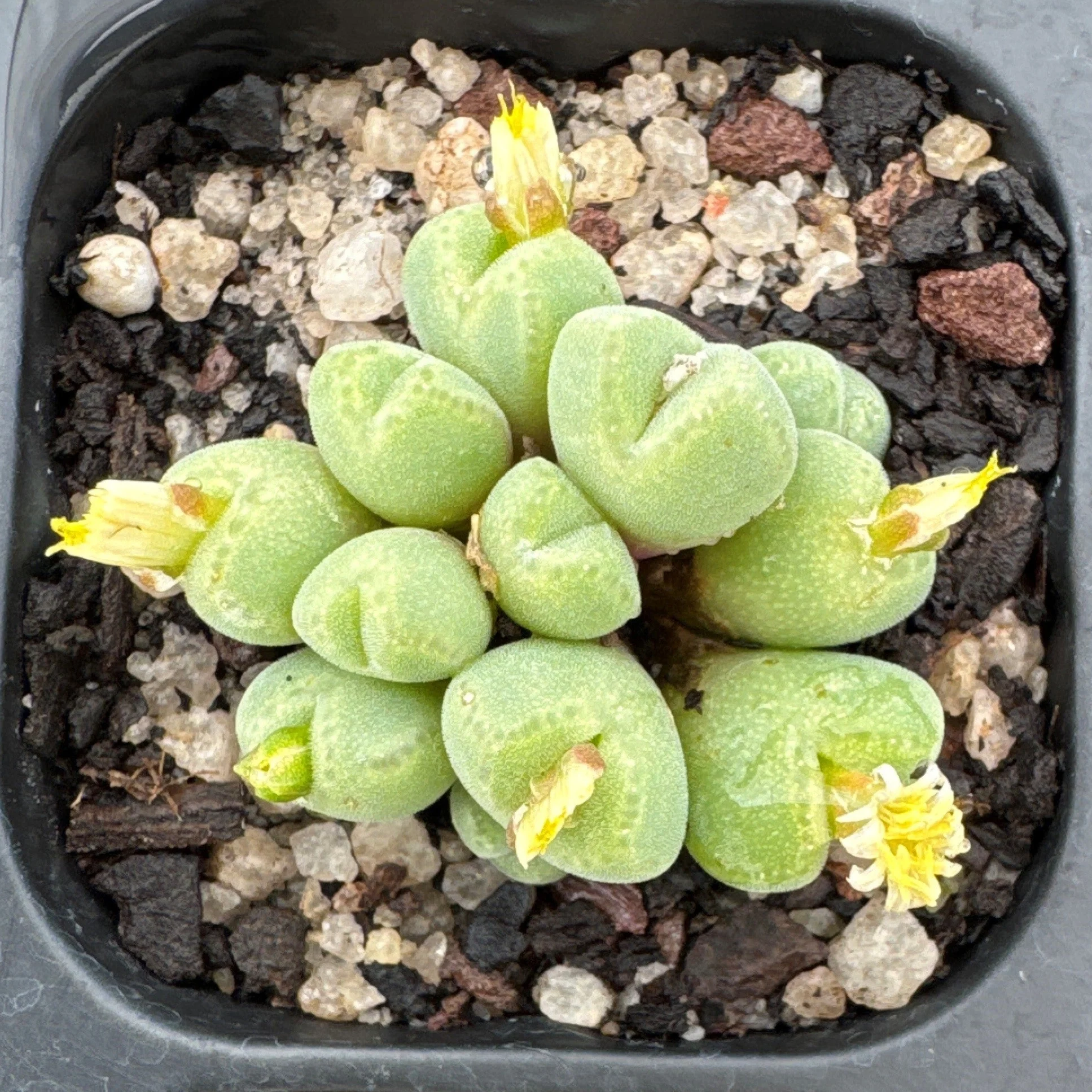
Conophytum hians is a small, clump-forming succulent native to the arid regions of Namaqualand, South Africa. Known for its sharply split body resembling two conjoined domes, this mesemb undergoes a dramatic seasonal transformation, retreating into dormancy during the summer. It is sought after by collectors for its peculiar appearance and compact growth habit.
Distinctive Features
- Deep fissure: Each body consists of two fused leaves with a pronounced central cleft, giving it a beak-like form.
- Night-blooming flowers: Small, daisy-like blooms emerge from the fissure in autumn, often pink to pale magenta in hue.
- Seasonal growth rhythm: Actively grows during the cool months and enters full dormancy in the heat of summer.
Care Tips
- Light: Bright, indirect sunlight or filtered light; protect from intense summer sun.
- Water: Water only during active growth (autumn to spring); keep completely dry in summer dormancy.
- Humidity: Prefers dry air; avoid humid environments.
- Media: Use a gritty, mineral-rich mix with excellent drainage.
- Temperature: Ideal range is 10–25°C; protect from frost.
- Fertiliser: Apply a diluted low-nitrogen fertiliser once during the growing season.
- Repotting: Seldom needed; best done after dormancy if clumps become congested.
Product Information
Product Information
Shipping & Returns
Shipping & Returns
Description
Conophytum hians is a small, clump-forming succulent native to the arid regions of Namaqualand, South Africa. Known for its sharply split body resembling two conjoined domes, this mesemb undergoes a dramatic seasonal transformation, retreating into dormancy during the summer. It is sought after by collectors for its peculiar appearance and compact growth habit.
Distinctive Features
- Deep fissure: Each body consists of two fused leaves with a pronounced central cleft, giving it a beak-like form.
- Night-blooming flowers: Small, daisy-like blooms emerge from the fissure in autumn, often pink to pale magenta in hue.
- Seasonal growth rhythm: Actively grows during the cool months and enters full dormancy in the heat of summer.
Care Tips
- Light: Bright, indirect sunlight or filtered light; protect from intense summer sun.
- Water: Water only during active growth (autumn to spring); keep completely dry in summer dormancy.
- Humidity: Prefers dry air; avoid humid environments.
- Media: Use a gritty, mineral-rich mix with excellent drainage.
- Temperature: Ideal range is 10–25°C; protect from frost.
- Fertiliser: Apply a diluted low-nitrogen fertiliser once during the growing season.
- Repotting: Seldom needed; best done after dormancy if clumps become congested.